
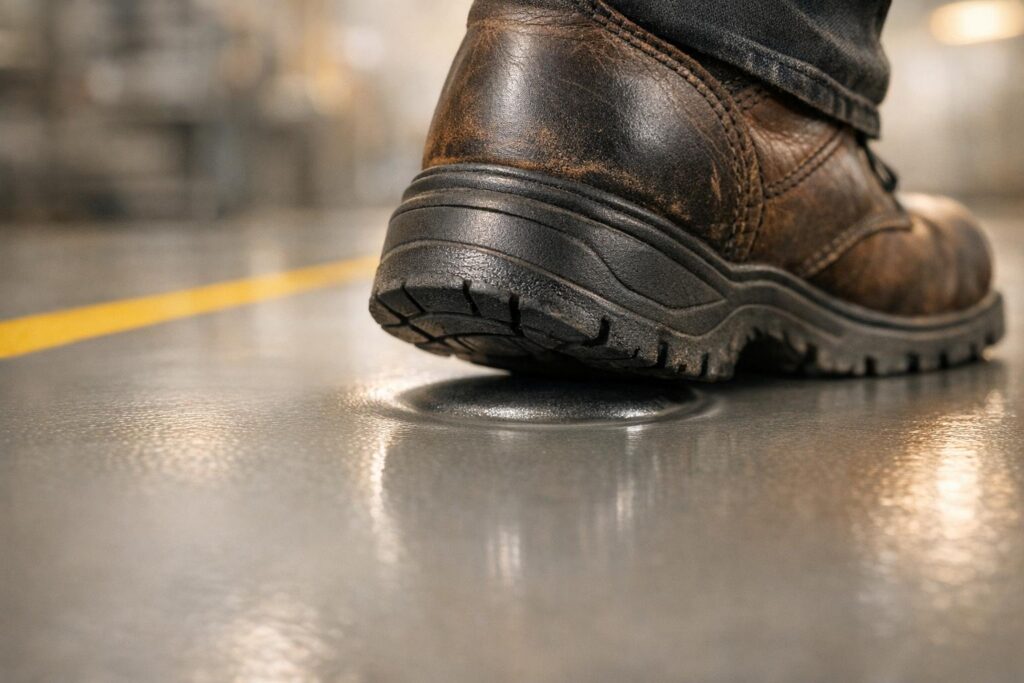
Polyurea coatings are a top solution for reducing worker fatigue in industries where prolonged standing is common. Unlike rigid epoxy coatings, polyurea provides flexibility and impact absorption, creating a more comfortable surface that reduces strain on joints and muscles. It bonds deeply with concrete for durability, resists cracking, and cures in as little as 6 hours, minimizing downtime. While its upfront cost is higher ($7–$12+ per square foot), polyurea lasts 15–20+ years, far outpacing epoxy’s 5–10 years. Businesses benefit from lower maintenance costs, improved worker well-being, and increased productivity, making it a smart long-term investment for demanding environments.
The Fatigue Problem in Commercial and Industrial Spaces
How Prolonged Standing Affects Worker Health
Standing on hard concrete for long periods creates a static posture, restricting the muscle movements needed for proper blood circulation. Without movement, blood tends to pool in the legs, leading to swelling, varicose veins, and fatigue.
Every time a worker’s heel hits a concrete surface, shock waves travel through the body – from the feet all the way to the spine. Over time, this repeated impact can lead to musculoskeletal disorders (MSDs) like tendinitis, bursitis, and arthritis. On average, workers miss 14 days of work due to MSD-related injuries. Beyond physical pain, these conditions also affect mental focus, reducing concentration and decision-making abilities. This mental strain can hurt productivity just as much as absenteeism.
The combined physical and mental toll not only impacts workers’ health but also creates significant costs for businesses.
Business Costs of Poor Flooring
Hard flooring doesn’t just harm workers – it hits businesses financially, too. In the U.S., companies face about $50 billion in direct costs related to MSDs annually. The average worker’s compensation claim for these injuries is around $15,000.
When you add indirect costs – like training new staff, administrative expenses, and lower employee morale – these expenses can climb to five times the direct medical costs. Fatigue alone is estimated to cost businesses $136 billion each year in lost productivity. High employee turnover makes things worse, with replacement costs averaging 21% of a worker’s yearly salary.
The silver lining? Ergonomic flooring can help address these challenges. Research shows that such solutions can improve worker circulation by 50% and reduce heel strike impact by 35%. In some cases, productivity has increased by 22%, which translates to about 45 additional workdays per employee annually.
sbb-itb-4b4bb37
Why Traditional Anti-Fatigue Flooring Falls Short
Where Epoxy and Other Coatings Fail
Epoxy coatings might improve the appearance of concrete floors, but they fall short when it comes to addressing worker comfort. The problem? Epoxy is rigid. It doesn’t have the flexibility needed to absorb the impact of repeated heel strikes, leaving workers’ feet and joints to bear the brunt. Essentially, it creates a hard, unforgiving surface that offers no relief for those standing for extended periods.
While epoxy may deliver a quick aesthetic boost, it isn’t built for durability in high-impact environments. It remains a surface-level solution, sitting on top of the concrete rather than bonding with it. Over time, the constant wear from heavy machinery and foot traffic causes the coating to peel and chip, leading to visible damage.
When epoxy starts to fail, the only option is a complete floor replacement. This process not only takes time but also drives up costs due to extended downtime. These limitations highlight the need for a flooring solution that can better withstand the demands of industrial settings.
Why Polyurea Works for Anti-Fatigue Floors
Polyurea addresses the shortcomings of traditional flooring by forming a strong bond with low-moisture concrete and curing at an impressive speed. The result? A tough, long-lasting surface that not only holds up under constant use but also helps reduce worker fatigue. Here’s a closer look at why polyurea is a standout choice for anti-fatigue flooring.
Flexibility and Energy Absorption
One of polyurea’s key features is its moderate flexibility, which allows it to absorb impacts effectively. This means it can handle heavy foot traffic and machinery without cracking or losing its structural integrity.
Durability and Rapid Curing
Time is money, especially in industrial settings. Polyurea cures quickly – ready for foot traffic in just 6 hours and heavy equipment in 24 hours. This rapid curing process minimizes downtime while ensuring a durable surface that resists peeling and chipping.
Chemical and UV Resistance
Polyurea is built to last, even in tough environments. Its resistance to UV rays and heat keeps it from fading or breaking down under harsh conditions. This durability ensures it can maintain its performance over time, even in demanding industrial settings.
Polyurea vs. Other Coating Options
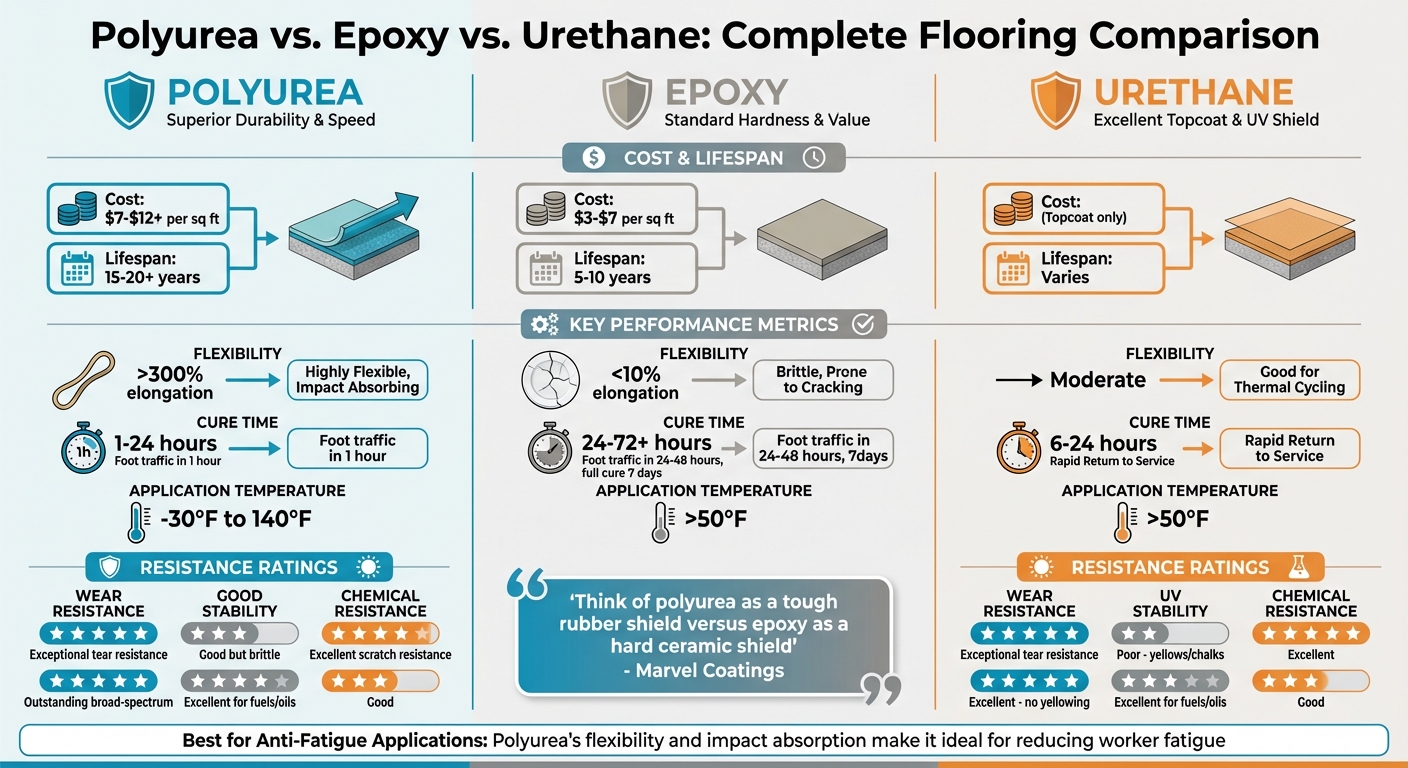
Polyurea vs Epoxy vs Urethane Flooring Comparison Chart
Building on polyurea’s impressive impact absorption and quick curing capabilities, let’s see how it stacks up against epoxy and urethane, particularly for anti-fatigue flooring and budget considerations. Epoxy has been a popular choice due to its lower upfront cost, typically ranging from $3–$7 per square foot installed. However, its performance often falls short when it comes to flexibility and durability. Polyurea, on the other hand, costs more – $7–$12+ per square foot – but delivers a significantly longer service life of 15–20+ years, compared to epoxy’s 5–10 years.
The core difference lies in their chemical structures. Epoxy hardens into a rigid, brittle material prone to cracking under stress, while polyurea cures into a flexible elastomer capable of absorbing impacts. Marvel Coatings puts it best:
"Think of a polyurea as a tough rubber shield versus epoxy as a hard ceramic shield." – Marvel Coatings
With an elongation rate exceeding 300%, polyurea offers superior flexibility compared to epoxy’s 5–10%, making it far better at handling dynamic environments. This flexibility reduces cracking and lowers repair costs over time. These qualities make polyurea the top choice for demanding anti-fatigue applications.
Another key advantage of polyurea is its fast curing time. It allows foot traffic within an hour and fully cures in 24 hours, while epoxy requires 24–48 hours for light use and up to 7 days to fully cure.
Performance Comparison Table
Here’s a quick look at how polyurea, epoxy, and urethane compare across key features:
| Feature | Polyurea Coating | Epoxy Coating | Urethane (Topcoat) |
|---|---|---|---|
| Flexibility | High (>300% elongation) | Very Low (<10% elongation) | Moderate |
| Cure Time | Exceptionally Fast (1–24 hours) | Slow (24–72+ hours) | Moderate (6–24 hours) |
| Wear Resistance | Exceptional tear resistance | Good (hard but brittle) | Excellent scratch resistance |
| UV Stability | Excellent (aliphatic/polyaspartic) | Poor (yellows/chalks) | Excellent |
| Chemical Resistance | Outstanding (broad-spectrum) | Excellent (fuels/oils) | Good |
| Application Temp | -30°F to 140°F | >50°F | >50°F |
While urethane is often used as a topcoat for epoxy to improve UV protection and scratch resistance, it doesn’t offer the same elastomeric properties that make polyurea ideal for anti-fatigue applications. Additionally, epoxy coatings tend to yellow and degrade when exposed to sunlight, whereas aliphatic polyurea formulations maintain their appearance and structural integrity over time.
Anti-Fatigue Flooring Solutions from Atlas Concrete Coatings
Atlas Concrete Coatings brings the benefits of polyurea flooring to commercial and industrial spaces across Pennsylvania and New Jersey. Known for its strong bonding and impact resistance, polyurea helps reduce staff fatigue while standing up to demanding environments. To make these advantages accessible with minimal disruption, Atlas Concrete Coatings has developed a fast and efficient installation process.
Fast Installation Process
Thanks to polyurea’s quick curing properties, Atlas Concrete Coatings has perfected a process that prioritizes speed and quality. It starts with a moisture test of the concrete substrate. If necessary, a moisture barrier is applied before the coating is installed. The polyurea is then mixed with precision and applied to an exact thickness, measured in mils. Rebecca Harrell shares:
"Polyurea and polyaspartic coatings have a total cure time of 24 hours."
In just 6 hours, the surface is ready for foot traffic, and within 24 hours, it’s fully cured – allowing businesses to get back to work quickly.
Custom Finishes for Different Needs
Atlas Concrete Coatings offers a range of custom chip systems designed to meet specific operational requirements. These include slip-resistant finishes for wet or high-traffic areas, UV-resistant coatings for sun-exposed spaces like loading docks, and visually appealing color combinations to enhance the overall appearance. Each system is backed by a lifetime warranty, ensuring long-lasting performance.
Serving businesses throughout Pennsylvania and New Jersey, Atlas Concrete Coatings provides free consultations to tailor solutions to individual needs. With founder Scott Payne’s dedication to professional installation and premium materials, clients can expect flooring that not only performs but lasts.
Conclusion
Polyurea stands out as an excellent choice for anti-fatigue flooring in commercial and industrial settings. Its ability to deeply bond with concrete creates a strong, impact-resistant foundation designed to last. This firm but flexible surface not only absorbs the strain from prolonged standing but also enhances comfort and reduces fatigue. Plus, its resistance to chemicals and UV exposure ensures it can handle tough conditions without compromising performance.
One of its biggest advantages is its rapid curing time, which means businesses can resume operations quickly – an essential benefit for facilities where downtime isn’t an option. Combined with its durability, polyurea reduces the need for frequent repairs or replacements, making it a cost-effective, long-term investment.
Atlas Concrete Coatings brings these benefits to life for businesses in Pennsylvania and New Jersey. Their expert installations, backed by a lifetime warranty, include custom chip systems tailored to specific needs. Whether it’s slip resistance for wet areas or UV protection for outdoor spaces, they ensure each floor is designed to perform exactly as required.
For businesses looking to improve worker well-being and create a surface that can handle heavy use with minimal upkeep, polyurea offers a solution that addresses both health concerns and operational costs. It’s a practical choice for facility managers focused on efficiency, comfort, and long-term value.
FAQs
Is polyurea softer than concrete underfoot?
Polyurea isn’t inherently softer than concrete, but it offers a tough, impact-resistant surface. It’s built to handle heavy use, making it a solid choice for high-traffic areas, all while maintaining a sturdy feel underfoot.
How long does polyurea flooring installation take?
Installing polyurea flooring typically takes just 1 to 2 days, depending on the project’s size and complexity. This fast installation process makes it a great option for reducing downtime in commercial and industrial environments.
What floor prep is needed before applying polyurea?
Getting the surface ready is a must for ensuring polyurea coatings last. Here’s what needs to happen:
- Thorough cleaning and drying: A spotless, dry surface is the foundation for a strong bond.
- Fixing cracks and creating texture: Cracks need repairs, and the surface should be textured to a CSP 2–3 level for proper adhesion.
- Removing contaminants: Industrial tools help clear away debris, grease, and any old coatings that could interfere.
- Checking moisture and porosity: Testing ensures the surface is in the right condition to accept the coating.
Skipping any of these steps can lead to coating failure, making preparation a critical part of the process.