
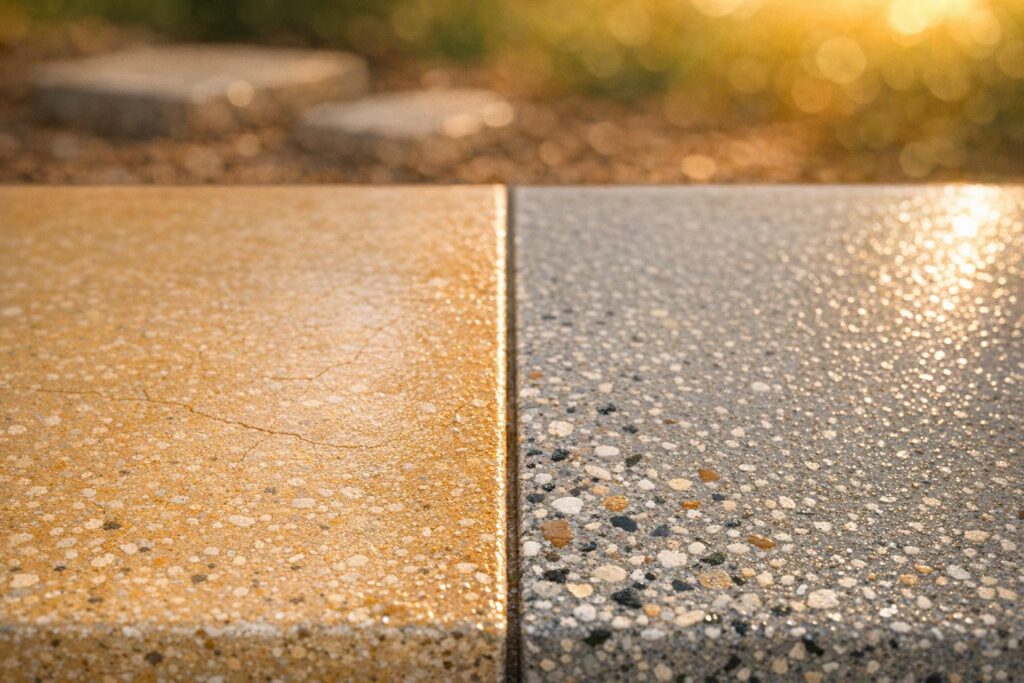
UV rays can severely damage concrete coatings, leading to yellowing, chalking, and structural failure. This article explains why polyurea coatings outperform traditional epoxy coatings in outdoor settings. Key takeaways:
- Epoxy coatings: Prone to UV damage, yellowing, and brittleness. Lifespan: 5–10 years outdoors.
- Polyurea coatings: Superior UV resistance, maintaining color and flexibility for 15–20+ years.
- Cost: Epoxy ($3–$7/sq. ft.) is cheaper upfront but requires frequent maintenance. Polyurea ($7–$12/sq. ft.) lasts longer with fewer repairs.
For outdoor surfaces like patios, driveways, and pool decks, polyurea coatings are a longer-lasting and low-maintenance choice.
How UV Exposure Damages Concrete Coatings
The Chemistry of UV Degradation
When UV rays hit a concrete coating, they penetrate the material and disrupt the polymer structure. This disruption happens because UV energy breaks the chemical bonds that hold the coating together, kickstarting a series of damaging reactions.
In standard epoxy coatings, the aromatic rings within the resin absorb UV energy. This triggers a process called "ambering", where the coating develops a yellow or brown tint. Over time, the surface layer deteriorates, leaving behind a fine, chalky residue. Christian Griffith from Formula Concrete Coating explains the science behind this:
"UV-stable coatings are formulated with specific additives and chemical structures that actively prevent UV degradation from occurring in the first place."
Unlike UV-stable coatings, standard epoxy coatings lack these protective additives, making them highly susceptible to ongoing UV damage. The resulting molecular changes soon lead to visible surface deterioration.
Effects on Appearance and Function
The chemical breakdown caused by UV exposure produces clear signs of damage. Coatings lose their shine, take on a yellowish tint, and develop a dull, matte finish as the surface becomes rougher. But the problem goes beyond aesthetics. Prolonged exposure to UV rays makes the coatings brittle, causing them to crack, chip, and peel. This damage leaves the underlying concrete exposed to moisture and harmful chemicals.
"This deterioration isn’t just cosmetic; it compromises the concrete’s structural integrity, making it susceptible to cracks, chips, and erosion." – Floor Shield
Additionally, UV-induced temperature changes cause the concrete to expand and contract, which speeds up coating failure. These issues not only ruin the coating’s appearance but also mark the start of structural problems. As a result, standard epoxy coatings typically last only 5–10 years outdoors, whereas UV-stable polyurea systems can last 15–20 years or more.
sbb-itb-4b4bb37
The uv stability test: Penntek vs. Epoxy vs. Common Polyurea
UV Resistance: Epoxy vs. Polyurea Coatings
Epoxy vs Polyurea Concrete Coatings: UV Resistance Comparison
Epoxy Coatings: UV Resistance Limitations
Epoxy coatings face challenges with UV exposure due to their chemical structure. Most epoxies include aromatic rings that absorb UV rays, causing the polymer chains to break down. This degradation leads to the yellowing and chalking issues often associated with epoxy. As Marvel Coatings puts it:
"There is no such thing as a truly UV-stable epoxy."
While aliphatic epoxies offer slightly improved UV resistance compared to their aromatic counterparts, they still fall short when compared to polyurea coatings. To address this, a common practice is applying a UV-resistant topcoat – typically an aliphatic polyurethane or polyaspartic layer – over the epoxy base. This method shields the epoxy from direct sunlight but adds installation complexity and increases costs.
Polyurea coatings, on the other hand, provide a more reliable solution for areas exposed to intense sunlight.
Polyurea Coatings: Better UV Performance
Given the limitations of epoxy, polyurea coatings stand out for their superior UV resistance. There are two main types of polyurea: aromatic and aliphatic. While aromatic polyureas (made with MDI, or methylene diphenyl diisocyanate) are prone to discoloration under UV exposure, aliphatic polyureas (made with HDI, or hexamethylene diisocyanate) are specifically engineered for UV stability.
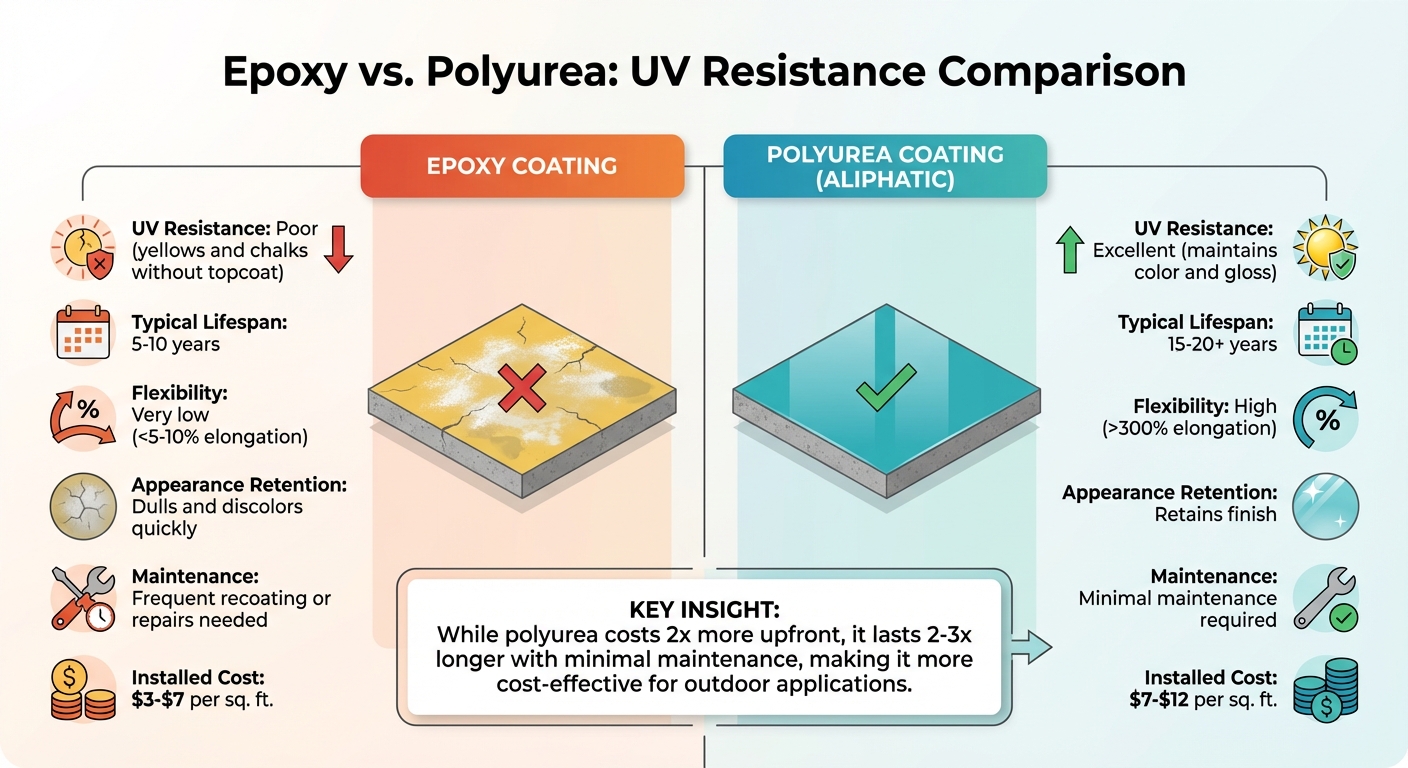
Aliphatic polyurea coatings maintain their color and gloss over time, making them ideal for outdoor applications like pool decks, patios, and driveways. Polyaspartic coatings, which are fully UV-stable, are often used as protective top layers in multi-layer systems. Beyond resisting UV damage, polyurea coatings offer impressive flexibility – boasting over 300% elongation at break – which allows them to adapt to temperature fluctuations without cracking. In comparison, epoxy coatings typically exhibit less than 5–10% elongation.
Performance Comparison Table
| Property | Epoxy Coating | Polyurea Coating (Aliphatic) |
|---|---|---|
| UV Resistance | Poor; yellows and chalks without topcoat | Excellent; maintains color and gloss |
| Typical Lifespan | 5–10 years | 15–20+ years |
| Flexibility | Very low (<5–10% elongation) | High (>300% elongation) |
| Appearance Retention | Dulls and discolors quickly | Retains finish |
| Maintenance | Frequent recoating or repairs needed | Minimal maintenance required |
| Installed Cost | $3–$7 per sq. ft. | $7–$12 per sq. ft. |
In regions with strong sunlight, like Texas, petrochemical plants using epoxy coatings for secondary containment have reported chalking and fading within just one year. After switching to aliphatic polyurea systems, these facilities achieved long-lasting protection and maintained their coatings’ appearance and performance.
Selecting Coatings for UV-Exposed Surfaces
What Determines UV Resistance Requirements
When selecting a coating for surfaces exposed to UV light, factors like UV intensity, length of exposure, and environmental conditions are key. Surfaces such as pool decks, patios, and driveways endure significant wear under direct sunlight. As Floor Shield points out:
"UV radiation accelerates the degradation of protective coatings, leading to: Fading, Chalking, [and] The breakdown of the concrete’s surface."
Geography also matters. Southern states, where sunlight is stronger year-round, demand coatings with stronger UV resistance compared to northern areas. Even indoor spaces with large windows or skylights can experience fading and discoloration without proper coatings. Additionally, regions with extreme temperature swings require coatings that can handle both UV exposure and the natural expansion and contraction of concrete.
Moisture levels complicate matters further. If coatings aren’t breathable, trapped moisture can lead to blistering. Together, these factors guide the choice of coating for any specific application.
Application-Specific Coating Recommendations
Here’s how different coatings perform under various conditions, ensuring durability and UV protection:
- Pool Decks and Patios: Polyurea coatings are ideal for outdoor surfaces exposed to strong UV rays, moisture, and temperature extremes. BlackHawk Garage Door highlights this advantage:
"Epoxy floor coatings won’t stand up to the moisture, UV rays and temperature swings that an outdoor pool area would experience. Therefore, you need a durable surface coating like polyurea."
- Garage Floors: Sunlight exposure through garage doors can cause epoxy coatings to yellow. Polyurea coatings avoid this issue and also prevent "hot tire pick-up", where heat softens epoxy, causing tires to peel it away. Atlas Concrete Coatings specializes in polyurea solutions that maintain performance and appearance even with frequent sun exposure.
- Shaded Indoor Spaces: In areas without direct sunlight or in climate-controlled environments, epoxy with a UV-stable topcoat offers a cost-effective option. However, for indoor spaces exposed to sunlight, aliphatic polyurea systems are better suited to prevent the amber discoloration Floor Shield describes as resembling "a manila folder".
- Industrial Facilities: For facilities in sunny regions, aliphatic polyurea is the top choice. Its elasticity – up to 300% – allows it to flex with temperature shifts, reducing the risk of cracking and pitting that rigid epoxy systems often face in harsh weather.
Maintenance and Cost Analysis
Maintenance Requirements for UV-Damaged Coatings
Coatings that lack resistance to UV rays often lead to frequent and expensive repairs. Standard epoxy coatings, when exposed to sunlight, can become brittle and crack, jeopardizing the structural integrity of the concrete beneath. UV exposure also heats the concrete, causing it to expand and absorb more moisture. This moisture absorption lowers the concrete’s alkalinity and speeds up its deterioration.
In severe cases of UV degradation, the coating can lose its bond to the concrete entirely. When this happens, simple touch-ups aren’t enough – complete removal and replacement of the coating become necessary. Non-breathable coatings make the situation worse by trapping moisture beneath the surface. This can result in blistering, increased porosity, and structural issues like erosion, chipping, and cracking, all of which require costly repairs. These ongoing maintenance challenges significantly increase long-term expenses.
Financial Benefits of UV-Resistant Coatings
Given the maintenance headaches associated with UV damage, opting for UV-resistant coatings can lead to substantial savings over time. These coatings are designed to extend the lifespan of surfaces and reduce the need for frequent repairs. Unlike standard epoxies that yellow and become brittle, UV-resistant coatings maintain their appearance and adhesion for years with minimal upkeep.
The key financial advantage lies in prevention rather than repair. UV-resistant coatings remain flexible and retain their color even under direct sunlight, eliminating the need for frequent cosmetic re-coating. Additionally, their breathable design allows moisture trapped beneath the surface to escape while preventing further moisture infiltration. This helps avoid delamination, which often results in expensive replacements. For property owners in sunny climates, these coatings offer reduced maintenance costs, preserved aesthetics, and long-lasting protection for their concrete investments.
Atlas Concrete Coatings provides polyurea-based systems that showcase these benefits. Their products offer exceptional durability and protect structural integrity, even under relentless UV exposure, reinforcing the value of choosing UV-resistant solutions.
Conclusion
UV exposure poses a major challenge to the durability of concrete coatings. It not only affects their appearance but also compromises their structural integrity. Without adequate UV protection, coatings are prone to fading, chalking, and breaking down, leaving the concrete underneath vulnerable to cracks, chips, and erosion. Additionally, UV rays heat the surface, causing expansion and moisture absorption, which reduces alkalinity and accelerates wear and tear.
"Opting for a UV-resistant concrete coating is not merely a practical decision; it’s an investment in your property’s future." – Floor Shield
Our findings highlight a clear distinction between epoxy and polyurea systems when it comes to UV resistance. Epoxy coatings, while widely used, degrade quickly under sunlight, becoming brittle, yellowed, and prone to cracking. On the other hand, polyurea coatings stand out for their ability to retain flexibility and color vibrancy even under prolonged UV exposure. These coatings are breathable, allowing internal moisture to escape while blocking external moisture, which prevents issues like blistering and bubbling.
Choosing UV-resistant coatings not only enhances the longevity of concrete surfaces but also reduces maintenance expenses. This combination of durability and cost-effectiveness makes UV-resistant coatings a smart, long-term choice for any outdoor concrete surface exposed to sunlight.
For those seeking reliable solutions, Atlas Concrete Coatings offers polyurea-based systems specifically designed to endure harsh UV conditions. Their products provide robust protection for residential, commercial, and industrial spaces – whether it’s garage floors, pool decks, or other outdoor areas – ensuring your concrete stays durable and visually appealing even under intense sunlight.
FAQs
How can I tell if my epoxy coating is UV-damaged?
Signs that UV damage has affected epoxy coatings include yellowing, chalking, loss of gloss, and the gradual deterioration of the polymer structure. These problems occur due to photochemical reactions triggered by UV exposure. Regular inspections are crucial for spotting these changes early on.
Do I need an aliphatic topcoat for outdoor epoxy?
Applying an aliphatic topcoat to outdoor epoxy isn’t mandatory, but it’s highly recommended. This extra layer boosts UV resistance, helping to prevent yellowing or fading caused by sunlight exposure. The result? A finish that lasts longer and stays durable in outdoor conditions.
Which coating is best for my driveway or pool deck?
For outdoor surfaces like driveways and pool decks, polyurea coatings – particularly aliphatic polyurea – stand out as an excellent option. They hold up well against UV exposure, resisting yellowing, fading, and peeling, and can endure tough conditions like freeze-thaw cycles. While epoxy coatings are durable, they tend to break down more quickly under sunlight and typically need a UV-resistant topcoat for protection. If you’re looking for a durable, low-maintenance solution for outdoor areas, polyurea coatings are a top contender.