
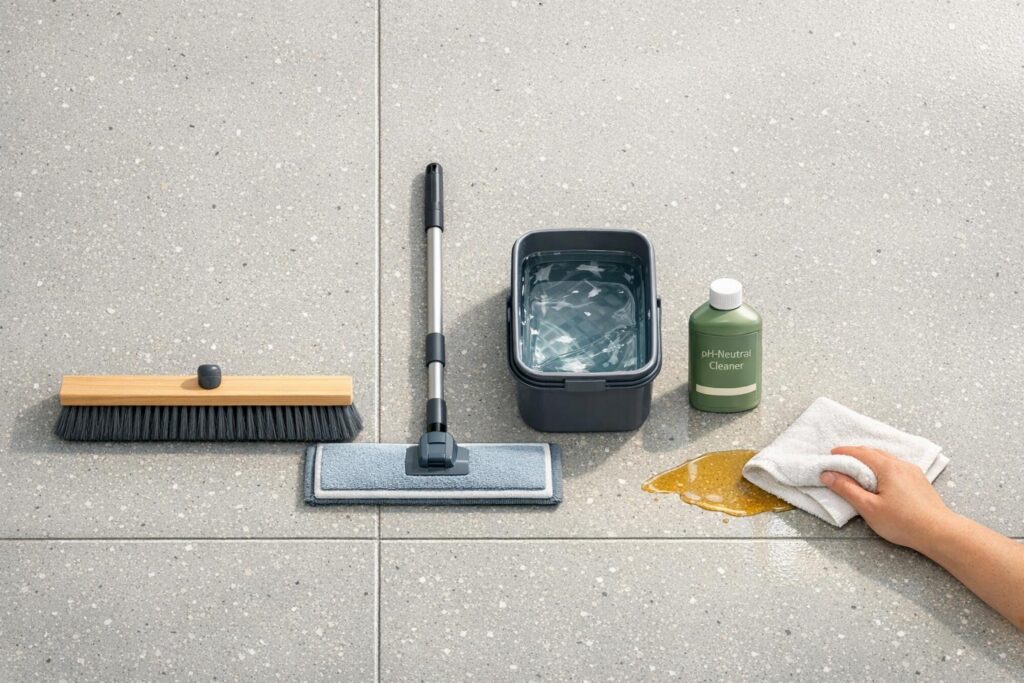
Polyurea floors are durable and can last 15–25 years with proper care, but neglecting maintenance can cut their lifespan in half. Regular cleaning is essential to preserve their appearance, functionality, and warranty. Most warranties require documented upkeep, and 80% of flooring failures are caused by neglect – not defects.
Here’s a quick breakdown of key cleaning practices:
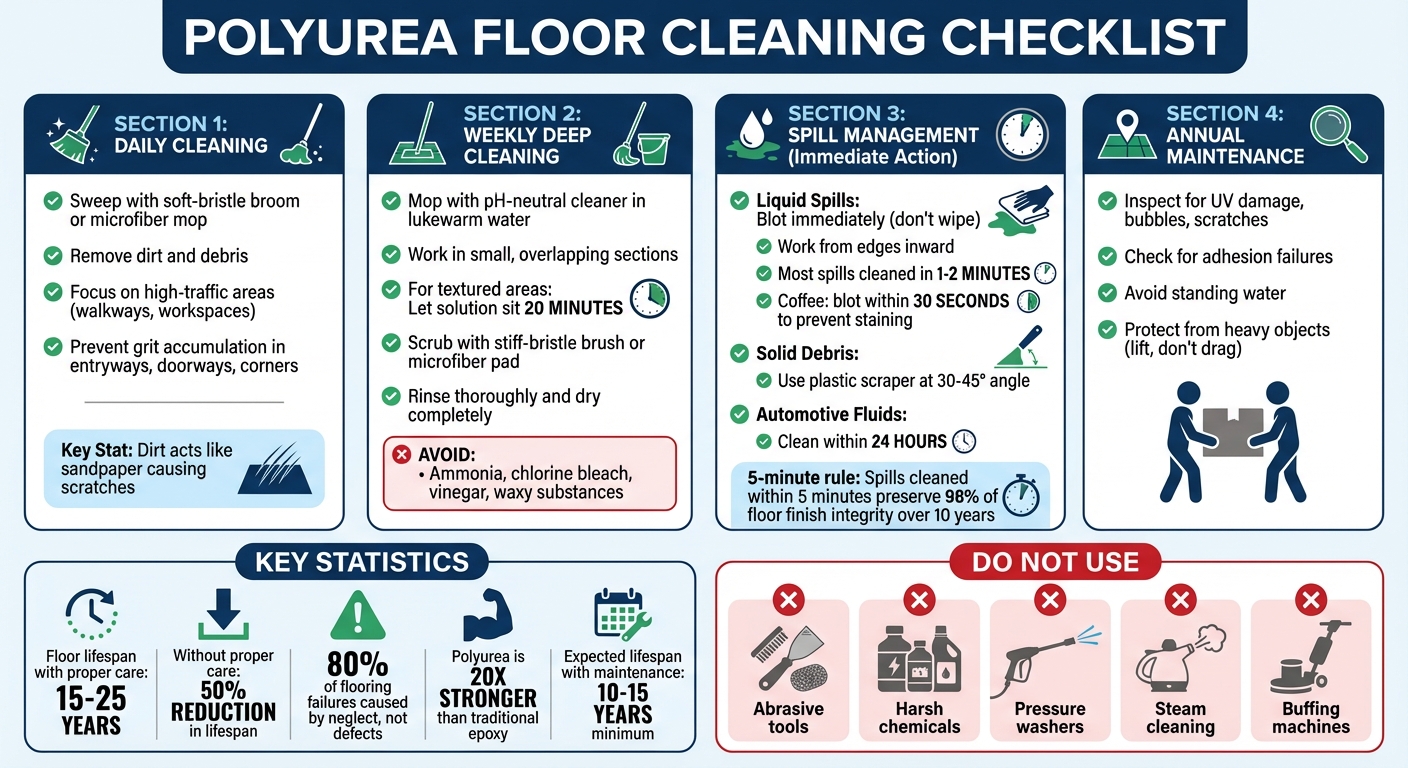
- Daily Cleaning: Sweep with a soft-bristle broom or microfiber mop to remove dirt and debris, especially in high-traffic areas.
- Weekly Deep Cleaning: Mop with a pH-neutral cleaner and focus on textured areas using a stiff-bristle brush or microfiber pad.
- Spill Management: Blot liquid spills immediately and remove solid debris carefully to prevent scratches or stains.
- Avoid Harmful Methods: Stay away from abrasive tools, harsh chemicals, pressure washers, and steam cleaning to protect the coating and warranty.
Polyurea Floor Cleaning Schedule: Daily, Weekly, and Long-Term Maintenance Guide
Cleaning a Polyurea Chip Floor
sbb-itb-4b4bb37
Daily Cleaning Steps
Daily cleaning is key to keeping your floors in good shape and avoiding premature wear. Dirt and debris are the main culprits here – they act like sandpaper, scratching the surface and causing damage that your warranty won’t cover. Stick to these steps to protect your floors and keep your warranty intact.
Sweep Away Dust and Debris
Grab a soft-bristle broom or a microfiber dust mop to clear away dirt. These tools are gentle on the surface and effective at removing debris without causing scratches. Steer clear of pressure washers, buffing machines, or scrubbing equipment – these can harm the finish and void your warranty. Pay extra attention to high-traffic areas like walkways and workspaces, as they tend to collect the most grime.
Prevent Grit Accumulation
Focus on spots like entryways, doorways, and corners where dirt tends to pile up. Even tiny particles can scratch the surface over time, leaving it dull. Cleaning up debris right away stops it from being ground into the flooring by foot traffic or moving equipment.
Stick to manual cleaning methods to avoid unnecessary damage and protect your warranty coverage.
Weekly Deep Cleaning
Daily upkeep is essential, but a weekly deep clean takes your floor care to the next level. This routine helps restore shine, remove stubborn grime, and maintain the surface’s pristine look. Regular mopping not only freshens up the floor but also stops dirt from embedding into textured areas. Thanks to polyurea’s chemical resistance, you can clean without worrying about damaging the finish.
Mop with pH-Neutral Cleaner
Start by mixing lukewarm water with a pH-neutral floor cleaner in a bucket. Stay away from cleaners containing ammonia, chlorine bleach, vinegar, or waxy substances. These can either harm the coating or leave a slippery residue that attracts dirt. Wring out your mop until it’s just damp – too much water can seep into unsealed joints and cause issues.
Work in small, overlapping sections while mopping. If your floor is newly installed, ensure the coating is fully cured before attempting a deep clean. You can test this by pressing your thumb on the surface – if it feels sticky or shifts under pressure, give it more time to cure. Once cured, the floor can handle regular mopping with ease.
Clean Textured and Anti-Slip Areas
Textured surfaces are great for grip but tend to trap dirt in their grooves. After mopping, allow the cleaning solution to sit for 20 minutes to loosen grime. Then, use a stiff-bristle brush or microfiber pad to scrub those textured spots, paying special attention to edges and corners. Rinse thoroughly with clean water.
For larger spaces, a rotary scrubber can help. Move it in overlapping lanes, following the grain of the flooring. Once cleaned, dry the floor using a wet vacuum or a dry mop – don’t let water pool on the surface. Keep foot traffic off the floor until it’s completely dry to avoid any streaks or damage.
How to Handle Spills and Stains
When regular cleaning doesn’t cut it, quick action on spills and stains becomes essential. Spills are common in garages, workshops, and other busy spaces. Dealing with them promptly not only keeps your floor looking great but also helps maintain its warranty. Acting fast protects your polyurea floor investment.
Blot Liquid Spills Immediately
For liquid spills, blot – don’t wipe. Wiping can spread the mess and push it deeper into the surface. Use a clean microfiber cloth or paper towel, starting from the outer edges and working inward to contain the spill. Most spills can be removed in 1–2 minutes with proper blotting. For larger accidents, like a spilled gallon of milk or juice, sprinkle an absorbent material such as cat litter over the area and let it sit for 15–30 minutes before blotting again. Quick action is especially important with coffee; blotting within 30 seconds can prevent tannins from causing permanent stains.
Remove Solid Debris
When dealing with solid debris – like food, mud, or gum – use a plastic scraper or even a credit card at a 30–45° angle to gently lift the material. This helps avoid scratching or gouging the floor. Afterward, sweep or vacuum the area using a soft brush attachment to remove any leftover particles. If there’s greasy residue, lightly spray a pH-neutral cleaner (such as Simple Green or Krud Kutter diluted 1:10 to 1:20), let it sit for 2–5 minutes, and then wipe it away gently.
Clean Up Automotive Fluids and Chemicals
Automotive fluids like motor oil, brake fluid, and transmission fluid can damage polyurea’s topcoat if left too long. While polyurea is resistant to many chemicals, it’s best to clean spills within 24 hours to avoid permanent etching. For oil spills, first absorb the excess liquid, then apply a degreaser like Oil Eater. Gently scrub with a nylon brush and rinse with clean water. For spills involving battery acid or other harsh chemicals, neutralize the area with a baking soda paste, blot thoroughly, and rinse well.
Atlas Concrete Coatings emphasizes the "5‑minute rule" – spills cleaned within 5 minutes help preserve up to 98% of the floor’s finish integrity over 10 years. Delays, however, can reduce this to around 70%. Acting fast ensures your floor stays in top condition and keeps its warranty intact.
Cleaning Methods to Avoid
Taking the right precautions not only keeps your polyurea floor looking its best but also ensures your warranty remains intact. Some cleaning methods can cause lasting damage and even void your warranty.
Don’t Use Abrasive Tools or Harsh Chemicals
Steer clear of tools like metal scrapers, steel wool, and wire brushes. These can leave scratches on your polyurea floor, which is particularly sensitive to abrasive materials. Instead, opt for plastic scrapers or soft nylon brushes to tackle tough spots.
As for chemicals, avoid substances like battery acid, brake fluid, paint stripper, and industrial solvents. These can cause the coating to peel, oxidize, or fail entirely when exposed to high concentrations of acids or strong detergents. Many polyurea warranties include clauses such as: "This limited warranty shall not apply in the case of… exposure of the products to solvents and/or higher concentrations of acids".
Avoid These Cleaning Techniques
Even with safe tools and chemicals, certain cleaning methods can still harm your floor. Pressure washers and mechanical scrubbing or buffing machines are a no-go – they can dull the finish and reduce its visual appeal. Additionally, the high-pressure water can force moisture beneath the coating, leading to bubbling or blistering. These methods are explicitly excluded in most warranties: "Our warranty excludes damage to or dulling of finish caused by… The use of pressure washers and scrubbing/buffing machines".
Steam cleaning is another risky option. The combination of heat and moisture can weaken the surface and allow water to seep into the coating. For deep cleaning, stick to safer alternatives like a mop, a pH-neutral cleaner, and a soft nylon brush for textured areas. These methods will effectively clean your floor without jeopardizing its integrity or warranty.
Long-Term Care and Maintenance
To keep your polyurea floor in top shape for years to come, regular upkeep is essential. With proper care, these coatings can last 10–15 years, even in high-traffic areas. Beyond your daily and weekly cleaning routines, these maintenance tips can help preserve the floor’s durability, secure your warranty, and extend its lifespan.
Inspect Floors Annually
Set aside time each year to inspect your floors, especially in areas that see heavy use. Look for signs of UV damage, such as yellowing, fading, or ambering, as well as physical issues like bubbles, blisters, scratches, scuffs, or adhesion failures. If your floor has a polyaspartic topcoat, ensure it’s still intact to maintain UV protection. Catching problems early not only helps you address them effectively but also ensures your warranty stays valid.
Though polyurea is about 20 times stronger than traditional epoxy, early detection of adhesion issues can prevent more extensive damage. In garages or industrial areas, double-check that the coating continues to resist stains and chemical corrosion as expected.
Avoid Standing Water
Polyurea coatings handle moisture well, but prolonged exposure to standing water can still lead to problems. To prevent this, avoid letting water pool on the surface. Use protective mats in areas prone to wetness, such as entryways or beneath water heaters, and ensure proper drainage to keep water from settling in low spots. This helps prevent bubbling or blistering caused by moisture seeping under the coating. Addressing these concerns also helps maintain your warranty.
Protect from Heavy Objects
While polyurea is known for its impressive impact resistance – some formulations can stretch up to 500% to absorb heavy loads – it’s still wise to handle heavy objects with care. Avoid dragging items across the floor. Instead, lift them or use furniture sliders to prevent scratches or other damage. This is especially important when moving metal objects or machinery that could scrape the coating. Taking these precautions helps maintain the floor’s appearance and structural integrity.
Conclusion
Taking care of your polyurea floor is all about sticking to a few simple habits. Regular sweeping, weekly mopping, and quickly addressing spills are key to keeping your floor in good shape and protecting your warranty. Steer clear of abrasive tools and harsh chemicals to avoid damaging the coating.
Routine maintenance not only helps your floor last longer but also creates a solid record for warranty claims. Keeping track of your cleaning and upkeep shows compliance with warranty requirements, which can save you a lot of hassle if issues arise. With proper care, polyurea floors can last 10–15 years or even longer, making them a smart, long-term investment.
While the day-to-day cleaning is manageable for most, don’t hesitate to call in professionals for more complex problems or occasional deep cleaning. Atlas Concrete Coatings offers durable polyurea-based floor coatings and can assist with maintenance, inspections, or repairs whenever you need expert help.
FAQs
What counts as “documented upkeep” for my warranty?
To keep your floors in great shape, stick to a routine that includes weekly cleaning with a microfiber mop and a pH-neutral cleaner. Add daily sweeping to get rid of dirt and debris, and plan for professional deep cleaning every few months. These steps not only preserve the look and durability of your floors but also help ensure they comply with warranty requirements.
How do I remove tire marks without damaging the topcoat?
To clean tire marks off a polyurea topcoat without causing damage, steer clear of harsh chemicals or abrasive tools. Instead, opt for a mild, pH-neutral cleaner paired with a microfiber mop for a gentle touch. Using blotting techniques can also lift the marks effectively while protecting the surface. Sticking to these methods during regular cleaning helps maintain the topcoat’s durability while keeping it free of tire marks.
Can I use a shop vac to clean up water after mopping?
Using a shop vac is a practical way to remove water after mopping polyurea floors. Pair this with a microfiber mop and a mild, pH-neutral cleaner for routine cleaning. The shop vac prevents water from pooling or penetrating the surface, helping to maintain the floor’s condition and durability. For stubborn stains or signs of wear, consider scheduling a professional deep cleaning.