

Weather can damage coated floors by causing cracks, peeling, and discoloration. Here’s how different conditions impact polyurea-coated surfaces:
- Temperature Extremes: High heat speeds up curing, making application harder, while cold slows curing, risking weak adhesion. Controlled substrate temperatures are critical.
- Humidity and Moisture: High humidity can cause defects like blushing or bubbles. Moisture interrupts bonding, leading to peeling.
- Freeze-Thaw Cycles: Freezing water expands, worsening cracks and causing delamination. Road salt adds to the damage by corroding the surface.
- UV Exposure: Prolonged sunlight can fade and degrade coatings without UV-resistant additives.
Seasonal Care Tips:
- Spring/Fall: Inspect for cracks and moisture. Use UV-resistant coatings for outdoor areas.
- Summer: Apply UV-protective topcoats to prevent fading.
- Winter: Remove salt and debris weekly, and use pH-neutral cleaners to maintain the surface.
Regular inspections, timely repairs, and proper maintenance tailored to seasonal challenges can extend the life of your coated floors.
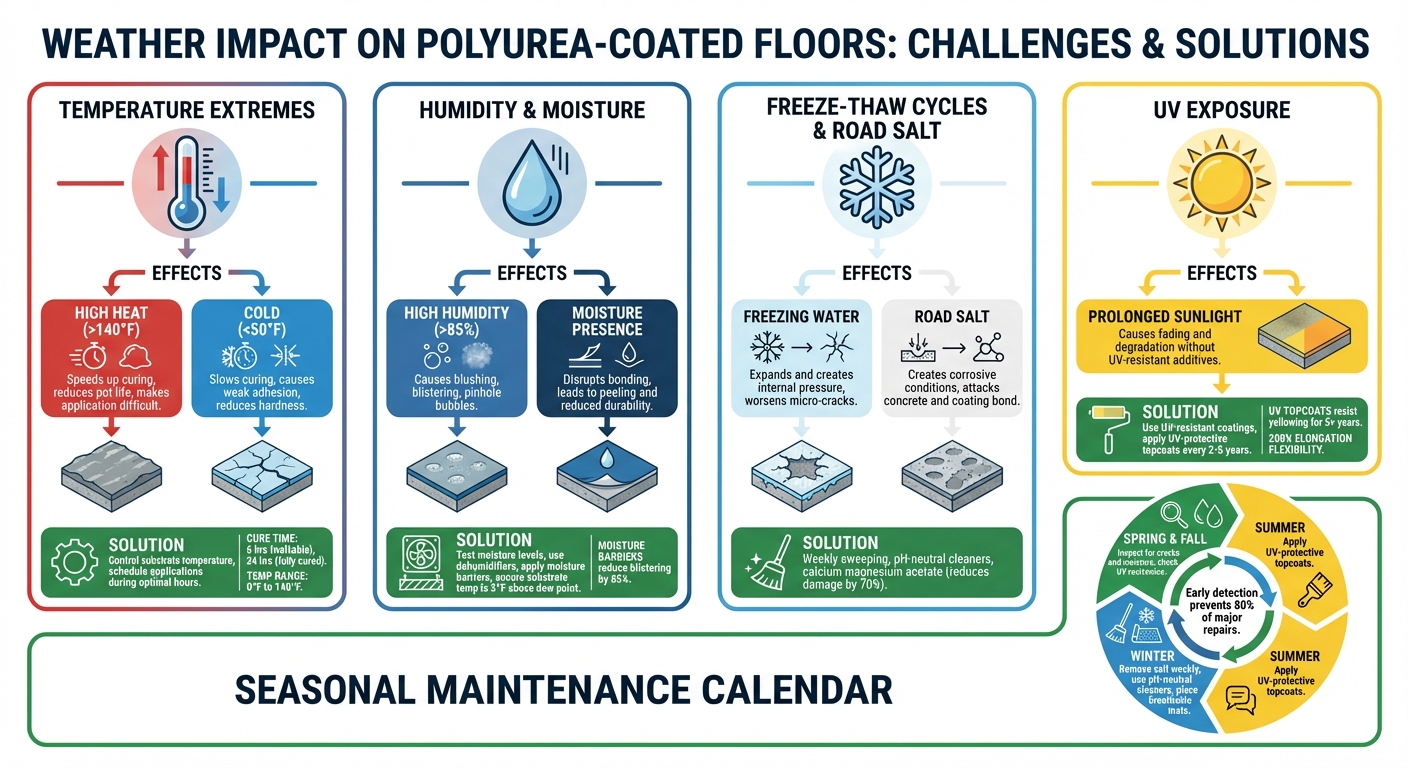
How Weather Conditions Damage Polyurea-Coated Floors: Effects and Solutions
How Weather Damages Polyurea-Coated Floors
Temperature Extremes and Expansion Cycles
Extreme heat can disrupt the application process. When substrate temperatures climb above 140°F, the chemical cross-linking in polyurea coatings speeds up significantly. This reduces the pot life, making the material unworkable before it can be properly applied. Additionally, excessive heat accelerates VOC evaporation, which may impact compliance with air quality standards.
Cold conditions bring their own set of problems. While polyaspartic coatings can be applied in temperatures as low as 0°F – far lower than the 50°F to 90°F range required for standard epoxies – cold weather slows the curing process. Uneven curing in localized cold spots can weaken the finish. Sudden temperature drops during curing may even interrupt the chemical reaction, leading to poor adhesion and reduced hardness over time.
Controlling substrate temperature is key. In hot climates, like the Desert Southwest, scheduling applications during cooler early morning hours can help avoid extreme heat. During colder months, heated enclosures can maintain consistent substrate temperatures, though uneven heating should be avoided as it may result in patchy curing.
Temperature fluctuations aside, humidity and moisture introduce additional challenges.
Humidity and Moisture Problems
Moisture disrupts the chemical bonding process. Polyurea coatings rely on penetrating concrete pores to form a strong bond. If moisture is present too soon, the coating may fail to integrate with the concrete and instead sit on the surface, which can lead to peeling and reduced durability.
"When a polyurea coating comes in contact with concrete, it bonds into the concrete while searching for moisture. Once the coating comes in contact with any moisture, it stops bonding to the concrete."
High humidity can create visible defects. When relative humidity exceeds 85%, moisture-sensitive coatings may develop issues like clouding (blushing), blistering, or tiny pinhole bubbles. These problems are especially common in humid regions like the Gulf Coast. Applying coatings during early morning hours, when humidity tends to be lower, can help. In enclosed spaces like basements, dehumidifiers are useful for managing ambient moisture during application and curing.
"Without proper dehumidification, that slight dampness in the air can cause your new floor to bubble up, leaving you frustrated and facing a potential redo."
Moisture content must always be tested before application. Installers should check the concrete’s moisture levels and, if necessary, apply a moisture barrier before the polyurea base coat. Using a hygrometer to confirm that the substrate temperature is at least 5°F above the dew point can help prevent invisible condensation, which weakens adhesion.
While moisture poses challenges, seasonal factors like freeze-thaw cycles and deicing chemicals introduce even more risks.
Freeze-Thaw Damage and Road Salt
Freezing moisture can damage the coating. When trapped moisture freezes, it expands, creating internal pressure that can worsen micro-cracks in the concrete. This often leads to spalling or delamination of the coating, particularly in outdoor areas exposed to repeated freeze-thaw cycles.
Road salt adds to the problem. Deicing chemicals create corrosive conditions that attack both the concrete and the coating bond. While polyurea coatings are resistant to many chemicals, their durability depends on proper application and moisture testing. If moisture levels are too high during application, the coating may not penetrate deeply enough, increasing the risk of peeling under winter conditions. These stresses, combined with freeze-thaw cycles, highlight the importance of precise installation.
Application flaws can worsen freeze-thaw damage. Defects like air bubbles caused by rapid mixing create weak points in the coating. However, polyurea’s fast cure time – walkable in 6 hours and fully cured within 24 hours – helps minimize the risk of moisture-related defects compared to slower-curing systems.
Sun Exposure
Adding to the challenges of temperature and moisture, prolonged exposure to sunlight can also impact the durability of polyurea coatings.
UV rays can degrade the coating over time. Extended sun exposure may cause fading and deterioration, especially in coatings that lack UV-resistant additives. To protect surfaces like driveways or patios, it’s important to choose a polyurea product specifically designed with UV resistance.
sbb-itb-4b4bb37
Seasonal Care for Polyurea-Coated Floors
Spring and Fall Maintenance
During spring and fall, it’s important to check the concrete’s moisture levels before performing any touch-ups. If seasonal rains have increased the moisture content, consider applying a moisture barrier before adding a base coat.
Temperature swings in these seasons call for extra care. Use the thumb test to check the coating’s cure status – press your thumb or finger against the surface. If it shifts under pressure or feels sticky, it hasn’t fully cured. For outdoor areas like patios and driveways, make sure the coating is labeled UV-resistant to help minimize fading during these transitional months.
Take time to inspect for any installation issues, such as small air bubbles, as these can lead to peeling or chipping over time. Addressing these concerns while the weather is mild can save you from dealing with more severe problems during extreme heat or cold.
Once spring and fall are handled, it’s time to prepare for the challenges of summer.
Summer Care
Outdoor surfaces face intense sun exposure in summer, so UV-resistant topcoats are a must to protect against fading and wear. Polyurea coatings are known for their quick curing times – usually within 24 hours – with foot traffic allowed after just 6 hours.
After tackling summer’s sun-related challenges, it’s equally important to gear up for winter’s unique demands.
Winter Preparation
Winter care starts with a thorough inspection in late fall to identify any wear or areas needing touch-ups before freeze-thaw cycles begin.
Sweep weekly using a soft-bristle broom to clear away road salt, gravel, and debris. While polyurea coatings resist chemical corrosion, accumulated salt can dull the surface over time. Use a floor squeegee to guide puddles from melted snow toward drains or the garage entrance, reducing the risk of standing water. For stubborn salt or dirt, clean with warm water and a pH-neutral cleaner, steering clear of harsh chemicals that might harm the topcoat.
Place breathable, non-rubberized mats at entry points and spots where vehicles are parked to capture moisture and salt before it spreads. In enclosed spaces like basements, running a dehumidifier during damp winter weeks can improve airflow and help prevent mildew. Although polyurea coatings create a non-porous seal that shields concrete from freeze-thaw damage, consistent upkeep ensures this protection is as effective as possible.
Problems with a Polyurea Concrete Coating (or Polyaspartic)
Year-Round Maintenance Practices
Keeping up with year-round maintenance is key to protecting surfaces from weather-related damage and ensuring their longevity.
Annual Inspections and Touch-Ups
Spring is the ideal time to inspect floors after the harshness of winter. Start by cleaning the surface with a mild detergent and then carefully check for signs of damage, such as hairline cracks, bubbles, blisters, or worn areas – paying special attention to edges and high-traffic zones. Use a flashlight to examine seams closely, and lightly tap the surface with a rubber mallet to detect hollow sounds that might indicate voids beneath. Experts suggest that catching issues early can prevent up to 80% of major repairs, especially when the damage affects less than 5% of the surface area.
For floors with UV-resistant topcoats, plan to reapply them every 2–5 years, depending on sun exposure. Outdoor spaces, like pool decks in sunny regions, may need more frequent attention. Look for signs of wear such as chalking, powdering, loss of gloss, or fading to determine when touch-ups are necessary. When performing touch-ups, sand the affected areas (keeping it to no more than 10 square feet), clean with isopropyl alcohol, and apply a compatible aliphatic polyurea topcoat. Use a roller for even application and consistent results.
Regular inspections and touch-ups are crucial for staying ahead of weather-related risks.
Weather Risk Management
Polyurea-coated floors face unique challenges from weather fluctuations, so targeted prevention is essential. Temperature swings can lead to expansion and cracking, which should be sealed immediately with polyurea caulk. Flexible coatings designed to block 95% of thermal damage are highly effective for preventing further issues. Moisture can also cause blistering, so proper drainage and the use of vapor barriers are critical. These measures can reduce blistering by as much as 85%.
Freeze-thaw cycles, especially when combined with road salt, can accelerate surface degradation. To combat this, rinse away salt after winter and use de-icing alternatives like calcium magnesium acetate, which can reduce damage by 70%. For example, a Florida pool deck that underwent annual spring inspections and UV topcoat reapplications every three years avoided blistering and saved $5,000 in replacement costs over a seven-year period.
Atlas Concrete Coatings‘ Weather-Resistant Solutions
Atlas Concrete Coatings offers systems specifically designed to handle tough weather conditions while maintaining floor integrity. Their polyurea chip systems are built for residential, commercial, and industrial use, combining broadcast vinyl chips with an aliphatic polyurea basecoat. These coatings provide excellent UV stability, resisting yellowing for over five years, and feature flexibility up to 200% elongation to handle temperature swings from 0°F to 140°F without cracking. Additionally, they offer complete waterproofing, blocking 100% of moisture penetration.
One major advantage of Atlas systems is their rapid curing time – just 4–6 hours – compared to the 3–5 days typically required for epoxy coatings. This allows for quick turnaround and minimal downtime. The coatings also resist road salt abrasion without delaminating and hold up against wind-blown debris thanks to their textured finish. In one case, an industrial garage in Chicago reported zero freeze-thaw issues over three winters, with the coating outperforming epoxy by 40% in durability tests. With compatible topcoats and a 20-year warranty available with annual inspections, Atlas Concrete Coatings provides a reliable solution for year-round maintenance across a wide range of U.S. climates, from humid coasts to snowy mountain regions.
Conclusion
Weather can take a serious toll on your floors. From temperature fluctuations and moisture to freeze-thaw cycles and UV exposure, these elements can weaken floor integrity over time. But here’s the good news: pairing seasonal care with durable, high-quality materials can go a long way in preventing damage and keeping your floors in top shape.
When it comes to materials, your choice matters. Flooring performance often hinges on the coating material’s ability to handle extreme conditions. This is especially critical in areas with harsh winters or scorching summer heat.
Atlas Concrete Coatings offers polyurea systems designed to withstand these challenges. Known for their quick installation and long-lasting durability, these coatings provide reliable protection across various climates in the U.S.
As highlighted in our seasonal care advice, regular maintenance is key. Routine inspections, timely repairs, and keeping an eye on environmental factors – like humidity levels above 85% – are essential steps to ensure your floors stay strong and functional.
FAQs
What’s the best temperature range to apply a polyurea floor coating?
The recommended temperature range for applying a polyurea floor coating spans from -40°F to 250°F. This wide range allows for proper curing and ensures strong adhesion, no matter the weather. For the best outcome, always stick to the manufacturer’s instructions.
How can I tell if moisture or humidity will cause my coating to fail?
Moisture or humidity can wreak havoc on coatings, causing problems like blistering, peeling, or delamination if the surface isn’t tested thoroughly before application. To avoid these issues, it’s crucial to assess vapor risks and confirm that the surface is both dry and porous. Using ASTM-standard testing methods ensures accuracy and reliability in this process. By preparing the surface correctly, you can minimize vapor-related problems and help the coating maintain its durability and performance over time.
How do I protect a coated garage floor from winter salt and freeze-thaw damage?
Keeping your coated garage floor in good shape during winter takes a little effort, but it’s worth it. Regular cleaning is key – salt and de-icing chemicals can build up and slowly wear down the coating if left unchecked. Use gentle cleaning methods and avoid harsh chemicals that might strip away the protective layer.
Want extra protection? Apply a sealant made for winter conditions. This can help block salt and prevent damage caused by freezing and thawing cycles. And don’t forget – clean up any spills or residues right away to keep that coating strong and ready to handle the cold months ahead.