
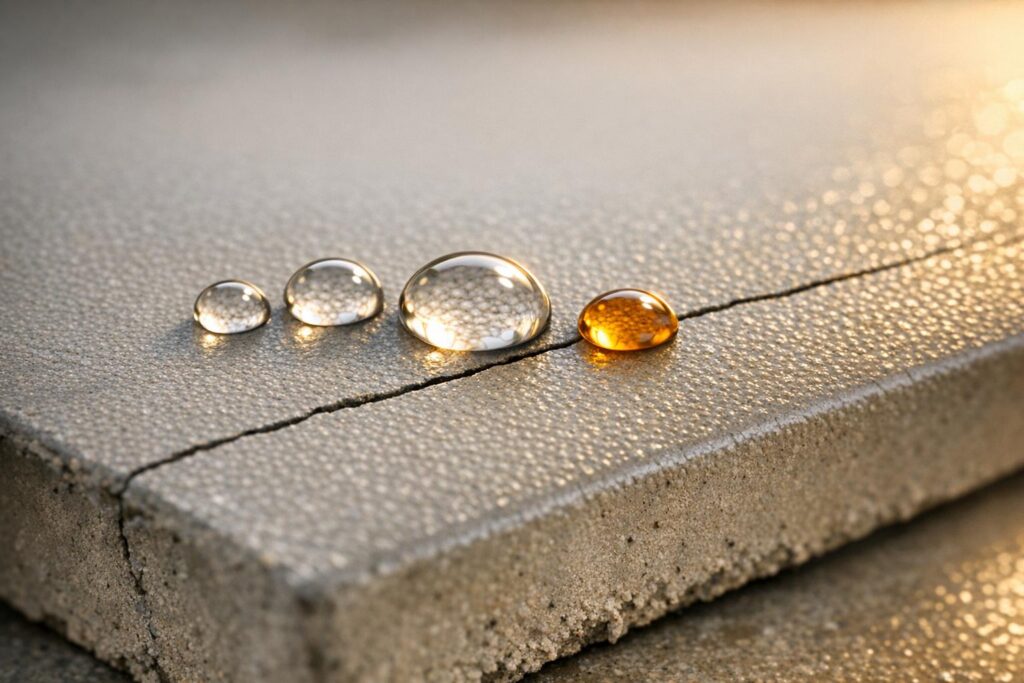
Polyurea is a durable floor coating known for its flexibility, impact resistance, and fast curing time. Unlike epoxy, it withstands temperature changes, UV exposure, and chemical spills while lasting up to 30 years with proper care. Here’s what you need to know:
- Strength: Polyurea is 20x stronger than epoxy and stretches over 300% without breaking.
- UV Stability: Aliphatic polyureas resist sunlight, preventing yellowing.
- Temperature Performance: Operates between -30°F to 140°F without cracking.
- Lifespan: 10–30 years depending on traffic and maintenance.
- Maintenance: Regular cleaning and protective measures extend its life.
Polyurea outperforms epoxy in longevity, flexibility, and resistance to wear, making it a smart choice for residential, commercial, and industrial spaces.
What Makes Polyurea Durable
Impact and Abrasion Resistance
Polyurea’s durability starts with its unique chemical structure. It forms a urea linkage through a rapid reaction between an isocyanate and an amine resin, creating a fast-curing elastomer that’s about 20 times stronger than traditional epoxy coatings. To put this into perspective, polyurea can stretch over 300% before breaking, whereas epoxy coatings typically fail at just 5–10% elongation. This remarkable flexibility allows polyurea to handle impacts from dropped tools or heavy machinery without cracking or chipping. Its Shore hardness, which usually ranges from Shore A 85–95 to Shore D 40–50, provides a perfect balance between toughness and flexibility.
"Epoxy cures into a very hard but brittle plastic… Polyurea, on the other hand, cures into a tough elastomer." – Marvel Coatings
These properties make polyurea a go-to choice for high-traffic areas like warehouse floors and garage spaces. Beyond its impact resistance, polyurea also offers protection against chemical exposure and UV damage.
Chemical and UV Resistance
Polyurea doesn’t just stand up to physical wear – it also resists chemical spills and UV light. Its formulation is designed to handle exposure to harsh chemicals and sunlight, making it suitable for both indoor and outdoor environments. However, the type of polyurea matters: aromatic polyureas (made with MDI) can discolor when exposed to UV light, while aliphatic polyureas (made with HDI) are fully UV-stable and maintain their color.
"There is no such thing as a truly UV-stable epoxy." – Marvel Coatings
This distinction highlights polyurea’s versatility, particularly in outdoor settings where UV exposure is unavoidable.
Temperature and Waterproofing Performance
Polyurea also shines in extreme conditions, maintaining its performance in temperatures ranging from -30°F to 140°F. Unlike epoxy, it expands and contracts with the substrate, avoiding brittleness in fluctuating temperatures.
Its waterproofing capabilities are another standout feature. Applied as a seamless, flexible membrane, polyurea creates a moisture barrier that withstands hydraulic pressure. This continuous application eliminates joints where water might seep through, ensuring the protection of the underlying concrete. For surfaces subject to movement or thermal changes, polyurea acts like a protective skin, sealing minor cracks that would compromise stiffer coatings. These qualities make polyurea a durable solution for both residential and industrial applications.
sbb-itb-4b4bb37
The strength tests of Polyurea coating
What Affects How Long Polyurea Lasts
Polyurea is known for its toughness, but its actual lifespan hinges on factors like installation quality, regular upkeep, and the environment where it’s applied.
Installation Quality
The difference between a polyurea coating lasting 5 years versus 25 years often comes down to how well the surface is prepared before application. According to the Polyurea Development Association, improper surface preparation accounts for 90% of coating failures. Professional installers take several steps to ensure durability: they clean the concrete to remove oils and contaminants, fix cracks with epoxy fillers, and use methods like shot blasting or diamond grinding to create a CSP 3–5 surface profile. This process ensures a strong mechanical bond that supports long-term adhesion.
Temperature control during application is equally important. Professionals rely on high-pressure, heated equipment (operating at 2,000–3,000 PSI) and maintain surface temperatures between 50°F and 90°F. DIY applications often fall short due to poor mixing, uneven coating thickness, or inadequate environmental controls. Such mistakes can cut the lifespan of the coating drastically – from over 20 years to less than 5 years in high-traffic areas. For example, a California warehouse with professional installation lasted 18 years under heavy use, while a Texas garage with a DIY coating failed after just 4 years due to poor adhesion. Beyond installation, ongoing care is essential for getting the most out of a polyurea coating.
Routine Maintenance
Regular maintenance can add 30–50% to the lifespan of a polyurea coating. Simple steps like weekly sweeping or hosing remove abrasive debris, while monthly cleaning with a pH-neutral cleaner (like Simple Green) helps tackle stains without harming the surface. To avoid damage, steer clear of pressure washing above 3,000 PSI or using harsh chemicals like bleach or ammonia, which can etch the coating. Quarterly inspections are key for spotting and repairing small issues, like cracks or chips, before they worsen. In spill-prone areas, immediate cleanup with a degreaser followed by rinsing is recommended. Case studies show that auto shop floors with regular maintenance can last over 20 years, even with constant exposure to oil and gasoline. However, the environment and how the coating is used also play a big role in its longevity.
Environmental and Usage Conditions
The amount and type of traffic a polyurea-coated surface endures significantly impact its durability. For instance:
- Light residential use (e.g., home garages): 20–30 years
- Moderate commercial use: 15–20 years
- Heavy industrial environments (e.g., forklift traffic): 10–15 years
One study noted that polyurea lasted 12 years in a warehouse with daily forklift use, compared to up to 25 years in a low-traffic residential setting.
Other factors, like UV exposure and chemical spills, also affect longevity. Standard polyurea may yellow or chalk under prolonged sunlight, reducing its lifespan by 10–20% over a decade. Aliphatic polyureas, which are more resistant to UV damage, are a better choice for sunny areas like Florida. With a UV-stable aliphatic topcoat, outdoor surfaces can last 15–25 years. On the chemical side, while polyurea resists most substances within a pH range of 2 to 12, prolonged exposure to strong solvents can weaken the coating and thin it by 20–40%. To combat these issues, prompt spill cleanup and applying chemical-resistant topcoats in industrial settings are vital for preserving the coating’s protective layer.
Polyurea vs. Other Coating Materials
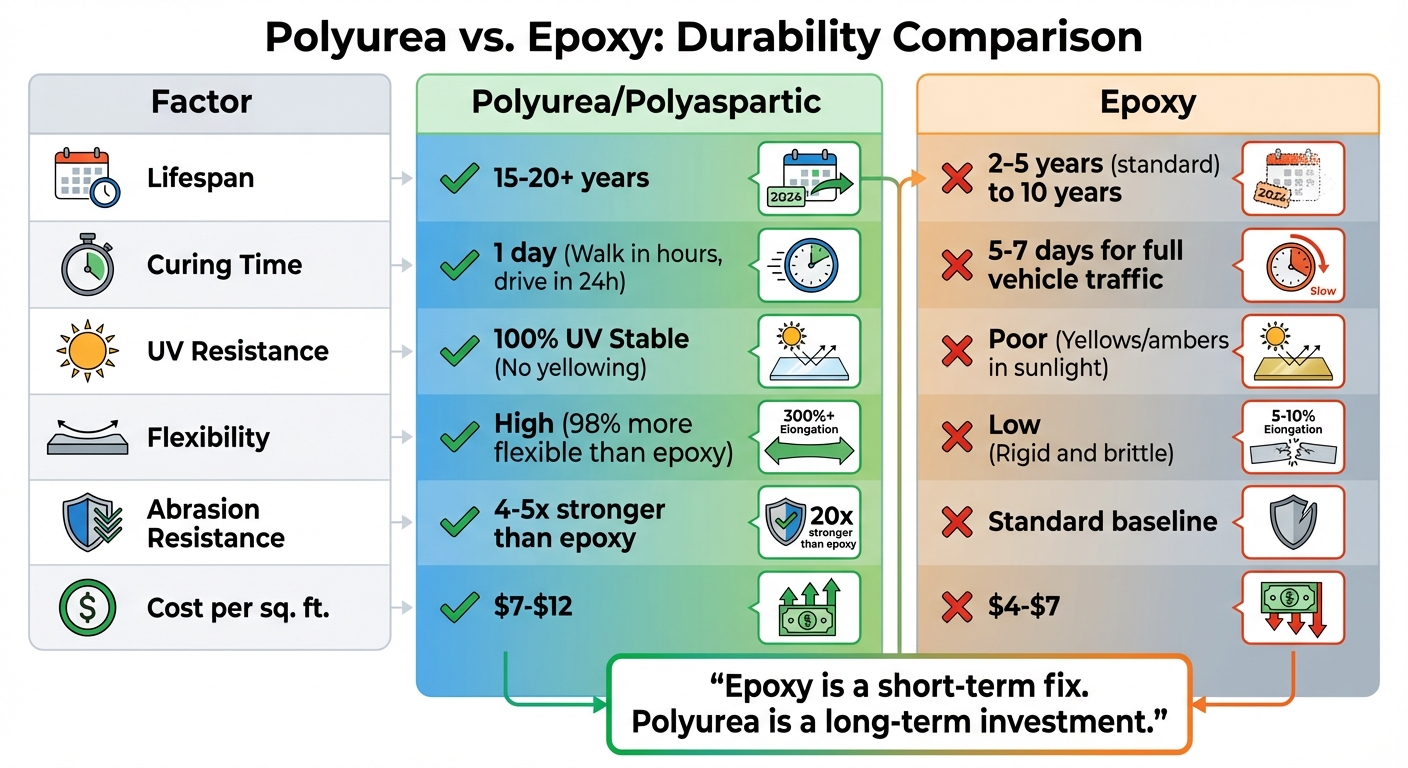
Polyurea vs Epoxy Floor Coating Durability Comparison
Polyurea has built a reputation for its durability, but how does it stack up against epoxy? This comparison highlights why polyurea often takes the lead in demanding applications.
When deciding on a floor coating, understanding the key differences between polyurea and epoxy can help you make a better choice. Factors like performance, longevity, and cost reveal why polyurea is often preferred.
Durability Comparison Table
When it comes to durability, polyurea consistently outshines epoxy. For starters, polyurea is 98% more flexible than epoxy, allowing it to adapt to temperature-driven expansions and contractions in concrete without cracking. Epoxy, on the other hand, tends to be rigid and brittle, which leads to issues like spiderweb cracks and delamination as the concrete shifts.
Another standout feature of polyurea is its ability to form a deep molecular bond by penetrating into the concrete pores. In contrast, epoxy merely adheres to the surface. This difference explains why epoxy is prone to "hot-tire pickup", where the heat from tires softens the coating and causes it to peel. Polyurea’s strong bond and heat resistance prevent such problems.
| Factor | Polyurea / Polyaspartic | Epoxy |
|---|---|---|
| Lifespan | 15–20+ years | 2–5 years (standard) to 10 years |
| Curing Time | 1 day (Walk in hours, drive in 24h) | 5–7 days for full vehicle traffic |
| UV Resistance | 100% UV Stable (No yellowing) | Poor (Yellows/ambers in sunlight) |
| Flexibility | High (98% more flexible than epoxy) | Low (Rigid and brittle) |
| Abrasion Resistance | 4–5x stronger than epoxy | – |
| Cost per sq. ft. | $7–$12 | $4–$7 |
"Epoxy is a short-term fix. Polyurea is a long-term investment." – Floortek Coatings
These differences clearly illustrate polyurea’s superior performance and durability, setting it apart as a more reliable option.
Where Polyurea Performs Best
The comparison makes it clear: polyurea shines in high-demand environments. For instance, industrial facilities with heavy machinery and constant traffic benefit from polyurea’s abrasion resistance, which is 4–5 times stronger than epoxy’s. This durability makes it ideal for warehouses and commercial kitchens, where floors endure significant wear from foot traffic and equipment movement.
Outdoor spaces are another area where polyurea takes the lead. Epoxy’s lack of UV stability results in yellowing and discoloration when exposed to sunlight, making it unsuitable for patios, pool decks, or driveways. In contrast, polyurea combined with a polyaspartic topcoat remains 100% UV stable, ensuring it retains its appearance over time.
For residential garages, polyurea offers distinct advantages. It resists hot-tire pickup and automotive fluid damage, issues that frequently plague epoxy coatings. Additionally, in regions with extreme temperature changes, such as areas with freeze-thaw cycles, polyurea’s flexibility prevents cracking and chipping, which are common problems with epoxy.
"The biggest flaw of epoxy is its hardness… when your concrete slab moves with seasonal temperature swings, the brittle epoxy can’t keep up. This stress causes it to crack, chip, and delaminate." – Floortek Coatings
How to Maintain Polyurea Coatings
With proper care, polyurea coatings can last anywhere from 15 to over 25 years. For high-traffic areas, daily sweeping helps remove abrasive grit that can cause micro-scratches. In residential garages, a weekly mop using a neutral pH cleaner like diluted Simple Green helps maintain the coating’s finish. For commercial spaces, more frequent attention is necessary – industrial floors exposed to chemicals benefit from bi-weekly deep cleaning to preserve the coating’s integrity. Below, we’ll cover cleaning tips, protective measures, and the benefits of warranties to ensure your polyurea coating stays in top shape.
Cleaning and Care Best Practices
A consistent cleaning routine is essential for keeping polyurea coatings durable and looking great. The tools you use are just as important as how often you clean. Opt for soft nylon brushes or microfiber mops to avoid scratching the surface. If you’re using a pressure washer, keep it under 2,000 PSI to prevent gouging the coating. On the flip side, tools like wire brushes or high-pressure washers exceeding 3,000 PSI can cause significant damage – even to polyurea’s tough surface.
For homeowners, sweepers work well for regular cleaning. Commercial facilities might benefit from auto-scrubbers paired with neutral detergents, while industrial managers often rely on ride-on sweepers for larger areas. To avoid compatibility issues, always test new cleaners on a small, inconspicuous area before applying them widely.
Protecting Your Polyurea Coating
Taking steps to protect your polyurea coating can save you from costly repairs down the road. Simple measures like placing rubber mats at entryways can trap grit and reduce impact damage by up to 70%. For heavy equipment or furniture, use pads to prevent dents, and avoid dragging items across the floor – sliders or dollies are a safer choice. In warehouses, marking traffic lanes with tape can help guide forklift operators and protect vulnerable areas.
According to Atlas Concrete Coatings, customers who adopt these protective practices have reported zero warranty claims over 10 years on their polyurea chip systems. One example from a residential garage showed that using entry mats alone extended the coating’s lifespan from 15 to 25 years by keeping tracked-in abrasives off the surface.
Atlas Concrete Coatings‘ Lifetime Warranty
Atlas Concrete Coatings offers a lifetime warranty on their polyurea-based chip floor coatings, covering peeling, chipping, and staining under normal use. To keep the warranty valid, professional installation and basic maintenance – such as quarterly cleaning with pH-neutral products – are required. The warranty is transferable to new property owners and provides indefinite coverage for material defects. Over time, this could save homeowners $5,000-$20,000 in repair costs. This guarantee highlights the durability of their customizable polyurea systems when paired with regular care, emphasizing the long-term value detailed throughout this guide.
Conclusion
What Homeowners and Businesses Should Know
Polyurea stands out for its impressive impact absorption and elasticity, thanks to its microphase-separated structure. These properties not only make it resistant to substances like brake fluid and gasoline but also allow it to perform reliably under extreme temperature swings. With thermal decomposition starting between 572°F and 608°F, it’s built to handle tough conditions. These qualities make polyurea an excellent choice for challenging environments.
Its fast curing time reduces downtime, and its proven track record in protecting military vehicles and industrial containment systems highlights its dependability.
Working with Atlas Concrete Coatings
Atlas Concrete Coatings uses these strengths to provide top-notch flooring solutions. Their polyurea-based chip floor coatings are designed for durability and customization, ideal for residential garages, commercial spaces, and industrial facilities across Pennsylvania and New Jersey. With a lifetime warranty covering peeling, chipping, and staining under normal use, they offer property owners long-lasting confidence.
Their range of services includes chip floor coatings, pool deck resurfacing, concrete repair, and heavy-duty industrial flooring. All options feature UV-resistant and slip-resistant properties, ensuring both safety and longevity. Free consultations help you choose finishes that maximize polyurea’s outstanding durability, reflecting Atlas Concrete Coatings’ commitment to quality and customer satisfaction.
FAQs
Is polyurea worth the higher upfront cost?
Yes, polyurea is worth the higher upfront cost because of its outstanding durability, resistance to wear and tear, and extended lifespan. These features significantly reduce maintenance and replacement expenses in the long run. Its reliability makes it a smart choice for long-term flooring solutions.
How do I know if my concrete is ready for polyurea?
To get your concrete surface ready for polyurea, it’s essential to start with a clean, dry, and debris-free surface. Remove any grease, old coatings, or contaminants. Address cracks or damaged areas by repairing them, and mechanically profile the surface to create the right texture. Don’t skip testing for moisture and porosity – this helps spot potential vapor issues. Proper preparation is key to achieving strong adhesion and long-lasting results.
Do I need a UV-stable topcoat for my floor?
A UV-stable topcoat is strongly recommended for polyurea floors. This layer acts as a shield against yellowing and fading caused by prolonged exposure to sunlight, helping the floor retain its color and appearance for years to come.