

Want a pool deck that’s durable, stylish, and safe? In 2025, the focus is on long-lasting coatings, earthy colors, and slip-resistant textures. Homeowners are choosing materials like polyurea and polyaspartic coatings for their toughness and flexibility, while decorative overlays mimic natural stone or wood for a high-end look. Here’s what you need to know:
- Top Materials:
- Acrylic: Budget-friendly ($2–$4/sq. ft.), cool-to-touch, needs reapplication every 3–5 years.
- Epoxy: Durable, customizable, but UV-sensitive.
- Polyurea/Polyaspartic: Extremely durable, fast-curing, lasts 20+ years, costs $6–$9/sq. ft.
- Design Trends:
- Earthy tones like sandstone and taupe are popular.
- Decorative overlays and textured finishes improve aesthetics and safety.
- Climate-Specific Choices:
- Coastal areas need non-porous coatings to resist salt and moisture.
- Cold climates benefit from flexible coatings to handle freeze-thaw cycles.
- Sunny regions require UV-resistant coatings and lighter colors to reduce heat.
Professional installation is key – 80% of coating failures happen due to poor prep. Companies like Atlas Concrete Coatings offer durable, slip-resistant finishes with warranties up to a lifetime.
Looking for a pool deck that lasts? These trends combine durability, safety, and style to create the perfect outdoor space.
25 Stunning Pool Deck Ideas | Elevate Your Outdoor Space!
sbb-itb-4b4bb37
Popular Pool Deck Coating Materials in 2025
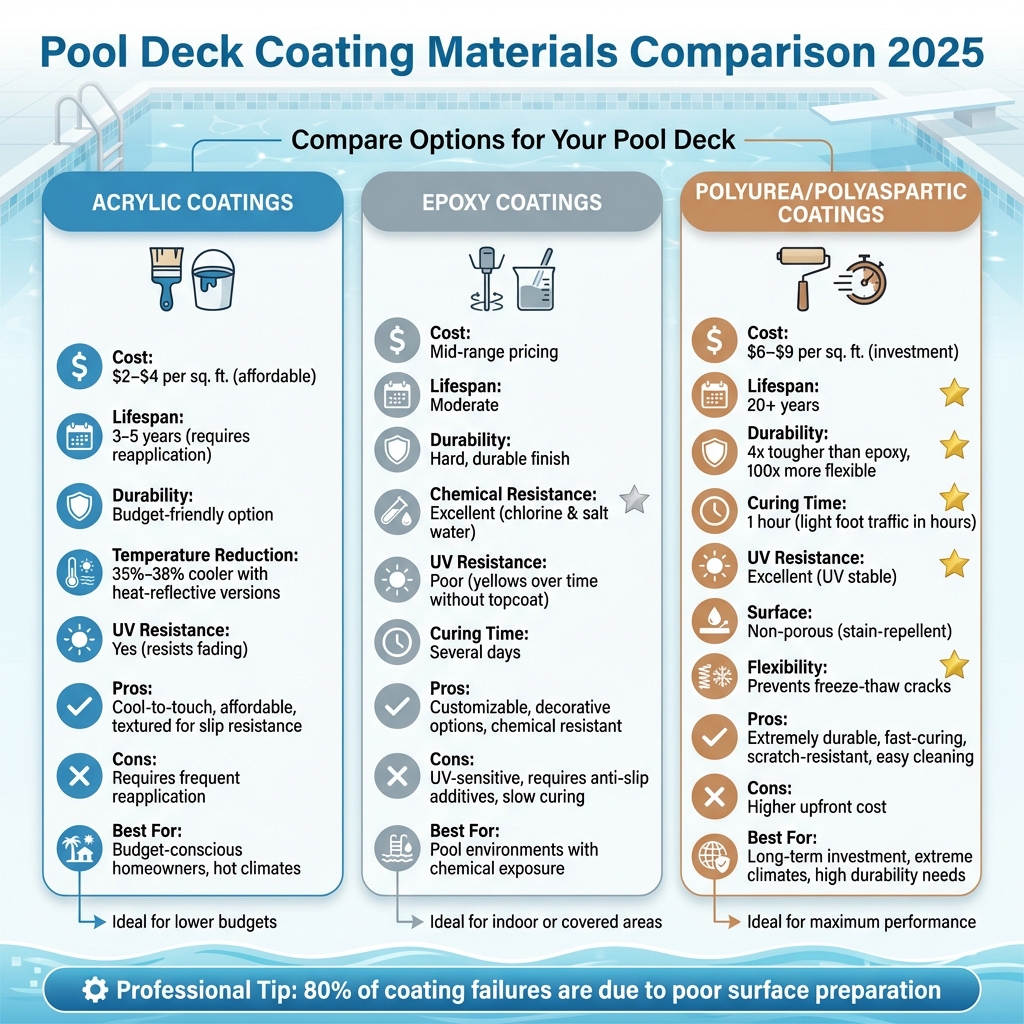
Pool Deck Coating Materials Comparison: Cost, Durability & Features 2025
In 2025, three coating systems dominate the pool deck scene, each catering to different needs based on budget, climate, and project timelines. Here’s a closer look at their standout features and potential drawbacks.
Acrylic Coatings
Acrylic coatings, priced at $2–$4 per square foot, are a budget-friendly choice that keeps surfaces cool, especially in heat-reflective versions, which can lower temperatures by 35%–38%.
"I can stand barefoot on the pool deck in full sun on the hottest day of the year." – Verified Customer, Galaxy Concrete Coatings
These coatings resist UV fading and can be textured for better slip resistance. However, they do require reapplication every 3–5 years to maintain their effectiveness.
Epoxy Coatings
Epoxy coatings offer a hard, durable finish with excellent chemical resistance against chlorine and salt water, making them ideal for pool environments. They also allow for decorative customization, adding a personalized touch to your deck.
On the downside, epoxy is UV-sensitive and can yellow over time unless protected by a topcoat. The curing process takes several days, and anti-slip additives are necessary to ensure safety on wet surfaces.
Polyurea and Polyaspartic Coatings
Polyurea and polyaspartic coatings stand out for their durability and flexibility – up to four times tougher and 100 times more flexible than epoxy. This flexibility helps prevent freeze-thaw cracks by expanding with the concrete.
Polyaspartic coatings cure quickly, typically within an hour, allowing light foot traffic in just a few hours. They boast a lifespan of over 20 years but come at a higher cost, ranging from $6–$9 per square foot.
"Polyaspartic floor coatings cure fast, flex with your concrete, and resist winter damage better than epoxy." – Everlast Concrete Coatings
Polyurea coatings provide exceptional scratch resistance and UV stability. Their non-porous surface repels stains, making cleaning as simple as using soap and water. Atlas Concrete Coatings utilizes polyurea systems for UV- and slip-resistant finishes that are fully customizable. These materials reflect the 2025 trend toward durable and stylish pool deck solutions.
Design Trends for Pool Deck Coatings
Decorative Overlays and Stamped Patterns
Stamped concrete overlays are a go-to option for homeowners looking to achieve the upscale look of flagstone, slate, brick, or even wood – without the hefty price tag. These overlays typically cost $6–$12 per square foot.
For those who love sleek, modern designs, spray knockdown finishes (often called "cool decks") are a popular choice. These textured surfaces not only stay cool to the touch – even in scorching triple-digit temperatures – but also offer excellent comfort for bare feet. Similarly, acrylic lace overlays are a hit in hot climates, as they remain cool under direct sunlight while providing much-needed slip resistance.
These finishes are shaping the aesthetic direction of pool decks, bringing exciting possibilities for color and design into focus for 2025.
Popular Colors for 2025
Color is just as important as texture when it comes to creating the perfect pool deck. In 2025, warm earth tones are taking center stage, replacing the once-dominant gray. Shades like sandstone, taupe, terracotta, and muted greens are in demand, offering a natural, serene vibe that blends seamlessly with surrounding landscaping. Beyond their visual appeal, lighter finishes can also help reduce surface temperatures by as much as 30°F compared to standard concrete, making them both stylish and practical.
For homeowners looking to make a bold statement, vibrant accent colors like aqua blue, coral pink, and lime green are gaining traction. Terrazzo-inspired designs featuring multi-colored rubber granules or aggregate flakes are also trending, adding unique visual depth while maintaining slip-resistant properties.
Textured Surfaces for Slip Prevention
Safety is a top priority around pools, and textured finishes are a smart solution to prevent slips and falls. Aggregate finishes – featuring materials like pebbles, quartz, or glass – create a mosaic-like effect that enhances traction while offering a visually striking appearance. These surfaces are built to last, with an impressive lifespan of 15–20 years.
"Your pool deck is more than just a space around your pool; it’s the backdrop to countless summer memories. Choose a design that reflects your style and stands the test of time." – Design Expert, Extreme Concrete Makeover
Companies like Atlas Concrete Coatings are taking safety and durability to the next level by incorporating anti-slip additives into their polyurea systems. Their UV-resistant finishes not only maintain vibrant colors but also hold up against years of exposure to sunlight and pool chemicals. These advanced coatings ensure that homeowners don’t have to compromise on either style or safety when designing their pool decks.
Choosing Coatings Based on Climate
When it comes to pool deck coatings, climate plays a huge role in determining what will last and perform well over time. A coating that works perfectly in Arizona’s dry heat might crumble under Minnesota’s freezing winters. Understanding your local weather conditions is key to making the right choice and protecting your investment. Let’s dive into the challenges different regions face and the coatings that work best in each scenario.
Coastal and High-Humidity Regions
If you live near the ocean, salt spray and constant moisture are your pool deck’s biggest enemies. In these areas, non-porous coatings are essential to keep salt and moisture from seeping in. Coatings like polyaspartic and polyurea are top picks because they resist not only salt but also pool chemicals and chlorine, all while staying flexible enough to handle natural concrete movement.
One common mistake homeowners in coastal regions make is skipping proper surface preparation. Did you know that around 80% of coating failures happen because the prep work wasn’t done right? To ensure the coating bonds well, especially in salty environments, the concrete must be thoroughly cleaned, etched, and primed before applying the coating. In humid climates, professional installation becomes even more critical. High moisture levels can interfere with the curing process, weakening the coating’s adhesion if not handled correctly.
Cold Climates with Freeze-Thaw Cycles
In colder regions, freeze-thaw cycles can wreak havoc on concrete. Water seeps into tiny cracks, freezes, and expands, causing significant structural damage over time. Rigid coatings like tile, plaster, or epoxy struggle in these conditions because they can’t flex with the concrete as it expands and contracts, leading to seasonal failures.
Flexible coatings, such as polyaspartic, are a game-changer in these climates. Their ability to move with the concrete makes them highly resistant to winter damage. With proper maintenance, these coatings can last over 20 years and typically cost between $6 and $9 per square foot – a solid long-term investment.
Areas with Intense Sun Exposure
Regions with strong sunlight bring their own set of challenges. UV rays can cause untreated concrete and non-resistant coatings to fade, warp, or deteriorate over time. This makes UV-resistant coatings a must in sunny areas. Polyaspartic coatings are particularly effective, as they’re designed to maintain their finish even under harsh sunlight.
For added comfort, solar-reflective finishes can reduce surface temperatures by 30°F to 40°F, making your deck much cooler on hot days. Choosing light colors like white, tan, or light gray can also help reflect sunlight and keep surfaces from overheating. Don’t forget to repair any existing cracks before applying a coating to ensure proper adhesion. Companies like Atlas Concrete Coatings offer polyurea systems that block UV light and preserve vibrant colors, providing durable finishes that stand up to intense sun exposure.
Why Professional Installation Matters
Getting a professional installation for your pool deck coating isn’t just a luxury – it’s a necessity if you want durability and long-lasting results. Contractors use heavy-duty tools like industrial-grade high-pressure washers (around 3,000 PSI) paired with degreasing agents to get rid of dirt, mold, algae, and oils. After that, they bring in diamond grinders and shot blasters to prepare the surface, ensuring the coating adheres properly.
Surface Preparation and Application Process
The secret to a successful pool deck coating lies in the preparation. Contractors use diamond grinders and shot blasters to create a textured surface by opening up the concrete’s pores. This step is critical for ensuring the coating sticks well and lasts over time. They also use specialized moisture meters to check for excess moisture, which could lead to bubbles or peeling. Before applying the coating, structural cracks are repaired with epoxy injections, and any surface imperfections are smoothed out with polymer compounds, creating a flawless base.
Take Atlas Concrete Coatings, for example. Their polyurea-based pool deck resurfacing process starts with a primer that fills micro-cracks and establishes a strong, chemically compatible foundation. This attention to detail ensures their coatings can last anywhere from 10 to 20 years. It’s this kind of meticulous preparation that sets the stage for long-term durability and reliability.
Long-Term Performance and Warranties
When the surface is properly prepared, professional installation delivers benefits that go far beyond the initial application. Polyaspartic coatings, for instance, cost between $6 and $9 per square foot, but that investment pays off with a longer lifespan and warranty coverage. Many contractors offer warranties ranging from 10 years to a lifetime, and with minimal maintenance, these coatings can maintain their structural integrity for more than 15 years.
Atlas Concrete Coatings goes a step further by offering customizable finishes with their polyurea systems. These include slip-resistant textures, UV protection, and heat-reflective surfaces that can lower temperatures by as much as 38% compared to bare concrete. Plus, their chip systems come with a lifetime warranty, ensuring your investment is protected for the long haul. Serving Pennsylvania and New Jersey, Atlas Concrete Coatings also provides free consultations to help you choose the best coating for your climate and design preferences.
Conclusion
When choosing a pool deck coating in 2025, it’s all about finding the right mix of durability, safety, and style. Options like polyurea and polyaspartic coatings stand out for being up to 4 times tougher and 100 times more flexible than traditional epoxy. These coatings are built to handle freeze-thaw cycles and UV exposure, while reflective versions can reduce surface temperatures by as much as 38%.
Design trends for 2025 lean toward earthy tones and natural-look decorative overlays, giving pool decks a timeless and inviting appearance. Safety also remains a top priority, with slip-resistant textures enhanced by micro-abrasive particles that provide solid grip without being harsh on bare feet.
Matching your coating to your local climate is key. Whether you’re dealing with salt, extreme temperature shifts, or intense sunlight, choosing the right material ensures your pool deck lasts while complementing your design goals. And since 80% of coating failures result from poor surface preparation, professional installation is crucial.
Atlas Concrete Coatings specializes in polyurea-based pool deck solutions tailored to meet these demands. They offer customizable finishes, slip-resistant textures, and heat-reflective surfaces. Their chip systems come with a lifetime warranty, and they provide free consultations to help you select the best option for your climate and style. Serving Pennsylvania and New Jersey, their team handles every step – from prepping the surface to the final application – delivering results that can last 10 to 20 years. With their expertise, they address the challenges of durability, design flexibility, and climate-specific needs, ensuring a pool deck that’s built to last.
FAQs
What are the advantages of using polyurea and polyaspartic coatings on pool decks?
Polyurea and polyaspartic coatings are known for their strength, UV protection, and waterproof properties, making them a dependable option for pool decks. Their flexibility helps resist cracking, even under heavy use or changing weather conditions, ensuring your pool area stays in great shape.
These coatings also provide slip-resistant surfaces, adding an extra layer of safety in wet areas. Plus, their quick curing times mean installations are completed faster, letting you start enjoying your refreshed pool deck without long delays. Available in a wide range of finishes and colors, they not only improve functionality but also elevate the look of your outdoor space.
How does the local climate affect the choice of pool deck coatings?
When it comes to picking the right pool deck coating, your local climate is a major factor. In hot and sunny regions, like the southern United States, it’s crucial to choose coatings that can reflect sunlight and stay cool to the touch. This not only boosts comfort but also enhances safety. Coatings that resist UV damage and fading are especially favored in these areas, as they hold up better under intense sunlight.
If you live in areas with fluctuating temperatures or high humidity, like the Northeast or Midwest, polyurea coatings are a smart choice. They’re known for standing up to cracking, moisture issues, and harsh weather. By selecting a coating that suits your climate, you’re investing in a pool deck that will stay safe, durable, and looking great for years to come.
Why should I hire a professional for pool deck coating installation?
When it comes to pool deck coating installation, bringing in a professional can make all the difference. Their expertise and specialized tools ensure the coating is applied properly, avoiding common problems like cracks, peeling, or uneven spots.
Beyond just the basics, professionals can deliver slip-resistant finishes that boost safety while also enhancing the overall look of your pool area. With their experience, they know how to create a surface that holds up against heavy use, harsh weather, and the test of time. The result? A pool deck that’s not only durable but also a stylish and safe space you can enjoy for years.