

When working with polyurea coatings, the right tools are essential for precision, durability, and efficiency. Whether you’re handling residential, commercial, or industrial projects, proper equipment ensures consistent results and long-lasting performance. Here’s what you need to know:
- Sprayers: Graco XP and Reactor series are top choices. They ensure accurate mixing, maintain material temperature, and provide consistent coverage, with options for small jobs (10–25 lb/min) or high-production tasks (20–50 lb/min).
- Concrete Preparation: Surface preparation is critical. Husqvarna grinders (PG 450 for large areas, PG 280 for smaller spaces) and HEPA vacuums like the DE 110 SH ensure proper adhesion by creating the required surface texture (CSP 3–4).
- Application Tools: Rollers, squeegees, and spiked shoes are essential for even coating application, especially for touch-ups or textured surfaces. Mixing kits prevent errors and ensure proper chemical reactions.
Investing in high-quality tools minimizes errors, reduces downtime, and ensures professional results for every polyurea installation.
Polyurea Spraying & Graco Reactor E-XP2 Plural Component Machine & Fusion Gun in Operation
Sprayers for Polyurea Applications
When it comes to professional polyurea installations, having the right sprayer is non-negotiable. These machines are specifically designed to handle the unique challenges of fast-setting, two-component coatings. They ensure precise mixing, maintain the proper material temperatures, and provide consistent coverage across large surfaces. Among the top choices for professionals are the Graco XP series, known for its precision in plural-component applications, and the Reactor series, built for high-production tasks. Let’s dive into what makes these sprayers stand out.
Graco XP Sprayers for Plural-Component Polyurea
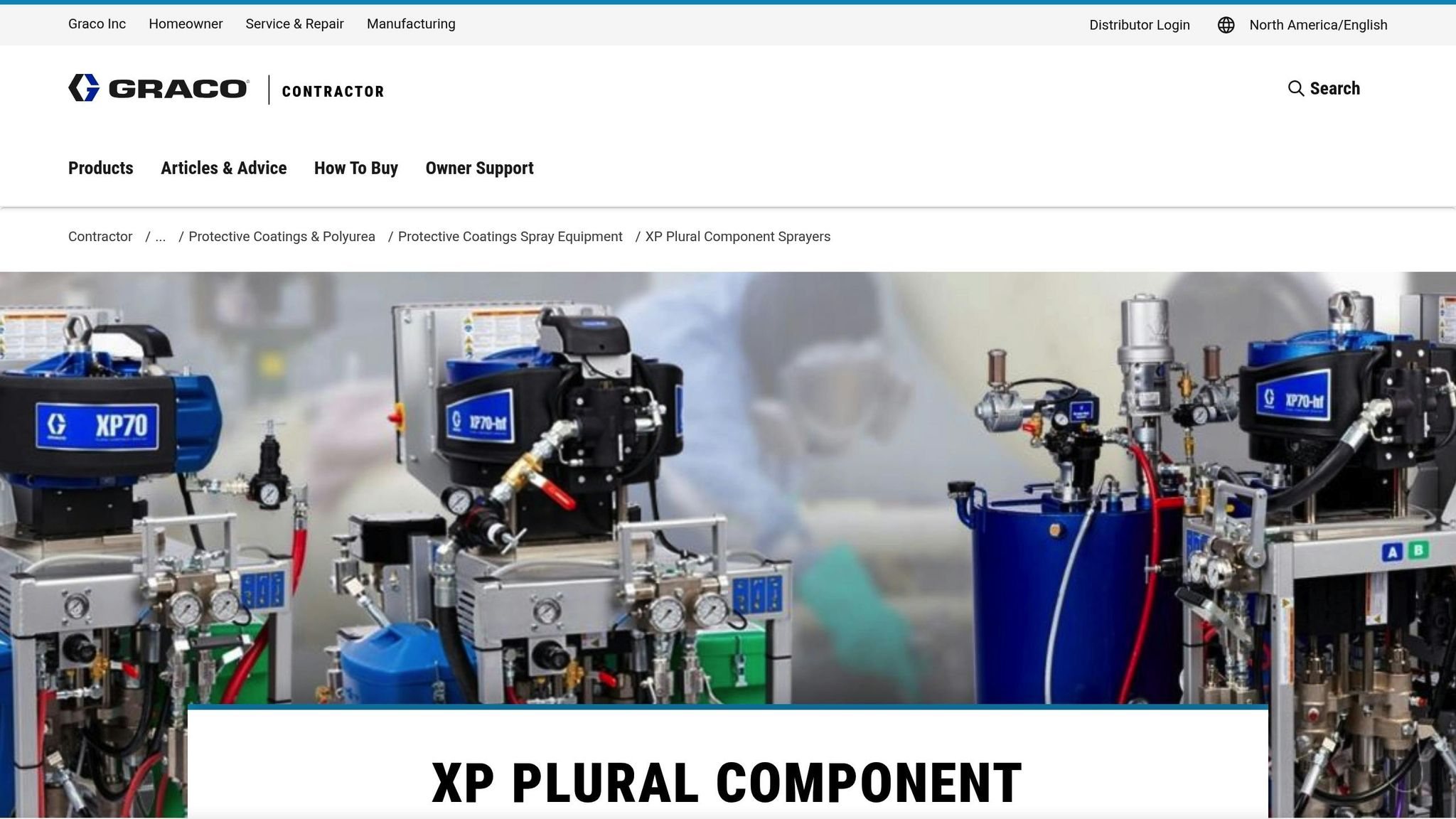
The Graco XP series is all about precision and reliability, particularly for fast-setting polyurea and polyaspartic coatings. These sprayers feature air motors capable of delivering up to 7,250 psi, making them perfect for handling high-viscosity materials and long hose runs without losing pressure. With 7-gallon hoppers as standard and a quick knockdown pump for easy maintenance in the field, the XP series is a versatile choice for a variety of projects.
- XP50: Best suited for low to medium-viscosity coatings, making it ideal for residential and commercial jobs.
- XP70: Designed for heavy-duty industrial applications, where durability and power are key.
Another standout feature is the remote mix manifold, which allows materials to be mixed closer to the spray gun. This not only reduces clean-up time but also minimizes the need for solvents compared to traditional hot potting methods.
Graco Reactor Sprayers for High-Production Applications
For projects that demand high output, the Graco Reactor series is a go-to option. These sprayers can deliver between 20 and 50 pounds of material per minute, making them perfect for large-scale operations like warehouses, industrial facilities, and expansive commercial spaces. Both the Reactor 2 and Reactor 3 models offer electric and hydraulic power options, ensuring they can handle continuous duty cycles with ease.
Key features include:
- Digital heat and pressure controls: These maintain precise material temperatures, which is critical for achieving consistent results.
- Reactor E-10hp: A portable model with a Boost Heat function that slashes startup time from over an hour to just 20 minutes.
- Reactor Connect system: This advanced feature tracks productivity metrics and monitors material ratios in real time, helping contractors streamline their workflow across multiple job sites.
For polyurea formulations that are sensitive to temperature, the Reactor series ensures coatings perform as intended, thanks to its precise control systems. These sprayers are built to meet the demands of high-production environments while maintaining accuracy and efficiency.
Concrete Surface Preparation Tools
Before diving into polyurea application, the foundation must be rock-solid – literally. Properly preparing concrete surfaces is essential for ensuring durable polyurea coatings. Over 90% of overlay failures stem from poor mechanical bonding due to insufficient surface texture. For polyurea to adhere effectively, the concrete needs a textured surface with enough "tooth" to create a strong mechanical bond. Smooth surfaces or those contaminated with grease, old sealers, or weak concrete layers simply won’t cut it.
The goal? Achieve a Concrete Surface Profile (CSP) of 3–4, which is ideal for polyurea bonding. Techniques like acid etching typically fall short, producing only a CSP of 2 or less – not suitable for long-term adhesion. This is where professional-grade grinders step in. These tools can remove up to 1/8 inch of material, leveling uneven joints and creating the perfect surface texture for bonding. When paired with a proper dust extraction system, they ensure the concrete is clean, profiled, and ready for coating. Let’s take a closer look at some of the top grinders and dust extraction systems designed for this crucial step.
Husqvarna PG 450 Floor Grinder for Concrete Surface Preparation
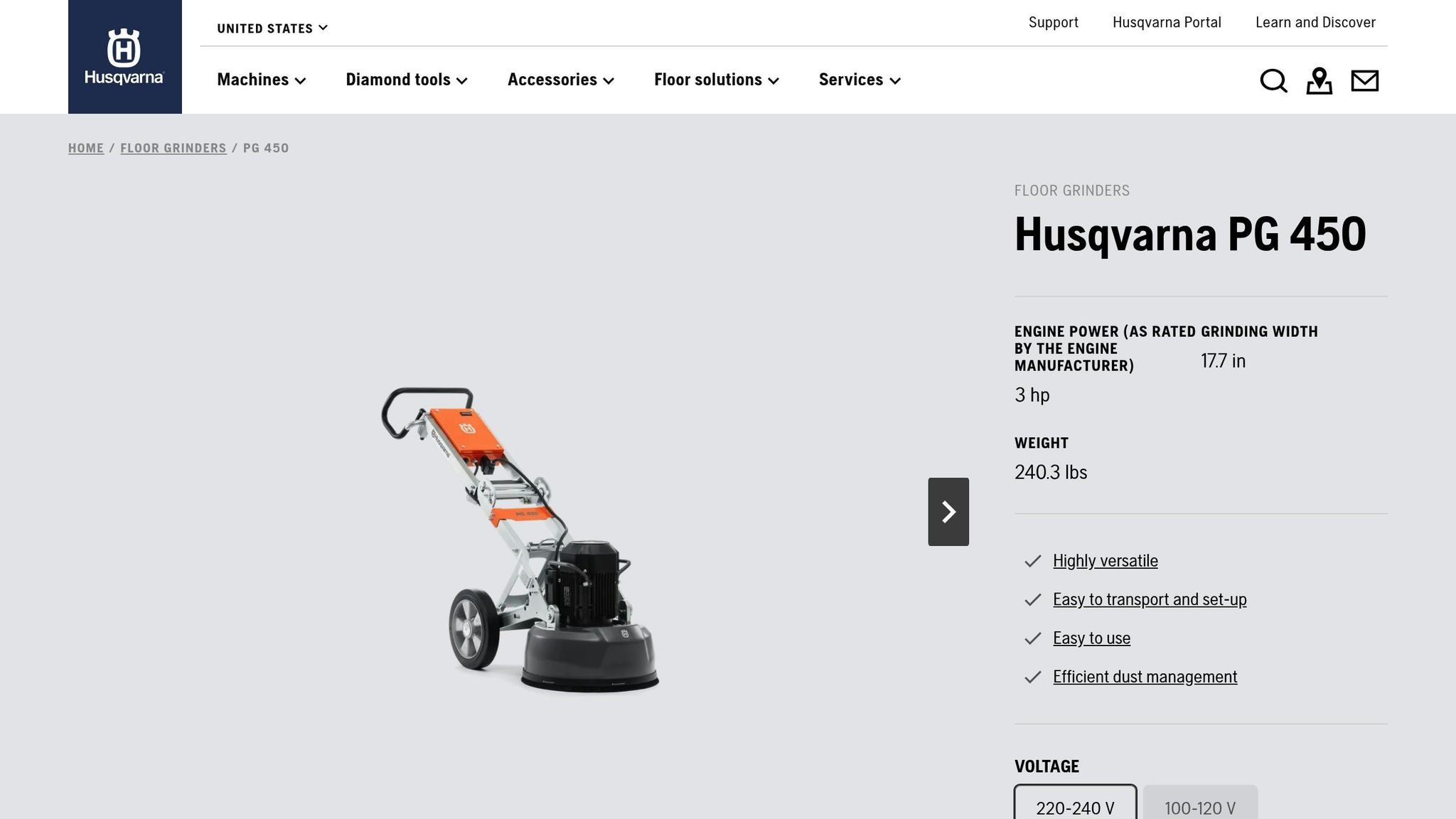
For large-scale projects that demand consistent surface texture, the Husqvarna PG 450 is a powerhouse. This grinder features a self-adjusting floating cover with a brush skirt, which forms a tight seal against the floor, capturing dust directly at the source. It’s a go-to choice for contractors handling expansive commercial or industrial spaces, delivering precision and reliability. Priced at $7,765.00, the PG 450 is a worthwhile investment for professionals who need dependable performance on a daily basis.
Husqvarna PG 280 Floor Grinder for Smaller Spaces
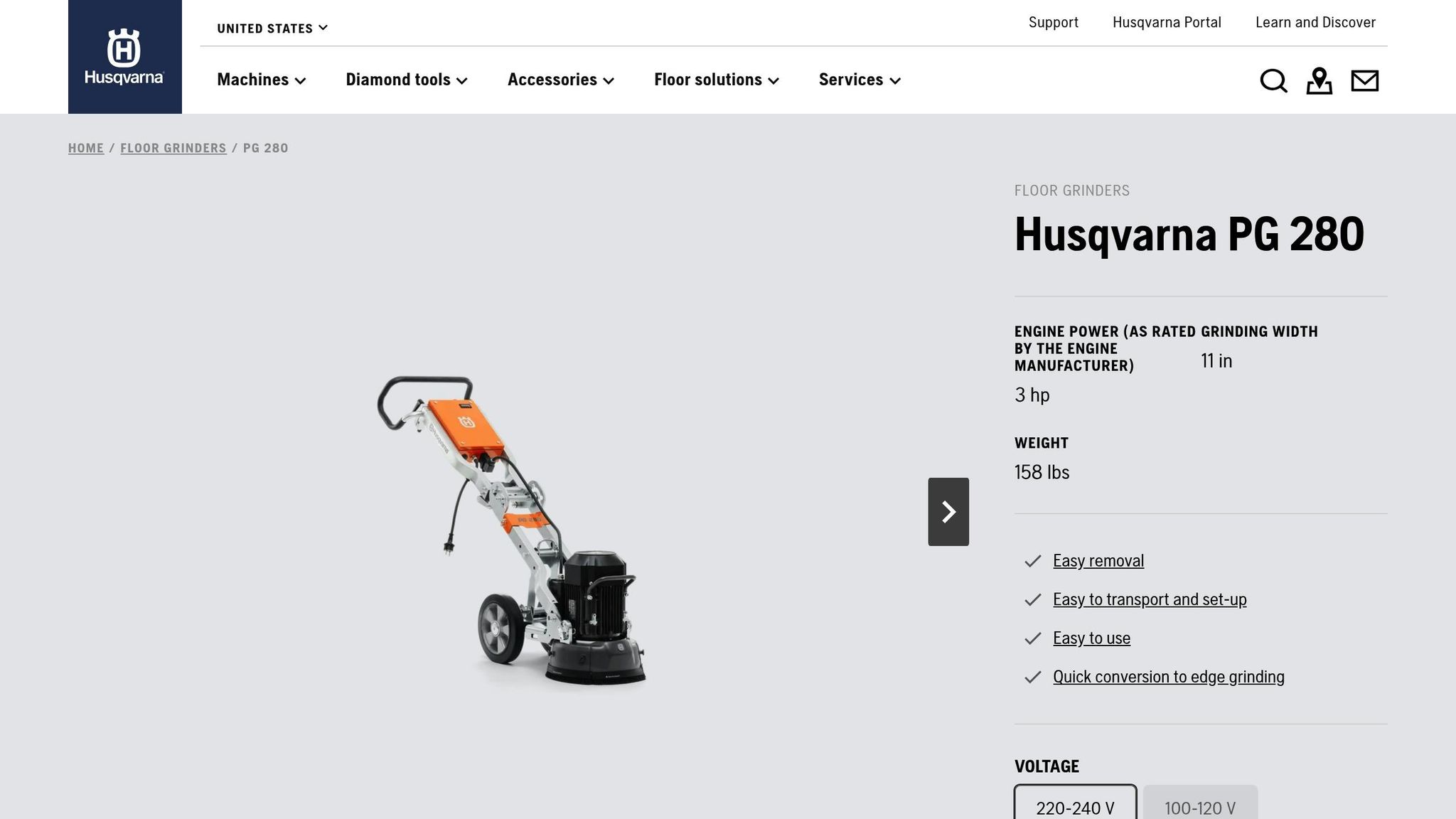
When working in tight corners, small rooms, or areas with complex layouts, the Husqvarna PG 280 shines. This compact grinder is perfect for spaces where larger machines can’t maneuver, such as residential garages, bathrooms, or areas with many obstacles. At $4,900.00, the PG 280 balances portability and performance. For those hard-to-reach spots along walls or in corners, pair it with handheld grinders to ensure every inch of the surface is properly prepared.
Husqvarna DE 110 SH Vacuum for Dust Extraction
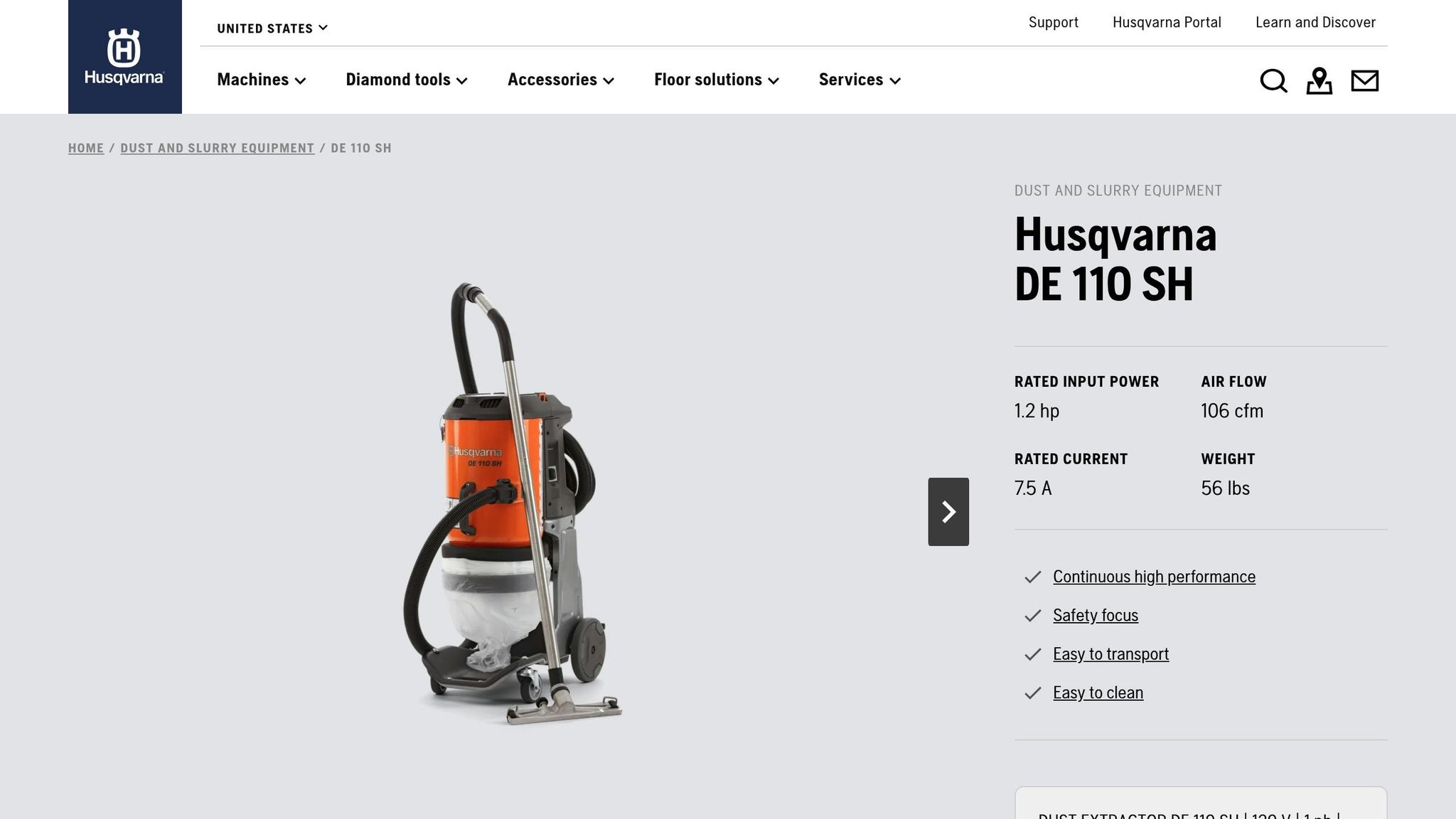
Dust extraction isn’t just about keeping the workspace clean – it’s critical for ensuring proper adhesion. Standard shop vacuums often clog with concrete dust in minutes, losing suction and leaving particles behind. These particles can act as bond-breakers, undoing all the hard work of grinding. Enter the Husqvarna DE 110 SH vacuum, which features HEPA filtration to capture harmful silica dust and keep concrete pores open for optimal polyurea bonding.
If investing in a high-end vacuum isn’t feasible, consider using a "Dust Deputy" or a similar pre-filter. These devices capture up to 90% of the dust before it reaches the vacuum filter, extending the equipment’s life and maintaining suction power. This budget-friendly option can be a game-changer for smaller operations while still delivering effective results.
sbb-itb-4b4bb37
Application Tools for Polyurea Coatings
With concrete surfaces carefully prepared, the next step is applying the polyurea coating using the right tools. While plural-component sprayers are the go-to for large-scale projects, smaller jobs or touch-ups often call for manual tools. These tools ensure even application, proper thickness, and help avoid issues like puddling or lap marks. The precision achieved during surface prep should carry through to the application process, and selecting the right equipment is key to achieving a flawless, durable finish.
9-Inch Professional Roller Frames and Covers
Professional roller frames and covers are a must for consistent coverage, especially on textured or stamped concrete surfaces. A 3/8-inch nap roller cover is the standard for polyurea applications, offering even distribution. For smaller areas like garages or basement floors, a 9-inch roller frame (priced around $3.50) paired with a matching cover (starting at $3.33) provides excellent control and ease of use.
"Using the right tools is critical to achieving the best coverage rate and sealer thickness for optimal performance." – Chris Sullivan, Technical Expert
For textured surfaces, back-rolling is essential to push the material into depressions and prevent bubbles. The process involves spraying the polyurea first and immediately following up with a roller. Maintaining a wet edge is crucial – push and pull the material to avoid visible seams. For larger commercial spaces, an 18-inch roller frame (starting at $26.10) speeds up the job while ensuring consistent results. This tool is especially effective when paired with specialized mixing and application kits, which are discussed next.
Mixing and Application Kits for Polyurea Systems
Polyurea’s quick cure time – often just a few hours – requires precise mixing and application. Relying on manual mixing methods, like "hot potting" or hand-stirring in buckets, can lead to errors and uneven chemical reactions. Professional mixing kits eliminate these issues. These kits typically include graduated Mix-N-Measure pails (available in sizes from 1 quart to 5 gallons, starting at $7.20 for a 5-gallon pail), heavy-duty mixing paddles (starting at $8.99), notched speed squeegees (ranging from 5 to 30 mils, priced between $32.39 and $35.99), and spiked shoes ($34.00 to $99.99).
Spiked shoes are particularly useful as they allow you to walk over wet coatings without leaving marks, making it easier to manage touch-ups and reach tricky areas. Together, these tools ensure the polyurea is mixed and applied with precision, preventing imperfections and ensuring a high-quality finish.
Equipment Comparison Table
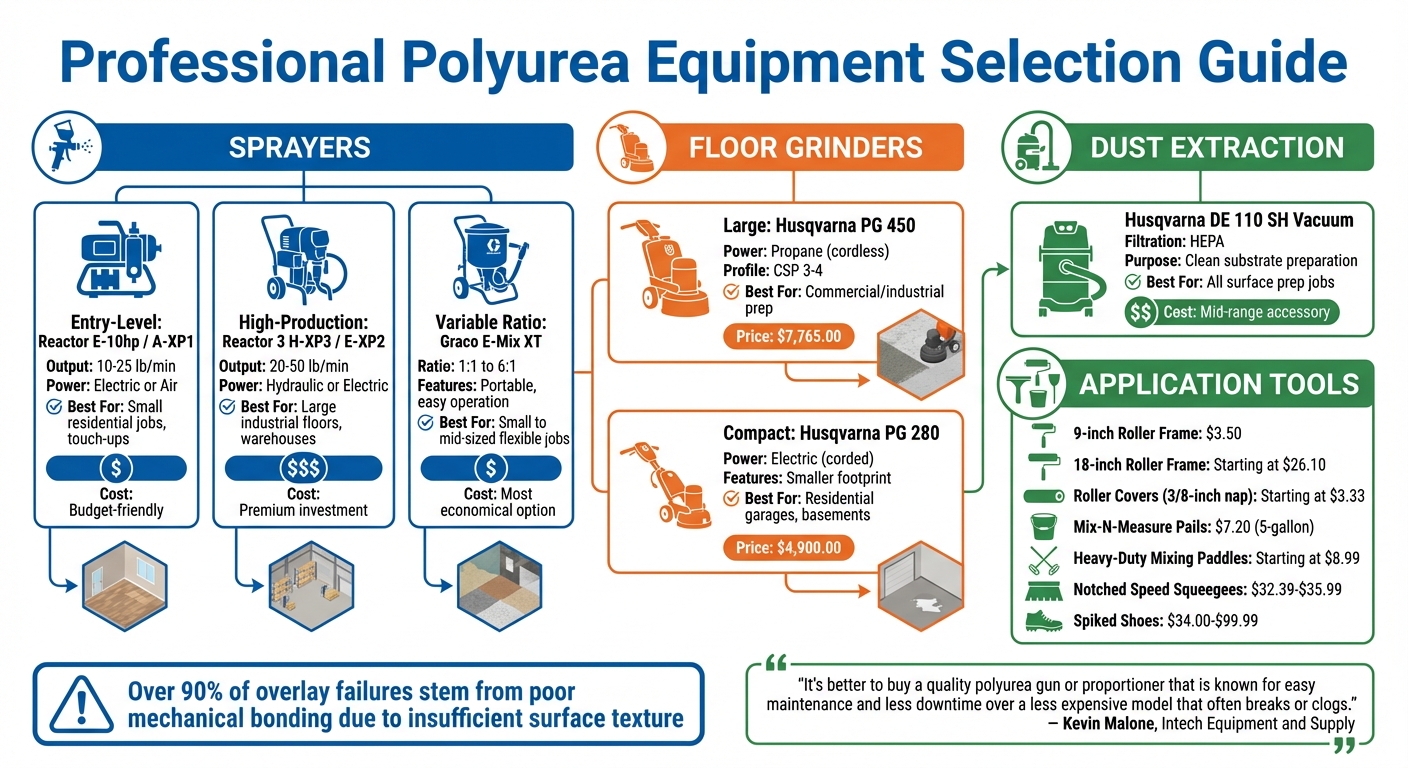
Polyurea Installation Equipment Comparison Guide: Sprayers, Grinders, and Tools
Selecting the right tools for polyurea installations starts with understanding how each piece of equipment fits your project’s specific needs. Below is a breakdown of the key features, best use cases, and pricing for major equipment categories covered in this guide.
| Equipment Category | Model/Type | Key Features | Ideal Use Case | Price Range |
|---|---|---|---|---|
| Entry-Level Sprayers | Reactor E-10hp / A-XP1 | Portable, 10–25 lb/min output, electric or air power | Small residential jobs, touch-ups, low-volume applications | Budget-friendly entry point |
| High-Production Sprayers | Reactor 3 H-XP3 / E-XP2 | 20–50 lb/min output, high duty cycles, hydraulic or electric | Large industrial floors, warehouses, continuous high-volume work | Premium investment |
| Economical Variable Ratio | Graco E-Mix XT | Variable ratio (1:1 to 6:1), portable, easy operation | Small to mid-sized jobs requiring flexibility | Most economical option |
| Large Floor Grinders | Husqvarna PG 450 (Propane) | CSP 3–4 profile, cordless, high power, faster grinding | Commercial and industrial concrete preparation | Higher upfront cost |
| Compact Floor Grinders | Husqvarna PG 280 (Electric) | Smaller footprint, corded, lower power | Residential garages, basements, smaller spaces | Lower purchase price |
| Dust Extraction | Husqvarna DE 110 SH Vacuum | Clean substrate preparation, HEPA filtration | All surface prep jobs requiring dust control | Mid-range accessory |
This table highlights how each tool’s unique features align with different project requirements, helping you make informed decisions.
Sprayer performance is largely determined by output capacity and power source. Entry-level sprayers produce 10–25 lb/min, while high-production models handle 20–50 lb/min. Similarly, electric grinders are more affordable upfront, but propane-powered models offer faster grinding speeds and eliminate cord-related obstacles. The choice of power source – whether electric, pneumatic, or hydraulic – affects both initial costs and long-term productivity.
"It’s better to buy a quality polyurea gun or proportioner that is known for easy maintenance and less downtime over a less expensive model that often breaks or clogs." – Kevin Malone, Leading Expert, Intech Equipment and Supply
Your equipment should match the scale and frequency of your projects. For residential contractors handling garages or basements, portable electric sprayers and compact grinders are ideal. On the other hand, commercial installers working on warehouses or industrial facilities will benefit from the speed and durability of hydraulic sprayers and propane grinders. Investing in the right tools can save labor time, reduce callbacks, and deliver polished, professional results.
Choosing the Right Equipment for Your Polyurea Installation
When selecting equipment for a polyurea installation, it’s critical to match the output capacity to the scope of your project. For smaller jobs like residential applications or touch-ups, systems with an output of 10–25 lb/min are sufficient. Standard commercial projects typically require equipment in the 20–50 lb/min range, while large-scale industrial floors demand systems capable of 30–50+ lb/min. Beyond output, the type of power source you choose plays a significant role in overall performance.
The power source should align with the specific demands of the job. Hydraulic systems are ideal for heavy-duty applications, electric models are better suited for confined spaces, and air-powered systems are a practical choice for entry-level projects.
To ensure smooth operations and reduce downtime, prioritize equipment features that enhance efficiency. For example, air-purge guns help prevent clogs, heated hoses maintain the correct material viscosity, and digital systems like Reactor Connect allow for real-time monitoring of performance.
Material compatibility is another key factor. Plural-component sprayers are essential for achieving the precise 2:1–4:1 mixing ratios needed for chemical resistance and structural integrity. Additionally, opt for systems designed to handle 100% solids and solvent-free coatings. The choice of grinder should also match the scale of the project, ensuring the substrate is clean and textured – an essential step for a durable, high-quality finish. From mixing to surface preparation, the equipment you select has a direct impact on the longevity and appearance of your polyurea installation.
FAQs
What makes Graco XP sprayers a great choice for polyurea installations?
Graco XP sprayers are well-known for their powerful high-pressure performance, making them a go-to option for applying polyurea coatings with precision and consistency. Built to tackle tough projects, these sprayers help cut down on material waste and solvent use, which can translate to lower overall expenses.
What sets these sprayers apart is their ease of use and low-maintenance design. They’re engineered for efficiency, helping to keep downtime to a minimum during installations. Capable of handling high-solids coatings with ease, Graco XP sprayers deliver a smooth, dependable finish – perfect for achieving long-lasting, professional results in polyurea applications.
Why is proper concrete surface preparation important for polyurea coatings?
Proper preparation of concrete surfaces is crucial for polyurea coatings to bond effectively and provide long-lasting results. If the surface isn’t prepared correctly, contaminants like dirt, oil, or moisture can interfere with the adhesion process, leading to problems like peeling, bubbling, or early wear.
The preparation process involves a few key steps: thorough cleaning, removing dust, and creating the right surface texture for optimal adhesion. Achieving this texture often requires grinding or shot blasting the concrete to reach the desired surface profile, typically a CSP (Concrete Surface Profile) of 3 to 4. Using reliable tools, such as propane grinders equipped with diamond tooling, ensures the surface is rough enough for strong bonding without being overly abrasive.
Rushing or skipping these critical steps can weaken the coating’s durability and reduce its protective capabilities. Proper preparation not only ensures a professional finish but also extends the lifespan of polyurea coatings.
Why do professionals wear spiked shoes when applying polyurea coatings?
Spiked shoes play a crucial role in polyurea coating applications. These specialized shoes let installers move across the coated surface without causing damage or introducing contaminants. By keeping contact with the wet material to a minimum, the spikes help ensure the coating remains smooth and evenly applied. This straightforward tool is key to achieving a high-quality, long-lasting finish.