
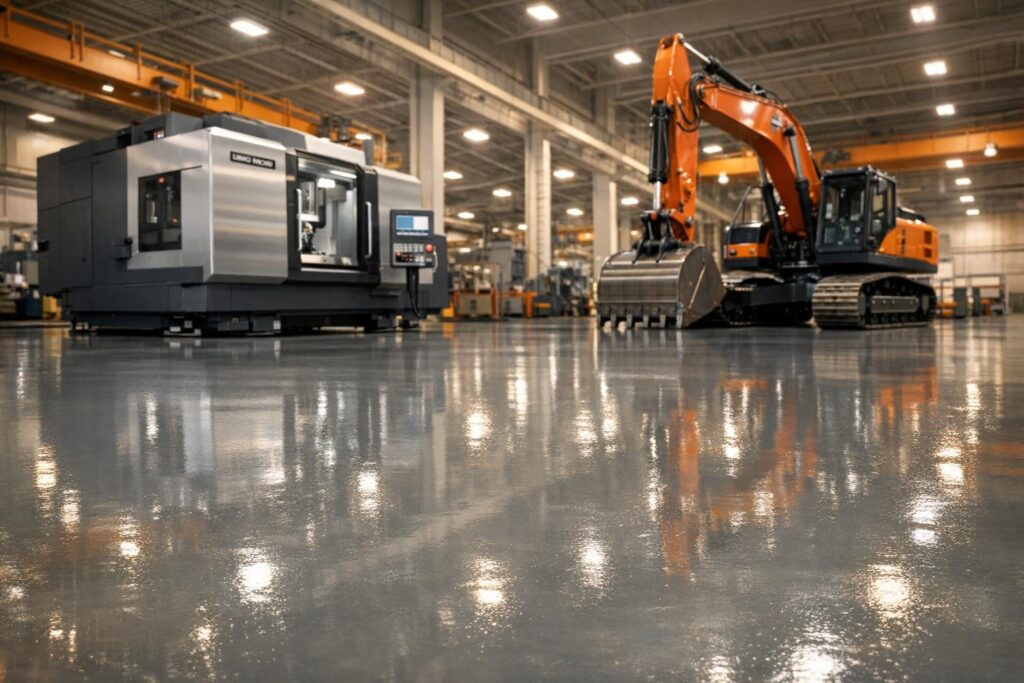
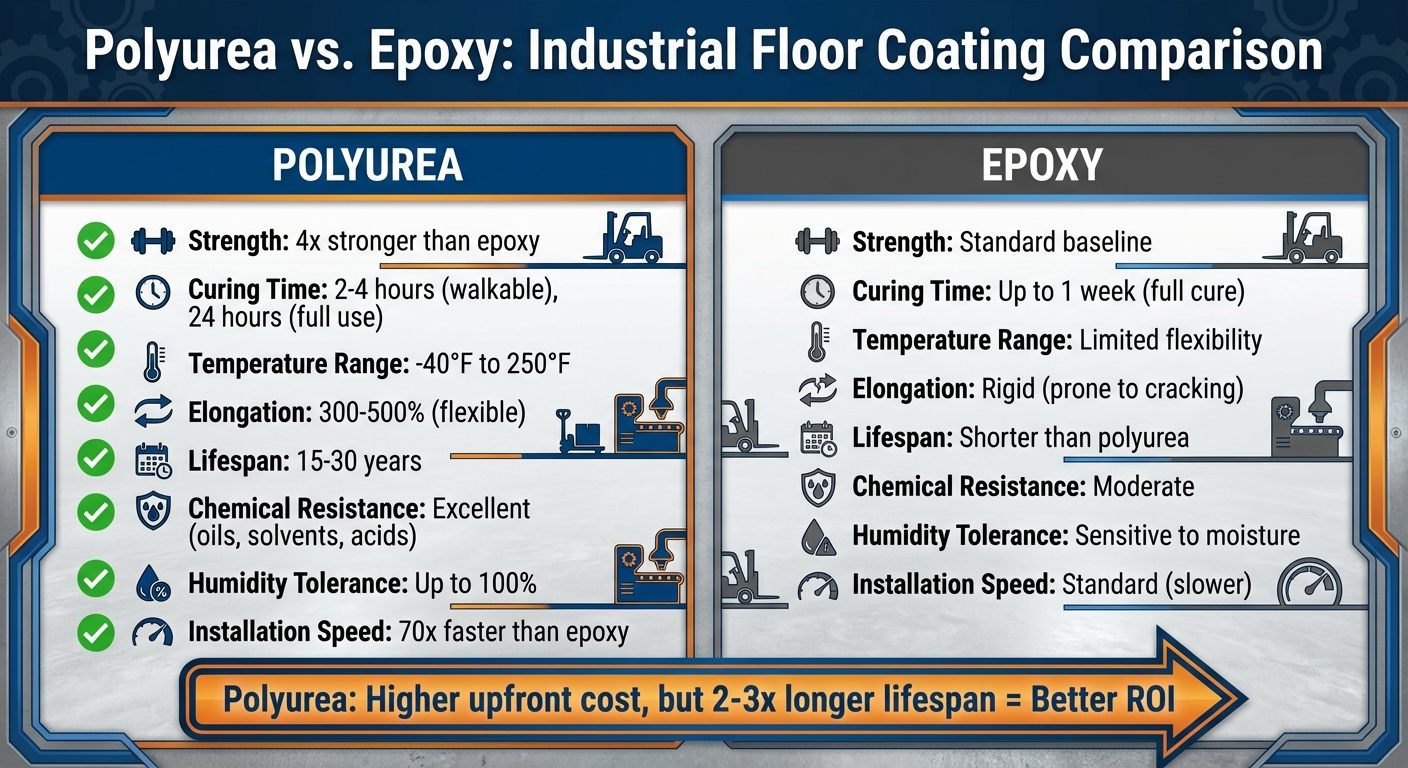
Polyurea coatings are the go-to solution for industrial floors exposed to heavy machinery. These coatings are incredibly strong – up to four times tougher than epoxy – while maintaining flexibility to prevent cracking under stress. They cure in as little as 2–4 hours, minimizing downtime, and resist extreme temperatures (-40°F to 250°F), chemicals, and wear. This makes them perfect for handling the constant impact, chemical spills, and vibrations that degrade standard flooring.
Key Benefits:
- Durability: Withstands heavy loads, impacts, and vibrations without cracking.
- Chemical Resistance: Protects against oils, solvents, and acids.
- Fast Curing: Ready for use in hours, cutting downtime significantly.
- Temperature Stability: Performs in extreme heat or cold.
Polyurea coatings also meet safety standards, offering anti-slip surfaces and low VOC emissions. While the upfront cost may be higher, their long lifespan (15–30 years) and low maintenance make them a cost-effective choice for industrial facilities.
Polyurea vs Epoxy Coatings: Performance Comparison for Industrial Floors
Industrial Floor Painting with POLYUREA FLOOR COATING by DUROSTICK
Common Problems with Heavy Machinery Floors
Industrial floors endure extreme conditions that can wear down unprotected surfaces, making durable coatings a must for smooth operations. Here’s a closer look at the challenges that emphasize the importance of resilient floor coatings.
Load and Impact Damage
Heavy machinery exerts immense pressure on industrial floors, often leading to cracks and erosion in unprotected concrete. These machines can apply thousands of pounds of force over small areas, causing significant stress. Stationary equipment creates constant pressure points, while moving forklifts and carts generate friction, further wearing down surfaces.
"When sharp objects are dropped, they concentrate their force on a small area of the floor. If your floor is not formulated to resist this force, it can become damaged and lead to other problems such as leaving your floor open to bacteria that can harbor and grow." – Stonhard
Dropped tools can leave deep gouges, and repeated stress on control joints often results in uneven surfaces and trip hazards. Additionally, vibrations from production lines can weaken the adhesion of floor coatings over time. These factors underscore the need for specialized polyurea coatings that can handle such demanding conditions.
Chemical and Environmental Damage
Concrete floors, if left unprotected, act like sponges, absorbing industrial fluids and contaminants through their porous surfaces. Over time, this can lead to staining, cracks, and spalling, weakening the structural integrity. Exposure to acids from battery fluids or industrial cleaners can etch and degrade the concrete, while harsh solvents may cause ordinary coatings to bubble, peel, or soften.
Temperature swings from processes like ovens or hot equipment can cause rapid thermal expansion and contraction, which often cracks rigid coatings and damages the substrate. Water intrusion is another common issue, leading to defects like efflorescence. In semi-exposed areas, UV rays can cause coatings to yellow and chalk, reducing their effectiveness. These environmental challenges make specialized polyurea coatings an essential solution.
Safety and Regulatory Requirements
Industrial facilities must prioritize safety, especially in areas prone to oil and hydraulic fluid spills. Slip-resistant surfaces with customizable textures and anti-slip aggregates are crucial for reducing injury risks. In food production and processing plants, maintaining sanitary conditions requires surfaces with antibacterial and antimicrobial properties.
Regulations around indoor air quality demand the use of "No VOC" or "Low Odor" coatings to ensure compliance in enclosed spaces. Coatings also need to protect concrete from damage that could lead to uneven or unstable surfaces, all while withstanding extreme temperature ranges from -40°F to 250°F. Meeting OSHA and hygiene standards makes these features non-negotiable. These requirements further emphasize the importance of specialized polyurea coatings for industrial floors.
How Polyurea Coatings Solve Industrial Floor Problems
Polyurea coatings address the challenges industrial floors face, such as heavy loads, chemical exposure, and operational downtime. These coatings are specifically designed to tackle these issues, offering a combination of strength, flexibility, and fast application.
Strength and Durability
Polyurea coatings boast a densely cross-linked molecular structure, giving them tensile strength up to four times greater than traditional epoxy coatings. Their high elongation allows them to expand and contract with the substrate, preventing cracks under heavy loads.
"Polyurea coatings are engineered with a unique molecular structure that creates an incredibly strong, yet flexible, bond, making them the ideal chemical resistant floor coating." – JAK Concrete Coatings
In August 2025, JAK Concrete Coatings highlighted how their polyurea coatings provided a seamless, non-porous surface that resisted automotive fluids and harsh chemicals. These coatings were built to endure the wear and tear of heavy equipment and constant vehicle traffic without peeling or chipping, significantly extending floor life in industrial environments. This combination of strength and flexibility ensures resistance to cracks, gouges, and surface erosion caused by dropped tools or repeated impact. Beyond mechanical durability, these coatings also protect against chemical and thermal damage, making them a reliable choice for tough industrial conditions.
Chemical and Temperature Resistance
Polyurea forms a dense, non-porous barrier through the rapid reaction of isocyanates and resin blends. This barrier prevents chemicals from penetrating the surface or reaching the concrete below. It can resist a wide range of industrial agents, including motor oil, hydraulic fluids, gasoline, brake fluid, paint thinners, wood stains, and various acidic or alkaline cleaning solutions.
Additionally, polyurea coatings maintain their integrity across a broad temperature range, from -40°F to 250°F. This makes them capable of withstanding thermal shocks from processes like steam cleaning or freeze-thaw cycles. For outdoor or high-UV environments, aliphatic polyurea formulations offer complete UV and color stability, preventing the yellowing and chalking that often occur with other coatings. Combined with rapid curing times, these features make polyurea a practical option for reducing operational interruptions.
Fast Installation and Minimal Downtime
One of polyurea’s standout benefits is its rapid curing time. Floors coated with polyurea can often be ready for use within 2–4 hours – about 70 times faster than traditional epoxy systems.
"Polyurea floors can be walkable and returned to service in as little as 2-4 hours after application. This rapid curing minimizes downtime and speeds up project timelines." – Top Coat Concrete Coatings
While epoxy coatings may take up to a week to fully cure, polyurea allows for heavy-duty use, including vehicle traffic, within 1 to 3 days. Its ability to tolerate up to 100% humidity also eliminates delays caused by environmental factors, enabling installation to proceed regardless of weather conditions. These time-saving advantages are especially valuable in environments where continuous use of heavy machinery is essential.
Atlas Concrete Coatings utilizes these advanced polyurea features to provide industrial flooring solutions that prioritize durability and minimize operational downtime.
sbb-itb-4b4bb37
Planning and Installing Polyurea for Heavy Machinery Floors
When it comes to heavy machinery floors, polyurea coatings deliver exceptional durability and performance. But to truly harness these benefits, careful planning and precise installation are key. The process involves multiple layers, meticulous surface preparation, and adjustments tailored to the specific needs of your facility.
Coating System Layers
A polyurea system typically includes three main layers, each serving a specific purpose:
- Primer: This layer bonds to and seals the concrete, creating a solid foundation.
- Basecoat: Made of 100% solids polyurea, this layer provides mechanical strength and impact resistance. For added texture, materials like broadcast sand can be incorporated.
- Topcoat: The final layer enhances UV stability and chemical resistance while acting as a barrier against abrasion, chemicals, and environmental wear.
The topcoat is especially important, as it shields the floor from daily wear and tear. Beyond these basics, the coating specifications should be fine-tuned to address the unique challenges of your facility.
Adjusting Specifications for Different Facilities
Every industrial floor has its own set of challenges, so customizing polyurea specifications is crucial. For areas with heavy loads, increase the coating thickness and aim for a Shore D hardness between 60–90. If spills are common, adding heavy-grit silica sand (such as 4095 heavy grit) to the topcoat improves slip resistance and traction.
For facilities exposed to thermal shocks – like those from steam cleaning or freeze-thaw cycles – opt for formulations with higher elongation properties (300–500%). In outdoor areas or spaces with significant UV exposure, aliphatic polyurea is the go-to choice to prevent color fading and chalking.
Atlas Concrete Coatings specializes in tailoring industrial flooring systems to meet the specific demands of load capacity, chemical exposure, and environmental conditions.
Installation Requirements
Proper surface preparation is the foundation of a successful polyurea installation. The concrete must be diamond ground or shot blasted to create a clean, porous profile (CSP) that enables the polyurea to bond effectively. Any cracks, spalls, or pits should be repaired using polyurea-based fillers, as the coating will follow the floor’s contours.
"Polyurea concrete coatings have a very small margin for mishaps and involve a high level of preciseness." – Innovative Concrete
Given polyurea’s rapid tack-free time – under 60 seconds – professional installation is critical. The process requires high-pressure spray equipment and a synchronized two-person crew to ensure even application. Unlike epoxy, polyurea can be applied in extreme temperatures, including below freezing, making it ideal for unheated warehouses or winter projects.
Maintaining Polyurea-Coated Floors
Once installed with precision, keeping polyurea-coated floors in good shape ensures their durability and performance over time. Thanks to its non-porous and impermeable surface, polyurea naturally resists water, oils, and chemicals. Instead of soaking in, fluids bead up on the surface, making cleanup easier and protecting the floor beneath.
Regular Cleaning and Care
Day-to-day maintenance is simple. Start by sweeping or vacuuming gently to clear away dirt and debris. Once a week, mop the floor using warm water mixed with a pH-neutral detergent (pH 7–10). For tougher stains, a diluted TSP (trisodium phosphate) solution works well – just scrub lightly. Spills, especially automotive fluids like oil, brake fluid, and antifreeze, should be cleaned up right away to avoid staining. For acidic spills, such as battery acid, neutralize the area first with a paste made from baking soda, then rinse thoroughly.
It’s important to avoid certain cleaners that can damage the coating. Steer clear of bleach, vinegar, citrus-based products, and floor wax, as they can undermine the floor’s non-slip properties. If you’re trying out a new cleaning solution, always test it on a small, hidden area first. Routine cleaning, paired with quick attention to spills and stains, helps maintain the floor’s integrity.
Repairing Damaged Areas
Minor scratches can often be handled by buffing them out with a soft cloth and a non-abrasive polish. For more noticeable damage, professional touch-up kits or fillers are ideal. These repairs typically cure in just 2–4 hours, minimizing downtime. Compared to epoxy coatings, which require significantly longer curing times, polyurea repairs are quick and efficient, ensuring the floor is back in service with minimal disruption.
Long-Term Cost Savings
Although polyurea coatings might come with a higher initial cost, they deliver impressive savings over time. With proper care, these floors can last anywhere from 15 to 30 years. This extended lifespan means fewer repairs, reduced downtime, and lower overall maintenance expenses. Plus, companies like Atlas Concrete Coatings offer warranties of up to 15 years, giving facility managers added confidence and long-term reassurance in their investment.
Conclusion
Heavy machinery floors face tough challenges – constant impact, exposure to chemical spills, and the strain of heavy loads. Polyurea coatings rise to meet these demands with strength that’s four times greater than epoxy, impressive flexibility, and strong resistance to chemicals.
One standout advantage of polyurea is its rapid curing time. Floors treated with polyurea can be ready for light use in just 2–4 hours and fully operational within 24 hours. This quick turnaround helps facilities avoid lengthy downtime and keeps operations running smoothly.
Polyurea also shines in extreme conditions, tolerating temperatures from -40°F to 250°F while resisting UV damage. Its non-porous surface repels oils, solvents, and industrial chemicals, ensuring the flooring maintains its structural integrity even after years of heavy use. These features make polyurea an ideal choice for flooring systems that need to endure the toughest industrial environments.
Atlas Concrete Coatings takes these benefits to the next level by offering tailored polyurea solutions for heavy machinery floors. Their certified team installs multi-layer systems that bond deeply with concrete, creating a durable, permanent flooring structure. With expert installation techniques and a commitment to quality, they ensure the floors perform exactly as promised. Supported by strong warranties and deep industry knowledge, Atlas Concrete Coatings delivers flooring solutions designed to stand the test of time.
FAQs
Why are polyurea coatings a better choice than epoxy for heavy machinery floors?
Polyurea coatings are known for their durability, thanks to their flexible and elastomeric properties. This flexibility allows them to handle heavy loads without cracking, unlike epoxy, which tends to become brittle over time. The result is a tough, abrasion-resistant surface that holds up under constant wear and tear.
What sets polyurea apart even further is its resistance to chemicals and UV rays, making it a great choice for industrial settings where harsh substances and prolonged sunlight exposure are common. Plus, its quick curing time means less waiting around – your floors can be back in action in no time.
How do polyurea coatings improve safety in industrial workplaces?
Polyurea coatings play a crucial role in boosting safety within industrial environments by creating a tough, slip-resistant surface built to handle the demands of heavy machinery, constant foot traffic, and challenging conditions. Thanks to their quick curing process, facilities can get back to work faster, minimizing downtime and avoiding the risks associated with unfinished or uneven flooring.
These coatings are also non-porous and resistant to chemicals, effectively repelling spills like oils and solvents. This not only helps maintain a safer, less slippery surface but also prevents the coatings from degrading over time. To further enhance traction, aggregates like vinyl chips can be added, creating a textured finish that improves footing and reduces the likelihood of slips.
In areas where heavy equipment is used, polyurea’s exceptional impact and abrasion resistance serves as a protective barrier for the concrete beneath. This durability prevents cracks, dents, or hidden damage that could pose safety hazards. By offering a stable and even surface, polyurea coatings help maintain a secure, accident-free environment in factories, warehouses, and other industrial facilities.
How do you properly prepare and install polyurea coatings for heavy machinery floors?
To get the best results from polyurea coatings on heavy machinery floors, thorough preparation and precise installation are essential. Begin by inspecting the concrete surface for any cracks, moisture issues, or contaminants such as oil and grease. Make sure to clean the floor completely, then grind or shot-blast it to create a textured surface. This step is crucial for ensuring the coating adheres properly.
Once the surface is prepped, repair any cracks or imperfections using a polyurea-based filler. This will help create a smooth and level foundation. If needed, apply a primer to improve adhesion before moving on to the coating process. When applying the polyurea coating, use a spray gun for an even application, and work quickly since the material cures in just a few minutes. Allow enough curing time – this typically means 1–2 hours for light use and up to 24 hours for heavy machinery. Following these steps will help ensure your floors are durable, resistant to heavy loads, and well-protected for the long haul.