
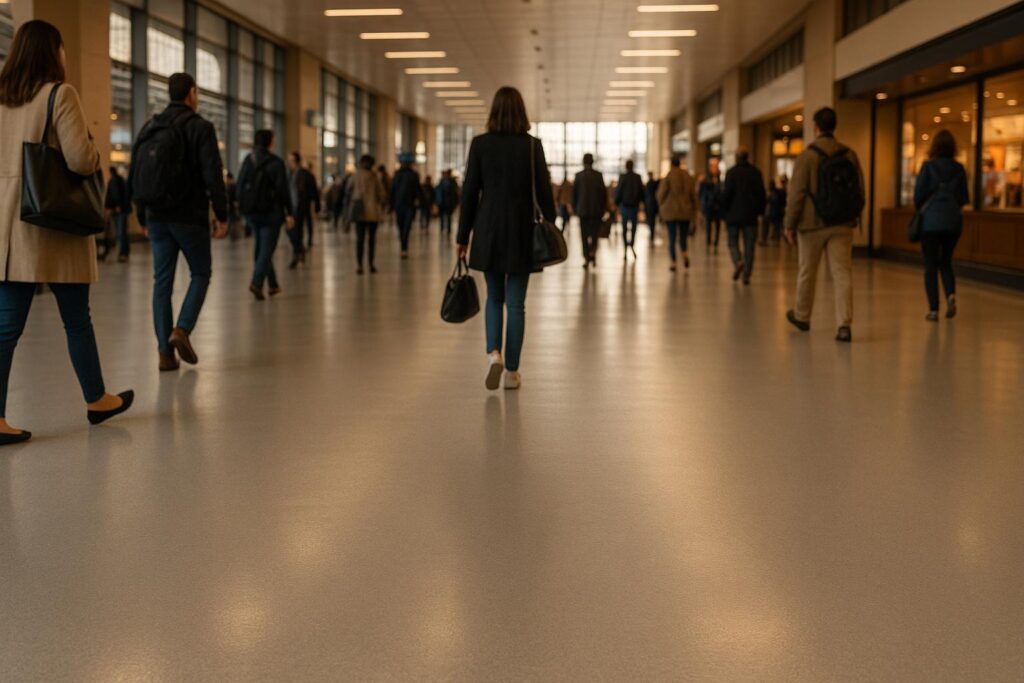
Polyurea coatings are a durable, fast-curing solution for high-traffic public spaces like malls, hospitals, parking garages, and stadiums. They outperform many flooring options by resisting abrasion, impacts, chemicals, and UV damage. Their seamless surface enhances safety with slip-resistant textures and simplifies cleaning by preventing bacteria buildup. With a lifespan of 10–20 years and minimal maintenance needs, they reduce long-term costs and downtime.
Key Benefits:
- Durability: Handles heavy foot traffic, vehicle wear, and temperature changes without cracking.
- Fast Curing: Ready for use in hours, minimizing disruptions.
- Safety: Slip-resistant and compliant with safety standards.
- Low Maintenance: Easy to clean, resists stains and bacteria.
- Customization: Available in various colors, textures, and finishes to match any design.
Whether it’s for parking decks, food courts, or transit stations, polyurea coatings offer a reliable flooring solution that balances performance with practicality.
Benefits of Polyurea for High-Traffic Public Areas
Durability and Long-Lasting Performance
Polyurea coatings stand out for their toughness, offering strong resistance to abrasion, impacts, and scratches. Unlike tile, bare concrete, or carpet – materials that often require frequent repairs – polyurea holds up under the strain of heavy foot traffic, equipment, and impacts. Thanks to its elastomeric properties, it can flex with temperature changes and movement, reducing the risk of cracks or delamination. For instance, in parking garages, it resists tire marks and wear from vehicles, while in shopping malls, it handles the daily pressure of thousands of footsteps. Additionally, polyurea acts as a moisture barrier, shielding concrete from water damage, freeze-thaw cycles, and corrosion. This durability not only ensures longevity but also lowers overall lifecycle costs. And with its rapid curing capabilities, facilities can quickly return to normal operations without extended delays.
Fast Curing and Minimal Downtime
One of polyurea’s standout features is its quick curing time. Unlike traditional epoxy coatings that may take several days to fully cure, polyurea systems are often ready for use within just a few hours. This fast turnaround is a game-changer for busy public spaces, as it minimizes disruptions and helps avoid revenue loss during maintenance periods.
Safety and Environmental Resistance
Polyurea can be customized with slip-resistant textures, offering excellent traction even in wet or oily conditions. This reduces the risk of slip-and-fall accidents, making it a safer option for areas prone to spills. Many polyurea systems meet ASTM E303 skid resistance standards and support ADA compliance, ensuring accessibility. Beyond safety, the coating also provides strong chemical and UV resistance, standing up to automotive fluids, cleaning agents, de-icing salts, and food acids. It maintains its color and performance even in tough conditions. Plus, its seamless, non-porous surface simplifies cleaning and helps prevent bacteria growth, making it a hygienic choice for public spaces.
"Our advanced polyurea blends remain consistent when facing cold, heat, UV radiation, and even caustic chemicals." – Atlas Concrete Coatings
With its durability, fast application, and safety features, polyurea offers a reliable flooring solution for high-traffic public areas. It’s a practical choice for facility managers looking to reduce maintenance costs and downtime while ensuring long-term performance.
Common Applications in High-Traffic Public Areas
Parking Garages and Decks
Parking structures endure some of the harshest conditions among public spaces. Constant vehicle traffic leaves tire marks and causes abrasion, while oil leaks, fuel spills, and de-icing salts wreak havoc on unprotected concrete. In many U.S. facilities, untreated concrete begins to stain and deteriorate within just a few years, leading to frequent and costly repairs. Polyurea coatings provide an impenetrable shield against water and chloride intrusion, and their flexibility helps them bridge minor cracks caused by temperature fluctuations. For outdoor decks, UV-stable formulations ensure colors remain vibrant even under prolonged sunlight exposure. These coatings cure quickly, often allowing light pedestrian use within hours and full vehicle traffic in about a day, minimizing downtime and getting garages back in operation swiftly. Their durability makes them equally effective in indoor parking environments.
Shopping Malls and Food Courts
Polyurea coatings also shine in indoor commercial spaces like shopping malls and food courts, where floors face relentless challenges. Retail corridors endure heavy daily foot traffic, shopping carts, routine cleaning, and inevitable spills. Food courts add extra layers of wear and tear from grease, spilled beverages, and harsh cleaning chemicals that can damage traditional flooring. Polyurea’s seamless and nonporous surface resists abrasion, staining, and dirt buildup, maintaining a polished look with basic mopping or auto-scrubbing. Thanks to its fast-curing properties, installation can often be completed overnight, allowing areas to reopen the next morning. These coatings can be customized with colored chips or specific tints, making it easy to incorporate brand colors, create wayfinding patterns, or visually separate dining zones from main walkways.
Hospitals, Metro Stations, and Stadiums
High-traffic facilities like hospitals, metro stations, and stadiums share a need for flooring that’s safe, durable, and easy to maintain. In hospitals, polyurea forms a seamless surface that eliminates grout lines where dirt and bacteria can accumulate, making it ideal for corridors, emergency room entries, and waiting areas. Metro stations and stadium concourses benefit from slip-resistant finishes that improve traction on wet surfaces, reducing the risk of falls in crowded conditions. The chemical resistance of polyurea protects against disinfectants, bodily fluids, fuel residues, and de-icing chemicals commonly encountered in these spaces. Its rapid curing process allows for installation during off-hours, causing minimal disruption to operations. For outdoor stadiums and transit platforms, UV-stable formulations and high abrasion resistance ensure the floors can withstand heavy event traffic and weather exposure without fading or wearing out quickly. This blend of safety, durability, and quick turnaround makes polyurea an ideal choice for these demanding environments.
Citadel Polyurea Coatings Commercial Solutions
Installation Process for Polyurea Coatings
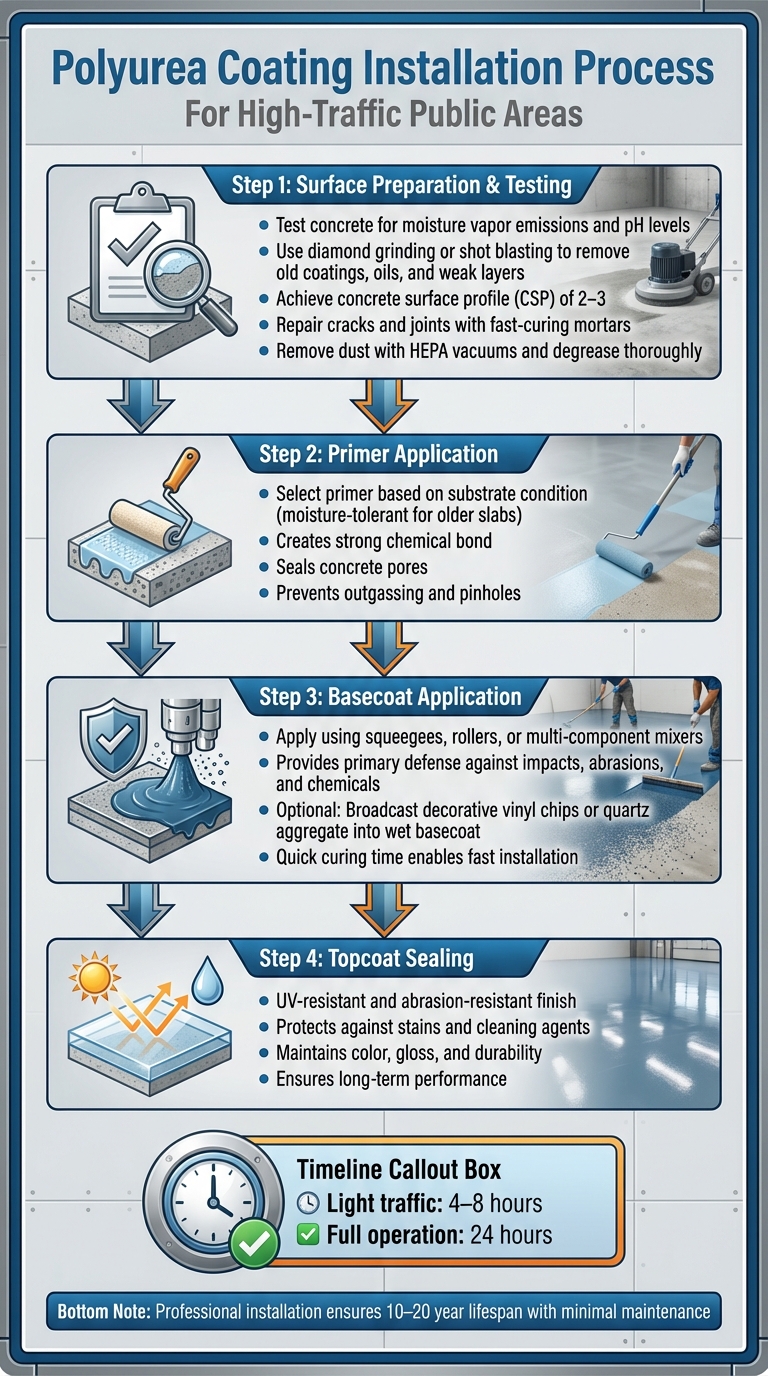
Polyurea Coating Installation Process for High-Traffic Public Areas
Surface Preparation and Cleaning
Getting the surface ready is a crucial first step to ensure polyurea coatings deliver the durability and quick performance they’re known for. Professional installers typically start by testing the concrete for moisture vapor emissions and pH levels. Why? Because excessive moisture or chemical contamination can lead to problems like blistering or delamination in areas with heavy foot traffic, such as malls or parking garages. Once testing is complete, they use mechanical methods like diamond grinding or shot blasting to remove surface laitance, old coatings, oils, and weak layers. The goal is to achieve a concrete surface profile (CSP) of 2–3, which is ideal for interior floors.
Next comes addressing cracks, spalls, and joints. These are repaired with fast-curing mortars to create a smooth, even surface. After the mechanical prep, dust is removed using HEPA vacuums, and any lingering contaminants, like oils or cleaning chemicals, are thoroughly degreased. This step is especially critical in areas like food courts or parking structures where such substances tend to accumulate.
Application of Primer, Basecoat, and Topcoat
A well-installed polyurea system typically involves three key layers. The process starts with applying a primer, which is selected based on the condition of the substrate. For example, moisture-tolerant primers are often used for older slabs or parking decks. The primer creates a strong chemical bond, seals the concrete pores, and prevents outgassing or pinholes during the curing process.
Next comes the basecoat, which provides the primary defense against wear and tear. This layer protects against impacts, abrasions, and chemicals. Since polyurea cures quickly, it’s applied using tools like squeegees, rollers, or multi-component mixers. To make the floor both functional and visually appealing, decorative elements such as vinyl chips or quartz aggregate are often broadcast into the wet basecoat. This is common in high-traffic areas like stadium concourses or mall corridors.
Finally, the topcoat seals the deal – literally. It’s designed to resist UV rays, abrasion, and chemicals, ensuring the floor maintains its color, gloss, and durability. This layer also protects against stains and cleaning agents, making it ideal for spaces that experience constant use.
Quick-Cure Techniques for Reduced Downtime
One of the standout features of polyurea systems is their rapid curing time. Floors can handle light traffic in as little as 4–8 hours and be fully operational within 24 hours. This quick turnaround is a game-changer for public spaces, allowing contractors to work overnight or during off-peak hours and reopen sections the next morning. By phasing the project zone by zone, disruptions to daily operations are kept to a minimum.
To pull this off efficiently, contractors carefully manage factors like ambient and slab temperatures and ensure all materials and tools are staged and ready. They work in a sequential process – prep, prime, basecoat, broadcast, and topcoat – keeping each layer within its recoat window. Traffic control measures, like barriers and signage, are also pre-planned to keep the process smooth. Specialized contractors, such as Atlas Concrete Coatings, customize every aspect of the project, from surface prep to slip-resistance levels, ensuring the flooring upgrade is completed without disrupting business operations. This streamlined approach not only minimizes downtime but also ensures the flooring’s long-term resilience in high-traffic environments.
sbb-itb-4b4bb37
Customization Options for Public Spaces
Once a surface is installed, the next step is customizing it to enhance both safety and aesthetics. Polyurea coatings offer a wide range of options to suit any brand or architectural theme. You can choose nearly any color – whether it’s bold shades for food courts or softer tones for hospital corridors. For added flair, finishes range from high-gloss for a polished look to matte or satin for a more modern and subtle style. Plus, with UV-stable pigments, these colors stay vibrant even in outdoor settings like parking decks or sunlit atriums.
These coatings can also include decorative features that combine durability with visual appeal. For instance, shopping malls can achieve eye-catching floors that stand up to heavy foot traffic and spills, while transit stations can use color-coded zones to improve navigation and safety.
Beyond aesthetics, these coatings can be customized with surface textures to improve safety.
Slip-Resistant Textures
In public spaces where safety is a top priority, polyurea coatings can be enhanced with traction-boosting additives like silica sand, aluminum oxide, or polymer grit. These create textured surfaces with excellent grip, even in wet conditions, and can be tested to ASTM E303 standards to ensure reliable traction.
The level of slip resistance can be tailored to specific areas. For example, ramps, stairs, and wet zones like metro station platforms can have more aggressive textures, while spaces like corridors and lobbies benefit from smoother finishes that are both safe and easy to clean.
Atlas Concrete Coatings Systems
Atlas Concrete Coatings takes customization a step further with systems designed specifically for public spaces. Their multipurpose chip floor systems combine a polyurea basecoat with colored vinyl chips broadcast onto the wet surface, sealed with a UV-resistant topcoat. The result? Floors that are durable, visually appealing, and aligned with a facility’s unique design.
These systems are quick to install and highly versatile. Atlas can match chip colors and patterns to a facility’s branding or create custom blends to complement any architectural style. The polyurea base ensures the flooring resists chipping, peeling, or discoloration – issues commonly associated with traditional epoxy floors. Meanwhile, the UV-stable topcoat keeps the surface looking great, even in high-traffic areas like parking garages, stadium concourses, and other demanding environments.
Maintenance and Longevity of Polyurea Coatings
One of the standout features of polyurea coatings in public spaces is how little effort they require to maintain. Their seamless, non-porous surface naturally resists stains, scratches, and chemical spills, which means fewer repairs and replacements. For everyday upkeep, a simple sweep with a soft broom or a quick mop using a neutral cleaner is usually enough to keep floors looking polished. In high-traffic areas like food courts or stadium concourses, spot-cleaning spills as they happen and scheduling a monthly deep clean can help maintain their fresh appearance.
For heavy-use spaces like parking garages or outdoor areas, weekly low-pressure washes with neutral cleaners are recommended. Avoid using harsh chemicals, wire brushes, or high-pressure tools, as these can damage the coating. Opting for microfiber mops and eco-friendly soaps can further extend the life of the coating while keeping maintenance eco-conscious. These straightforward cleaning habits set the stage for more comprehensive protocols when needed.
Low-Maintenance Cleaning Protocols
Polyurea coatings shine when it comes to easy maintenance. Their natural resistance to bacteria and chemical damage significantly reduces both the effort and cost of upkeep compared to traditional flooring options like tile or carpet.
Expected Durability and Warranty Options
Proper maintenance not only keeps polyurea coatings looking their best but also helps them reach their full lifespan and meet warranty expectations. When installed correctly, these coatings can last 10–20 years in busy, high-traffic environments. They hold up against abrasion, impacts, and even UV exposure without cracking or peeling. For example, Atlas Concrete Coatings designs their polyurea systems to last at least 10 years, with many installations enduring decades. Their warranties typically cover 5 to 15 years, addressing issues like peeling, blistering, fading, and wear from heavy use. Real-world results back these claims – parking garages have reported polyurea floors withstanding tire abrasion and fluid spills for over 15 years with minimal maintenance.
"Our trusted materials are designed to last for at least 10 years and much longer than standard epoxy."
– Atlas Concrete Coatings
Atlas ensures professional installation and comprehensive aftercare support, so your floors perform reliably throughout their lifespan. Their commitment to quality and longevity makes polyurea coatings a durable and cost-effective choice for demanding environments.
Conclusion
Polyurea coatings are a reliable solution for protecting high-traffic public infrastructure across the United States. These coatings stand out for their ability to handle abrasion, impact, chemical exposure, and UV damage, making them a durable choice for various public facilities. Their seamless, slip-resistant surfaces not only enhance safety but also help reduce liability risks. Plus, the non-porous finish makes cleaning easier and cuts down on long-term maintenance costs compared to more traditional flooring options.
With a service life of 10–20 years, extended warranties, and lower lifecycle costs, polyurea coatings represent a smart investment for facility managers. Whether you’re dealing with a parking deck battling road salts and tire wear, a food court that needs quick and thorough sanitization, or a metro station requiring fast overnight installation, these systems meet diverse demands without sacrificing safety or style.
If you’re noticing issues like spalling, frequent repairs, or slip-and-fall incidents, it might be time to consider polyurea coatings for your next renovation. Reach out to experienced contractors like Atlas Concrete Coatings for tailored advice, accurate downtime estimates, and design options that fit your operational goals and budget.
FAQs
What makes polyurea coatings a better choice than traditional epoxy coatings for durability and maintenance?
Polyurea coatings are known for their outstanding durability and minimal upkeep, offering a much tougher alternative to traditional epoxy coatings. They excel in resisting chipping, peeling, and discoloration, even when subjected to heavy foot traffic or demanding conditions.
What sets polyurea apart is its flexibility. Unlike rigid coatings, it can adapt to temperature changes and minor shifts in concrete without cracking. This combination of resilience and adaptability makes it a dependable, long-term flooring option, especially for public spaces that demand both strength and reliability.
What steps are required to prepare a surface before applying polyurea coatings in high-traffic areas?
To get the best results, begin by thoroughly cleaning the concrete surface. This step removes dirt, oil, and any old coatings that might interfere with the application. Once cleaned, ensure the surface is completely dry and free of any leftover debris. Next, repair any cracks or damaged sections to create a smooth, stable base. As a final step, etch or roughen the surface to improve adhesion – this is key to ensuring the polyurea coating holds up well, especially in high-traffic areas.
Can polyurea coatings be tailored to enhance the look of public spaces like malls and hospitals?
Polyurea coatings can play a big role in enhancing the look of public spaces like malls, hospitals, and other busy areas. Thanks to their wide range of options, you can choose from different colors, textures, and finishes to create a design that matches the overall vibe of the space.
But they’re not just about looks. These coatings are tough and built to last, standing up to the wear and tear of heavy foot traffic. This combination of durability and style makes them a smart choice for public spaces where both functionality and appearance matter.