
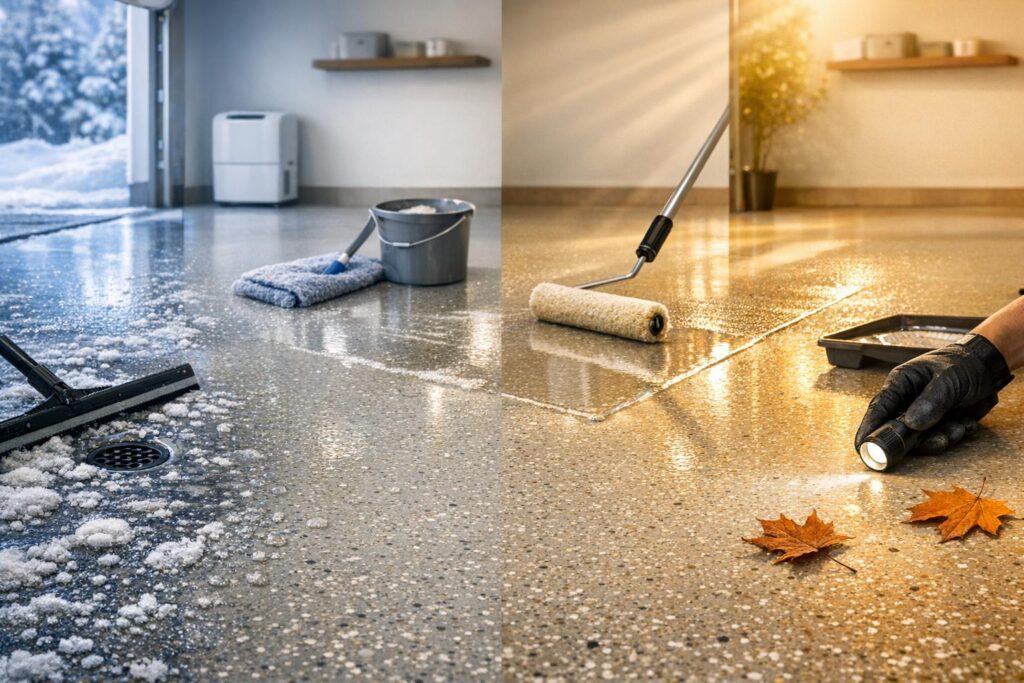
Polyurea floors are tough, durable, and perfect for handling temperature changes, but they still need seasonal care to stay in top condition. Each season brings unique challenges – salt and moisture in winter, pollen and UV exposure in summer, and mud or standing water during rainy seasons. Regular cleaning, using pH-neutral cleaners, and protecting against scratches are key steps. Seasonal maintenance, like clearing debris, managing moisture, and inspecting for damage, ensures longevity. Annual professional inspections and resealing every 3-5 years can save money and extend the life of your floor to 15-20 years. Simple care routines combined with expert help make a big difference.
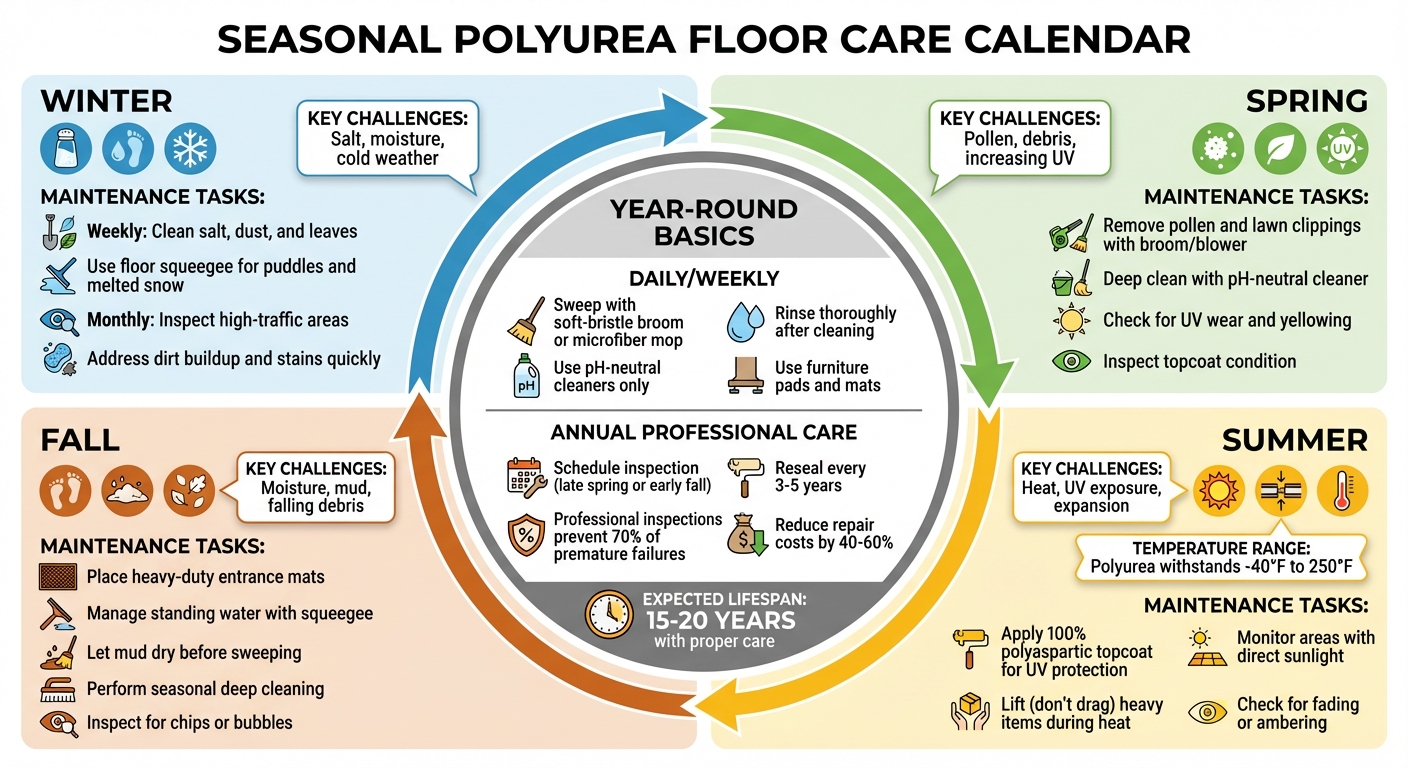
Seasonal Polyurea Floor Care Guide: Year-Round Maintenance Calendar
Cleaning a Polyurea Chip Floor
sbb-itb-4b4bb37
Daily and Weekly Maintenance Basics
Taking care of your polyurea floor regularly ensures it stays durable and performs well, no matter the season.
Regular Sweeping and Cleaning
The first step to maintaining your polyurea floor is keeping it free of dirt and debris. Particles like dust and grit can scratch and damage the surface, especially in busy areas where they’re constantly pressed into the floor. For daily cleaning, use a soft-bristle broom or a microfiber dust mop. A vacuum with a hard floor setting can also help pick up fine particles without causing harm.
When it’s time for wet cleaning, start by clearing any movable items from the floor. Sweep away any dry debris, then mop the surface using warm water mixed with a mild, pH-neutral soap until you see a light foam. After mopping, remove excess water with a squeegee or wet vacuum, and rinse thoroughly to prevent residue buildup.
Choosing pH-Neutral Cleaners
The type of cleaner you use matters. Harsh chemicals can break down the coating on your polyurea floor, so stick to mild dish soaps or pH-neutral degreasers. Always rinse the floor well after cleaning to ensure no residue is left behind, which could dull the finish or attract more dirt.
Preventing Scratches and Wear
Preventing damage is just as important as cleaning. Place mats in high-traffic areas to catch grit and use furniture pads under heavy items to distribute weight and avoid dents or scratches. Be mindful not to drag or drop heavy objects directly onto the floor, as this can chip or damage the coating. These small preventative measures can make a big difference in keeping your floor looking great over time.
Winter Care: Protection from Cold Weather
Winter presents specific challenges for keeping polyurea floors in good condition. To tackle these, focus on managing salt and moisture while regularly inspecting for seasonal wear and tear.
Managing Salt and Moisture
Salt, dust, and leaves can accumulate quickly during winter, so it’s essential to clean them up weekly. A floor squeegee works well for pushing puddles or melted snow toward the entrance or into a floor drain, helping to minimize excess moisture on the floor.
After addressing salt and moisture, turn your attention to areas that experience the most foot traffic.
Inspecting for Winter Damage
Make it a habit to inspect high-traffic areas every month. If you notice heavy dirt buildup or stains, act quickly to clean and repair these spots to prevent further damage. Regular maintenance can help extend the life of your flooring during the colder months.
Spring and Summer Care: Heat and UV Management
When the weather warms up and outdoor activities kick into high gear, your polyurea floor faces new challenges. Intense sunlight, rising temperatures, and seasonal debris all require special attention to keep your floor in top condition.
Clearing Pollen and Debris
Spring and summer bring an influx of pollen, lawn clippings, and dust, which can quickly coat your floor. To tackle this, start by removing loose debris with a broom or leaf blower before any wet cleaning. This prevents particles from being ground into the surface. For a deeper clean, mix a neutral or low-pH cleaner with warm water and rinse thoroughly. Avoid leaving soap residue, as it can attract more dirt and create slippery spots.
Monitoring UV Wear and Topcoat Condition
UV exposure is another concern during warmer months. While polyurea floors are built to last, they aren’t naturally resistant to UV rays. Prolonged sunlight can cause ambering, or yellowing, of the surface. To combat this, apply a 100% polyaspartic topcoat, which offers stronger UV protection and helps maintain the floor’s vibrant color. Regularly check areas exposed to direct sunlight for signs of fading or yellowing and reseal them as needed to preserve their appearance.
Managing Heat Expansion
Heat can also cause your floor to expand, but polyurea coatings are designed to handle this. They can withstand temperatures ranging from -40°F to 250°F and remain flexible, unlike more brittle materials that might crack under stress. Marvel Industrial Coatings highlights this durability:
If you park a car inside the garage with screaming hot tires, no damage will come to your floor.
Still, extra caution is needed when moving heavy furniture or equipment during hot weather. Always lift heavy items instead of dragging them to prevent unnecessary wear or damage to the surface.
Fall and Rainy Season Care: Moisture and Dirt Control
During the fall and rainy seasons, your polyurea floor faces extra challenges like increased moisture, falling debris, and tracked-in mud. Tackling these issues head-on is key to keeping your floor in great shape.
Managing Standing Water
Standing water isn’t just a slip hazard – it can also encourage mold growth. To handle it, grab a floor squeegee and push the water toward drains or out garage doors. Make sure your drainage system is working properly, especially in garages or covered spaces. While polyurea coatings won’t absorb water, prolonged moisture exposure can seep into the concrete below if the coating has any weak spots.
Preventing Mud and Dirt Buildup
Combat dirt and mud with heavy-duty entrance mats at all entry points. These mats help catch mud, leaves, and other debris before they reach your floor. Clean the mats often – shake them out or hose them down as needed. If mud does make its way onto the floor, let it dry first; sweeping dried mud is much easier and cleaner than dealing with wet messes.
Performing Seasonal Deep Cleaning
As fall gives way to winter, take time for a deep clean. Start by removing loose debris with a broom or blower. Then, mop the floor using warm water and a pH-neutral cleaner. Rinse thoroughly and inspect for any signs of wear, like chips or bubbles. It’s important to dry the floor completely before addressing any damage. As Southwest Exteriors explains, "When a polyurea coating comes in contact with any moisture, it stops bonding to the concrete". Attempting repairs on a damp surface could lead to bigger issues later on.
Annual Inspections and Long-Term Care
After managing seasonal maintenance, ensuring your floor’s longevity requires consistent long-term care. Even with routine seasonal upkeep, having professionals inspect your flooring is key to maintaining its durability.
Getting Professional Inspections
Plan for annual inspections during late spring or early fall to avoid extreme temperatures that could complicate repairs. These inspections focus on areas like adhesion, topcoat condition, and potential moisture or UV damage. Tools like moisture meters and thickness gauges are often used to identify hidden issues. Taking this proactive step can help prevent up to 70% of premature flooring failures by catching problems such as micro-cracks or delamination early.
Be on the lookout for cracks wider than 1/16 inch, bubbling in the topcoat, discoloration, or soft spots. Documenting these areas with photos can help professionals prioritize repairs during inspections. By addressing issues early, you can save significantly – professional inspections often cut repair costs by 40-60% compared to full floor replacements. This routine care ensures timely repairs and resealing, keeping your floor in top shape.
Repairing and Resealing When Needed
For high-traffic areas, resealing every 3-5 years is essential. Signs like topcoat thickness dropping below 4 mils or gloss loss exceeding 20% indicate it’s time for professional intervention. Chips or cracks deeper than 1/8 inch should be repaired promptly to maintain the floor’s waterproofing. Resealing not only restores 50% of UV protection but also maintains resistance to chemicals with pH levels between 2-12. This prevents yellowing and etching, helping your floor retain its polished look. Professional services can simplify this process, ensuring thorough inspections and quality repairs.
Atlas Concrete Coatings Services
Atlas Concrete Coatings offers a full range of services for homeowners in Pennsylvania and New Jersey, including free consultations, professional inspections, chip system repairs, and resealing. Their polyurea coatings come with a lifetime warranty, providing peace of mind for your investment. By combining homeowner efforts with expert care, Atlas Concrete Coatings helps extend the lifespan of residential polyurea floors to 15-20 years. Their efficient installation process minimizes downtime, ensuring your floor gets the attention it needs without disrupting your routine.
Conclusion
Keep your polyurea floor in top shape all year by tackling the specific challenges each season brings – whether it’s winter’s salt and moisture or summer’s UV exposure. Simple steps like regular cleaning, seasonal deep cleaning, and scheduling annual professional inspections can go a long way in maintaining both the look and durability of your flooring.
Polyurea floors are a high-quality investment, and proper upkeep is key to preventing issues like UV fading, moisture damage, or surface wear. By staying on top of maintenance, you can protect both the appearance and structural strength of your floor.
Routine tasks, such as sweeping and using pH-neutral cleaners, are essential for homeowners. But for more complex jobs – like checking adhesion, assessing the topcoat, or resealing high-traffic areas – it’s best to rely on professionals with the right expertise and tools.
For homeowners in Pennsylvania and New Jersey, Atlas Concrete Coatings offers expert support with free consultations, professional inspections, and resealing services. Their polyurea coatings come with a lifetime warranty, giving you peace of mind that your investment is protected for the long haul. With their streamlined installation and ongoing maintenance options, you can enjoy your floors without the hassle.
FAQs
What cleaning products should I avoid on a polyurea floor?
Avoid harsh chemicals like bleach or ammonia, as well as abrasive tools like steel wool or scouring pads. These can harm the polyurea coating, potentially weakening it and affecting its finish. Instead, opt for gentle, non-abrasive cleaners and soft tools to maintain it properly.
How can I tell if UV exposure is starting to damage my floor?
Signs of UV damage can show up as yellowing, fading, or a noticeable loss of gloss. But here’s where aliphatic polyurea stands out – it’s highly resistant to UV exposure, managing to keep over 90% of its gloss intact even after rigorous testing. Make it a habit to inspect your flooring regularly for these signs, so you can catch and address potential problems early.
When should I schedule a professional inspection or reseal?
If you spot any signs of wear, damage, or surface deterioration, it’s a good idea to schedule a professional inspection or resealing. Following regular maintenance routines, as outlined in the manufacturer’s guidelines or tailored to your local climate, can help keep your flooring in good shape for years to come.