

Want your outdoor floors to last 15–25+ years? Here’s how:
Polyurea-coated floors are durable, UV-resistant, and outperform epoxy. To maximize their lifespan, follow these steps:
- Clean regularly: Sweep daily, mop weekly with pH-neutral cleaners, and spot-clean spills immediately to prevent stains and scratches.
- Protect from UV damage: Apply UV-resistant topcoats every 10–15 years and use shade structures like awnings or umbrellas.
- Prepare for weather changes: Remove standing water, clear snow and salt promptly, and ensure proper drainage to avoid damage.
- Inspect and repair: Check monthly for cracks or peeling, and fix minor issues with polyurea repair kits.
With consistent care, your floors can remain vibrant and functional for decades. For professional help, consider experts like Atlas Concrete Coatings.
How to Maintain your Polyaspartic Garage Floor
sbb-itb-4b4bb37
Set Up a Regular Cleaning Routine
Keeping your outdoor surfaces clean isn’t just about appearances – it helps protect the coating and keeps it looking great for years. Dirt and debris can scratch the surface, leaving tiny marks that dull the finish over time. Spills from oils, grease, or chemicals can also leave stains or cause damage if not cleaned up quickly. A regular cleaning routine removes these risks before they become permanent problems.
Daily Cleaning Tasks
A little daily upkeep can go a long way in preventing wear and tear. Sweep or blow away loose debris every day to stop dirt from building up. Use a soft-bristle broom or microfiber mop for quick cleanups on patios and pool decks. If you prefer a leaf blower, keep the speed below 100 mph to avoid pushing debris into the coating. This quick task keeps your surfaces free from abrasive particles that can cause damage.
Weekly Deep Cleaning
Set aside time once a week for a deeper clean. Mix a pH-neutral cleaner with warm water (mild dish soap works too) and use a soft mop or microfiber cloth to gently scrub the surface. Rinse thoroughly with a garden hose to wash away any soap residue – leftover cleaner can make the surface slippery and dull the shine. Cleaning a 500-square-foot patio like this should take about 20 to 30 minutes. Stay away from harsh or acidic cleaners, as they can damage the coating or cause discoloration, which could lead to the need for earlier maintenance or topcoat refreshes.
Spot Cleaning for Spills
Don’t wait to clean up spills. Quick action prevents stains and long-term damage. For oil or grease from grills, sprinkle cat litter on the spill and let it sit for 15 to 30 minutes to absorb the mess. Sweep it up, scrub the area with a degreaser or pH-neutral soap, and rinse clean. If tree sap gets on the surface, soften it with mineral oil before wiping it away. Bird droppings, which are acidic, should be neutralized immediately with a baking soda paste and then rinsed off.
A consistent cleaning routine like this not only keeps your surfaces looking their best but also prepares them for better UV and weather protection, which we’ll dive into next.
Protect Against UV Damage
Sun exposure can take a serious toll on outdoor floor coatings. UV rays break down the coating’s molecular structure, leading to discoloration, yellowing, and a dull, worn-out appearance. As Tom Dassie from CustomCrete puts it:
UV rays hitting your floor trigger a chemical reaction. It breaks down the coating’s molecular structure. This causes discoloration, fading, and a decline in the floor’s appearance.
But not all coatings are created equal when it comes to handling UV exposure. Polyaspartic and polyurethane coatings (often associated with polyurea) stand out for their ability to resist these damaging reactions. Epoxy coatings, on the other hand, yellow quickly in sunlight, while acrylic coatings offer strong UV resistance but may not hold up as well under heavy foot traffic. Polyaspartic and polyurethane coatings strike a balance, retaining both color and gloss even in direct sunlight. Given these differences, regular inspections are key to catching early signs of UV damage.
Watch for early warning signs like fading, yellowing, or dull spots where the gloss has worn off. These are clear indicators that the coating is starting to degrade. Pay special attention to areas near windows or those exposed to full sun, as they are most vulnerable. If you notice uneven darkening – like shadowing around furniture or equipment – try moving these items occasionally to promote more even aging across the surface.
Physical barriers can also help reduce sun exposure. Install awnings, pergolas, or patio umbrellas to create shade over high-traffic areas like patios or pool decks. For indoor spaces, UV-blocking window films on glass doors can cut down on the intensity of sunlight hitting the floor. These simple steps can go a long way in extending the life of your floor coating without requiring constant maintenance.
Apply UV-Resistant Topcoats
Protecting your outdoor flooring from the sun’s harsh rays is crucial, and that’s where UV-resistant topcoats come in. Standard polyurea coatings can break down under direct sunlight unless they have an added layer of protection. That’s why applying a topcoat isn’t just an option – it’s a must for keeping your floors in great shape over time.
For outdoor spaces like patios, driveways, and pool decks, 100% polyaspartic coatings are a solid choice. These topcoats are specifically formulated to resist UV rays while preserving both color and gloss. Floor Shield Coatings highlights the importance of using "a 100% polyaspartic color topcoat for areas exposed to sunlight, ensuring long-lasting brilliance and protection". Unlike standard epoxy coatings, which can yellow and become brittle with prolonged sun exposure, polyaspartic coatings stay flexible and durable for years.
UV-resistant topcoats do more than just maintain appearances. They protect the surface at a molecular level, preventing issues like chalking, cracking, and erosion. These coatings also manage moisture effectively by allowing trapped water vapor to escape while blocking external moisture from seeping in. This dual action helps avoid problems like bubbling and blistering.
Since these coatings cure quickly, it’s best to have them professionally applied to ensure even coverage and avoid mistakes. Make sure the surface is completely dry before application, as trapped moisture or high humidity can lead to bubbling during the process.
Use Shade or Protective Covers
Adding physical barriers to your UV-resistant topcoat can give your floors an extra layer of protection from harsh sunlight. While the topcoat helps minimize UV damage, items like outdoor rugs, patio furniture covers, and retractable awnings reduce direct sun exposure even further. Together, they create a solid defense against wear and tear caused by sunlight.
For outdoor spaces like patios or pool decks, choose materials that won’t trap moisture against the surface. Moisture sensitivity is a known issue with polyurea coatings, especially in humid conditions or on surfaces that aren’t fully dried. As Floor Shield Coatings highlights:
Polyurea’s sensitivity to moisture can be a real spoiler, especially in humid climates or on substrates that haven’t been properly dried.
To avoid problems, go for breathable outdoor rugs with perforated backing to allow airflow. For larger areas, sectional shade systems can provide flexible coverage without trapping moisture. Portable canopies are another great option for seasonal protection. These solutions not only shield your floors from sunlight but also help extend their lifespan.
Steer clear of covers that seal tightly against the surface, like rubber-backed mats or solid plastic covers, as they can trap condensation and lead to issues like bubbling or blistering. Instead, opt for quick-drying materials such as polypropylene or marine-grade fabrics, which are designed to handle outdoor conditions more effectively.
Weatherproof for Seasonal Changes
Outdoor floors face tough conditions throughout the year – rain, snow, freezing temperatures, and even salt can take a toll. While polyurea and polyaspartic coatings are designed to be tough and non-porous, they still need regular care to stay in good shape and avoid damage from winter debris.
Prevent Water Pooling and Mineral Deposits
Even waterproof coatings can lose their shine if standing water leaves behind streaks or mineral deposits. To keep your floor looking its best, grab a floor squeegee and guide any pooled water toward drains or exits as soon as you notice it.
For patios and pool decks, it’s a good idea to check drainage after heavy storms. If water keeps collecting in the same areas, you might need to tweak the slope or install additional drainage. Quickly clearing standing water helps maintain a clean, streak-free finish.
Manage Snow and Salt Properly
Winter can be especially tough on outdoor floors. Road salt and gravel are abrasive and can dull the coating if left too long. Make it a habit to clear snow and slush right away to minimize exposure to salt and moisture.
Sweep away salt and debris at least once a week to avoid scratching the surface. If you notice a salt film or stubborn residue, mop with warm water and a pH-neutral cleaner. Stay away from harsh chemicals or degreasers, as they can weaken the protective topcoat.
Placing breathable mats at entry points is another smart move. These mats trap salt and moisture before they can accumulate on your floor. Staying on top of these seasonal challenges not only keeps your coating looking fresh but also makes it easier to spot any areas that might need repairs.
Inspect and Repair Regularly
After weatherproofing, regular inspections are your next line of defense to keep your outdoor floors in top shape. Even tough polyurea coatings benefit from monthly checkups to spot and address minor issues before they snowball into bigger problems. These inspections, paired with routine cleaning and maintenance, help ensure your floors stay resilient against the elements. The best part? This quick 15–30 minute habit can significantly contribute to your floor’s impressive 15–25+ year lifespan.
Monthly Visual Inspections
Start by clearing the surface with a soft-bristle broom or a leaf blower. Once the area is clean, walk through it section by section, keeping an eye out for cracks, chips, discoloration, scuffs, or any separation along joints and edges. Pay extra attention to high-traffic zones, edges, and expansion joints, as these spots are more prone to wear and tear. Good lighting is key – natural daylight works best, but a flashlight can help you spot subtle issues like peeling edges or areas where the coating might be losing its grip. Catching these problems early can stop moisture from sneaking underneath and causing more extensive damage. And while polyurea coatings are designed to handle freeze–thaw cycles better than epoxy, regular inspections are still essential to maintain their flexibility and performance.
DIY Repairs for Small Problems
For minor issues like hairline cracks (under 1/4 inch) or small chips caused by dropped tools, a DIY approach works well. Here’s what to do:
- Clean the damaged area thoroughly.
- Use a polyurea-compatible repair kit and apply the material with a putty knife.
- Smooth the surface and let it cure for 24 hours.
It’s important to perform these repairs in temperatures between 50°F and 90°F and always wear proper safety gear.
However, for more serious damage – like cracks over 1 inch wide, peeling that covers a large area, or delamination affecting more than 1 square foot – it’s best to call in the pros. Atlas Concrete Coatings can handle professional repairs and recoating to restore your floor. By combining timely DIY fixes with expert help when needed, you’ll keep your outdoor floor looking and performing its best.
Maintenance Schedule Overview
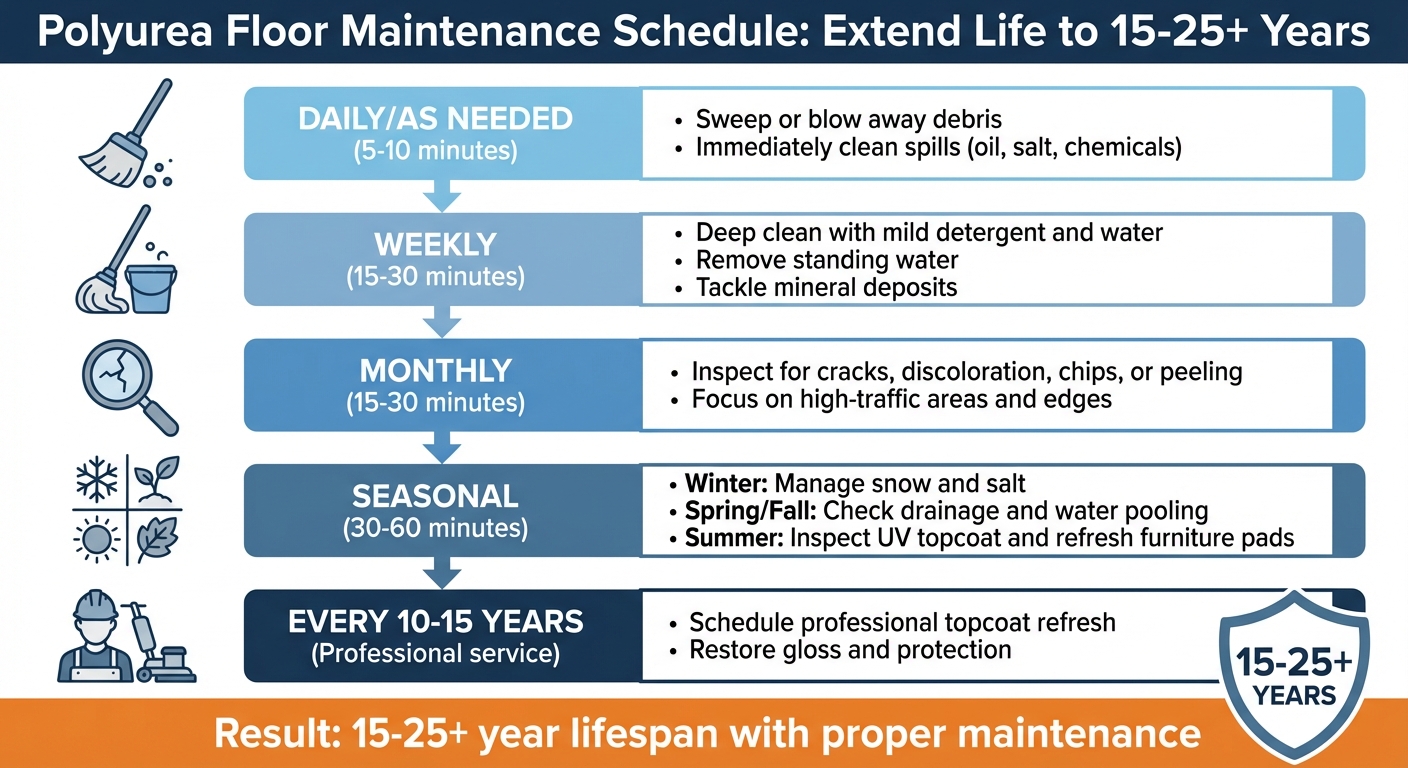
Maintenance Schedule for Polyurea-Coated Outdoor Floors: Daily to 15-Year Timeline
Keeping your polyurea-coated floor in great condition is easier with a clear plan. Below, you’ll find a simple maintenance schedule broken into daily, weekly, monthly, and seasonal tasks. Following this routine can help extend your floor’s lifespan to an impressive 15-25+ years. It complements the cleaning and protection tips shared earlier.
Maintenance Calendar:
| Frequency | Key Tasks | Time Required |
|---|---|---|
| Daily/As Needed | Sweep or blow away debris; immediately clean spills like oil, salt, or chemicals | 5-10 minutes |
| Weekly | Deep clean with mild detergent and water; remove standing water; tackle mineral deposits | 15-30 minutes |
| Monthly | Inspect for cracks, discoloration, chips, or peeling; focus on high-traffic areas and edges | 15-30 minutes |
| Seasonal | Winter: manage snow and salt; Spring/Fall: check drainage and water pooling; Summer: inspect UV topcoat and refresh furniture pads | 30-60 minutes |
| Every 10-15 Years | Schedule a professional topcoat refresh to restore gloss and protection | Professional service |
Most tasks take less than 30 minutes, making regular upkeep manageable. Weekly cleaning prevents moisture and chemicals from causing damage, while monthly inspections catch issues like cracks or peeling early, saving you from costly repairs down the road.
If you live in a high-UV area or near the coast, consider inspecting your floors more frequently. Similarly, in regions with harsh winters, pay close attention to snow and salt management. Adjust the schedule based on your local climate and how often the floor is used.
To stay organized, keep a maintenance log. Documenting tasks and observations can help you spot trends or emerging issues, making it easier to schedule professional maintenance when necessary. This simple habit ensures your floor stays in top shape for years to come.
Professional Support from Atlas Concrete Coatings
Once you’ve set up a solid maintenance routine, professional installation becomes the next step to protect your floors for the long haul. While regular cleaning and inspections keep your floors in good shape, expert help ensures they stay that way for years to come. That’s where Atlas Concrete Coatings comes in. Known for serving Pennsylvania homeowners and businesses since 2010, Atlas specializes in polyurea-based coatings that outlast and outperform traditional epoxy. These coatings are built to handle Pennsylvania’s tough freeze-thaw cycles, extreme temperatures, and heavy UV exposure – without cracking, peeling, or yellowing.
Atlas stands behind its work with a lifetime warranty on its chip systems, offering peace of mind against UV damage, wear, and temperature extremes. Their professional-grade installations are built to last a decade, and with proper upkeep, they can extend to 20–25+ years. That’s a serious return on investment.
"The previous owner installed epoxy and it failed. Anthony clearly explained how his solution surpassed the previous product… The floors were done same day and we are very happy with the results." – Ben Bender, Customer
Atlas also offers one-day installations, meaning your floors are ready to use within 24 hours – perfect for minimizing downtime at home or work. Their services cover everything from slip-resistant, UV-stable pool deck finishes to garage floor coatings, industrial flooring, and concrete repair. They even address underlying issues before applying new coatings, ensuring a flawless finish.
For Pennsylvania residents dealing with seasonal weather challenges, Atlas provides free consultations to help you choose the right coating system. Whether you’re looking for a decorative chip system for patios or a glossy polyurea finish for pool decks, their local expertise ensures you’ll get a UV-resistant solution tailored to your needs. Plus, periodic topcoat refreshes every 10–15 years can bring back that like-new gloss and protection.
Conclusion
You can extend the life of your polyurea floor by sticking to a few simple, consistent habits. Start with regular cleaning – daily sweeping and weekly mopping with pH-neutral cleaners will help remove debris that might scratch the surface. Quick spot cleaning is also key to preventing stains from setting in.
Protect your floor from UV damage by applying a UV-resistant topcoat every 10–15 years. Adding shade structures or protective covers offers extra defense. Seasonal weatherproofing, like ensuring proper water drainage, promptly clearing snow, and using furniture pads, helps maintain the floor’s condition throughout the year. Managing these environmental factors can go a long way in keeping your floor looking and performing its best.
Make it a habit to inspect your floor monthly. Addressing minor chips and cracks early with DIY repairs can stop them from turning into bigger problems. With professional installation, polyurea coatings often last 15–25 years, but many homeowners report their floors staying strong for over 30 years.
Routine maintenance can transform a standard lifespan into decades of durability. While polyurea is built to handle extreme temperatures – from –40°F to 350°F – and resist yellowing under sunlight, consistent care ensures you get the most out of these features. For added peace of mind, professional help from Atlas Concrete Coatings can help protect your investment for years to come.
FAQs
What cleaner is safe for polyurea outdoor floors?
For polyurea outdoor floors, stick to a mild, pH-neutral cleaner for safe maintenance. Use a microfiber mop to clean the surface weekly, paired with this gentle cleaner to keep the coating in top shape. Steer clear of harsh chemicals and abrasive tools, as they can harm the finish. Routine cleaning not only protects the floor’s durability but also keeps it looking great.
How do I know when a UV topcoat needs reapplying?
You can spot when a UV topcoat needs to be reapplied by looking for signs like fading, yellowing, or a noticeable drop in gloss. High-quality aliphatic polyurea coatings are designed to hold onto more than 90% of their gloss even after 5,000 hours of UV exposure. If you see these signs of wear well before that point, it’s a clear indicator that reapplication is necessary to keep the UV protection and appearance intact.
When should I DIY a repair vs call Atlas Concrete Coatings?
When dealing with minor issues like small cracks or surface scratches, DIY repairs can be a good option – especially if you’re familiar with coating repair techniques. However, for more serious damage, heavy wear, or if you’re unsure about the proper methods, reaching out to Atlas Concrete Coatings is the smarter choice. Professional repairs not only extend the life of your polyurea-coated outdoor floors but also help maintain their resistance to UV exposure and harsh weather conditions.