
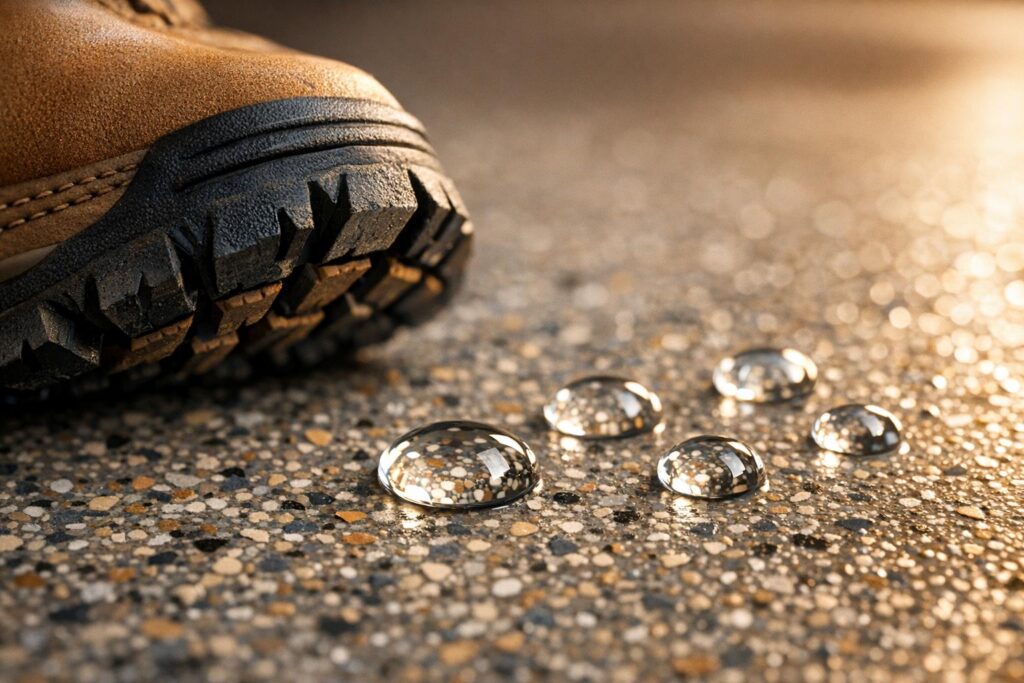
Slip-resistant coatings are a practical solution to moisture problems on concrete floors. They reduce slip hazards, protect surfaces from damage, and improve safety in wet environments like garages, pool decks, and industrial spaces. Here’s what makes them effective:
- Moisture Resistance: Polyurea coatings create a seamless, non-porous barrier, handling high moisture levels without peeling or bubbling.
- Quick Installation: Floors are ready for foot traffic in 12-18 hours and vehicles in 24 hours, minimizing downtime.
- Durability: These coatings last over 20 years, resist cracking, and withstand extreme temperatures.
- Improved Safety: Textured chips increase traction, reducing slip incidents by up to 80%.
- Low Maintenance: Non-porous surfaces make cleaning easy and cost-effective.
Polyurea chip floor systems outperform standard epoxy in strength, flexibility, and UV resistance, making them ideal for areas prone to moisture and temperature changes.
How Slip-Resistant Coatings Address Moisture Problems
Why Polyurea Coatings Work Against Moisture
Polyurea coatings create a seamless, solid barrier that can withstand hydrostatic pressure up to 140 psi. What makes them stand out is their ability to flex and bridge cracks without leaking. They cure quickly – foot traffic can resume in just 4-6 hours – making them practical for applications where downtime needs to be minimal. Plus, they can be applied on slightly damp surfaces without issues like bubbling or delamination.
One of their key benefits is their exceptional bonding strength to concrete, even when the surface is damp. With tensile strengths over 20 MPa, polyurea coatings handle moisture vapor emission rates (MVER) as high as 25 lbs per 1,000 square feet in 24 hours. For comparison, rigid epoxy coatings would fail under such conditions. This strong adhesion makes them a reliable choice for areas prone to high humidity, such as garages in Pennsylvania, where temperature changes often lead to condensation.
In addition to their moisture resistance, polyurea coatings can include textured chips, which significantly improve traction and safety.
How Textured Chips Improve Traction
Textured chips, usually 1/16-inch flakes made from vinyl or acrylic, are embedded into the coating to create a randomized surface. This design achieves a wet coefficient of friction (COF) between 0.8 and 1.0, far surpassing the ADA‘s minimum standard of 0.6. Research shows that incorporating these chips can reduce slip-and-fall incidents by as much as 70-80% compared to smooth coatings.
These chips enhance safety by dispersing water in multiple directions, preventing it from pooling into slippery sheets. In real-world conditions, surfaces treated with these chips maintain their high COF ratings even after extended exposure to standing water. This makes them an excellent choice for areas where moisture and safety are key concerns.
sbb-itb-4b4bb37
WHITECHEM – Slip Resistant Polyurea – SR 1080 #polyurea #waterproofing #carpark #garagefloor
Polyurea Chip Floor Systems Compared to Standard Coatings
Polyurea vs Epoxy Coatings: Performance Comparison for Moisture-Prone Floors
Feature and Performance Comparison
When it comes to handling moisture-related challenges, the limitations of standard epoxy coatings become apparent, especially when compared to polyurea systems. While epoxy has been a go-to choice for concrete floors for years, it struggles in damp or moisture-prone environments. Polyurea chip floor systems, on the other hand, excel with their toughness, flexibility, and long-lasting performance. These qualities make a noticeable difference in terms of durability and maintenance.
One of the standout features of polyurea is its flexibility. Unlike rigid epoxy, polyurea is elastic, which means it can expand and contract with temperature changes. This is a significant advantage in areas like Pennsylvania, where garages and pool decks experience extreme seasonal temperature swings. Epoxy, being brittle and inflexible, is more likely to crack or peel under these conditions.
As Crayton Caudill from Level 10 Coatings explains:
"Polyurea is up to five times stronger than standard epoxy, showing better resistance to chemicals, abrasion, and impact."
Another key benefit is the installation and curing time. Polyurea systems are ready for foot traffic within hours and can handle vehicles the very next day, all within a 24-hour timeframe. In contrast, standard epoxy coatings require 3 to 5 days of downtime before they’re fully cured. Plus, polyurea’s UV-stable topcoat ensures that it won’t yellow or fade when exposed to sunlight – a common issue with standard epoxy.
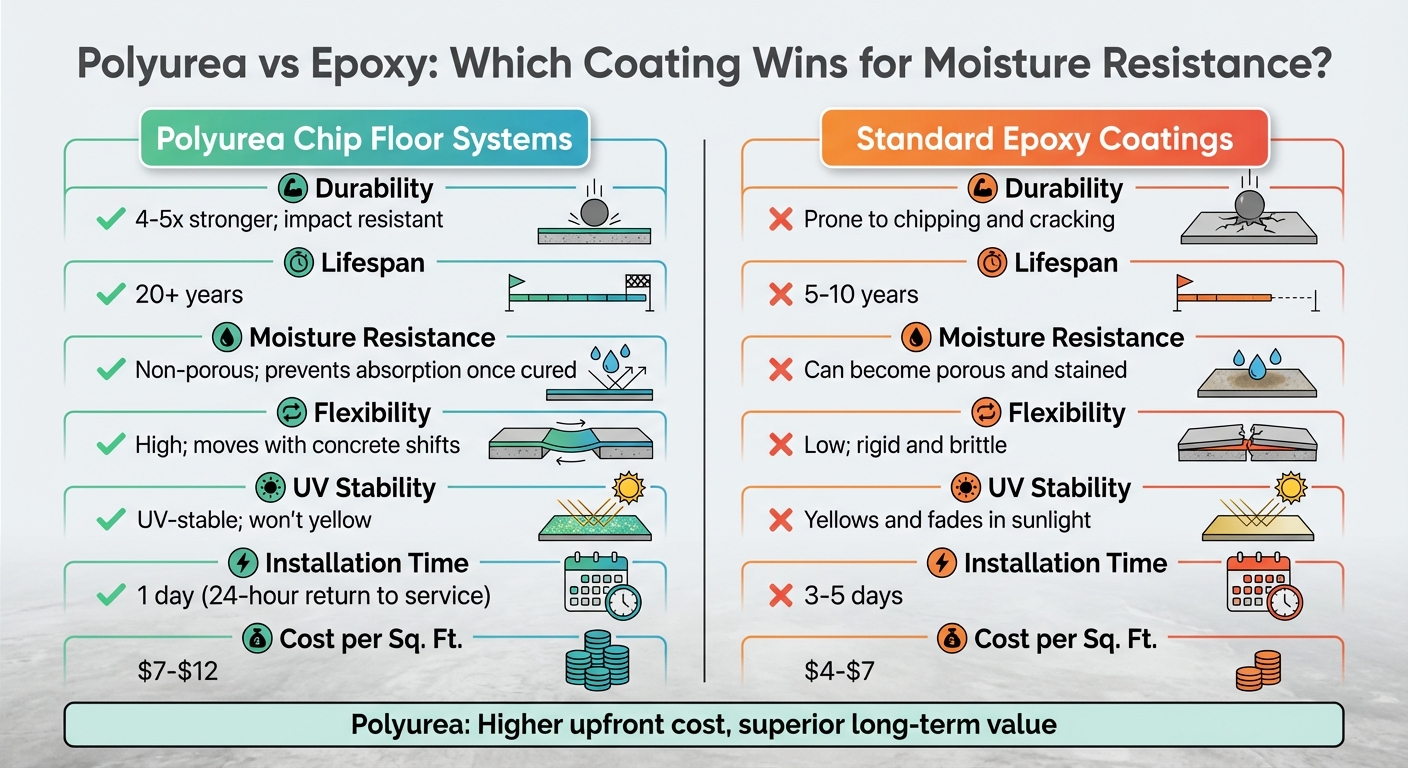
Here’s a quick breakdown of how the two compare:
| Feature | Polyurea Chip Floor Systems | Standard Epoxy Coatings |
|---|---|---|
| Durability | 4–5x stronger; impact resistant | Prone to chipping and cracking |
| Lifespan | 20+ years | 5–10 years |
| Moisture Resistance | Non-porous; prevents absorption once cured | Can become porous and stained |
| Flexibility | High; moves with concrete shifts | Low; rigid and brittle |
| UV Stability | UV-stable; won’t yellow | Yellows and fades in sunlight |
| Installation Time | 1 day (24-hour return to service) | 3–5 days |
| Cost per Sq. Ft. | $7–$12 | $4–$7 |
These benefits highlight why Atlas Concrete Coatings recommends polyurea chip floor systems, particularly for environments where moisture and temperature changes are a concern.
Installing Atlas Concrete Coatings in Moisture-Prone Spaces
Installation Process Breakdown
Atlas Concrete Coatings’ polyurea chip floor systems are installed through a streamlined, three-phase process that wraps up in just one day – keeping downtime to a minimum for Pennsylvania property owners.
Surface preparation is the first step and takes about 2-4 hours. The team uses diamond grinders and shot-blasters to mechanically profile the concrete to CSP 3-5 standards, ensuring the surface is free of oils, efflorescence, or other contaminants that might hinder adhesion. Moisture levels in the slab are carefully monitored using calcium chloride tests, keeping them below 3 lbs per 1,000 sq. ft. per 24 hours. Cracks are filled, and the surface is thoroughly cleaned before moving forward.
Next comes the application of the polyurea base coat with chips, which takes 1-2 hours. Using specialized spray equipment, installers apply a 15-20 mil thick polyurea base coat. This 100% solids, zero-VOC formula cures almost instantly, forming a seamless, water-resistant membrane capable of handling up to 20 lbs of moisture. While the base coat is still wet, 1/16-inch textured vinyl color chips are evenly distributed at 1-2 lbs per sq. ft. and back-rolled to ensure complete encapsulation.
The final step is sealing with a clear aliphatic topcoat. This layer locks in the chips, provides UV protection, and ensures a wet coefficient of friction (COF) above 0.8. The entire process is completed within a single workday. Floors are ready for foot traffic in 12-18 hours and can handle vehicle traffic within 24 hours, making this a fast and efficient solution for property owners.
Benefits for Pennsylvania Property Owners
This quick installation process not only reduces downtime but also offers long-term advantages. Unlike traditional epoxy systems, which can take 3-5 days to install, Atlas Concrete Coatings finishes the job in a fraction of the time. This is especially valuable during Pennsylvania’s rainy spring months, which average 3-4 inches of rainfall. The faster turnaround also cuts labor costs by 30-50% compared to epoxy systems. In humid areas like Philadelphia, where relative humidity hovers between 60-70%, there’s no need for extended moisture acclimation periods.
Pennsylvania homeowners enjoy lifetime warranties on residential installations, covering issues like peeling, chipping, or yellowing. For commercial spaces, 15-year warranties protect against moisture blistering, with testing aligned to ASTM D7234 standards. These coatings are designed to handle the state’s tough freeze-thaw cycles, reliably performing in temperatures from -20°F to 120°F. Case studies from Harrisburg warehouses and other industrial sites back up these claims.
Customization options make it easy to adapt the coatings to specific requirements. With over 20 chip blend colors available – including metallic flakes for garages and quartz aggregates for pool decks – property owners have plenty of choices. Businesses can also incorporate custom logos or select varying traction grades (fine, medium, or coarse). For example, a Reading, PA factory installed an anti-slip floor with high-visibility yellow chips to meet OSHA compliance. In Lancaster, an 800 sq. ft. pool deck installed on June 10, 2025, achieved a wet COF of 0.85, reducing slip incidents by 90%, according to the owner. Impressively, no maintenance was needed even after one humid summer.
Maintenance and Lifespan of Slip-Resistant Coatings
How Long Polyurea Coatings Last in Wet Environments
Polyurea chip floor systems are built to handle moisture-heavy areas like pool decks, garages, and industrial spaces. Their resistance to chemicals and abrasion means they require less frequent intensive maintenance, even in tough conditions. In places with high traffic and constant moisture, slip resistance might need a quick inspection or minor touch-ups every 3–4 years. However, the overall coating system remains strong and intact for over 20 years. Regular inspections are crucial to ensure the coating continues to perform well in wet conditions, keeping safety and functionality intact. This long-lasting durability also helps cut down on maintenance costs over time.
Low Maintenance Requirements and Cost Benefits
One of the standout features of polyurea coatings is how little maintenance they need. They hold up well against standard cleaning methods – whether it’s mop-and-bucket systems, ride-on scrubbers, or even heavy-duty steam cleaners – without the need for frequent resealing. Thanks to their non-porous surface, spills don’t seep in, making cleanup easier and helping to lower overall maintenance expenses in the long run.
Conclusion: Improving Safety with Slip-Resistant Coatings
Moisture doesn’t have to sacrifice safety or style in spaces like garages, pool decks, or industrial areas. Slip-resistant polyurea coatings enhance floor friction, reducing slip hazards. The addition of textured chips ensures better traction, while the non-porous surface keeps water from seeping through.
These coatings also protect concrete from damage caused by wear, erosion, or chemical spills – all while maintaining a polished appearance. Their ability to resist fuels, oils, and other chemicals makes spill cleanup straightforward, leaving no stubborn stains behind. For Pennsylvania property owners dealing with freeze-thaw cycles and moisture, the durability and minimal upkeep of these coatings provide long-term savings, often supported by lifetime warranties from Atlas Concrete Coatings.
This combination of benefits makes polyurea systems a smart choice for anyone seeking reliable, long-lasting performance. Atlas Concrete Coatings specializes in polyurea-based chip floor systems tailored to handle moisture-heavy environments. With fast installation and customizable designs, these coatings offer immediate safety improvements and enduring value for both residential and industrial spaces.
The bottom line? Managing moisture doesn’t have to mean constant upkeep. The right coating will keep your floors safe, damage-free, and ready to handle wet conditions for years to come.
FAQs
Do I need a moisture test before coating my concrete?
Testing the moisture levels of your concrete is a smart step before applying any coating. Ideally, the moisture content of the slab should fall between 3.5% and 4.5% to ensure it’s ready for coating. This process, along with checking the porosity, helps confirm the surface is properly prepared. Skipping this step could lead to coating failures caused by excess moisture, but proper testing ensures a finish that lasts and performs well over time.
What traction level should I choose for a garage or pool deck?
For garages and pool decks, it’s important to select a slip-resistant coating that provides strong traction, ensuring both safety and durability. Polyurea-based coatings are a solid choice, known for their long-lasting performance and ability to protect surfaces in moisture-prone areas.
Will the coating peel or bubble if my slab has high moisture?
When dealing with high-moisture slabs, coatings can peel or bubble if they aren’t specifically designed for these conditions. Too much moisture interferes with adhesion and curing – two key factors that ensure slip-resistant coatings work as intended.