
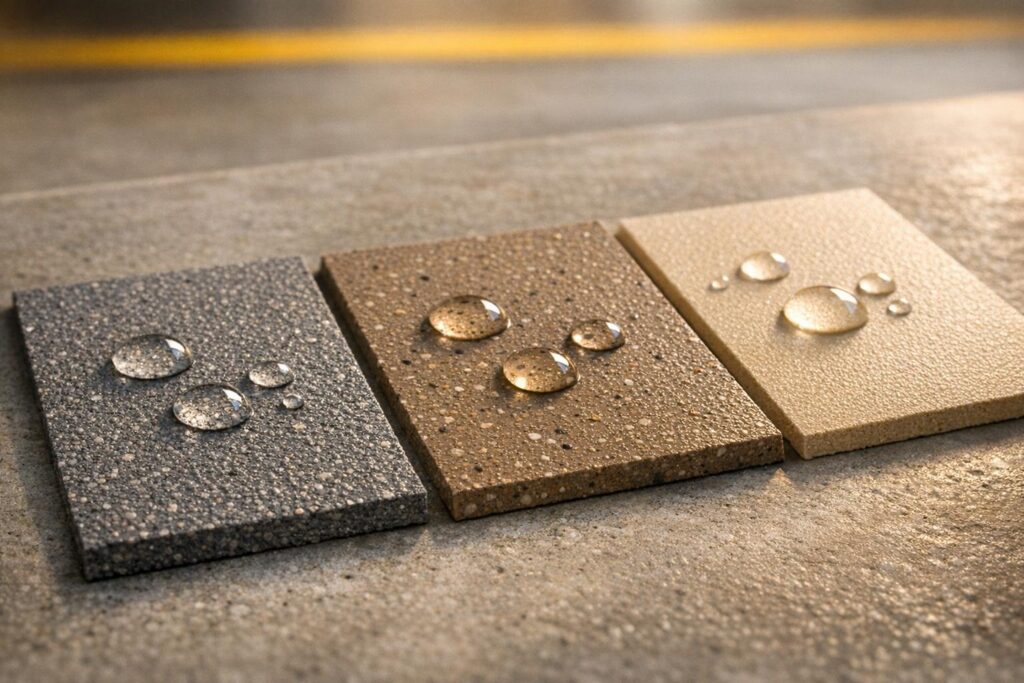
Slippery floors are a major safety hazard, causing injuries and costing U.S. businesses over $80 billion annually. Slip-resistant floor coatings improve traction, reduce accidents, and help meet OSHA and ADA safety standards. Here’s how to select the right coating:
- Assess Your Space: Consider traffic type (foot, machinery), moisture, chemicals, and temperature changes.
- Choose Materials: Options include epoxy (durable, chemical-resistant), polyurea (fast curing, UV-resistant), and urethane cement (thermal shock-resistant).
- Check Compliance: Ensure the coating meets ANSI and ADA standards for slip resistance (e.g., DCOF of 0.42+ for wet areas).
- Plan Maintenance: Textured coatings may require extra cleaning tools and care.
- Hire Professionals: Proper installation ensures durability, safety, and long-term performance.
For high-risk areas like pool decks or industrial spaces, coatings with a DCOF of 0.55 or higher are recommended. Professional installation guarantees the coating is applied correctly, avoiding safety risks and premature wear.
Step 1: Assess Your Space and Usage Requirements
Evaluate Traffic Type and Frequency
Start by determining how the floor will be used daily. The type of traffic – whether it’s foot traffic, light vehicles, or heavy machinery – will dictate the level of durability and impact resistance needed. For instance, a residential garage with occasional car use requires far less robust flooring than a warehouse handling forklifts and pallet jacks.
Industrial spaces that deal with heavy loads and high-impact equipment often need coatings designed to withstand mechanical stress. In areas where sharp tools or machinery are common, puncture-resistant coatings are essential since even small cuts can escalate into significant damage. For commercial spaces with high traffic, quick-cure systems are ideal, allowing operations to resume with minimal downtime.
| Traffic/Environment Type | Critical Coating Property |
|---|---|
| Heavy Loads & High Impact | Heavy Duty / High Durability |
| Wet or Slick Surfaces | Slip Resistance |
| Sharp Tools or Machinery | Puncture Resistance |
| High-Frequency Use | Quick Cure Epoxy |
| Temperature Cycling/Coolers | Thermal Shock Resistance |
| Electronics/Sensitive Equipment | Static Control (ESD) |
| Food/Beverage Processing | USDA Compliance / Antimicrobial |
Once you’ve assessed the traffic, consider how environmental conditions might impact the coating’s performance.
Identify Environmental and Safety Conditions
Environmental factors can significantly affect how well a coating performs over time. For instance, moisture, chemical exposure, and temperature changes are all critical considerations. If spills or frequent cleaning are expected, opt for waterproof coatings. For facilities with cold storage or coolers, thermal shock resistance is key since rapid temperature shifts can damage the floor.
Chemical exposure is another major concern. Spaces like manufacturing plants, auto shops, and food processing facilities often deal with corrosive substances that can deteriorate concrete. In such cases, chemical- and acid-resistant coatings are a must to protect the floor. Similarly, be mindful of moisture vapor transmission (MVT) from the subfloor; excessive moisture can cause coatings to fail. In food-related spaces, antimicrobial coatings that meet USDA standards can help prevent bacteria, mold, and fungus growth.
Verify Compliance with Safety Standards
After addressing usage and environmental needs, ensure your chosen coating complies with industry safety standards. Compliance not only reinforces safety but also helps avoid potential legal issues. In the U.S., the ANSI A326.3-2021 standard is used to measure slip resistance. For wet, high-risk areas like pool decks, showers, or outdoor walkways, aim for a DCOF (Dynamic Coefficient of Friction) of 0.60 or higher.
"Following DCOF ADA Compliance makes floors safer for everyone and helps avoid accidents or legal issues in public and commercial buildings." – Halil I Oguz, Content Strategist, Mosaicenter
The Americans with Disabilities Act (ADA) mandates that floors be safe and stable for individuals using mobility aids. While the ADA doesn’t specify a numerical DCOF, adhering to standards like ANSI A326.3 ensures compliance and reduces the likelihood of slip-and-fall accidents. Always confirm that your chosen coating has been tested with approved DCOF devices to verify compliance.
sbb-itb-4b4bb37
How to Achieve Anti-Slip Concrete Floor
Step 2: Compare Coating Materials and Properties
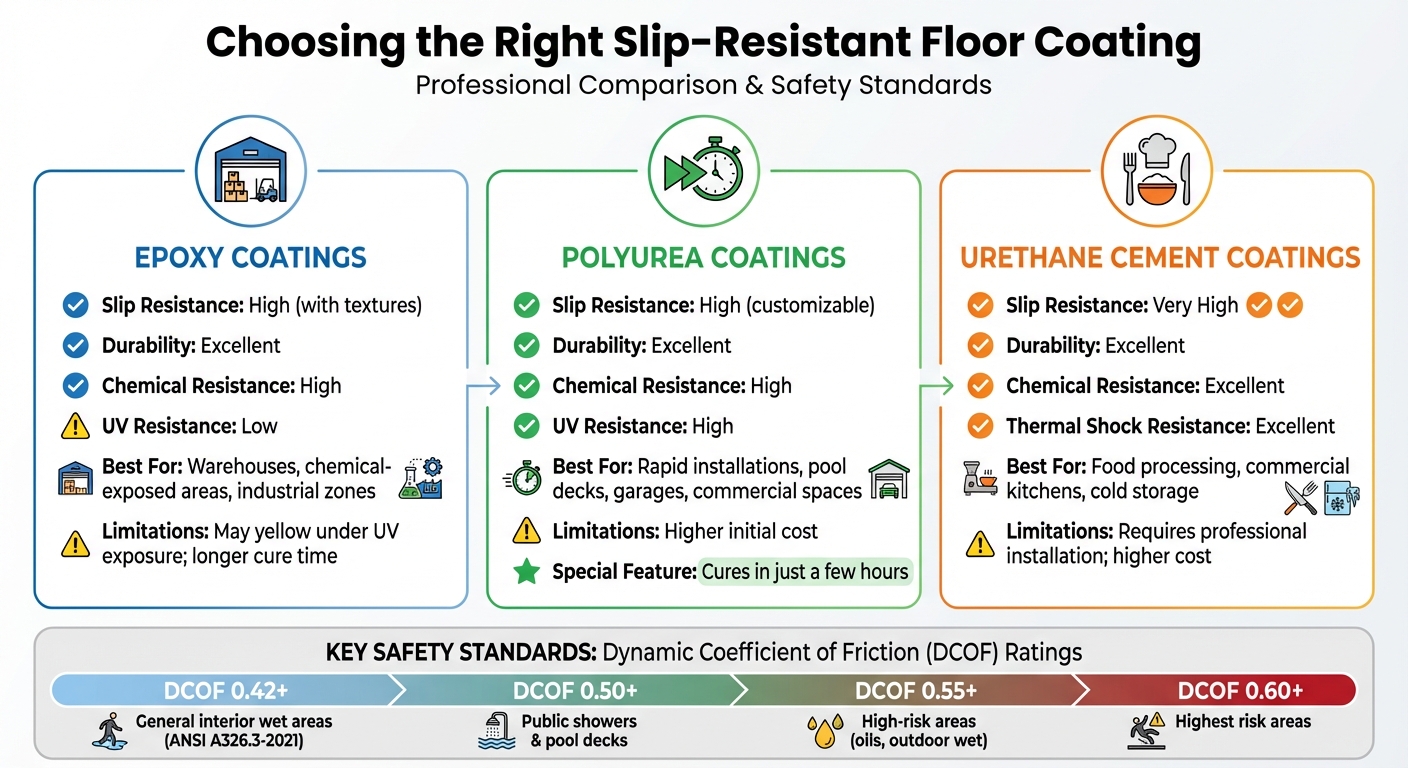
Slip-Resistant Floor Coating Comparison: Epoxy vs Polyurea vs Urethane Cement
Common Coating Material Options
When choosing a coating material, consider epoxy, polyurea, and urethane cement systems – each tailored to different needs. Epoxy coatings are a go-to for their durability and resistance to chemicals, making them ideal for warehouses, industrial areas, and spaces exposed to harsh substances. Polyurea coatings, on the other hand, are prized for their quick curing times, helping businesses minimize downtime during installation. Lastly, urethane cement coatings shine in food processing environments due to their ability to handle thermal shock and maintain excellent performance in challenging conditions.
Resinous systems can be customized with aggregates like quartz, vinyl flake, or aluminum oxide to achieve specific textures. For instance, aggressive additives such as Aluminum Oxide (#24, #36, or #54) provide superior slip resistance for high-risk areas, while smoother "orange peel" textures are easier to clean and better suited for less demanding environments.
Material Comparison Table
| Coating Type | Slip Resistance | Durability | Chemical/UV or Thermal Resistance | Best Applications | Limitations |
|---|---|---|---|---|---|
| Epoxy | High (with textures) | Excellent | High chemical resistance; low UV resistance | Warehouses, chemical-exposed areas, industrial zones | May yellow under UV exposure; longer cure time |
| Polyurea | High (customizable) | Excellent | High chemical and UV resistance | Rapid installations, pool decks, garages, commercial spaces | Higher initial cost |
| Urethane Cement | Very High | Excellent | Excellent chemical and thermal shock resistance | Food processing, commercial kitchens, cold storage | Requires professional installation; higher cost |
For those seeking quick installation and adaptable textures, polyurea coatings are often the top choice.
Polyurea-Based Systems
Polyurea coatings stand out for their fast curing times and exceptional durability. These systems can cure in just a few hours, significantly reducing downtime for businesses. Companies like Atlas Concrete Coatings specialize in polyurea-based chip floor coatings, which combine safety, visual appeal, and customizable slip resistance – perfect for wet or high-traffic zones.
Another advantage of polyurea coatings is their UV resistance, making them an excellent option for outdoor spaces like pool decks and patios where other coatings might discolor or deteriorate. The material’s flexibility allows it to handle thermal expansion and contraction better than more rigid alternatives. Additionally, the texture can be tailored during installation by using various aggregate sizes or vinyl flakes, ensuring compliance with ANSI standards while maintaining a surface that’s easy to clean.
Step 3: Evaluate Durability, Maintenance, and Installation
Review Durability and Performance Ratings
When choosing a coating, it’s important to evaluate how well it holds up under real-world conditions. For high-traffic areas, abrasion resistance is a must. You’ll want a coating that can handle constant foot traffic, heavy loads, and even wheeled equipment without wearing down. If your space involves exposure to oils, solvents, or cleaning agents, chemical resistance becomes equally important. Additionally, coating thickness plays a major role in durability – thicker, high-performance coatings tend to last longer and perform better. With proper care, top-quality coatings can last over a decade. Once durability is assessed, it’s time to consider the maintenance demands.
Understand Maintenance Requirements
Textured coatings are great for added grip but can trap dirt and contaminants more easily than smooth surfaces. While smooth floors are simple to mop, textured ones often require tools like stiff-bristled brushes, rotary machines, or automatic scrubbers to clean effectively. The cleaning method should fit the environment. For example:
- Commercial kitchens and auto service areas: Cleaner/degreasers work best.
- Manufacturing facilities and loading docks: Heavy-duty cleaners are often necessary.
However, steer clear of acidic or abrasive cleaners like vinegar, bleach, or undiluted ammonia, as these can damage the coating over time. Always test new cleaning products on a small area first to avoid dulling the finish. Quick action is vital for chemical or dairy spills – residues can stain or weaken the coating if left unattended.
Also, keep in mind that high-performance coatings may take up to 14 days to fully cure. During the first 7 days (at 70°F), avoid scrubbing the surface to ensure the coating sets properly.
Why Professional Installation Matters
Even the best coating won’t perform well without proper installation. Professional installers ensure everything is done right, from surface preparation to mixing ratios and application conditions. These factors directly affect the durability, texture, and safety of the finished product. For instance, Atlas Concrete Coatings specializes in polyurea-based systems that cure quickly and provide excellent durability and slip resistance. Their expertise ensures the right texture profile, proper thickness, and ideal curing conditions – details that DIY installations often overlook. Poor installation can lead to premature wear, safety risks, or maintenance challenges. By relying on professionals, you’ll get a coating tailored to your specific needs, ensuring long-term performance and easier upkeep.
Step 4: Final Checklist for Selecting Your Coating
Now that you’ve assessed your space, materials, and installation needs, use this checklist to finalize your coating selection.
Match Coating Features to Your Needs
Make sure the coating aligns with your space’s specific requirements. Start by checking the Dynamic Coefficient of Friction (DCOF) ratings, the go-to standard for slip resistance. For level interior floors that might get wet, the ANSI A326.3-2021 standard requires a minimum wet DCOF of 0.42. That said, some environments demand higher ratings – public showers and pool decks typically need at least 0.50, while spaces exposed to oils, greases, or outdoor wet conditions should aim for 0.55 or more. This step ensures your choice fits your usage needs, environmental conditions, and durability expectations.
If heavy forklift traffic is part of your daily operations, you’ll need a coating that can handle that level of wear and tear. Facilities exposed to oils, greases, or chemical spills should prioritize coatings with chemical resistance and UV stability to prevent yellowing or breakdown. Consider both safety and appearance – clear coatings may preserve the original surface, while textured finishes can add extra grip for high-traffic areas.
"The specifier shall determine materials appropriate for specific project conditions, considering… type of use, traffic, expected contaminants, expected maintenance, expected wear, and manufacturers’ guidelines and recommendations." – ANSI A326.3-2021
Request Samples and Consultations
Before committing, test the coating in your actual environment. Since there’s no universal federal standard for slip resistance, consulting with experts can help you navigate varying requirements. Request sample patches to evaluate traction, texture, and overall appearance. This hands-on approach ensures the coating performs as expected and meets your aesthetic preferences before full-scale application.
"A sample should always be obtained and tested prior to the installation of any slip resistant flooring system." – Jes Grant, Marketing Engagement Manager, Sherwin-Williams
During consultations, be specific about your operational needs. Explain if your space handles heavy machinery, what types of contaminants the floor may encounter, and how your team manages maintenance. Technical experts can recommend texture additives like aluminum oxide or granulated polymers to boost safety. Companies like Atlas Concrete Coatings offer free consultations and estimates to help you choose the right polyurea-based system for residential, commercial, or industrial applications. Once your sample passes all performance tests, move forward with professional installation.
Work with Professional Service Providers
Proper installation is key to ensuring the coating performs well over time. Verify that your chosen service provider adheres to the standards discussed in earlier steps. Skilled professionals will prepare the surface correctly and follow safety protocols throughout the process.
Atlas Concrete Coatings specializes in polyurea-based chip floor coatings that provide quick installation and long-lasting results. Their systems offer customizable slip-resistant textures, UV protection for outdoor spaces, and strong chemical resistance for demanding environments. Partnering with experienced professionals ensures your coating meets OSHA safety standards for walking and working surfaces, while also delivering the durability you need. Atlas Concrete Coatings supports their chip systems with lifetime warranties and serves both Pennsylvania and New Jersey, offering tailored solutions for garage floors, pool decks, and industrial facilities.
Conclusion: Improve Safety and Durability with the Right Coating
The steps above are designed to help you make a well-informed decision that enhances both safety and longevity. Choosing a slip-resistant coating tailored to your environment’s specific needs is key. Whether your space faces heavy forklift traffic, frequent chemical spills, or consistently wet conditions, the coating you select should meet the appropriate Dynamic Coefficient of Friction standards: at least 0.42 for general interiors and 0.55 for high-risk areas. Once selected, expert application is crucial to ensure the coating’s durability and effectiveness.
"Factory safety starts from the ground up, literally. The floors under your employees’ feet need to do more than withstand machinery and foot traffic; they need to keep workers safe while supporting the pace of production."
– Jamie Gillespie, CPC Floor Coatings
Professional installation plays a significant role in achieving long-lasting results. Proper surface preparation, customized textures, and compliance with OSHA standards are all essential elements of a successful application. Experts like Atlas Concrete Coatings specialize in polyurea-based systems, ensuring correct installation and delivering durable, OSHA-compliant solutions tailored to various environments.
Investing in the right coating protects both your workforce and your property. Slip-and-fall incidents are some of the most common causes of workers’ compensation claims, making it critical to prioritize safety alongside durability. By working with professionals who understand how to balance traction, maintenance, and visual appeal, you can create a safe and long-lasting flooring solution that meets your specific needs. The right coating doesn’t just safeguard people – it fosters a workplace culture committed to safety and reliability.
FAQs
What DCOF should my floor coating have?
A slip-resistant floor coating should feature a Dynamic Coefficient of Friction (DCOF) of 0.42 or higher. This standard is key for maintaining safety, particularly in spaces where moisture or wet conditions are common. Checking the DCOF rating ensures the coating aligns with safety requirements, helping to minimize slip and fall risks.
Which coating is best for my space: epoxy, polyurea, or urethane cement?
The right coating choice depends on your specific requirements. Epoxy stands out for its strong adhesion and resistance to chemicals, making it a great option for garages or industrial floors. Polyurea is known for its durability, flexibility, and fast curing time, making it a top pick for pool decks or commercial settings. Urethane cement offers excellent resistance to chemicals and abrasion, perfect for industrial environments, though its application demands precision. To ensure the best fit for your space, it’s a good idea to consult a professional.
How do I balance slip resistance with easy cleaning?
To strike the right balance between slip resistance and easy cleaning, go for a floor coating with a moderate texture. It should provide enough grip to prevent slips but still be smooth enough to clean without hassle. Steer clear of overly rough surfaces, as they tend to trap dirt and make cleaning more challenging. Regular cleaning with tools and cleaning agents specifically designed for textured floors can help maintain both safety and cleanliness. Look for finishes that make it simple to remove debris and spills while keeping the slip resistance intact.