
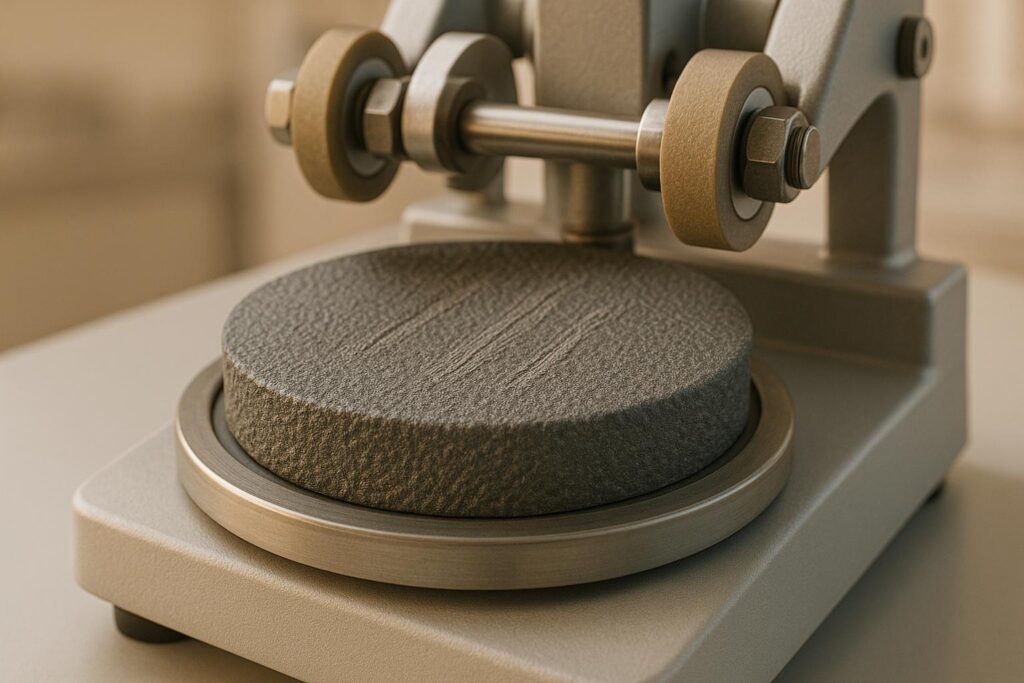
Polyurea coatings are known for their durability, but how do they actually perform under wear and tear? The ASTM D4060 test provides a standardized way to measure abrasion resistance, helping you compare coatings for demanding environments like garages, warehouses, and industrial facilities.
- What is ASTM D4060? A test using a Taber Abraser to measure how much material a coating loses after repeated friction (e.g., 1,000 cycles with specific wheels and loads).
- Why does abrasion resistance matter? It ensures coatings maintain their appearance, functionality, and longevity under constant mechanical wear.
- Polyurea vs. Epoxy: Polyurea coatings typically show lower weight loss in testing, meaning they resist wear better, making them ideal for high-traffic areas.
- Key results: High-performance polyurea coatings often lose only 10–40 mg after 1,000 cycles, outperforming many epoxy systems.
When choosing a floor coating, ASTM D4060 results help predict durability, but real-world factors like thickness, preparation, and usage also play a role. For long-lasting performance, pair these results with other metrics like chemical and impact resistance.
How the ASTM D4060 Testing Method Works
The Taber Abrasion Test Procedure
The ASTM D4060 test starts with a fully cured coating applied evenly to a rigid panel. This panel is placed on a rotating turntable, ensuring the coating sits directly under two abrasive wheels that simulate wear and tear similar to real-world conditions.
The wheels move in opposite directions, creating overlapping arcs over a 30 cm² area. This motion replicates the friction patterns caused by turning vehicles, pivoting machinery, or shifting foot traffic. Each wheel applies a 1-kilogram load (around 2.2 pounds) to the coating, and the turntable rotates for a set number of cycles – often 1,000 cycles for floor coatings, though this can vary depending on the test’s purpose. A vacuum system runs continuously to clear away debris, preventing it from contributing to three-body abrasion, where loose particles act as additional abrasives, skewing the results.
The most commonly used abrasive wheels for these tests are CS-17 and CS-18. To maintain consistent performance, technicians reface the wheels with an S-11 disk before the test begins and after every 500 cycles. This step ensures the wheel surface remains uniform, as debris buildup can alter how aggressively the wheels wear down the coating. In some cases, resurfacing may need to happen more frequently. By monitoring weight loss every 50 cycles, technicians can identify when the wheels need attention to preserve test accuracy.
Once the test is complete, the results are determined by carefully measuring weight changes in the panel.
Reading Test Results: Weight Loss and Wear Index
The primary metric for ASTM D4060 testing is weight loss in milligrams (mg). This is calculated by subtracting the panel’s final weight from its initial weight, showing how much coating was worn away. A lower weight loss indicates better abrasion resistance.
For easier comparisons, results are often presented as a wear index, measured in mg per 1,000 cycles. This standardizes weight loss across tests with varying cycle counts. For example, a coating losing 50 mg over 1,000 cycles has a wear index of 50 mg/1,000 cycles, while one losing 150 mg is less resistant to abrasion.
Other reporting formats include total weight loss at a specific cycle count, weight loss per cycle, or the number of cycles required to wear away a specific coating thickness. However, the wear index remains the most common method for comparing products like polyurea or other floor coatings.
It’s worth noting that mass loss and thickness loss can tell different stories. A coating with dense fillers may show higher weight loss but less thickness loss, while a lighter coating might lose less weight but wear down faster. For instance, a urethane coating with 20 mil thickness containing 1.2-micrometer titanium particles showed 2.1 mil thickness loss and 110 mg mass loss. In contrast, a similar urethane coating without titanium particles experienced 2.9 to 3.1 mil thickness loss but only 44 mg mass loss. While the titanium-reinforced coating lost more weight, it maintained its thickness better, offering longer-lasting protection.
This distinction matters because thickness loss is often a better indicator of how well a coating protects its substrate over time. When comparing coatings, both mass loss and thickness loss should be evaluated for a complete understanding of performance.
Factors That Affect Test Results
Several variables can influence ASTM D4060 test outcomes beyond the standard procedure. The coating’s composition, hardness, and friction properties all play a role. For instance, coatings with dense fillers or high friction levels may wear down the abrasive wheels faster than the coating itself. Hard fillers like silica or metal oxides can accelerate wheel degradation, altering the results in ways that don’t always reflect real-world conditions.
Debris characteristics also have a significant impact. Dense particles in the debris can cause three-body abrasion if not effectively removed by the vacuum system, leading to faster coating breakdown.
Air bubbles in flexible coatings can reduce recorded weight loss. These bubbles often become exposed after 50 to 100 abrasion cycles, causing the abrasive wheel to ride over the pockets of air rather than the solid coating. This reduces the amount of material actually removed during testing.
Coating thickness is another critical factor. For thicker coatings, the final 200 cycles may involve abrading the substrate once the coating wears through in certain areas. In such cases, these cycles are sometimes excluded when calculating the wear index to focus solely on the coating’s performance.
These variables highlight why coatings with similar weight loss values can perform differently in practical applications. An interlaboratory study involving seven labs and five materials underscored the importance of consistent procedures and repeatability in ASTM D4060 testing.
To ensure reliable comparisons, all test conditions must be identical – this includes wheel type, load, cycle count, substrate material, and coating thickness. Plotting weight loss every 50 cycles can help identify when wheels need resurfacing or when coating properties change during the test. Always measure and report dry film thickness in mils alongside weight loss to provide a fuller picture of abrasion resistance, accounting for both material density and protective thickness after wear.
Polyurea Coating Performance in ASTM D4060 Tests
Typical Abrasion Resistance Values for Polyurea Coatings
Polyurea coatings consistently perform well in ASTM D4060 abrasion tests, with weight loss values typically falling between 20–40 mg at 1,000 cycles when tested using CS‑17 wheels under a 1,000-gram load. High-performance polyurea or polyaspartic floor systems often achieve even better results, with weight loss figures ranging from 10–40 mg under the same conditions.
These results depend on both the formulation of the polyurea and the thickness of the coating. Thicker applications naturally offer more material to wear through, but the specific formulation plays an equally critical role. For instance, adding dense particulate fillers can influence the wear pattern during testing. When checking product data sheets, it’s essential to confirm details like the wheel type (commonly CS‑17), applied load (usually 1,000 grams), and cycle count (typically 1,000), as any variations in these factors can impact how results compare. For residential and commercial applications, polyurea coatings with weight loss at or below 30 mg at 1,000 cycles are often preferred. These values provide a reliable benchmark for comparing polyurea to other coating options.
Polyurea vs. Other Coatings in Abrasion Testing
In ASTM D4060 tests, polyurea coatings generally outperform epoxy systems, showing lower weight loss and better abrasion resistance. This advantage stems from polyurea’s material properties, including its high tensile strength and excellent tear resistance. These attributes allow polyurea to handle mechanical stress without cracking or peeling. On the other hand, epoxy coatings, which are more rigid, are prone to chipping or peeling at the edges of scratches.
It’s worth noting that ASTM D4060 focuses solely on abrasion resistance and doesn’t account for impact, chemical, or thermal performance. Additionally, coatings with dense fillers may show slightly higher weight loss during testing because the fillers can wear down the test wheel, even though the actual thickness loss of the coating might be minimal. For this reason, ASTM D4060 results should be considered alongside other performance metrics when evaluating coatings.
How Polyurea’s Abrasion Resistance Applies to Actual Use
The durability demonstrated in ASTM D4060 tests translates directly to real-world applications. Polyurea’s low weight loss highlights its ability to withstand mechanical stress better than more brittle coatings. For example, in residential garages – where vehicles, road debris, dropped tools, and rolling equipment create constant wear – a polyurea coating with low weight loss can maintain its protective properties for years. Its flexibility helps prevent the cracking and peeling often seen with rigid coatings.
Beyond garages, polyurea systems excel in pool decks, industrial facilities, and other high-traffic areas. Outdoor applications benefit from polyurea’s wear resistance combined with complete UV stability. Unlike some coatings, polyurea maintains its color and finish even after prolonged exposure to sunlight, foot traffic, and chemical cleaners – resisting fading and cloudiness.
In industrial environments, where floors endure forklifts, heavy machinery, constant foot traffic, and chemical spills, polyurea coatings designed for demanding conditions provide the durability needed for long-term performance. These systems also cure quickly – often within a single day – minimizing downtime and allowing operations to resume without delay.
Atlas Concrete Coatings offers polyurea solutions tailored for high-traffic, fast-curing applications. Their polyurea chip floor coatings, garage floor systems, and industrial flooring products are specifically engineered to take advantage of polyurea’s abrasion resistance and quick return-to-service, delivering durable, long-lasting results.
Matching a coating’s ASTM D4060 performance data to the specific demands of a space is crucial. For instance, a residential garage with moderate use might require a system with weight loss in the 20–30 mg range, while an industrial facility would benefit from coatings with results on the lower end of the spectrum. Evaluating both weight loss and thickness loss together paints a clearer picture of the coating’s long-term durability.
Using ASTM D4060 Results to Select Floor Coatings
What ASTM D4060 Results Tell You About Durability
The ASTM D4060 test provides weight loss values that help gauge how well a coating resists abrasion under controlled conditions. For instance, a coating showing 20 mg of weight loss after 1,000 cycles will generally resist wear better than one with 80 mg of loss under the same parameters. In simple terms, lower numbers typically mean better abrasion resistance.
That said, the connection between lab results and real-world performance isn’t always straightforward. The test simulates wear by grinding an abrasive wheel against a coating sample, but actual floors face a variety of challenges – like foot traffic patterns, debris buildup, and environmental factors like temperature and moisture changes.
Weight loss values also need to be interpreted in context. Some coatings, especially those with dense fillers like silica or metal oxides, may show higher mass loss during testing but experience minimal thickness reduction. On the flip side, lighter coatings might perform well in weight loss tests but wear through their protective layer faster in the field.
Thickness loss provides a clearer picture of durability. For example, if a coating loses 2.1 mils in thickness with 110 mg of mass loss, you get a better sense of how much protective material is actually wearing away. This is crucial because maintaining protective properties over time is more important than just minimizing weight loss.
For environments like retail spaces, office hallways, or residential garages, weight loss values offer a reasonable indication of durability since these settings often mirror the test conditions. However, in areas with heavy equipment or vehicle traffic, ASTM D4060 results are just one part of a broader evaluation that also includes impact resistance and the ability to handle dynamic loads.
These insights help you align coatings with the specific demands of your floor.
Selecting Coatings Based on Abrasion Resistance
Once you have ASTM D4060 results, the next step is to match coatings to the specific traffic and environmental conditions your floor will face. The key is understanding the daily challenges your floor endures.
For residential floors, such as garages with occasional vehicle use and weekend projects, polyurea coatings with weight loss in the 20–30 mg range after 1,000 cycles (using CS-17 wheels with a 1,000-gram load) typically perform well. These coatings handle moderate wear from vehicles, foot traffic, and the occasional dropped tool while maintaining their appearance.
In commercial spaces like retail floors, office lobbies, or restaurant dining areas, constant foot traffic means abrasion resistance is critical. Polyurea systems with weight loss at or below 30 mg are a solid choice, especially if they also offer good slip resistance and are easy to maintain. These coatings need to withstand daily cleaning, resist scuff marks, and retain their finish under continuous use.
For industrial environments, where forklifts, heavy machinery, or vehicles are common, coatings with weight loss in the 10–25 mg range or lower are ideal. These settings also require coatings that can handle chemical spills, impacts from dropped materials, and repeated temperature fluctuations caused by equipment or seasonal changes.
When reviewing product data sheets, pay close attention to the test conditions. A coating with 25 mg weight loss might sound impressive, but you need to confirm whether this result comes from 1,000 cycles or 500 cycles, what type of wheel (e.g., CS-17 or CS-18) was used, and the applied load. Without consistent test parameters, comparisons between coatings can be misleading. Always compare coatings tested under identical conditions – same wheel type, load, number of cycles, and substrate.
For a more complete picture, request both weight loss and thickness loss data. If possible, ask manufacturers for field performance data from applications similar to yours. Real-world case studies often reveal more about long-term durability than lab results alone.
Limitations of ASTM D4060 Testing
While ASTM D4060 testing offers a useful baseline, it has its limitations. The test focuses on one specific aspect of coating performance under controlled conditions, which may not fully reflect real-world challenges. For example, the standardized abrasive wheels used in the test don’t simulate the wear caused by concrete dust, sand, or industrial debris that floors often encounter.
Real-world traffic introduces variables that the test can’t replicate. A person walking across a floor exerts different pressure than a rolling cart, and forklifts create entirely different stress patterns. These dynamic loads, combined with directional changes and varying speeds, produce wear patterns that a rotating abrasive wheel simply can’t mimic.
The test also measures mass loss, not functional performance. A coating might show acceptable weight loss yet develop wear patterns or lose slip resistance over time – factors that impact both aesthetics and safety but aren’t captured in the test results.
Different coating chemistries can further complicate comparisons. For instance, harder coatings may wear down the abrasive wheel faster, while coatings with air bubbles might show artificially low mass loss because the wheel encounters air pockets instead of solid material. This makes it tricky to directly compare polyurea, epoxy, or MMA systems based on ASTM D4060 results alone.
Use ASTM D4060 as a starting point for evaluating abrasion resistance, but don’t stop there. Build a comprehensive durability assessment that considers your specific needs. For a garage floor, impact resistance and chemical resistance might matter just as much as abrasion performance. In an industrial facility, the ability to withstand thermal cycling and exposure to specific chemicals could be equally critical. For outdoor surfaces like pool decks, factors like UV stability and slip resistance when wet are just as important.
Atlas Concrete Coatings takes a broader approach, evaluating polyurea systems across multiple performance criteria – not just abrasion resistance. Their philosophy emphasizes that durability comes from a combination of factors, including abrasion resistance, flexibility, impact strength, chemical resistance, and proper installation. Together, these elements ensure floors perform well not just in lab tests, but in real-world conditions where it truly counts.
sbb-itb-4b4bb37
ASTM D4060 and Atlas Concrete Coatings‘ Polyurea Systems
Atlas Concrete Coatings’ Focus on Durability
Atlas Concrete Coatings relies on ASTM D4060 testing to refine and validate its polyurea systems. By analyzing chip coatings, pool deck resurfacing products, and industrial flooring systems, they measure material loss in milligrams or by wear index. This helps ensure consistent performance. The data allows them to compare different formulas, film builds, and topcoat options, selecting combinations that minimize material loss while meeting performance targets for adhesion, impact resistance, and UV stability.
Atlas evaluates its polyurea systems against several performance benchmarks. Results from ASTM D4060 testing confirm that their coatings resist wear better than traditional epoxy systems. The flexibility and quick curing time of polyurea make it ideal for real-world challenges faced by U.S. homeowners and facility managers.
For residential garage floors, Atlas aims for weight loss values that outperform standard epoxy coatings. In pool deck applications, they balance abrasion resistance with slip-resistant textures, accounting for foot traffic, furniture movement, and exposure to sand or pool chemicals. Industrial settings demand even tougher criteria, with products designed to withstand continuous abrasion from forklifts, pallet jacks, and rolling loads, all while showing minimal weight loss.
Atlas’s chip floor coatings combine a durable polyurea basecoat with a protective topcoat, offering exceptional durability. These coatings outperform standard epoxy, which is more prone to chipping, peeling, and discoloration. Additionally, UV-resistant properties ensure a consistent finish over time. This rigorous testing and evaluation reflect Atlas’s commitment to providing reliable coatings for a variety of U.S. environments.
Where Atlas’s High-Performance Polyurea Coatings Are Used
Atlas’s ASTM D4060-tested polyurea systems are designed to excel in areas with constant abrasion. In residential garages, Taber test results showing low mass loss translate to long-lasting polyurea chip systems that help reduce bare concrete spots and maintain color over years of daily use.
On pool decks and patios, strong abrasion resistance ensures surfaces can handle heavy foot traffic, dragged furniture, and abrasive debris. Atlas correlates its Taber test data with field performance, finding that systems with superior ASTM D4060 results develop fewer worn spots and maintain a uniform appearance. Slip-resistant textures further enhance safety and aesthetics.
In commercial and industrial environments – like warehouses, service bays, and manufacturing facilities – the benefits of superior ASTM D4060 performance are even more critical. In forklift aisles and loading docks, coatings with the lowest mass loss stand up to heavy loads and frequent use. Production lines benefit from coatings that resist both abrasion and chemicals, ensuring regular cleaning or accidental spills won’t compromise the floor. Atlas’s polyurea coatings handle variable loads without cracking or peeling, making them perfect for demanding conditions in places like Pennsylvania and New Jersey.
Helping U.S. Customers Choose the Right Flooring
Atlas uses ASTM D4060 data to guide homeowners, facility managers, and contractors in choosing the best flooring solutions for their needs. They simplify technical test results into clear benefits, showing how their polyurea systems perform in real-life situations. For homeowners, this means longer intervals between maintenance, fewer visible worn spots, and a finish that holds up under constant use.
Facility managers rely on ASTM D4060 results to match product performance to specific building zones. For high-traffic areas like loading docks, products with the lowest mass loss take priority. Meanwhile, walkways are treated with coatings that balance wear resistance and slip-resistant properties for added safety.
Atlas also works closely with contractors, using ASTM D4060 data to inform installation decisions. For example, comparing high-build polyurea clear coats against UV-stable polyaspartic layers helps determine the best option for different climates – whether it’s garages exposed to road salt in snowy regions or outdoor areas in hot, dusty environments.
Atlas provides free consultations and estimates, reviewing ASTM D4060 data alongside field performance from completed U.S. projects. By combining lab results with real-world case studies from garages, pool decks, and warehouses, Atlas sets realistic expectations for how their floors will perform over time. While ASTM D4060 testing offers a solid baseline for abrasion resistance, other factors like adhesion, hardness, flexibility, chemical resistance, and UV stability also play a key role in the overall performance of their polyurea systems.
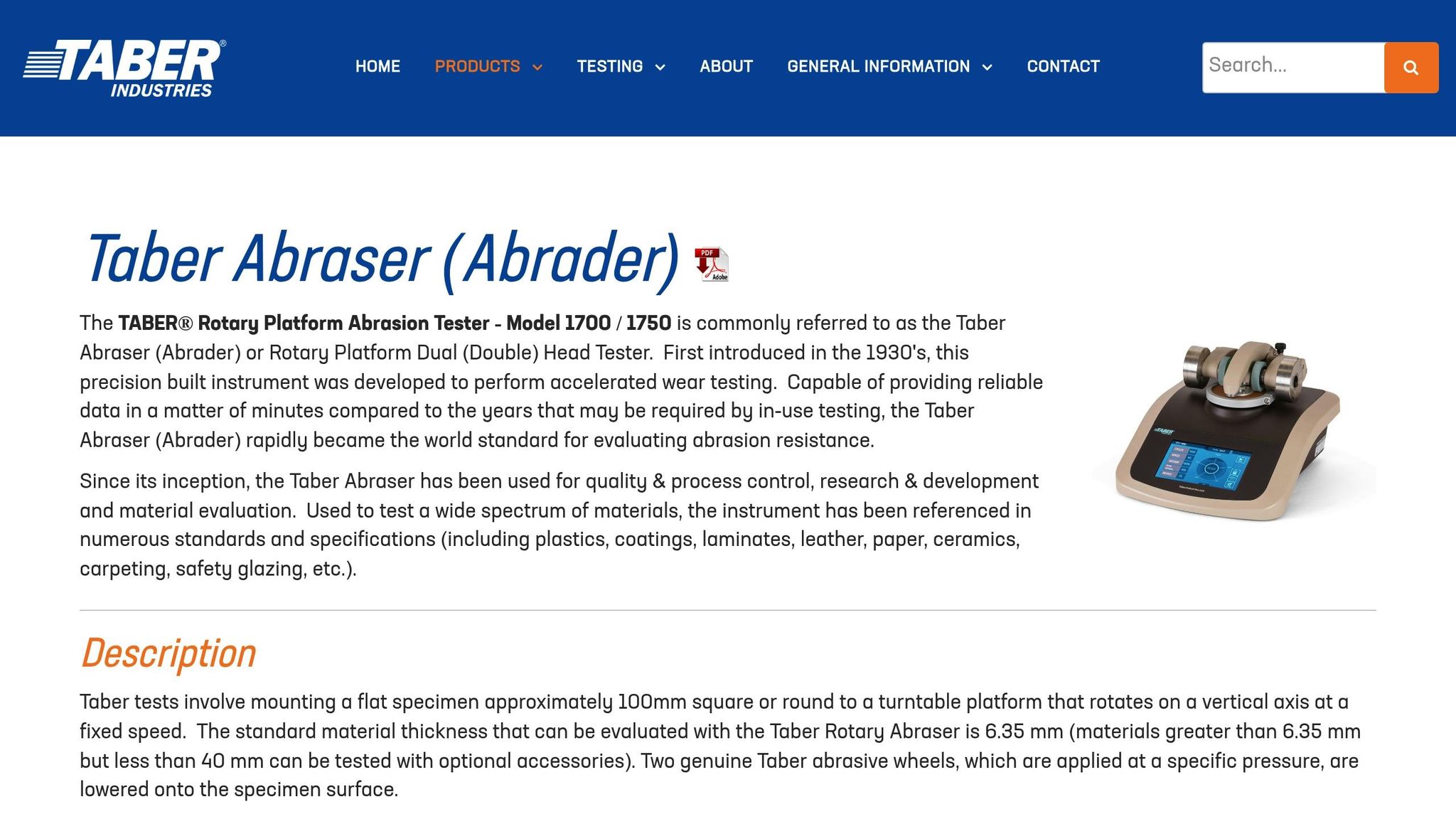
TABER test | Taber Abrasion Tester, Taber Abraser-ASTM D4060 D1044
Conclusion: Using ASTM D4060 to Choose Durable Floor Coatings
The ASTM D4060 test offers clear, measurable data to help you compare and choose floor coatings. By evaluating how much material wears away under controlled abrasion, it provides a reliable baseline for assessing durability. Simply put, coatings with lower weight loss values stand up better to wear and tear, keeping floors looking good and performing well for longer periods.
Polyurea coatings often outperform traditional epoxy systems in these tests, showing greater resistance to abrasion. For homeowners and facility managers across the U.S., this means reduced repair costs, longer recoating intervals, and a better overall return on investment over the lifespan of the coating.
However, lab results are just one piece of the puzzle. Real-world performance depends on practical factors like how well the surface is prepared, the thickness of the coating, and ongoing maintenance. Even the most abrasion-resistant coating can fall short if applied incorrectly or on poorly prepared concrete.
When comparing coatings, look beyond the test results. Review details like the type of testing wheel, the number of cycles, and how weight loss was calculated. These factors can vary and make direct comparisons tricky. Pair this technical data with field performance insights – examples of similar installations with comparable traffic, environmental conditions, and usage patterns can provide valuable context.
To make the best choice, combine ASTM D4060 data with other critical metrics, such as chemical resistance, UV stability, flexibility, and impact resistance. For areas with heavy foot or vehicle traffic, prioritize coatings with the lowest weight loss values. In spaces exposed to chemicals or outdoor conditions, consider a balance between abrasion resistance and other performance needs.
The real value of the ASTM D4060 test lies in its ability to provide objective data for comparing coating options and setting realistic expectations. While it won’t predict the exact lifespan of a coating in your specific environment, it does highlight which products are more likely to withstand abrasion. When paired with proper installation and consistent maintenance, this information helps you choose a floor coating that delivers the durability and reliability your space demands. Atlas Concrete Coatings uses these insights to craft polyurea systems that meet even the toughest durability requirements.
FAQs
What is the purpose of the ASTM D4060 test, and how does it evaluate the durability of polyurea coatings?
The ASTM D4060 test is designed to assess the abrasion resistance of coatings, including polyurea, by replicating the effects of wear and tear over time. This process uses a standardized abrasion machine to determine how effectively a coating can handle friction and physical wear.
Polyurea coatings, known for their durability, excel in this test. Their strong resistance to abrasion makes them ideal for areas with heavy foot traffic or challenging conditions. By analyzing the test results, it becomes clear how polyurea stands out compared to other coatings, offering superior protection and maintaining its appearance over time.
What other factors should you consider besides ASTM D4060 results when choosing a floor coating for your space?
When evaluating ASTM D4060 results to understand a coating’s abrasion resistance, it’s essential to look beyond just this metric to ensure the coating is suitable for your specific environment. Factors like chemical resistance, UV stability, and thermal tolerance are especially important for areas exposed to tough conditions. You’ll also want to consider the amount of foot or vehicle traffic, moisture levels, and the desired aesthetic appearance.
For polyurea coatings, such as those provided by Atlas Concrete Coatings, these considerations are crucial in achieving durable, long-lasting performance tailored to residential, commercial, and industrial needs.
How can a coating with higher mass loss in ASTM D4060 tests still perform well in real-world conditions?
When evaluating coatings, it’s important to remember that a higher mass loss in ASTM D4060 abrasion tests doesn’t automatically mean poor performance in practical scenarios. These tests are designed to be much harsher than what most coatings encounter during regular use. Real-world durability depends on a mix of factors, including the type of abrasion, exposure to environmental conditions, and key properties like flexibility, adhesion, and resistance to chemicals.
Take polyurea coatings as an example. They are widely recognized for their toughness and ability to handle everyday wear and tear, even if they show some mass loss in lab tests. This is why focusing on the overall performance characteristics of a coating, rather than relying on a single test result, is crucial when determining its suitability for specific needs.