
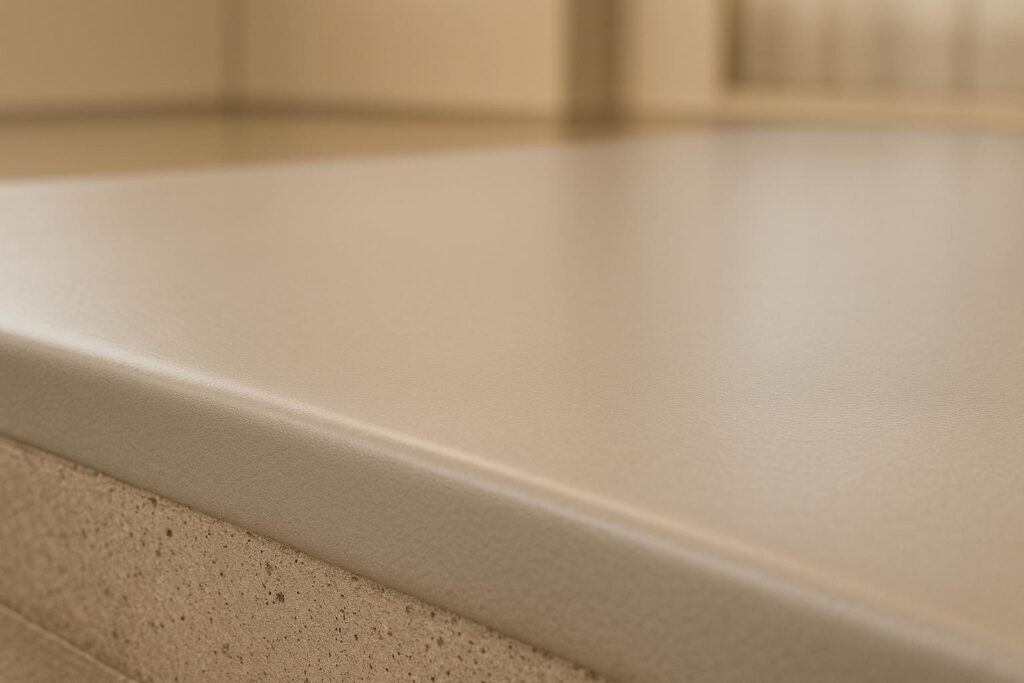
Polyurea coatings outperform other floor coatings like epoxy by providing superior crack resistance, flexibility, and durability. Concrete floors often crack due to moisture, temperature changes, heavy loads, and structural settling. While epoxy coatings are rigid and prone to failure within 3–5 years, polyurea coatings last up to 15 years, even in harsh conditions like freeze-thaw cycles or industrial environments.
Key Takeaways:
- Why Concrete Cracks: Stress from moisture, temperature changes, and heavy traffic weakens concrete over time.
- Epoxy vs. Polyurea: Epoxy is rigid and brittle, while polyurea is flexible, absorbs impacts, and resists cracking.
- Durability: Polyurea remains intact in extreme temperatures (–40°F to 164°F), resists chemicals, and handles heavy use.
- Testing: Rigorous tests, such as impact and freeze-thaw cycle evaluations, confirm polyurea’s reliability.
For residential, commercial, and industrial spaces, polyurea coatings offer long-lasting protection, reducing maintenance costs and extending floor life.
Tekno Polyurea Coating Durability | On The Brick Durability Test
Why Concrete Floors Crack
Concrete floors endure a variety of stresses. While they excel at handling compression, they struggle with tension and movement. When forces pull the material apart or cause it to shift, cracks can form as the concrete reaches its limits.
How Cracking Affects Function and Appearance
Cracks in concrete aren’t just cosmetic – they can weaken the structure and reduce its functionality. Structurally, cracks create weak points where stress builds up, lowering the floor’s ability to bear weight. Over time, these weak areas can lead to sudden failures or uneven surfaces, which are both safety hazards.
From an aesthetic perspective, cracked floors can hurt property value and give off a poor impression. In places like retail stores, warehouses, or showrooms, visible damage might signal neglect or poor upkeep. Beyond appearances, cracks can let in water, chemicals, and other contaminants. This moisture can reach the reinforcing steel inside, leading to corrosion and spalling – when pieces of concrete flake or break off. What starts as a small crack can grow into a costly structural issue, potentially requiring major repairs or even a full floor replacement. Addressing cracks early with protective coatings is far more cost-effective and can prevent liability risks, especially in commercial settings.
Common Causes of Concrete Cracking
Moisture Penetration
Water is one of the most damaging forces for concrete. It seeps into tiny pores, weakening the structure from within. In areas with freeze-thaw cycles, the problem worsens. When water inside the concrete freezes, it expands by about 9%, creating internal pressure. Over time, this repeated stress leads to internal cracks and surface damage.
Thermal Expansion and Contraction
Temperature changes also take a toll on concrete. It expands when exposed to heat and contracts when it cools. In regions with extreme weather swings – like northern states with freezing winters and scorching summers – these cycles can strain the material. For example, a heated warehouse next to a cold loading dock can experience rapid thermal stress, especially where the concrete meets applied coatings.
Heavy Loads and Repeated Traffic
Industrial and commercial spaces often deal with heavy machinery, forklifts, and constant vehicle traffic. These loads create small stresses within the concrete, which build up over time. If the weight exceeds the concrete’s capacity or focuses on weak areas, cracks are almost inevitable. Floors with poor compaction are especially prone to this type of damage.
Structural Settling
As buildings settle, uneven pressure is placed on concrete floors. Basements are particularly at risk, as they face both foundation shifts and moisture intrusion from surrounding soil. Without adequate protection, these combined factors make cracking almost unavoidable.
Given these challenges, it’s clear that concrete floors need coatings capable of withstanding such persistent stresses. Standard epoxy coatings often fall short, making advanced solutions like polyurea essential for long-term durability and performance.
Why Standard Coatings Don’t Prevent Cracking
It’s a common misconception that any floor coating can stop concrete from cracking. The truth is, standard coatings like epoxy and urethane often fall short. They simply can’t keep up with concrete’s natural movement or withstand the daily wear and tear, especially in challenging conditions.
Rigid Coatings Break Under Stress
Epoxy coatings are notoriously rigid, which is their biggest flaw. Concrete naturally expands, contracts, and shifts over time. Epoxy, with its brittle molecular structure, can’t flex along with it. Instead, it cracks. This problem becomes even more pronounced in high-traffic areas – think industrial warehouses where forklifts, heavy tools, and constant activity put the floor under immense stress. Add temperature extremes to the mix, and epoxy’s brittleness only worsens, making it even more prone to cracking.
Polyurea coatings, on the other hand, excel where epoxy fails. Their flexible molecular structure allows them to absorb impacts and adjust under stress without breaking apart. For example, while epoxy often fails after just one significant impact, polyurea maintains its integrity even under repeated abuse.
"The previous owner installed epoxy and it failed." – Ben Bender, Google Review
The lifespan difference is also striking. Epoxy coatings typically need replacement every 3 to 5 years, while polyurea coatings can last up to 15 years. Modern polyurea systems are engineered to be up to four times stronger than traditional epoxy coatings.
Beyond impact resistance, temperature extremes present another challenge where epoxy coatings struggle.
Poor Performance in Freeze-Thaw Cycles
In colder regions – like Minnesota and other northern states – freeze-thaw cycles wreak havoc on rigid coatings. When water becomes trapped beneath or within the coating, it freezes as temperatures drop below 32°F. Frozen water expands by about 9%, creating pressure that forces the coating to separate from the concrete. When temperatures rise, the coating contracts, leaving behind gaps that lead to new cracks. This cycle repeats throughout winter, compounding the damage over time.
Once cracks form, water seeps underneath the coating. When that water freezes again, it expands even further, accelerating the deterioration process. And if that weren’t enough, standard coatings often lack strong chemical resistance, leaving them vulnerable to substances like acids or road salts, which only speed up their breakdown.
| Property | Epoxy | Polyurea |
|---|---|---|
| Temperature Tolerance | Brittle in cold; loses flexibility | Maintains flexibility in extreme temperatures |
| Freeze-Thaw Performance | Fails; separates from substrate | Expands/contracts with substrate, maintaining integrity |
| Lifespan | 3–5 years | Up to 15 years |
| Impact Resistance | Cracks under stress | Effectively absorbs impacts |
Polyurea coatings shine in these harsh conditions. They remain flexible even in freezing temperatures, allowing them to expand and contract with the concrete without cracking. This flexibility prevents water infiltration and ensures the coating performs consistently, even through repeated freeze-thaw cycles.
For property owners in the United States, especially in areas prone to harsh winters, choosing a rigid coating like epoxy often leads to frequent repairs and early replacement. While epoxy may seem like a cheaper option initially, the long-term costs of maintenance and concrete repairs make it a less economical choice in the end. Polyurea offers a more durable and reliable solution for these challenging environments.
How Polyurea Coatings Prevent Cracking
Polyurea’s ability to resist cracking lies in its unique, flexible molecular structure. Unlike epoxy, which tends to be stiff and prone to brittleness, polyurea is designed to flex and absorb impact. This flexibility allows it to disperse stress rather than transferring it directly to the concrete beneath. By moving with impacts and natural shifts, polyurea helps prevent cracks from forming. Rigorous testing consistently highlights polyurea’s effectiveness in maintaining floor integrity, setting it apart from traditional coatings.
Flexibility and Stretch Capacity
One of polyurea’s standout features is its ability to stretch over 300% without breaking – a performance level that far surpasses traditional coatings. Tests like ASTM D522 have shown polyurea’s exceptional bending and stretching capabilities. On the Shore scale, which measures material hardness, polyurea typically scores between 40 A and 80 D. This range balances softness and flexibility on the A scale with tougher yet still elastic properties on the D scale.
"The incredible flexibility of our advanced floor coating solutions provides unrivaled surface stability, even when heavy and high-friction loads are applied. Thanks to polyurea’s innovative composition, it can adapt to variable loads without cracking or peeling as traditional epoxy flooring solutions do under extreme forces." – Atlas Concrete Coatings
The practical benefits of this flexibility are especially evident in high-traffic areas like industrial warehouses. Floors in these spaces endure constant stress from heavy equipment and repeated impacts, yet polyurea coatings hold up without showing signs of wear or failure. This stretch capacity also addresses the natural movement of concrete floors. As concrete expands and contracts due to temperature changes, settles over time, or shifts slightly because of ground movement, polyurea maintains a tight seal. This prevents water from seeping in and helps preserve the structural integrity of the floor.
Beyond its impressive flexibility, polyurea also performs exceptionally well under tough environmental conditions.
Performance in Extreme Conditions
When exposed to extreme temperatures, polyurea continues to shine. In cold climates like Minnesota, where winter temperatures often plummet below 32°F, polyurea coatings remain flexible and resist cracking. This resilience is crucial during freeze-thaw cycles. As water freezes and expands – by about 9% – rigid coatings often crack under pressure. Polyurea, however, adapts to these changes, moving with the substrate and avoiding stress-induced cracks.
Its durability extends beyond temperature fluctuations. Polyurea resists damage from chemicals and UV radiation, making it a reliable choice for industrial and commercial settings where exposure to acids, oils, and other harsh substances is common. Even in outdoor applications – like pool decks or patios exposed to intense sunlight – polyurea retains its properties, ensuring consistent performance throughout its lifespan.
With a typical lifespan of up to 15 years, polyurea coatings offer long-term protection and reduce the need for frequent repairs compared to less durable alternatives. Atlas Concrete Coatings has become a leader in polyurea-based systems, applying these coatings in residential garages, commercial spaces, and industrial facilities. Their expertise in surface preparation, coating thickness, and application conditions ensures floors remain protected and crack-free over time.
For property owners exploring flooring options, polyurea’s flexibility and ability to thrive under extreme conditions make it a standout choice. It delivers reliable, long-lasting protection, keeping floors intact and free from cracks for years to come.
sbb-itb-4b4bb37
Testing Methods for Polyurea Crack Resistance
Before polyurea coatings are installed, they go through a series of rigorous tests to ensure they can withstand the stresses and conditions they’ll face in practical use. These tests simulate real-world scenarios, such as falling objects and extreme temperature changes, to confirm the coating’s durability and long-term performance. By adhering to established industry protocols, these evaluations validate the benefits of polyurea coatings.
Testing processes follow recognized standards like ASTM G14 for impact resistance, ASTM D522 for flexibility, and PN-EN ISO 6272-1:2011, which replicates impact scenarios.
Drop-Weight Impact Testing
This test measures how well a polyurea-coated surface handles the force of heavy objects – like dropped tools or industrial equipment – striking it. A weight is dropped from a specific height onto the coating, assessing whether it can absorb and disperse the impact energy without cracking. Unlike rigid coatings, such as epoxy, which may fail after a single impact, polyurea shows superior resilience. Additionally, a pendulum impact test is often conducted to simulate angled impacts, common in high-traffic areas.
Freeze-Thaw Cycle Testing
To replicate extreme temperature changes, polyurea samples are subjected to repeated freeze-thaw cycles. This test is particularly important in regions where temperatures frequently drop below 32°F. The goal is to ensure that the coating can expand and contract alongside the concrete without breaking down or losing its protective properties.
Temperature Range Testing
Polyurea coatings are also tested across a wide temperature range, from –40°F to 164°F. These tests confirm that the material maintains its structural integrity under both extreme cold and intense heat. By accommodating daily temperature changes and the natural expansion and contraction of concrete, polyurea prevents water infiltration and cracking.
Real-World Field Testing
While laboratory tests provide valuable insights, field testing under actual conditions is equally important. Factors like surface preparation, substrate type, and weather can significantly affect performance. Conducting pilot tests before a full-scale application ensures the coating performs as expected in its intended environment.
From drop-weight impact tests to freeze-thaw cycles and extreme temperature evaluations, polyurea proves its ability to resist cracking. These thorough assessments result in durable, low-maintenance floors that stand up to the challenges of demanding environments.
Polyurea Performance in Actual Use
Real-world applications reveal just how well polyurea coatings handle the challenges of everyday use. From residential garages to industrial warehouses, polyurea consistently delivers where other coatings fall short. These practical results align closely with laboratory findings, showcasing polyurea’s reliability in demanding environments.
Results from Challenging Installations
Field data highlights polyurea’s ability to thrive in extreme conditions, especially in regions with freeze-thaw cycles. Unlike epoxy, which becomes brittle and prone to cracking in cold weather, polyurea flexes with the substrate, preventing damage caused by freezing temperatures.
In industrial settings, polyurea proves its durability under heavy use. Whether it’s withstanding the impact of dropped tools, the weight of heavy machinery, or constant foot and vehicle traffic, polyurea holds up where epoxy coatings often fail. With a lifespan of up to 15 years – compared to epoxy’s typical 3 to 5 years – polyurea reduces the frequency of repairs and replacements, offering a more dependable solution.
For outdoor applications like pool decks, patios, and garage floors, polyurea’s resistance to UV radiation prevents discoloration and degradation. This ensures that surfaces not only retain their functionality but also maintain their appearance over time. These qualities make polyurea a versatile choice for a wide range of environments, from residential spaces to heavy-duty industrial floors.
Benefits for Different Property Types
Residential Properties: Homeowners appreciate polyurea for its crack resistance and quick curing time. Garage floors coated with polyurea can handle dropped tools, vehicle traffic, and temperature changes without the chipping or peeling that often affects epoxy coatings. Since polyurea cures in minutes instead of hours or days, spaces can be used almost immediately, minimizing disruption. According to Atlas Concrete Coatings, customers who switch from epoxy to polyurea report better durability and an improved appearance.
Commercial Properties: Businesses benefit from polyurea’s extended lifespan and fast installation, which help reduce maintenance costs and minimize downtime. Retail spaces, offices, and showrooms maintain their professional look over time, thanks to polyurea’s UV resistance, which prevents fading and cloudiness.
Industrial Facilities: In the most demanding environments, polyurea stands up to heavy equipment, chemical spills, and constant traffic. Its flexibility allows it to absorb impacts and adjust to substrate movement, ensuring long-lasting protection without cracking or peeling. This reduces maintenance downtime and provides a stable surface for manufacturing operations.
Polyurea’s flexibility, measured on the Shore A or Shore D scale (ranging from 40 A to 80 D), allows it to absorb impacts and adapt to substrate shifts. This results in fewer repairs, lower overall costs, and a better return on investment. It also performs well across a wide temperature range, from –40°F to 164°F, making it ideal for environments that experience significant temperature fluctuations.
Whether it’s automotive fluids in a garage, cleaning chemicals in a commercial kitchen, or industrial solvents in a manufacturing plant, polyurea retains its protective properties. Its resilience against cracking and degradation ensures long-term performance in even the toughest conditions.
With its combination of impact resistance, chemical durability, UV stability, and temperature tolerance, polyurea offers a reliable, long-lasting solution for a variety of applications. Whether for residential, commercial, or industrial use, polyurea delivers the durability and protection that property owners need to keep their floors looking and performing their best over time.
Conclusion
Polyurea coatings stand out for their exceptional ability to resist cracks, thanks to their flexibility and durability. The testing methods explored in this article – ranging from drop-weight impact assessments to freeze-thaw cycle evaluations – highlight polyurea’s capacity to endure the stressors that often lead to cracking in concrete floors.
The data speaks volumes. With a lifespan that can reach up to 15 years – four times longer than epoxy – and superior impact absorption, polyurea significantly reduces the need for frequent repairs. Its unique molecular structure allows it to expand and contract with the concrete substrate, adapting to natural movements instead of resisting them.
Real-world applications further validate these findings. From enduring the brutal winters of Minnesota to withstanding the heavy demands of industrial floors, polyurea retains its structural integrity even in extreme conditions. Whether it’s a residential garage facing freeze-thaw cycles, a commercial showroom handling constant foot traffic, or an industrial warehouse supporting heavy machinery, polyurea effectively prevents the cracking issues that undermine other coating systems.
The financial advantages are also compelling. Reduced recoating needs and lower maintenance expenses make polyurea an economical choice over the long term.
These benefits explain why polyurea technology is trusted by industry leaders. Atlas Concrete Coatings specializes in polyurea-based systems designed to capitalize on this crack resistance. Their efficient installation process and proven results make polyurea a reliable solution for everything from residential garages to demanding industrial spaces.
FAQs
Why is polyurea better at resisting cracks compared to epoxy coatings?
Polyurea is known for its remarkable flexibility, making it capable of withstanding shifts in the underlying surface and handling heavy loads without cracking or peeling. On the other hand, epoxy coatings tend to be more rigid and can sustain damage under similar conditions.
This flexibility makes polyurea a smart option for environments with frequent temperature fluctuations or areas exposed to heavy foot and vehicle traffic. It ensures a finish that lasts longer and holds up better over time.
How are polyurea coatings tested to ensure they resist cracking and remain durable in extreme conditions?
Polyurea coatings are put through extensive testing to confirm their ability to handle harsh conditions. These tests focus on key factors like resistance to cracking, durability under heavy loads, and performance under extreme circumstances, including intense heat, freezing temperatures, and prolonged UV exposure.
Atlas Concrete Coatings provides top-tier polyurea coatings that are engineered to resist cracking and deliver durability that lasts, even in the most challenging environments. This makes them a reliable option for flooring needs in residential, commercial, and industrial spaces.
What makes polyurea a more cost-effective flooring option compared to epoxy?
Polyurea stands out as a budget-friendly option due to its impressive durability, flexibility, and long lifespan when compared to traditional epoxy coatings. Its resistance to cracking and wear means floors need less upkeep and repairs, which translates to cost savings over time.
Another advantage is its quick curing process, which shortens installation time and minimizes interruptions. This blend of toughness, efficiency, and lasting performance makes polyurea a practical choice for both homes and businesses.