
Polyurea coatings are a durable choice for protecting surfaces exposed to sunlight and harsh weather. Their advanced chemical structure enables quick curing, flexibility, and resistance to cracking, fading, and peeling. Aliphatic polyurea, in particular, excels in UV resistance and color stability, outperforming aromatic polyurea and epoxy coatings.
Key takeaways:
- UV Resistance: Aliphatic polyurea resists yellowing and fading, retaining over 90% gloss after 5,000 hours of UV testing.
- Weather Durability: Performs well in freeze-thaw cycles, extreme temperatures, and moisture-heavy environments.
- Applications: Ideal for outdoor surfaces like pool decks, patios, and industrial floors.
- Maintenance: Requires minimal upkeep compared to epoxy, with proper installation ensuring long-lasting performance.
Polyurea coatings are a reliable solution for long-term surface protection, reducing maintenance needs and preserving appearance in challenging conditions.
Polyurea Polyaspartic Concrete Floor Coatings, The UV Stability Test
How Polyurea Coatings Resist UV and Weather Damage
Polyurea stands out for its durability, thanks to its specially designed molecular structure. Unlike traditional coatings that break down under constant sunlight and fluctuating temperatures, polyurea resists damage from ultraviolet (UV) radiation and extreme weather conditions.
When UV rays strike most coatings, the high-energy radiation disrupts polymer bonds, increasing polar functional groups. This process leads to common problems like fading, yellowing, chalking, and eventual structural failure. However, polyurea’s chemical design actively combats this degradation.
One key advantage is its flexibility. Polyurea can expand and contract with the surface it’s applied to, making it ideal for environments with extreme temperature changes – like the freezing winters of Minnesota, where rigid coatings often crack. Whether exposed to intense heat, moisture, or UV light, polyurea maintains its integrity, avoiding cracks and delamination when applied correctly. This sets the stage for a closer look at how its chemical makeup influences performance.
Aliphatic vs. Aromatic Polyurea: Performance Differences
The effectiveness of polyurea in outdoor settings depends heavily on its chemical formulation. Aromatic polyurea contains ring structures that offer some stability but are prone to UV degradation. On the other hand, aliphatic polyurea lacks these ring structures, giving it superior resistance to UV rays. This structural difference prevents pigment breakdown and avoids the fading and yellowing often seen in aromatic systems and traditional epoxy coatings.
Testing underscores these distinctions. In QUV Weatherometer testing (ASTM G 53), aliphatic polyurea showed no surface color changes, chalking, or cracking, and retained over 90% of its gloss after 5,000 hours of accelerated UV exposure. Meanwhile, aromatic polyurea exhibited UV yellowing, making it less suitable for prolonged outdoor use.
| Property | Aliphatic Polyurea | Aromatic Polyurea | Epoxy Coatings |
|---|---|---|---|
| UV Resistance | Superior | Low (yellowing) | Low (fades, chalks) |
| Color Stability | Excellent | Limited | Limited |
| Outdoor Suitability | High | Low | Low |
| Flexibility | High | High | Moderate |
| Curing Time | Seconds to minutes | Seconds to minutes | Hours to days |
This difference is crucial for areas like pool decks and patios, where vibrant colors and slip-resistant textures must endure prolonged sunlight and chemical exposure. Aromatic polyurea works better for interior or sheltered environments, while aliphatic formulations shine in outdoor applications.
How Polyurea Prevents UV Damage
Aliphatic polyurea’s fast curing time eliminates the need for a separate UV-stable topcoat, simplifying the application process while providing robust protection. It often cures within seconds or minutes, reducing the coating’s exposure to environmental challenges during its most vulnerable phase.
This combination of rapid curing and UV resistance allows polyurea to perform well in harsh conditions. For instance, GroundGuard polyurea coatings maintained their wearability and physical properties after 2,500 hours of QUV testing.
Proper application is essential for maximizing UV protection. A topcoat thickness of 4–5 mils is ideal for high UV exposure, though 2–3 mils may work in milder conditions. Additionally, applying the coating within an optimal temperature range of 60°F to 85°F ensures proper curing and long-lasting durability.
These qualities make polyurea a top choice for demanding outdoor projects. Companies like Atlas Concrete Coatings use advanced aliphatic polyurea systems to create weather-resistant flooring that holds up against intense UV exposure and harsh climates. This understanding of polyurea’s molecular defenses lays the groundwork for exploring the rigorous testing that verifies its long-term reliability.
Testing Methods for Polyurea Coating Durability
Evaluating the durability of polyurea coatings involves rigorous testing designed to simulate years of exposure to challenging conditions. These tests help manufacturers refine their formulations to ensure coatings can endure in demanding environments. Laboratory and field tests work hand-in-hand to validate performance under real-world conditions.
Laboratory Testing: QUV Weatherometer and UV Exposure
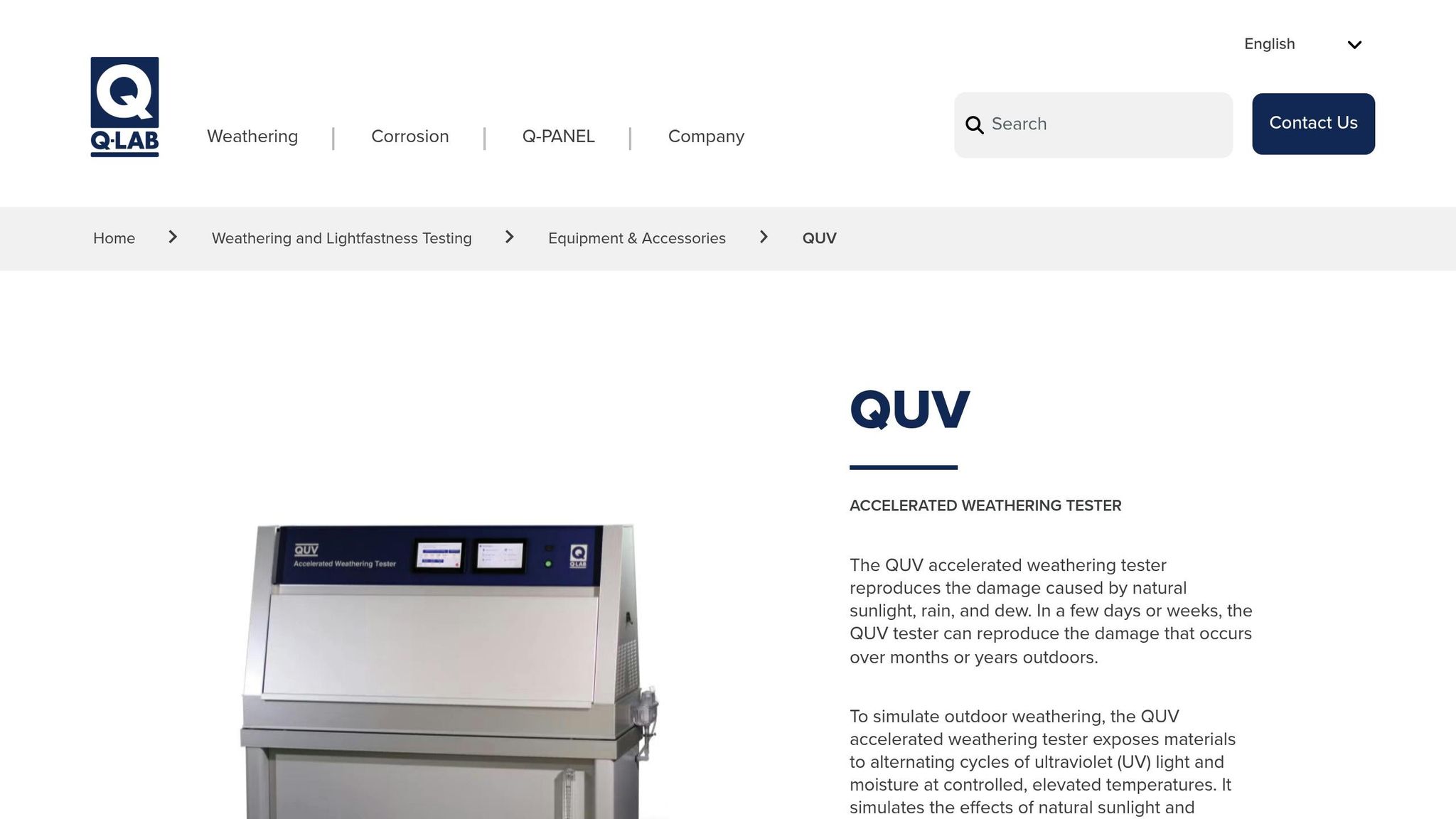
The QUV Weatherometer is a crucial tool for accelerated UV testing of polyurea coatings. Using UVB-313 bulbs, it replicates years of sunlight exposure in just a few weeks, adhering to ASTM G 53 standards. During testing, technicians monitor key performance indicators like color changes, chalking, cracking, and gloss retention. The process alternates between UV exposure at 140°F (60°C) and condensation at 122°F (50°C) in 8-hour cycles.
High-performance aliphatic polyurea systems have shown impressive durability, with gloss retention exceeding 90% after 5,000 hours of testing. Two key standards guide these procedures: ASTM D4587, which specifies 2,500-hour cycles for U.S.-based tests, and ISO 4892-3, an international benchmark for comparison.
Recent tests revealed 95% gloss retention after 2,000 hours of QUV exposure. Additionally, certain coatings maintained exceptional surface integrity after 2,500 hours, showing no notable color fading, chalking, or cracking.
Cohesive strength tests further highlight polyurea’s performance. When bonded to concrete substrates, initial cohesive strength values averaged 3.493 MPa. However, exposure to water baths at elevated temperatures, particularly at 176°F (80°C), led to a faster decline in cohesive strength.
Field Testing Results in Varied Weather Conditions
While lab tests provide accelerated insights, field testing demonstrates how polyurea coatings perform in real-world environments. Factors like pollution, substrate quality, and physical wear add complexity to these evaluations.
Field tests in regions like Minnesota reinforce laboratory findings, showing polyurea’s resilience during freeze-thaw cycles. Unlike rigid coatings such as epoxy, polyurea remains flexible, avoiding cracks and maintaining its integrity. These tests confirm the coating’s resistance to water, UV radiation, and extreme temperatures, even in the harshest conditions.
"Our advanced polyurea blends remain consistent when facing cold, heat, UV radiation, and even caustic chemicals." – Atlas Concrete Coatings
Field studies also highlight polyurea’s chemical resistance, making it effective against moisture, stains, and abrasions. Whether repelling spills or resisting road salt damage in winter, these coatings protect surfaces while maintaining their appearance. Environmental factors, such as water pressure and ambient temperature, can influence aging. Research shows that higher temperatures and prolonged exposure accelerate bond degradation between polyurea and concrete.
To provide a complete durability profile, manufacturers combine UV testing with evaluations for moisture, abrasion, and thermal resistance. This multi-faceted approach not only validates the reliability of polyurea coatings but also helps predict their lifespan in specific conditions.
Atlas Concrete Coatings uses these extensive testing methods to deliver flooring solutions that consistently perform under extreme conditions, ensuring their products meet the challenges revealed through both laboratory and field testing.
sbb-itb-4b4bb37
Polyurea vs. Other Coating Systems: Performance Comparison
When deciding on a coating system for outdoor use, understanding the performance differences is key to making a choice that lasts. Both lab tests and real-world applications show how polyurea outshines traditional options, especially when it comes to UV resistance and weather durability.
Polyurea vs. Epoxy: UV and Weather Performance Data
Accelerated testing highlights the advantages of aliphatic polyurea, which retains over 90% of its gloss after 5,000 hours of simulated sunlight exposure – without any color change, chalking, or cracking. On the other hand, epoxy coatings show noticeable yellowing, gloss loss, and surface degradation under the same conditions.
| Property | Polyurea (Aliphatic) | Epoxy |
|---|---|---|
| UV Resistance | Excellent (no yellowing) | Poor (yellows, fades) |
| Gloss Retention | >90% after 5,000 hours QUV | Significant loss over time |
| Flexibility | High (no cracking) | Low (prone to cracking) |
| Weather Durability | Excellent (freeze-thaw, moisture) | Moderate to poor |
| Maintenance | Low | Higher due to degradation |
This performance gap becomes even more apparent in real-world conditions. Polyurea coatings maintain their UV resistance and appearance over time, avoiding issues like fading, cloudiness, or uneven wear. In contrast, epoxy coatings are prone to chipping, peeling, and discoloration when exposed to UV radiation.
"Unlike epoxy floor coatings that can begin to chip, peel, and discolor, our concrete floor coating experts utilize the latest in professional-grade polyurea to fortify surfaces with consistency." – Atlas Concrete Coatings
Polyurea’s flexibility is another standout feature, allowing it to expand and contract with the substrate. This prevents water infiltration and damage during freeze-thaw cycles. For areas with extreme seasonal weather, this adaptability is crucial, as epoxy coatings are more likely to crack or delaminate under such conditions.
Field tests back this up. In regions with intense sun and freeze-thaw cycles, polyurea coatings resist UV and moisture damage, while epoxy surfaces often fade and crack. Applications like pool decks, patios, and industrial floors treated with polyurea show consistent appearance and slip resistance over years of use.
Recent tests reinforce polyurea’s durability, with the material holding up exceptionally well after 2,500 hours of QUV testing. This demonstrates its ability to withstand prolonged exposure without breaking down.
Polyurea also handles variable loads without cracking or peeling, making it a more reliable option than traditional epoxy flooring under extreme conditions.
Cost and Installation Considerations
While aliphatic polyurea formulations cost 30–50% more than aromatic versions, they deliver much better UV stability and color retention. The higher initial cost is often offset by lower maintenance needs and a longer service life, resulting in a lower total cost of ownership.
Installation is another factor to consider. Polyurea’s fast curing time requires precise timing and favorable weather conditions – ideally between 60°F and 85°F, with no rain for at least 24 hours. Although epoxy is slightly more forgiving of minor moisture after curing, it lacks the long-term durability of polyurea in outdoor settings.
Customer experiences further validate these technical advantages. For example, Ben Bender shared in a Google review how his epoxy floor failed, leading him to choose Atlas Concrete Coatings’ polyurea solution. The job was completed in a single day, and he noted being "very happy with the results", particularly after Atlas resolved an issue with water infiltration during curing.
For outdoor applications where UV resistance and weather durability are essential, experts consistently recommend aliphatic polyurea. Its superior durability, color stability, and flexibility make it the go-to choice for environments where coating failures simply aren’t an option.
How to Maximize Polyurea Coating Lifespan
Ensuring your polyurea coating lasts as long as possible starts with proper installation and consistent upkeep. By following proven methods during both steps, you can keep your coating durable and visually appealing for years to come.
Installation Requirements for Best Performance
To achieve the best results, apply polyurea coatings when temperatures range between 60°F and 85°F, and ensure the substrate is at least 5°F above the dew point. Avoid application if rain is expected within 24 hours, as moisture can cause problems like surface blushing, bubbling, or poor adhesion.
Prepare the surface thoroughly. Clean, dry, and mechanically profile the concrete to remove contaminants and repair any cracks before applying the coating.
For areas exposed to high UV levels, aliphatic polyurea is an excellent choice due to its UV stability and color retention. Maintain the appropriate coating thickness – 4–5 mils for high-UV areas and 2–3 mils for less demanding conditions.
Field examples back these recommendations. A petrochemical plant in Texas transitioned from epoxy to aliphatic polyurea after dealing with chalking and fading. The new system maintained its appearance and protective qualities over several years. Since polyurea cures rapidly (in seconds or minutes), professional installation with specialized spray equipment is essential. Companies like Atlas Concrete Coatings follow these industry standards to ensure long-lasting results.
Once installed correctly, regular maintenance is key to preserving the coating’s performance.
Maintenance Guidelines for Long-Term Durability
Routine maintenance plays a crucial role in keeping polyurea coatings in excellent shape. Cleaning with mild detergents and water is effective for removing dirt and debris without harming the surface. Avoid using harsh chemicals or abrasive tools, as they can damage the coating.
Inspect coated surfaces at least twice a year – or more frequently in high-traffic areas – for signs of wear, such as cracks, peeling, discoloration, or reduced slip resistance. Catching these issues early allows for quick repairs, preventing small problems from escalating. For example, pool decks in North Idaho and Eastern Washington have shown exceptional durability through harsh freeze-thaw cycles when proper maintenance is followed.
Address chips, cracks, or delamination immediately to stop moisture from seeping in. After severe weather events like hailstorms or heavy snow, conduct thorough inspections to identify and fix any damage. Compared to epoxy coatings, which often need frequent touch-ups, well-maintained polyurea systems typically require less intervention while retaining their appearance and performance.
For industrial applications, controlling chemical exposure is critical. Use pH-neutral cleaners and minimize contact with harsh chemicals to extend the coating’s lifespan. Atlas Concrete Coatings emphasizes these maintenance practices to protect both the functionality and aesthetic appeal of polyurea-coated surfaces in residential, commercial, and industrial settings.
Summary: Polyurea Coating Durability Test Results
Extensive laboratory and field tests highlight the impressive durability of polyurea coatings under UV exposure and extreme weather conditions. In controlled lab experiments using a QUV Weatherometer (ASTM G53), aliphatic polyurea systems showed exceptional resilience, retaining over 90% of their gloss after 5,000 hours of accelerated UV exposure. This level of performance simulates several years of harsh outdoor environments, proving the coatings’ ability to endure challenging conditions.
Field evaluations back up these lab results. For example, a five-year study in a water conveyance tunnel demonstrated that polyurea coatings maintained their cohesive strength and waterproofing capabilities throughout the entire period. Even in conditions harsher than typical real-world scenarios, the coatings performed consistently well.
Temperature fluctuations have little impact on properly formulated polyurea systems. Unlike epoxy coatings – prone to cracking during freeze-thaw cycles or softening in high heat – polyurea remains flexible and structurally sound across a wide range of temperatures. Its aliphatic chemical structure also prevents pigment degradation, which helps surfaces resist fading and yellowing over time .
Accelerated weathering tests further validate polyurea’s durability. These coatings consistently withstand prolonged testing with minimal wear or damage . Such results underscore their reliability for long-term outdoor use.
Based on these findings, polyurea coatings offer exceptional durability for residential, commercial, and industrial applications. They help reduce maintenance needs and extend the service life of surfaces. For those seeking high-performance finishes, Atlas Concrete Coatings provides solutions that reflect these outstanding test results.
FAQs
Why are aliphatic polyurea coatings better suited for outdoor use compared to aromatic polyurea or epoxy coatings?
Aliphatic polyurea coatings stand out as a top choice for outdoor use, thanks to their exceptional UV resistance. This quality helps them resist discoloration and degradation caused by sunlight, unlike aromatic polyurea and epoxy coatings, which tend to fade and deteriorate with extended UV exposure.
These coatings also excel in withstanding harsh weather conditions, ensuring long-lasting durability and performance. This makes them a dependable option for outdoor surfaces exposed to constant environmental wear and tear.
How does the fast curing time of polyurea coatings benefit their use in different weather conditions?
Polyurea coatings, such as those offered by Atlas Concrete Coatings, stand out for their incredibly fast curing time. This speedy process means installations can be completed quickly, reducing downtime – a major plus for both residential and commercial projects.
But the benefits don’t stop there. Thanks to their rapid curing, these coatings deliver consistent performance in a variety of weather conditions. Whether facing intense sunlight, high humidity, or extreme temperatures, polyurea coatings hold up exceptionally well. They remain durable, flexible, and resistant to cracking or peeling, making them a dependable option for long-term protection in nearly any setting.
How can I maintain polyurea coatings to ensure they last in tough weather conditions?
To keep polyurea coatings performing well and lasting as long as possible in tough conditions, regular upkeep is essential. Start by cleaning the surface regularly – sweep away debris and use mild soap with water to wash it as needed. Steer clear of harsh chemicals or abrasive tools that could wear down or damage the coating over time.
For outdoor areas, it’s a good idea to inspect the coating periodically. Look for signs of wear, like small cracks or chips, which can result from harsh weather or UV exposure. Addressing these minor issues quickly can stop them from turning into bigger problems, helping the coating retain both its durability and appearance. With these straightforward steps, your polyurea-coated surfaces can stay in great shape for years.