
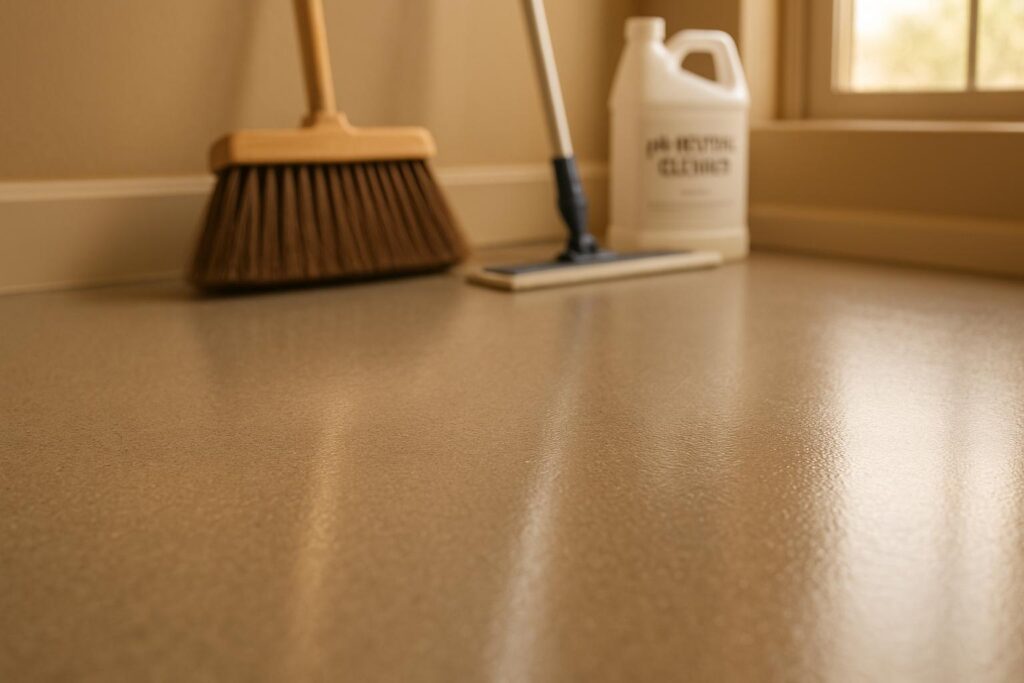
Polyurea floors are durable and low-maintenance, but they still need proper care to stay in great condition. Dirt, spills, and harsh cleaning methods can damage the protective coating over time. Here’s a quick guide to keeping your polyurea floors clean, shiny, and long-lasting:
- Sweep daily to remove dirt and debris that can scratch the surface.
- Mop weekly using a microfiber mop and a mild, pH-neutral cleaner.
- Clean spills immediately using blotting techniques to prevent stains or damage.
- Avoid harsh chemicals and abrasive tools that can weaken the coating.
- Protect high-traffic areas with mats and avoid dragging heavy objects.
For tougher stains or wear, schedule professional deep cleaning every few months to restore the floor’s appearance and durability. These simple steps will help you protect your investment and keep your floors looking their best.
Cleaning a Polyurea Chip Floor
1. Sweep Daily and Mop Weekly
Taking care of polyurea floors is straightforward: a daily sweep combined with a weekly mop is all it takes to keep them looking great and lasting longer. All you need are a soft-bristled broom, a microfiber mop, and a mild cleaner.
Daily Sweeping Made Simple
Sweeping every day helps remove dirt, dust, and debris that could scratch the floor’s surface over time. Use a soft-bristled broom or a vacuum with a soft brush attachment. The key is to glide gently across the floor without applying too much pressure. This quick step keeps the surface clean and protects the coating from unnecessary wear and tear.
Weekly Mopping for a Deeper Clean
When it’s time to mop, mix some mild dish soap (like Dawn) with warm water. A microfiber mop with a flat head and replaceable pads works best – it’s gentle on the surface and easy to maneuver. Work in sections and use just enough water to avoid streaks. This simple routine not only cleans but also helps maintain the floor’s protective coating and shine.
For stubborn spots, you can use a TSP (trisodium phosphate) cleaner mixed with water as directed. Apply it gently with a non-abrasive pad, and make sure to rinse thoroughly. To take it a step further, consider a monthly deep clean using a floor scrubber or professional cleaning service for a full refresh.
Protecting Your Polyurea Coating
Daily sweeping and weekly mopping do more than clean – they prevent damage. Dust and debris can act like sandpaper, slowly wearing down the protective layer of your floor, especially in high-traffic areas. Regular cleaning removes these particles before they cause harm.
When cleaning, avoid harsh chemicals like bleach, ammonia, or acidic cleaners. Hot water, steam cleaners, and high-pressure washing can also weaken the polyurea coating. Stick to soft materials like microfiber mops or paper towels, and steer clear of steel wool, wire brushes, or abrasive pads. These precautions ensure your floor stays durable and keeps its polished look for years to come.
2. Clean Spills Right Away Using Blotting Methods
Spills in garages and workshops need to be dealt with quickly to avoid stains and potential damage to your floor coating. While polyurea coatings are tough, leaving spills unattended for too long can harm both their look and durability.
A Simple and Effective Cleanup Approach
The blotting method is straightforward and gets the job done. Grab a clean, dry microfiber cloth, and instead of wiping or rubbing, gently press the cloth onto the spill. Work from the outer edges toward the center to keep the spill contained.
To stay prepared, keep a few essentials close at hand: microfiber cloths, a pH-neutral cleaner, cat litter (or sawdust), and baking soda. Acting fast with these tools can go a long way in preserving your floor’s condition.
Keeping Your Floor in Top Shape
Just like regular cleaning, dealing with spills immediately is key to maintaining your polyurea floor. Different types of spills might require slightly different steps, but the blotting method is the starting point for all of them.
- Water-based spills (like soda or juice): Blot the spill with a dry microfiber cloth, then clean the area with a pH-neutral cleaner to prevent water spots.
- Oil-based spills (such as motor oil or cooking grease): Sprinkle cat litter or sawdust to soak up the oil first. Once absorbed, clean the area with a pH-neutral cleaner to avoid slippery residues or deeper penetration.
- Chemical spills: Neutralize immediately with baking soda, blot the area, and follow up with a pH-neutral cleaner. If the stain remains after cleaning, it’s a good idea to consult a polyurea expert for further advice.
After cleaning, make sure the floor dries completely. Any leftover moisture can lead to water spots, streaks, or even weaken the coating over time.
Protecting Your Polyurea Coating from Damage
Ignoring spills can lead to serious problems. Liquids left to sit on the polyurea surface might cause permanent stains, discoloration, or even damage the coating chemically. Oil and chemical spills, in particular, can weaken the coating’s protective layer, potentially leading to costly repairs or the need for a complete recoating.
Microfiber cloths are excellent for absorbing liquids without scratching the surface. Using them ensures you don’t accidentally spread the spill or push it deeper into the coating, helping to maintain both the strength and appearance of your floor.
For spills that have already dried or caused stains, start by rinsing the area with clean water to remove any residue. Then dry the surface thoroughly and evaluate the damage. For tough stains, you can try a TSP (trisodium phosphate) cleaner mixed as directed by the manufacturer. Apply it with a non-abrasive scrub pad, rinse thoroughly, and dry. That said, the best approach is always to clean up spills right away to avoid stains from setting in.
If you need expert advice or professional help in maintaining your polyurea floors, reach out to Atlas Concrete Coatings, specialists in durable polyurea floor solutions.
3. Use pH-Neutral Cleaners and Soft Tools
To keep your polyurea floor looking great and lasting longer, stick to pH-neutral cleaners and soft tools. Using the wrong products or methods can harm the protective coating, but the right approach will preserve its durability and appearance.
Simple Cleaning Routine
Maintaining your polyurea floor doesn’t have to be complicated. A pH-neutral cleaning routine is easy to follow and doesn’t require fancy equipment. All you need is a soft-bristled broom, a microfiber mop, and some mild dish soap. Mix warm water with a small amount of dish soap, or opt for a commercial pH-neutral cleaner, to create an effective solution. A quick weekly mop with this mixture can keep your floor looking its best. If you prefer specialized products, many flooring companies offer pH-neutral cleaners designed for sealed concrete, but the dish soap method works just as well for everyday cleaning.
Keeping Your Floor Durable and Looking Great
pH-neutral cleaners are gentle yet effective, removing dirt and grime without causing damage. Unlike acidic or alkaline cleaners, they won’t corrode the surface. Regular cleaning with these mild solutions not only keeps your floor clean but also helps maintain its shine, even in areas with heavy foot traffic. For stubborn stains, you can use a TSP (trisodium phosphate) cleaner with a non-abrasive pad – just follow the manufacturer’s instructions and rinse thoroughly to avoid residue.
Protecting the Polyurea Coating
The polyurea coating is what shields your concrete floor from wear and tear, so it’s essential to protect it. Here’s how:
- Skip harsh chemicals: Bleach, ammonia, vinegar, and oil-based cleaners can damage the coating or leave it slippery.
- Avoid abrasive tools: Steel wool, wire brushes, and rough pads can scratch the surface, making it vulnerable to moisture and dirt.
- Use warm – not hot – water: High-temperature water or steam cleaners can weaken the coating. Stick to warm water instead.
- Stick to gentle methods: Use soft-bristled brooms, microfiber mops, and non-abrasive pads for cleaning.
When mopping, clean in sections, starting at the back of the room and working forward. Use just enough water to clean without soaking the floor, rinse thoroughly to remove any soap, and let it dry completely to avoid water spots.
If you’re uncertain about your cleaning methods or notice any damage to the coating, it’s a good idea to consult polyurea flooring specialists like Atlas Concrete Coatings. They can provide expert advice to help you care for your floor and avoid costly repairs.
sbb-itb-4b4bb37
4. Protect High-Traffic Areas and Avoid Dragging Heavy Objects
Keeping high-traffic areas in top shape is key to ensuring the longevity of your polyurea-coated floors. While these coatings are built to endure, spots like entryways, garage work zones, and kitchen pathways often face constant foot traffic and heavy equipment movement. Without a little extra care, these areas can wear down faster than you’d expect. Luckily, a few simple steps and affordable tools can help keep your floors looking and performing their best.
Simple Ways to Protect High-Traffic Zones
Just like regular cleaning keeps your coating in good condition, protecting high-traffic areas minimizes the risk of mechanical damage. Start by placing furniture pads under chair and table legs and laying down protective mats at entrances or work zones. These small additions act as the first line of defense, catching dirt and debris before it spreads and creating a cushion between heavy objects and your floor.
When moving heavy furniture or equipment, always lift instead of dragging. If lifting isn’t an option, use a dolly with soft wheels, a hand truck, or furniture sliders designed for floor protection. These tools prevent scuff marks and scratches. It’s also helpful to spend a few minutes explaining these practices to family members or employees to ensure everyone is on the same page.
Keeping Your Floors Durable and Looking Great
These preventative measures go a long way in reducing scuffs, scratches, and dirt buildup in high-use areas. While polyurea coatings are flexible enough to handle heavy loads without cracking or peeling, they’re not immune to surface damage. Using protective mats and handling heavy items with care preserves the coating’s shine and structure.
Make it a habit to inspect high-traffic areas weekly or every other week. Look for scratches, dull spots, or sections where the coating appears different. If you spot signs of wear, consider adding more mats or improving your handling practices. Addressing minor issues early is far cheaper and easier than dealing with major repairs later.
Avoiding Damage to Your Polyurea Coating
Dragging heavy objects across your floor can cause concentrated wear, which is often the fastest way to compromise your coating. Instead, use furniture pads and mats to evenly distribute weight and prevent direct damage. These small adjustments can make a big difference in protecting your floor’s integrity.
If you notice visible damage – such as scratches, exposed concrete, or areas where the coating seems compromised – take action right away. Minor scuffs can usually be cleaned and restored, but more severe damage, like visible concrete, may require professional help. In such cases, companies like Atlas Concrete Coatings can assess the damage and recommend localized repair or recoating.
Tailor your protection strategy to the specific needs of your space. For residential garages, mats at entry points and under stored items, along with furniture pads for workbenches, are ideal. Commercial spaces benefit from protective runners in busy pathways and pads under movable furniture. In industrial settings, use mats rated for equipment wheels and enforce strict handling protocols. These thoughtful measures can significantly extend the lifespan of your polyurea-coated floors.
5. Schedule Professional Deep Cleaning When Needed
Even with consistent upkeep, polyurea floors occasionally need a deeper clean to tackle stubborn stains and contaminants that regular care can’t handle. Professional deep cleaning goes beyond what household tools and cleaners can achieve, helping to restore your floor’s appearance and maintain its performance. Knowing when to call in the pros and what they can offer makes a big difference in preserving your floor’s pristine condition.
Maintaining Durability and Appearance
Professional cleaners bring specialized tools and expertise that surpass everyday cleaning methods. While your broom and mop are great for routine dirt and spills, professionals use commercial-grade floor scrubbers specifically designed for sealed concrete surfaces. These machines are far more effective at removing persistent stains and restoring the floor’s original shine.
For homes with moderate foot traffic, scheduling professional deep cleaning once every three to six months is usually sufficient. However, high-traffic areas or spaces exposed to oils, chemicals, or temperature extremes may require monthly attention. Professionals use the right cleaning solutions and techniques to lift deep stains without damaging the protective coating, ensuring your floor stays in top condition over time.
Protecting the Polyurea Coating
One of the biggest advantages of hiring professionals is their understanding of what not to do. Improper cleaning methods – like using harsh chemicals, abrasive tools, or excessive heat – can compromise the polyurea coating’s protective properties. Professional cleaners are trained to use safe products and proper techniques, preserving the integrity of your floor.
Experienced technicians also know how to spot early signs of damage, such as dullness, discoloration, or small surface irregularities. They can address these issues before they worsen, whether through cleaning or recommending localized repairs. If you notice chemical stains or marks that don’t fade after your own cleaning attempts, it’s time to call in the experts. These deep-set contaminants can weaken the coating if left untreated, potentially leading to more extensive and costly repairs.
Making the Process Easy
Scheduling a professional cleaning service is simple, but a little preparation can make the process even smoother. Clear the floor area of loose items and sweep away surface debris before the cleaning team arrives. This allows them to focus entirely on deep cleaning rather than basic tidying.
Be sure to point out any specific stains, damage, or problem areas to the cleaners in advance. This helps them bring the right tools and solutions for your floor’s unique needs. If you’re unsure whether a stain requires cleaning or repair, many reputable services offer free consultations to assess the situation.
Between professional cleanings, stick to your daily sweeping and weekly mopping routine with pH-neutral cleaners. Quickly blot up spills, use mats to protect high-traffic areas, and avoid dragging heavy objects across the floor. These small habits can reduce the frequency of deep cleanings while keeping your floor looking great year-round.
When choosing a cleaning service, look for companies with experience in polyurea and epoxy coatings. These surfaces require specialized knowledge, so be sure to ask about their equipment, training, and guarantees. Reading reviews from other polyurea flooring clients can also help you find a trustworthy provider. Companies like Atlas Concrete Coatings, for example, not only install polyurea coatings but also offer maintenance and repair services to keep your floor in excellent shape.
Building a relationship with a reliable polyurea flooring specialist ensures you have expert help for regular upkeep and any unexpected repairs. This professional care complements your daily maintenance, ensuring your floor stays durable and beautiful for years to come.
Spill Cleaning Methods Comparison
Acting quickly on spills is crucial to avoid permanent damage to your floors. Polyurea floors, in particular, encounter four main types of spills, each requiring a specific cleaning approach to safeguard the coating and maintain the floor’s look. Here’s a breakdown of how to handle each type effectively, along with a handy table for quick reference.
Water-based spills are the most frequent and typically the least harmful but still demand prompt action. These include liquids like beverages, cleaning water, or anything that mixes easily with water. To clean, blot the spill immediately using a microfiber cloth, starting at the edges and working inward to prevent spreading. Follow up with a pH-neutral cleaner, then dry thoroughly.
Oil-based spills are trickier since they don’t mix with water and can leave behind slippery residues. To manage these, sprinkle cat litter or sawdust over the spill to absorb the oil. Use a soft scraper to remove the material, then clean the area with a pH-neutral solution.
Chemical spills are more serious and need immediate attention to avoid damage. Rinse the affected area with water right away. If necessary, apply baking soda to neutralize the chemical before rinsing again. Dry the area completely, and if discoloration remains, consult a polyurea expert for further advice.
Solid debris requires a straightforward approach. Sweep the debris with a soft-bristled broom and then follow up by mopping the area with a microfiber mop.
Here’s a quick table summarizing the cleaning methods:
| Spill Type | Cleaning Method | Tools Needed |
|---|---|---|
| Water-based | Blot with a microfiber cloth from edges inward, clean with pH-neutral solution, dry | Microfiber cloth, pH-neutral cleaner |
| Oil-based | Absorb with cat litter or sawdust, remove with a soft scraper, clean with pH-neutral cleaner | Cat litter or sawdust, soft scraper, cleaner |
| Chemical | Rinse with water, apply baking soda if needed, dry thoroughly, identify chemical type | Baking soda, clean cloths, pH-neutral cleaner, water |
| Solid debris | Sweep with a soft-bristled broom, mop with a microfiber mop | Soft-bristled broom, microfiber mop |
For oil-based and chemical spills, timing is everything – address them within minutes to minimize the risk of coating damage. Even water-based spills, though less harmful, should be cleaned quickly to avoid staining. The faster you act, the easier the cleanup and the lower the chance of lasting damage.
Always finish with a pH-neutral cleaner to protect your polyurea coating. Avoid harsh chemicals like bleach, ammonia, or acidic cleaners, as they can degrade the coating over time. For regular cleanup, a simple mix of mild dish soap and warm water works well. For tougher stains, a TSP (trisodium phosphate) cleaner, used as directed, can help without harming the surface.
Conclusion
Taking care of your polyurea floors doesn’t have to be complicated or costly. The tips shared in this article – daily sweeping, weekly mopping, quick spill cleanup, using pH-neutral cleaners with gentle tools, and protecting high-traffic areas – offer an easy-to-follow plan to keep your floors looking great and lasting longer.
By sticking to a routine of daily sweeping and weekly mopping with pH-neutral cleaners, you can effectively remove dirt and grime that might otherwise cause damage. This simple approach not only keeps your floors looking clean but also helps maintain their durability over time. Avoiding harsh chemicals, opting for soft-bristled brooms or microfiber mops, and addressing spills promptly are small steps that make a big difference in minimizing wear and tear.
Of course, regular upkeep can only go so far. If you start noticing stubborn stains, wear patterns in high-traffic zones, or scratches and chips in the coating, it might be time to call in the professionals. Deep cleaning or restoration services can tackle these issues before they escalate, complementing your regular maintenance efforts.
Atlas Concrete Coatings offers expert services tailored to polyurea floors, including deep cleaning and restoration. Their team understands the unique needs of polyurea coatings and can handle maintenance challenges beyond your daily routine. For professional support, visit Atlas Concrete Coatings or reach out to schedule a free consultation.
With consistent care and the occasional help of professionals, your polyurea floors can stay in top shape for years to come, combining beauty and performance that lasts.
FAQs
Why should you use pH-neutral cleaners on polyurea floors, and how do they help maintain the surface?
Using pH-neutral cleaners is key for keeping polyurea floors in great shape. These cleaners are tough on dirt, stains, and grime but gentle enough to avoid harming the coating or causing discoloration. In contrast, harsh or acidic cleaners can wear down the protective layer over time, compromising the floor’s durability.
To protect and preserve your polyurea floors, stick to cleaners specifically labeled as pH-neutral, and always follow the manufacturer’s guidelines. Regular cleaning with the right products helps ensure your floors stay looking their best for years.
How often should you schedule professional deep cleaning for polyurea floors in high-traffic areas, and what does the service typically include?
For polyurea floors in high-traffic areas, scheduling professional deep cleaning every 6 to 12 months is a smart way to preserve their durability and keep them looking great. The exact timing depends on how much wear and tear the floor experiences, as well as its exposure to dirt, spills, or other messes.
Professional cleaning services typically handle the tough stuff – removing built-up grime, stains, and debris. They also inspect the coating to ensure it’s holding up well. This not only helps your flooring last longer but also keeps it looking polished and well-maintained.
How should I clean up chemical spills on polyurea floors to avoid damage?
When dealing with chemical spills on polyurea floors, timing is everything. The moment a spill occurs, grab a clean, absorbent cloth or paper towel and wipe it up immediately. Letting the chemical sit too long can weaken the coating and potentially cause damage.
Once the spill is removed, mix a mild, pH-neutral cleaner with warm water and gently clean the area using a soft mop or sponge. Be sure to rinse with clean water and dry the spot thoroughly. Steer clear of harsh chemicals or abrasive tools, as these can harm the polyurea finish. By addressing spills quickly and sticking to regular upkeep, you can keep your floor in top shape for years to come.