
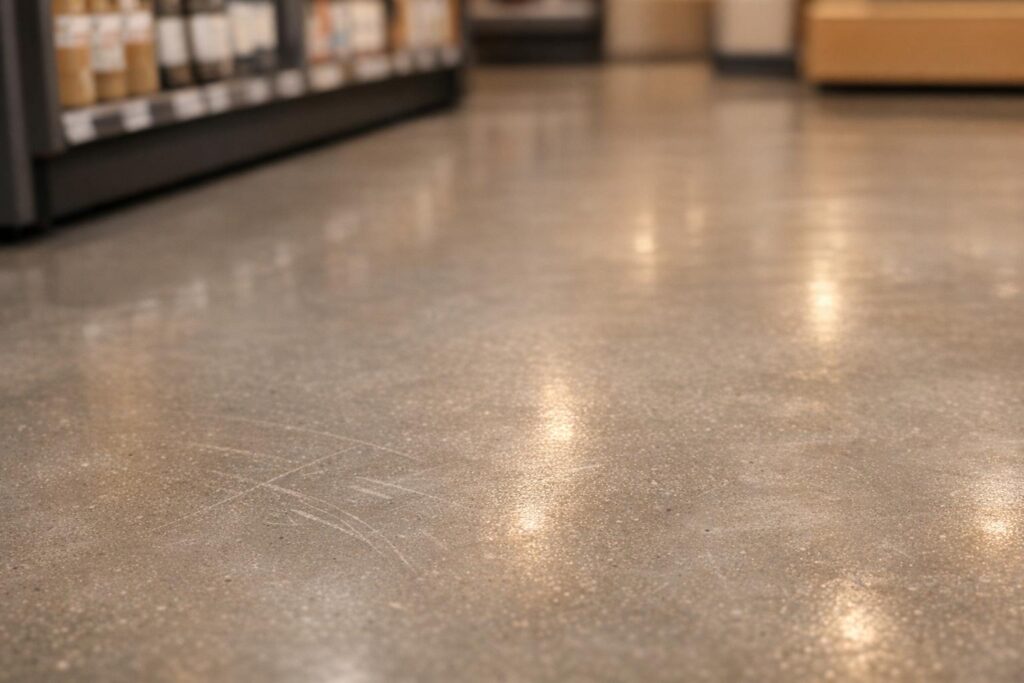
Retail store floors endure constant wear and tear from heavy foot traffic, equipment, and environmental factors. These challenges can lead to cracks, stains, slippery surfaces, and costly maintenance. Polyurea coatings offer a durable solution with fast installation, slip resistance, and easy cleaning. They bond deeply with concrete, resist UV damage, and handle heavy loads, making them ideal for retail spaces.
Key Takeaways:
- Heavy Traffic: Durable coatings prevent damage from carts, forklifts, and foot traffic.
- Moisture Issues: Polyurea resists water damage, stains, and mold growth.
- Safety: Slip-resistant surfaces reduce risks of injuries.
- Low Maintenance: Seamless, non-porous surfaces simplify cleaning.
- Quick Installation: Stores can reopen within 24 hours after application.
Polyurea coatings not only protect floors but also enhance their appearance with customizable design options, ensuring long-lasting performance and a polished look for retail environments.
Main Flooring Challenges in Retail Stores
Heavy Traffic and Equipment Loads
Retail store floors face a constant barrage of wear and tear, starting the moment the doors open. High customer traffic and the use of heavy equipment like shopping carts, handcarts, dollies, and forklifts put immense stress on the flooring. Areas such as entrances, exits, and checkout counters take the brunt of this damage, experiencing the most concentrated wear over time. On top of that, frequent movement of heavy displays and occasional dropped merchandise only add to the strain.
Dirt, sand, and grit tracked in from outside further contribute to the problem. These materials accumulate in high-traffic areas, acting like sandpaper and grinding away protective finishes. In stores with U-shaped or C-shaped layouts – commonly seen in grocery stores – this wear tends to concentrate along the perimeter, where foot traffic is heaviest.
For commercial spaces that endure this kind of constant use, flooring must meet a Class 5 wear rating. When it comes to Luxury Vinyl Tile (LVT), the wear layer should be no less than 20 mil thick for commercial applications.
"The performance of the wear layer you select also impacts the floor’s performance. The minimum recommended thickness in wear layers for commercial use is 20 mil." – Sandra Drake, Vice President of Sales at Parterre
Given the relentless strain these floors endure, polyurea systems offer a significant advantage. They resist wear and help extend the lifespan of the flooring. But physical stress isn’t the only challenge – environmental factors also play a major role in flooring deterioration.
Environmental Conditions and Cleaning Requirements
Environmental factors can wreak havoc on retail flooring. Moisture is one of the biggest culprits. Rain, snow, and de-icing salts tracked in from outside can penetrate flooring surfaces, leading to stains and even adhesive failures. In fact, businesses in North America spend an estimated $2.4 billion annually addressing moisture-related flooring issues.
Moisture isn’t just a surface issue. High relative humidity (RH) and alkalinity in the concrete slab beneath the flooring can cause coatings to delaminate and even promote mold growth. These problems are compounded by the heavy loads placed on the floor, which accelerate structural fatigue. While a standard 4-inch concrete slab typically needs 90 to 120 days to dry to an acceptable moisture vapor emission rate, tight construction schedules often cut this process short.
Another challenge comes from sunlight streaming through large storefront windows. UV exposure can cause non-UV-stable coatings to yellow, fade, and break down over time. Cleaning routines also take their toll. Harsh chemicals and floor polishers strip away protective finishes, leaving the underlying surface vulnerable to damage. Even regular foot traffic can cause significant abrasion – comparable to the effect of using 400-800 grit sandpaper.
Winter months bring their own set of difficulties. De-icing salts tracked in from outside can scratch finishes and embed themselves in the flooring, causing permanent damage. In humid regions, such as the Southern U.S., these issues are compounded by longer drying times for floor finishes, making them more prone to scuffing and dirt buildup.
Commercial Flooring Challenges and Failures
Common Flooring Problems and How Polyurea Coatings Fix Them
Polyurea vs Traditional Flooring: Retail Performance Comparison
Cracked and Damaged Concrete Floors
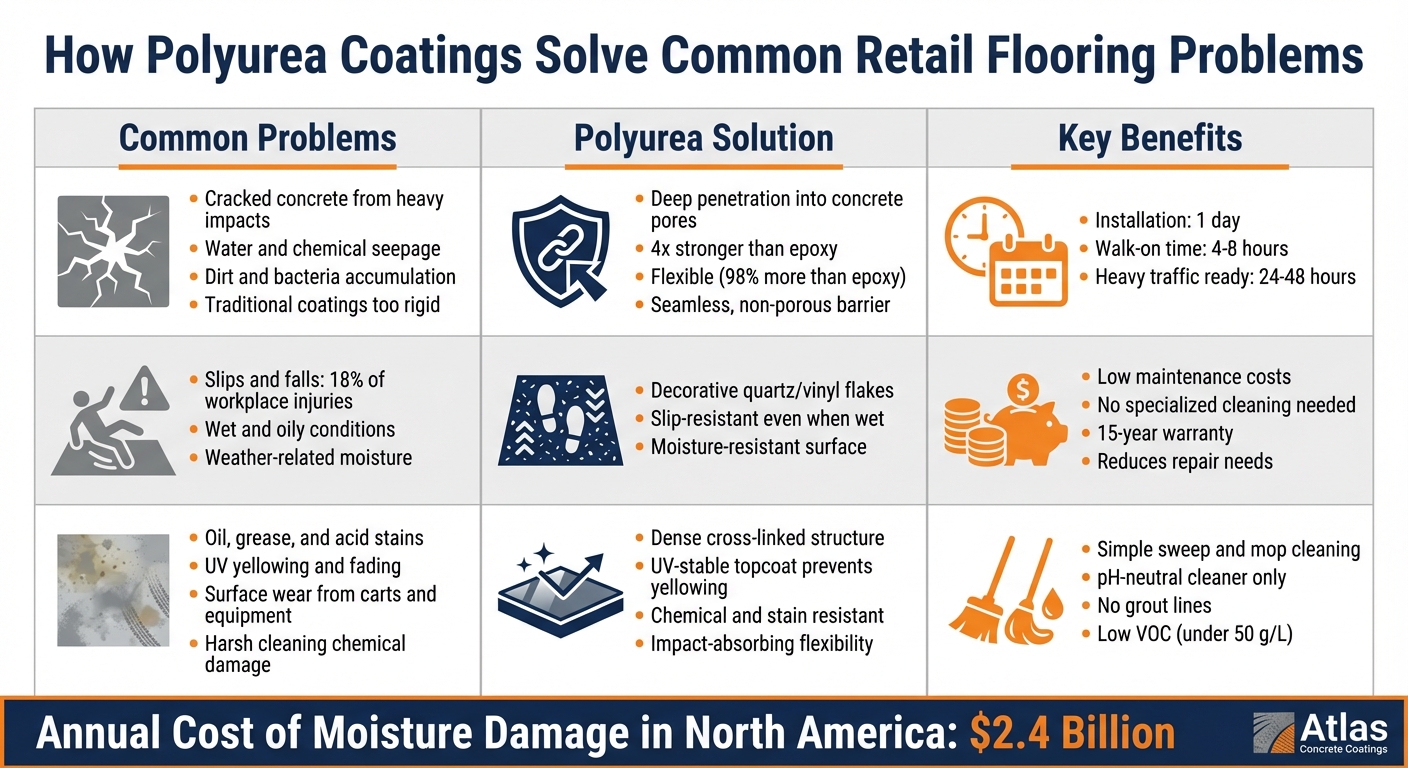
Concrete floors in retail spaces often endure heavy impacts, leading to cracks that allow water and chemicals to seep in. These cracks create tiny pockets where dirt and bacteria can gather, making the floor harder to clean and maintain. Dropped tools and other mishaps can chip the surface, while moisture deepens the damage over time. Traditional coatings, which are often too rigid, struggle to handle the constant movement and thermal expansion that retail floors experience.
Polyurea coatings tackle these issues head-on. The base coat penetrates deeply into the concrete’s pores, forming a bond that’s even stronger than the concrete itself. Unlike rigid epoxy, polyurea offers about four times the strength and far greater flexibility, allowing it to adapt to the floor’s natural movements without cracking. Its seamless, non-porous surface acts as a shield, keeping water and corrosive chemicals from worsening existing cracks. During installation, professionals grind the concrete and patch imperfections to create a smooth, durable finish.
But structural damage isn’t the only concern – retail floors also present safety challenges due to slippery surfaces.
Slippery Floors and Safety Hazards
Slippery floors are a major safety risk in retail environments, with slips and falls accounting for over 18% of workplace injuries. Polyurea coatings address this problem by incorporating decorative quartz or vinyl flakes, which enhance slip resistance – even in wet or oily conditions. Because polyurea is moisture-resistant, it helps prevent floors from becoming slick during changes in weather.
"Slip-resistant flooring directly reduces the risk of slips and falls, which are among the most common causes of injuries in retail environments." – Erika Ray, Keas Concrete Coatings
In addition to improving safety, polyurea coatings help retail floors maintain their visual appeal.
Stains, Fading, and Surface Wear
Retail floors take a beating from oil, grease, acids, and harsh cleaning chemicals. Over time, these substances – combined with sunlight streaming through storefront windows – can cause staining, yellowing, and fading in coatings that aren’t UV-stable.
Polyurea’s dense, cross-linked structure resists chemicals and stains, while its flexibility – 98% greater than epoxy – allows it to absorb and disperse impacts from shopping carts and heavy equipment. This prevents surface wear and reduces visible damage.
"This is due to polyureas extreme flexibility, elongation, dense cross-linking and mar resistance. Polyureas can take a tremendous amount of abuse because they are malleable and can take the physical impacts and disperse them, much like the rubber on a car tire." – Ark-La-Tex Concrete Coatings
For areas exposed to sunlight, a UV-stable polyaspartic topcoat prevents the yellowing and fading that standard coatings often suffer. The non-porous barrier also seals the concrete, protecting it from water and contaminants that could lead to early wear and tear. Best of all, professional installation can typically be completed in just one day, with foot traffic resuming in as little as four to six hours.
Atlas Concrete Coatings ensures fast, expert installation of polyurea flooring systems, minimizing downtime for retail businesses while delivering long-lasting results.
sbb-itb-4b4bb37
Why Polyurea Coatings Work Well for Retail Floors
Durability and Lower Maintenance Costs
Polyurea coatings are a smart choice for retail floors because they help reduce repair needs and lower maintenance expenses. Thanks to their seamless surface, there are no grout lines to deal with – making routine cleaning as simple as sweeping and mopping with a pH-neutral cleaner. This eliminates the need for pricey specialized cleaning products or professional maintenance contracts.
One of the standout features of polyurea is its quick curing time. Floors treated with polyurea can be walked on in just 4–8 hours and can handle heavy foot traffic within 24–48 hours. This means minimal downtime for your business and fewer missed sales during renovations.
"Polyurea is our best choice for customers who want an incredibly high gloss, beautiful garage floor with outstanding chemical and abrasion resistance."
– Justin, Garage Flooring LLC
Polyurea coatings also offer impressive flexibility, which boosts impact resistance and prevents cracking – something that brittle epoxy systems often struggle with. Additionally, many polyurea systems have low VOC levels (under 50 grams per liter), making them safe to apply in occupied retail spaces without disrupting customers or staff.
Beyond their durability and low maintenance, polyurea coatings can dramatically enhance the overall look of your retail space.
Design Options and Appearance Choices
In addition to being tough, polyurea coatings provide endless design possibilities, making it easy to align your flooring with your brand’s image. For example, flake broadcast systems allow for nearly unlimited color combinations using vinyl flake media, while metallic pigments create a striking, modern aesthetic with unique swirls and depth. Retailers can choose high-gloss finishes to brighten their interiors or satin finishes for a more refined, elegant look. For added texture and slip resistance, colored quartz granules or specialized micro-flakes can be used to achieve a seamless and polished satin finish.
"The floors have to look good so the store presents a positive brand image to its customers."
– CFI Coatings
Companies like Atlas Concrete Coatings offer customizable polyurea-based chip floor systems, allowing retailers to incorporate their branding directly into durable, high-traffic flooring. With these options, you can create a floor that not only stands up to wear and tear but also leaves a lasting impression on your customers.
Conclusion
Retail floors face a tough lineup of challenges – constant foot traffic, heavy equipment loads, moisture issues, and safety concerns. These demands call for a flooring solution that can handle it all. Enter polyurea coatings. Known for their strong bond to concrete, flexibility, UV resistance, quick 24-hour curing time, and slip-resistant finish, polyurea coatings not only stand up to wear and tear but also make daily cleaning much easier. Plus, with a professional installation backed by a 15-year warranty, you can count on long-term protection for your investment.
"The polyurea solution bonds to the concrete and is stronger and more flexible than epoxy. The base coat finds to open pours in the concrete and adheres deep into the concrete becoming a permanent part of the floor."
– Atlas Concrete Coatings
Polyurea’s durability and fast installation make it a smart choice for retail floors, combining safety with style. Atlas Concrete Coatings offers fully customizable polyurea flooring systems tailored to your retail space. Their certified team manages every step, from prepping the surface to the final finish, ensuring a result that aligns with your brand’s look and feel. Reach out to Atlas Concrete Coatings today for a free consultation and discover how polyurea can elevate your retail space with unmatched strength, safety, and style.
FAQs
Why are polyurea coatings a better choice for retail store floors than traditional options?
Polyurea coatings are a top-tier option for retail floors, offering unmatched durability and performance when compared to traditional choices like epoxy. They form a strong bond with concrete, set within just a few hours, and stand up to UV exposure, chemicals, abrasions, and discoloration.
With their low-odor, high-gloss finish, these coatings provide a sleek, professional look while being slip-resistant and easy to maintain. This makes them ideal for high-traffic areas where foot traffic and cart movement are constant. Plus, their fast application process means less downtime, so businesses can get back to serving customers in no time.
How soon can a retail store reopen after installing polyurea floor coatings?
Retail stores can get back to business almost immediately after installing polyurea floor coatings. With their rapid curing ability, these coatings often allow operations to resume the same day or within just 24 hours. This quick turnaround keeps disruptions to a minimum, ensuring your business stays on track.
Beyond their fast curing time, polyurea coatings are impressively tough. Designed to handle heavy foot traffic, they’re built to last and require less frequent maintenance, making them a smart, durable option for busy retail spaces.
Can polyurea coatings be customized to reflect a store’s branding and style?
Polyurea coatings offer incredible flexibility, making them a fantastic option for retail spaces aiming to showcase their brand’s personality. With options like solid colors, flake systems, or chip finishes, you can choose from a variety of colors, textures, and styles to perfectly complement your store’s design. This versatility helps retailers achieve a polished, cohesive look that seamlessly aligns with their branding.