
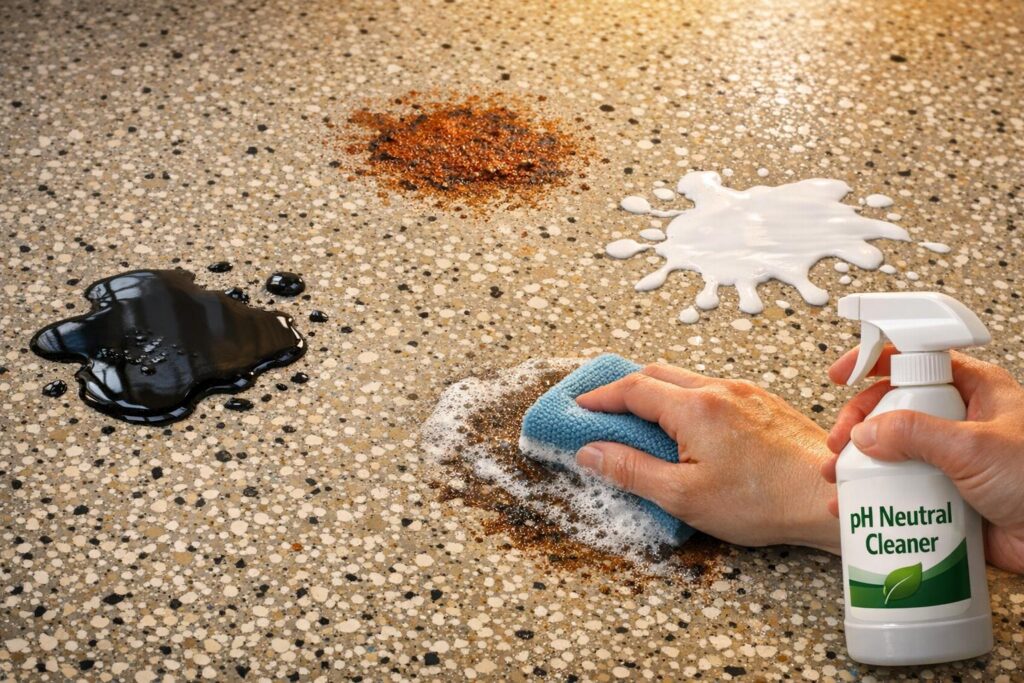
Polyurea-coated floors are tough and resistant to most stains, but they’re not invincible. Quick cleaning and the right tools can keep them looking great and prevent damage. Here’s what you need to know:
- Oil and grease spills: Blot immediately, use absorbents like kitty litter, then clean with a water-based degreaser.
- Rust stains: Apply vinegar or lemon juice, scrub gently, and rinse.
- Paint or adhesive spills: Use a plastic scraper, followed by a citrus cleaner or acetone for residue.
- Tire marks: Spray water, apply degreaser, and scrub with a stiff brush.
- Food and drink stains: Use mild dish soap or vinegar for tougher spots.
For cleaning, stick to soft tools like microfiber mops and pH-neutral cleaners. Avoid harsh chemicals, abrasive tools, and steam mops, as they can harm the coating. Prevent stains by cleaning spills quickly, using mats, and placing protective trays under items. Regular maintenance ensures your floor lasts for years.
How To Clean A Coated Floor The FAST and EASY way
How Polyurea Coatings Resist Stains
Polyurea coatings stand out for their ability to protect surfaces, but knowing how they work can make maintenance easier and more effective.
Key Features of Polyurea Coatings
Polyurea forms a dense, non-porous surface with a tightly cross-linked molecular structure, creating a powerful barrier against liquids and chemicals. This means that when substances like motor oil, antifreeze, or brake fluid come into contact with the coating, they don’t seep in – they bead up instead. As industry experts explain:
A polyurea floor is non-porous and impermeable. When oil, antifreeze, or brake fluid drips, it simply beads on the surface. A simple wipe-up suffices even after prolonged exposure.
This resistance isn’t limited to automotive fluids. It also holds up against gasoline, transmission fluid, paint thinners, and even some acids that would typically damage bare concrete. Unlike epoxy, which can crack under stress, polyurea remains flexible. This flexibility allows it to expand and contract with the concrete during temperature changes, reducing the risk of tiny cracks forming.
Another standout feature is its UV stability. Polyurea coatings maintain their color and structural integrity even under prolonged sunlight exposure, making them suitable for both indoor areas like garage floors and outdoor spaces such as pool decks and patios.
However, even with these durable properties, addressing spills promptly is still essential for maintaining the coating’s appearance and performance.
Basic Cleaning Guidelines
Quick action is key when spills occur. For fresh spills, blot the area immediately with an absorbent cloth or paper towel to avoid any potential dulling over time.
For regular cleaning, stick to soft tools like microfiber mops or soft-bristled brooms to clear away dust and debris without scratching the surface. Mild, pH-neutral cleaners work best for routine maintenance. A simple mix of warm water and a small amount of mild dish soap is often enough. As experts recommend:
A neutral pH cleaner and warm water are usually all you need for general maintenance. This keeps the coating intact without introducing unnecessary wear.
If you’re dealing with acidic spills, such as battery acid, neutralize the area by applying a paste made of baking soda and water. Rinse thoroughly afterward. Steer clear of abrasive tools like metal brushes or scouring pads, as these can scratch or damage the protective topcoat, compromising its effectiveness.
Common Stains and Removal Methods
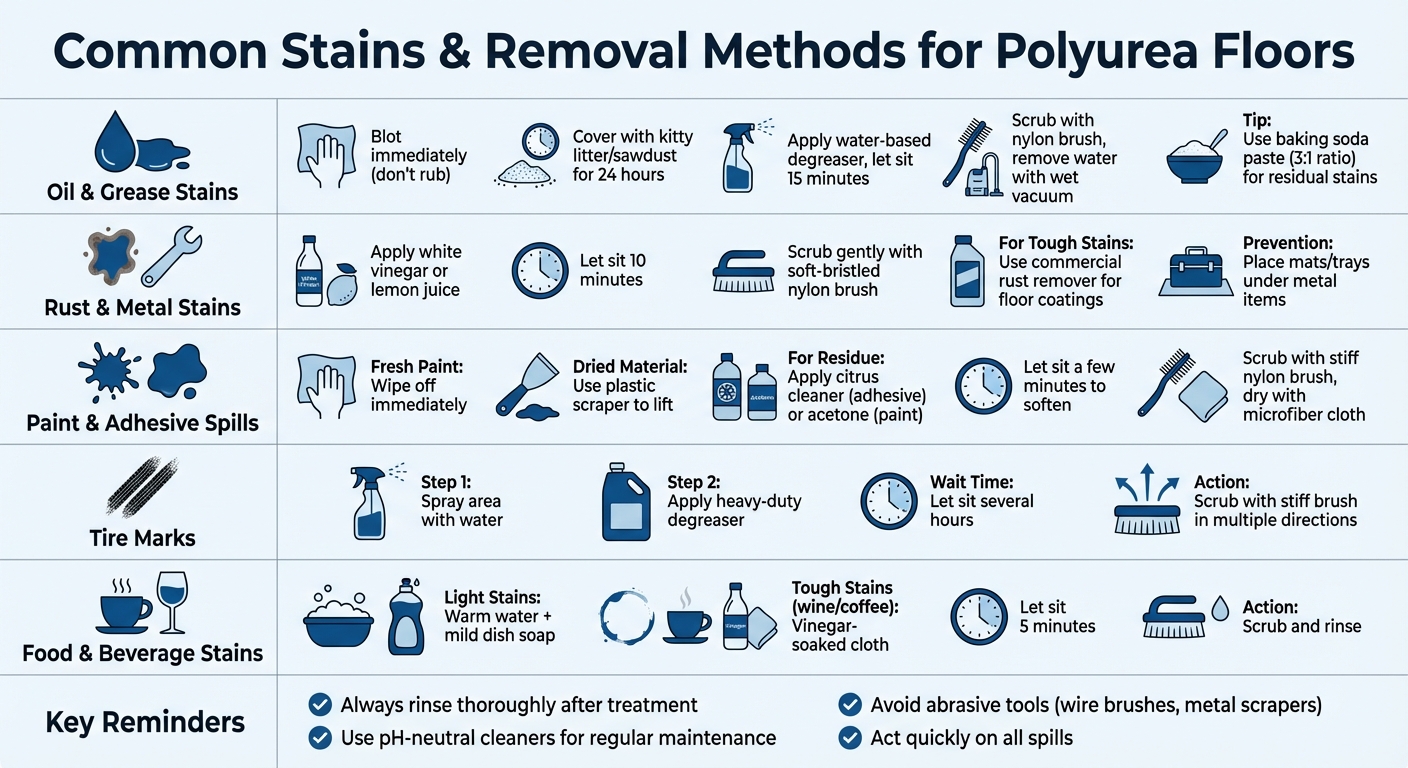
Quick Guide to Removing Common Stains from Polyurea-Coated Floors
Even though polyurea floors are highly resistant to damage, certain spills can leave marks if not addressed quickly. Here’s how to handle some of the most frequent stains effectively.
Oil and Grease Stains
Garage floors often face spills from motor oil, transmission fluid, and grease. For fresh spills, blot the liquid immediately – avoid rubbing to prevent spreading. For larger spills, cover the area with kitty litter or sawdust, leaving it in place for up to 24 hours before sweeping it away.
Once the bulk of the spill is removed, apply a water-based, biodegradable degreaser and let it sit for about 15 minutes. This dwell time is essential for breaking down the oil. As British Concrete Polishing explains:
Dwell time is critical – it breaks down oils, allowing them to lift out of the pores instead of just smearing across the surface.
Scrub the area with a nylon brush, working in multiple directions, and then remove the rinse water with a wet vacuum or squeegee to prevent the oil from resettling. For light residual stains, try a paste made from three parts baking soda and one part water. Let it sit overnight to draw out discoloration. To check if the stain is gone, spray a small amount of water on the area. If the water spreads evenly, you’re good to go.
Rust and Metal Stains
Rust stains from metal shelving, tools, or equipment can be tackled with mild acidic solutions. Apply white vinegar or lemon juice directly to the rust and let it sit for about 10 minutes. Then, gently scrub the area with a soft-bristled nylon brush. For tougher rust stains, use a commercial rust remover designed for floor coatings. Avoid abrasive tools like wire brushes, as these can scratch the surface. To prevent future rust marks, consider placing mats or protective trays under metal items.
Paint and Adhesive Spills
Fresh paint can be wiped off easily, but dried paint or adhesive spills need extra effort. Use a plastic scraper to gently lift any dried material. For lingering residue, apply a citrus-based cleaner for adhesives or an acetone-soaked cloth for paint. Let the solvent sit for a few minutes to soften the material, then scrub with a stiff nylon brush. Finish by drying the area with a microfiber cloth to avoid leaving any cleaning agent behind.
Tire Marks and Rubber Transfer
Tire marks and rubber transfer from vehicles or heavy equipment can leave dark streaks on polyurea-coated floors. Start by spraying the area with water, then apply a heavy-duty degreaser and let it sit for several hours. Scrub the marks with a stiff brush, working in multiple directions to lift the residue.
Food, Beverage, and Organic Stains
For food and beverage spills, warm water and mild dish soap usually do the trick. For tougher stains like wine or coffee, use a cloth soaked in vinegar and let it sit on the stain for five minutes before scrubbing.
After treating any of these stains, rinse the area thoroughly to remove any leftover cleaning products. Each of these methods takes advantage of polyurea’s durability while ensuring the floor stays spotless and damage-free.
sbb-itb-4b4bb37
Safe Cleaning Tools and Products
Taking care of polyurea floors isn’t just about keeping them shiny – it’s about making them last. The right tools and products can make all the difference, ensuring your floor stays in top shape without risking damage to the coating.
Recommended Cleaning Tools
For tougher cleaning tasks, reach for non-abrasive pads or sponges to handle stubborn spots. A plastic scraper works well for dried paint or adhesives without scratching the surface. Once you’re done cleaning, use a wet/dry vacuum or a squeegee to remove any leftover water. If you need to pressure wash, stick to a setting under 1,000 psi and avoid aiming directly at seams to keep the bond intact.
George Apap, a respected industry expert, advises against using harsh chemicals or stiff brushes, which can harm the coating. Instead, he recommends gentle tools like microfiber mops or even paper towels for lighter messes.
Pairing these tools with the right cleaning products ensures your floor stays protected and looking great.
Approved Cleaning Products
For everyday cleaning or dealing with oil spills, a mild dish soap solution or a diluted pH-neutral cleaner works wonders. These options clean effectively while preserving the sealer and maintaining that glossy finish. Always follow the dilution instructions on the product label – usually, one ounce per gallon of water is enough.
If you’re dealing with tougher stains, try trisodium phosphate (TSP), but make sure to dilute it according to the manufacturer’s directions. For fresh oil or chemical spills, absorbents like cat litter or sawdust can be a lifesaver. Let them sit for about 24 hours, then sweep up and finish with a suitable degreaser.
Before using any new cleaner, test it on a small, hidden area to ensure it won’t cause discoloration. And don’t forget to rinse thoroughly with clean water after cleaning to avoid leaving behind any slippery residue.
Just as important as knowing what to use is knowing what to avoid.
Products to Avoid
Stay away from stiff-bristled brushes, metal scrapers, and scouring pads. These can create tiny scratches that dull the finish and make it easier for dirt to settle in. Wire brushes and steel wool are especially harmful and should never be used.
Harsh chemicals like muriatic acid, strong bleach, and heavy-duty solvents can wreak havoc on the coating. Even natural acids, such as vinegar or lemon juice, can cause damage over time if used repeatedly. Steam mops are another no-go, as the intense heat and moisture can get trapped under the coating, leading to white spots or even delamination.
Brian Deas of Deas Garage Floors has seen the damage these products can cause firsthand:
"Avoid harsh chemicals, abrasive cleaners, or scouring pads, as we’ve seen these damage the coating."
Additionally, high-pressure washers over 1,000 psi and vacuums with beater bars can weaken the coating at the seams and edges. Stick to gentle tools and pH-neutral products to keep your polyurea floors looking their best for years to come.
Preventing Stains on Polyurea-Coated Floors
Taking steps to prevent stains is just as important as knowing how to remove them. While polyurea coatings are known for their exceptional strength – being four times stronger than traditional epoxy – a little foresight can go a long way in preserving their durability and appearance.
Routine Cleaning and Maintenance
Regular cleaning is key to keeping your polyurea-coated floors spotless. Use a soft-bristled broom or a microfiber mop daily to sweep away dirt and grit. For a deeper clean, mop the floor weekly with warm water and a mild, pH-neutral detergent. Always rinse thoroughly and dry the surface after cleaning to avoid residue buildup.
Spills happen, but quick action can make all the difference. Whether it’s oil, antifreeze, or even battery acid, cleaning up immediately minimizes the risk of stains setting into the coating.
Protective Habits
Simple preventive measures can save you a lot of trouble down the road. Place mats at entry points to catch dirt and debris before they make it onto your floor. For tools and equipment, use trays or rags to catch drips, and apply furniture pads to the legs of chairs and heavy items to prevent scratches or rust marks. As Brian Deas of Deas Garage Floors puts it:
"An ounce of prevention is worth a pound of cure! … Use floor mats at entry points to trap dirt and debris before it gets tracked onto the floor."
Be cautious with heavy items – dragging them across the surface can leave permanent scuff marks. While polyurea coatings are incredibly tough, proper handling ensures they stay looking their best.
Professional Maintenance
To keep your floor in top condition, consider scheduling periodic professional maintenance. Services like those offered by Atlas Concrete Coatings (https://atlasonedayfloors.com) can address minor wear before it becomes a bigger issue. Professionals can also perform deep cleaning, touch-ups, and inspect weak points like seams. This proactive care helps your polyurea coating maintain its performance and protects your investment for years to come.
Conclusion
Keeping your polyurea-coated floor in top shape doesn’t have to be complicated. With the right care, you can maintain its durability and shine for years to come.
These floors are built to last, often backed by 15-year warranties. However, even the toughest surfaces benefit from some thoughtful maintenance. The key to a spotless, long-lasting floor lies in three simple habits: cleaning up spills quickly, using gentle cleaning methods, and sticking to a regular care routine.
For spills – especially oil or grease – act fast. Blot them up right away to protect the floor’s finish, then clean the area with a mild solution like warm water and dish soap. If stains persist, start with gentle options before moving to stronger cleaners, such as TSP or degreasers. This approach preserves the floor’s glossy finish while addressing stubborn marks.
Regular upkeep is just as important. Sweeping with a soft-bristled broom prevents grit from scratching the surface, while a weekly mop with a mild detergent keeps the floor looking fresh. Simple habits, like placing mats at entrances and using drip trays under tools, go a long way in preventing wear and tear. And when deeper cleaning or repairs are needed, professional services like those from Atlas Concrete Coatings (https://atlasonedayfloors.com) can provide expert care.
Avoid harsh chemicals and abrasive tools – they’ll dull the finish faster than any stain. Instead, stick to pH-neutral cleaners, microfiber mops, and non-abrasive pads to keep your floor looking its best.
FAQs
How can I keep tire marks off my polyurea-coated floor?
To keep your polyurea-coated floor looking its best and free from tire marks, it’s essential to stay on top of maintenance. Start by keeping the surface clean – regularly sweep or vacuum using a soft-bristled broom or a microfiber mop to clear away dust, dirt, and grit. These tiny particles can act like sandpaper under vehicle tires, increasing the chances of scuffs. Spills should also be cleaned up immediately to prevent residue buildup, which can trap heat and potentially lead to tire marks.
Another effective approach is to use protective measures. Placing rubber or vinyl mats at entrances and high-traffic zones can shield the floor from excessive wear. For vehicles parked for long periods, consider using wheel chocks or protective pads under the tires. These additions help minimize prolonged direct contact and reduce heat transfer from the tires to the floor.
Polyurea coatings, such as those offered by Atlas Concrete Coatings, are built to handle tough conditions, resisting wear, heat, and chemical exposure. By combining these durable coatings with a little routine care, you can keep your floor looking flawless for years to come.
What should I do if I accidentally use a harsh chemical on my polyurea-coated floor?
If a strong chemical spills onto your polyurea-coated floor, quick action is key to maintaining its surface. Begin by rinsing the affected area thoroughly with clean water to dilute and remove any chemical residue. Next, clean the spot using a mild detergent mixed with warm water, applying it gently with a soft mop or cloth to avoid scratching the coating.
Once cleaned, rinse the floor again to eliminate any leftover soap or chemical traces. Dry the area completely using a microfiber mop or let it air-dry. After drying, carefully inspect the floor for any signs of damage, such as discoloration or a dull finish. If you spot any problems, consider contacting a professional like Atlas Concrete Coatings for an assessment and possible repair. To reduce the risk of future damage, steer clear of harsh chemicals and stick to gentle, approved cleaning products.
Are polyurea-coated floors suitable for outdoor use?
Polyurea-coated floors are a fantastic option for outdoor spaces. Thanks to their weather-resistant and UV-stable qualities, they can handle sun exposure, rain, and temperature swings without a problem. The coating creates a seamless, non-porous surface that resists stains, abrasion, and fading, making it a durable choice for patios, pool decks, and walkways.
Atlas Concrete Coatings specializes in applying these coatings for outdoor areas, offering a slip-resistant and low-maintenance finish that holds up against the elements. With simple upkeep – like sweeping away debris, rinsing with water, and occasionally using mild soap – your outdoor surfaces can maintain their appearance for years.