
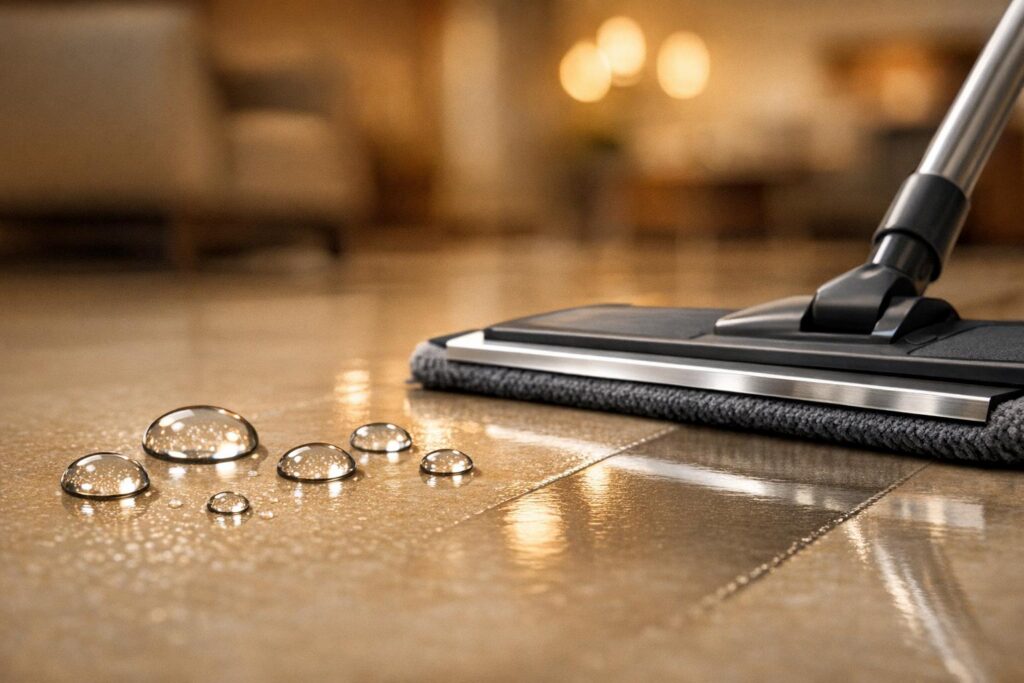
Maintaining moisture-resistant floors is critical for safety, durability, and compliance with regulations like OSHA and ADA standards. High-traffic areas in hospitality spaces, such as lobbies, kitchens, and pool decks, face constant challenges from spills, water, and wear. Proper care ensures these floors remain functional and long-lasting.
Key points:
- Daily cleaning: Sweep or vacuum with soft tools to prevent scratches.
- Use pH-neutral cleaners: Avoid harsh chemicals like bleach or ammonia.
- Immediate spill cleanup: Prevent stains and damage by addressing spills promptly.
- Regular inspections: Identify wear or damage early to avoid costly repairs.
- Professional maintenance: Experts can handle repairs and extend floor lifespan.
Polyurea concrete coatings offer durability, slip resistance, and easy cleaning, making them ideal for hospitality environments. They resist moisture, chemicals, and UV damage while providing customizable finishes for safety and aesthetics. Proper maintenance ensures these floors meet safety standards and maintain their appearance for years.
Types of Moisture-Resistant Flooring
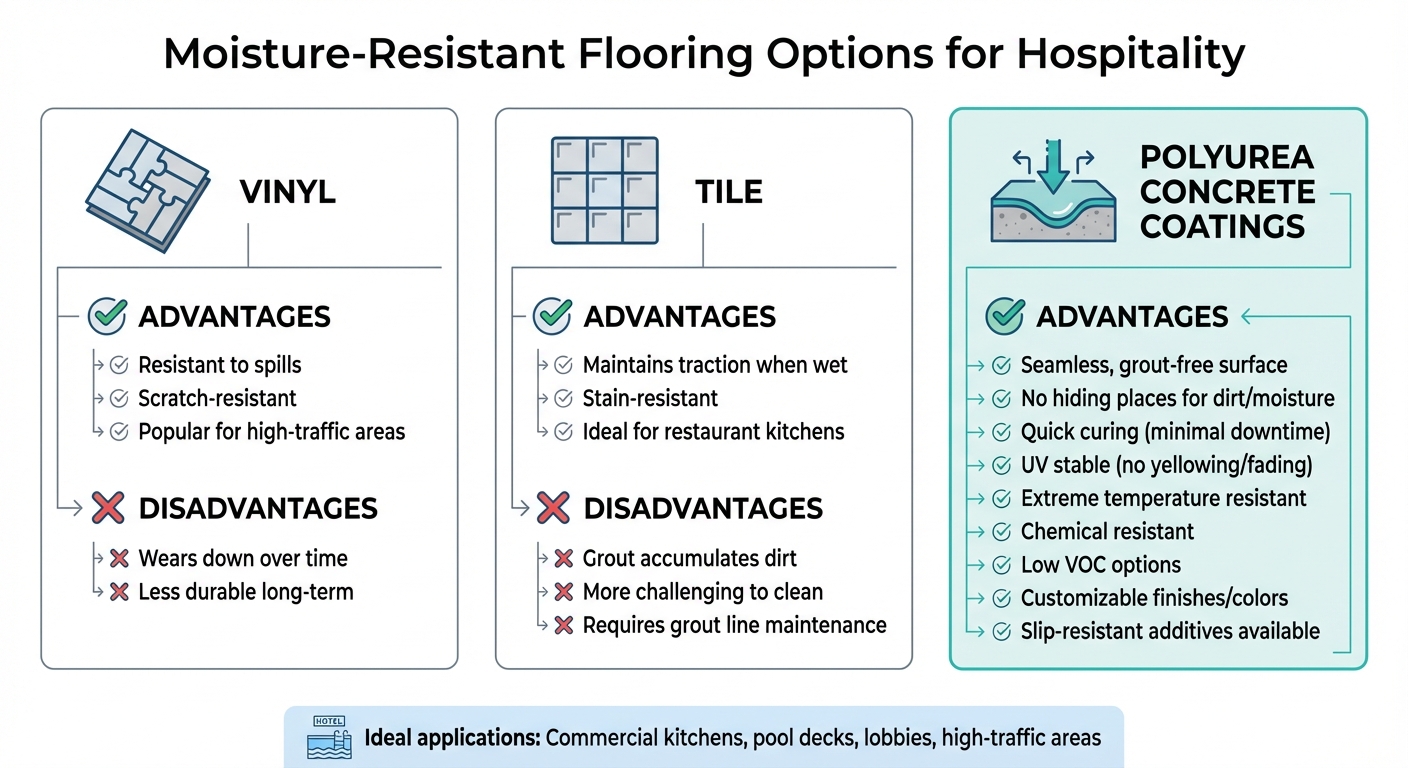
Moisture-Resistant Flooring Options for Hospitality Spaces Comparison
Hospitality properties have several flooring options designed to handle moisture, each offering distinct advantages. Vinyl is a popular choice for high-traffic areas due to its resistance to spills and scratches. Meanwhile, tile remains a go-to in restaurant kitchens because it maintains traction when wet and resists stains. However, both have some drawbacks: vinyl tends to wear down over time, and tile grout can accumulate dirt, making cleaning more challenging.
Polyurea concrete coatings provide a modern alternative. Unlike vinyl or tile, these coatings create a seamless, grout-free surface where dirt and moisture have no place to hide. They also cure quickly, cutting downtime for busy hospitality venues. Atlas Concrete Coatings specializes in these polyurea-based systems, offering solutions tailored for spaces like commercial kitchens, pool decks, and more.
What Are Polyurea Concrete Coatings?
Polyurea is applied directly onto concrete, forming a waterproof barrier that protects the surface and underlying material from moisture damage. It’s highly resistant to oils, solvents, acids, and even harsh cleaning chemicals, ensuring long-lasting durability.
One standout feature of polyurea is its UV stability, which prevents yellowing or fading when exposed to sunlight. This makes it an excellent choice for outdoor patios or sunlit areas like lobbies. Additionally, polyurea can withstand extreme temperatures without cracking – perfect for environments ranging from walk-in freezers to bustling commercial kitchens. Its elasticity even allows it to bridge minor cracks in the concrete, absorbing impacts and preventing further damage.
Customization is another strong point. Polyurea coatings can be tailored with different finishes, textures, and colors to align with brand aesthetics. For wet or high-risk areas such as bathrooms or bar entrances, slip-resistant additives can be included for enhanced safety. Many formulations are also low in volatile organic compounds (VOCs), promoting healthier indoor air quality for both guests and staff.
These technical qualities translate into practical, real-world benefits for hospitality settings.
Benefits for Hospitality Spaces
The seamless nature of polyurea coatings makes hygiene much easier to manage. Without grout lines, cleaning becomes more efficient and effective – an essential factor in food service areas where health inspections are frequent.
Another major advantage is rapid curing, which minimizes disruptions. Unlike traditional flooring installations that can take days, polyurea systems from Atlas Concrete Coatings allow spaces to reopen quickly, keeping operations on track. Once installed, the coating’s chemical resistance ensures it holds up against industrial-grade cleaning agents often used in hospitality environments. It’s also tough enough to endure heavy foot traffic, luggage wheels, and moving equipment, making it ideal for lobbies, corridors, and back-of-house areas where durability is a must.
These features underline why regular cleaning and inspections are key to maintaining the performance and longevity of polyurea-coated floors.
sbb-itb-4b4bb37
How to Maintain Moisture-Resistant Floors
Keeping polyurea-coated floors in top condition requires consistent care. A proper cleaning and maintenance routine not only protects your investment but also ensures the floor performs well in high-demand hospitality environments. Here’s how to keep these floors looking and functioning their best.
Daily Cleaning and Dust Removal
Dust and debris may seem harmless, but over time, they can scratch even durable surfaces. To prevent this, sweep or vacuum daily using tools that are gentle on the floor. A soft-bristle broom, a vacuum with a soft-bristle attachment (avoid beater bars), or a microfiber dry mop are ideal for routine cleaning. To minimize dirt entering the space, place doormats at all entry points – this simple step can intercept up to 80% of dirt, reducing wear and tear.
Choosing the Right Cleaning Products
When it’s time for weekly mopping, stick to pH-neutral cleaners. Harsh chemicals like ammonia, bleach, or oil-based products can harm the protective layer of the floor. For a natural solution, try mixing one cup of white or apple cider vinegar with a gallon of warm water to tackle embedded dirt. Be cautious with steam mops unless explicitly approved by the manufacturer, as excessive heat can weaken adhesives or damage the floor’s wear layer. Always clean spills immediately with a damp microfiber cloth to prevent stains from setting.
In addition to cleaning, regular inspections play a key role in maintaining the floor’s condition.
Regular Inspections and Maintenance
Frequent inspections are essential, especially in high-traffic areas like lobbies or kitchen entrances. Look for signs of wear or damage, and check furniture pads for any grit that might scratch the surface. Ensuring all contact surfaces are clean and in good condition can prevent unnecessary damage. For more thorough care, professional maintenance services, like those offered by Atlas Concrete Coatings, provide expert inspections and specialized treatments to extend the floor’s lifespan. Always follow manufacturer guidelines to address potential issues early on.
Mistakes to Avoid When Caring for Moisture-Resistant Floors
Even though polyurea floors are built to last, improper care can still lead to damage. Taking the right steps to maintain them doesn’t just preserve their appearance – it also ensures long-term safety and functionality. Here are some common mistakes to steer clear of to keep your floors in top shape.
Using Abrasive Tools or Harsh Chemicals
While polyurea is known for being four times stronger than standard epoxy, its finish is softer (Shore D 40-50) compared to epoxy’s harder, glass-like surface. This means abrasive tools like steel wool, stiff brushes, or rough pads can wear down the coating over time. Similarly, although the non-porous surface repels substances like oil and brake fluid, exposure to harsh chemicals might still necessitate an acid-resistant topcoat. To avoid unnecessary damage, stick with soft-bristle brooms or microfiber mops for daily cleaning.
Delaying Spill Cleanup
Polyurea flooring does an excellent job resisting stains, but that doesn’t mean spills can be ignored. Liquids left sitting for too long – especially over 24 hours – can seep into seams, leading to mold growth and even structural damage. Water damage, in particular, can start affecting materials in just a few hours. Cleaning spills as soon as they happen is a simple way to prevent long-term problems and keep your floors in great condition.
Skipping Professional Maintenance
Polyurea floors require specialized application and maintenance, thanks to their rapid curing process and the need for high-pressure spray equipment. This makes DIY repairs a risky choice. As Floor Shield Coatings explains:
Professional installers have the training and tools to ensure the job is done right the first time, saving you the headache and potential cost of future corrections.
Neglecting professional inspections can lead to issues like bubbling caused by moisture, UV-related discoloration (ambering), or uneven surfaces. These problems could cut into the 15–20+ year lifespan these floors are designed to deliver. Scheduling regular professional assessments not only prevents these issues but also helps maximize your investment. For expert services, reach out to Atlas Concrete Coatings.
Conclusion
The secret to durable, moisture-resistant floors in hospitality spaces lies in consistent daily upkeep paired with professional maintenance. Keeping floors in top shape not only ensures they perform well but also preserves their visual appeal. Simple habits like daily cleaning, addressing spills immediately, and using eco-friendly, low-VOC cleaners go a long way. As ArmorPoxy points out:
Because of its seamless design, there is no need for grout lines or seams, which in commercial settings can contain germs, dirt, and other impurities.
This seamless design makes routine cleaning easier and helps maintain a hygienic environment. However, beyond daily care, professional maintenance is essential to handle the wear and tear from high foot traffic.
Daily efforts alone won’t suffice – expert care is necessary to protect your investment and maintain key features like slip resistance, UV stability, and waterproofing. Regular inspections can identify issues such as damage in busy lobbies or wear in high-use areas like kitchens before they become expensive problems. As Polymer Nation highlights:
In the hospitality industry, first impressions matter.
A well-maintained floor not only enhances the overall look but also ensures guest safety and smooth operations.
FAQs
How often should moisture-resistant floors be professionally inspected?
The article doesn’t lay out a specific inspection timetable for moisture-resistant floors but emphasizes the need for consistent upkeep. This involves tasks like daily sweeping, weekly mopping, promptly cleaning up spills, and scheduling professional deep cleanings every few months to maintain both their longevity and look.
Can polyurea-coated floors be repaired if they get scratched or chipped?
Yes, polyurea-coated floors can be repaired if they get scratched or chipped. While these coatings are known for their durability, professional repair services are the best option to restore both their look and strength. Experts, such as Atlas Concrete Coatings, have the tools and experience to ensure the repairs are done correctly and last for years. For the best results, always trust professionals familiar with polyurea floors to preserve their quality and performance.
What slip-resistant options are available for wet areas like pool decks?
Slip-resistant coatings play a key role in ensuring safety in wet areas, especially around pool decks. Materials like polyurea and epoxy can be modified with slip-resistant additives or textured finishes to improve traction. To find the best solution for your specific requirements, it’s a good idea to consult a professional coating provider, such as Atlas Concrete Coatings, who can guide you toward the most effective options.