
When it comes to upgrading floors in restaurants or hospitality spaces, downtime can be costly. Closures lead to lost revenue, idle staff, and unhappy customers. Traditional flooring solutions often take days to install, but polyurea coatings offer a faster alternative. Here’s why they stand out:
- Faster Turnaround: Polyurea coatings cure in just 2–4 hours, allowing businesses to reopen within 24–36 hours, compared to several days with epoxy.
- Durable and Hygienic: They resist chemicals, abrasions, and bacteria, making them ideal for high-traffic areas like kitchens and dining spaces.
- Flexible Scheduling: Installations can be done overnight or during off-hours to reduce disruptions.
- Safety Features: Slip-resistant additives can be included to meet OSHA standards, ensuring a safer environment.
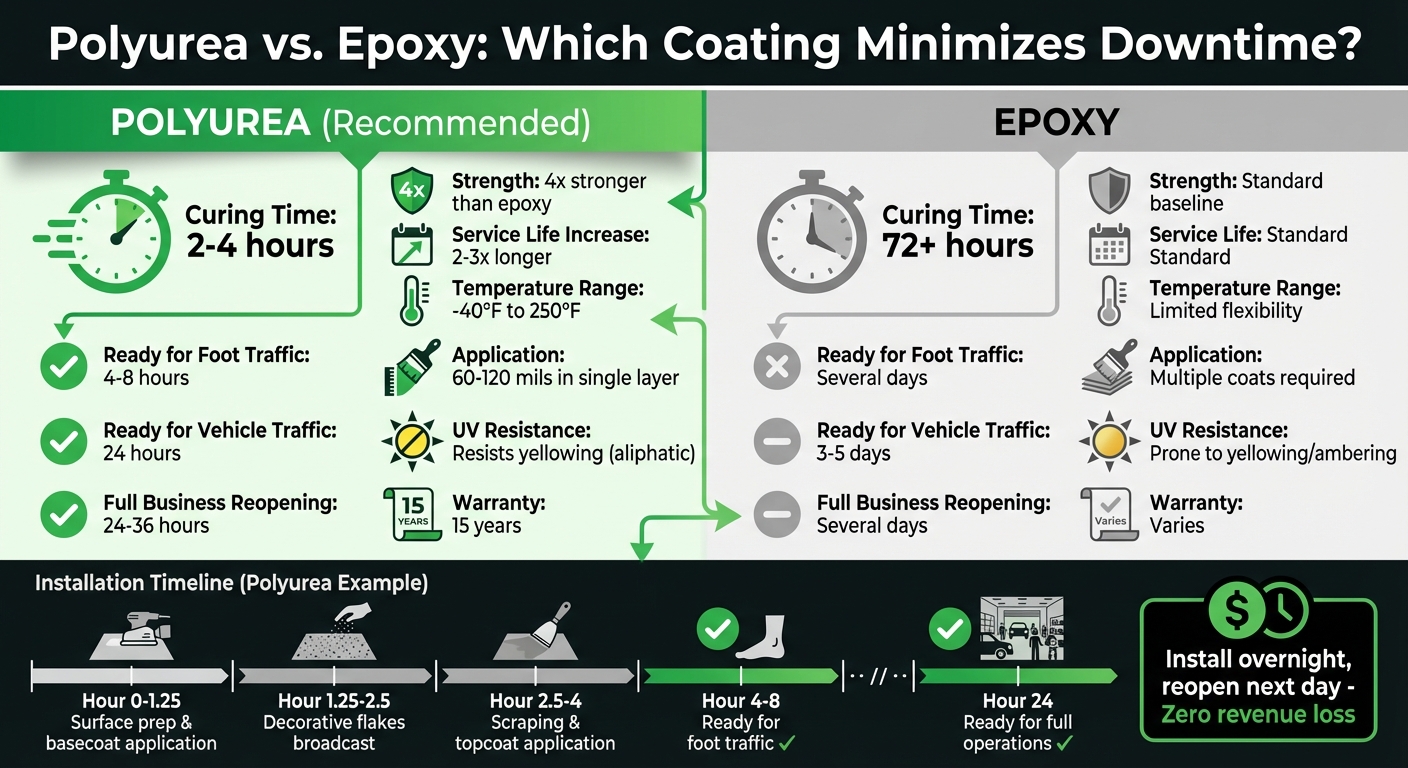
Polyurea vs Epoxy Floor Coatings: Speed and Durability Comparison
SPGX Polyurea Installation Video
sbb-itb-4b4bb37
Assessing Your Flooring Requirements
Before you dive into selecting a coating, it’s crucial to take a step back and evaluate what your flooring truly needs. In restaurant and hospitality settings, floors endure a lot – constant foot traffic, rolling carts, frequent spills, and exposure to harsh cleaning chemicals. While aesthetics matter, your flooring also needs to handle wear and tear without breaking down. Once you’ve outlined your requirements, focus on durability and the specific environmental challenges your floors will face.
Determining Traffic Levels and Durability Needs
Start by identifying areas with the most foot traffic or equipment movement. For example, kitchens near ovens and dishwashers are hotspots for thermal fluctuations and heavy rolling equipment. These zones demand coatings that can resist thermal shock, abrasion, and impact .
Daily exposure to degreasers, food acids, and oils can quickly degrade subpar coatings. To combat this, opt for a seamless, non-porous surface that minimizes bacterial growth. Unlike tiles with grout lines that trap contaminants, seamless polyurea coatings provide a cleaner and more hygienic solution .
Slippery floors, especially in wet or greasy conditions, are another concern. Choose coatings that allow for textured additives to enhance grip and meet OSHA safety standards .
"Our studies showed that you can increase the service life of the facility two to three times what the current technology was able to provide… That’s in terms of chemical resistance and abrasion resistance".
Polyurea coatings, in particular, stand out – they’re about four times stronger than traditional epoxy coatings.
Identify Coating Failures
Take a close look at your facility’s current flooring. Check for cracks wider than 1/16 inch, peeling, bubbling, or signs of moisture issues, such as rising dampness or laitance. Be on the lookout for contaminants like oils, grease, and tire marks, as these can interfere with adhesion. A simple porosity test can help: if water beads on the surface, additional mechanical preparation is necessary .
In areas with large windows or outdoor exposure, watch for yellowing – commonly referred to as "ambering" – which indicates UV damage . Also, ensure that moisture vapor emission levels are below 3 lbs per 1,000 sq. ft. over a 24-hour period before applying any coating.
Planning for Quick Installation
Once you’ve identified the type of flooring your business needs, the next step is creating an installation plan that minimizes disruption. A well-thought-out schedule can mean the difference between a smooth, one-day process and an extended, costly shutdown. The secret lies in two things: thorough surface preparation and strategic timing.
Preparing the Concrete Surface
Getting the surface ready is the foundation for a floor that lasts for decades. The process starts with mechanical diamond grinding, which removes the top 1/16 inch of concrete. This step eliminates laitance (a weak, powdery layer) and opens up the concrete’s pores, ensuring the coating adheres properly. Believe it or not, surface prep accounts for about 90% of the installation process.
"The preparation is about 90% of the job. It’s the one step that determines whether your floor will look amazing for decades or peel up in a year." – Floortek Coatings
Before you begin grinding, double-check moisture levels. They should be below 3 lbs/1,000 sq. ft./24 hours. For cracks, a V-blade grinder is essential. It creates clean edges, which you can then fill with a fast-curing polyurea mender that sets in just 15–20 minutes. Industrial grinders equipped with triple-HEPA-filtered vacuums capture 99.9% of silica dust, keeping the workspace clean and ensuring nothing interferes with proper adhesion. After grinding, test the surface by spraying water on it. If the water beads up rather than soaking in, you’ll need additional profiling.
Once the surface is prepped to these standards, plan to install the flooring during off-peak hours to keep your operations running smoothly.
Timing Installation Around Business Hours
Polyurea’s quick curing time makes it perfect for installations that need to happen without disrupting your business. From surface prep to the final topcoat, everything can be completed in just one day. That’s why many restaurant and hospitality businesses opt for overnight or weekend installations. Floors are ready for foot traffic in as little as 4 to 8 hours and can handle vehicle traffic within 24 hours.
Crack fillers made from polyurea cure in just 20 minutes, allowing you to move straight to the coating phase. By scheduling the work during your slowest business hours, you can reopen quickly and avoid losing revenue.
Selecting Fast-Curing Polyurea Coatings
How Polyurea Compares to Epoxy
Polyurea coatings offer a faster curing time – just 2 to 4 hours – compared to epoxy, which can take over 72 hours to fully cure. This quick turnaround is a game-changer for industries like restaurants and hospitality, where downtime can disrupt operations.
In terms of strength, polyurea is about four times tougher than epoxy and provides superior resistance to abrasion. Rob Loomis, a chemist at Willamette Valley Co., highlights its durability:
"Our studies showed that you can increase the service life of the facility two to three times what the current technology was able to provide".
Polyurea also excels under extreme temperatures, maintaining flexibility and structural integrity from –40°F to 250°F. This makes it particularly suitable for demanding environments like commercial kitchens. Additionally, aliphatic polyurea resists fading and yellowing under UV exposure, ensuring that floors in sunlit areas or outdoor spaces retain their color and gloss over time.
Hygiene and safety are other standout benefits. According to Jose Ibarra, owner of Crown West Inc.:
"Being 100 percent solids, it’s a closed-molecule system. It doesn’t bleed, it doesn’t open up, it doesn’t allow for growth of algae and bacteria".
Polyurea is also USDA and FDA compliant, non-porous, and waterproof, making it easy to clean without worrying about contamination risks. These features make it a versatile choice for both functional and aesthetic needs.
Matching Coatings to Your Design and Functional Goals
Once you’ve established performance requirements, it’s important to align your coating choice with your design and safety objectives. Polyurea systems are incredibly versatile, offering options to suit various styles and practical needs. For a sleek, modern look, you can opt for a solid color system. Alternatively, decorative chip systems not only add texture and visual appeal but also hide dirt and wear, making them a popular choice for high-traffic areas. Companies like Atlas Concrete Coatings even provide customizable chip systems in a range of colors and finishes to enhance both style and functionality.
Safety is a critical factor, especially in wet or greasy areas like kitchens and bar zones. Adding materials such as vinyl chips or quartz sand to the base layer can improve traction and meet OSHA safety standards. These additives blend seamlessly into the coating, creating a uniform, slip-resistant surface that doesn’t compromise the overall look.
For spaces exposed to direct sunlight, such as patios or poolside bars, aliphatic polyurea is the go-to choice. It prevents yellowing and maintains its appearance over time. While most polyurea finishes naturally have a high-gloss look, you can adjust the sheen to satin or matte with specific topcoats if a less reflective finish is preferred.
Thickness is another key consideration. Polyurea can be applied at 60 to 120 mils in a single layer, eliminating the need for multiple coats like epoxy. Mark Glendrange, Technical Director at Versatile Building Products, explains:
"The film thickness wet is equal to the film thickness dry with the polyurea".
This means what you apply is exactly what you get – no shrinkage during curing, ensuring consistent and reliable protection.
Installing Polyurea Coatings in One Day
Applying the Basecoat and Decorative Flakes
Start by spreading a pigmented polyurea basecoat using a flat or notched squeegee. Immediately follow this with back-rolling using an 18-inch roller to ensure the coating deeply penetrates the concrete surface. This step typically takes about 1 to 1.25 hours. To avoid visible seams or overlaps, work in sections that you can handle easily, keeping a wet edge throughout the process.
While the basecoat is still wet, decorative vinyl flakes are scattered across the surface by hand. Installers wear spiked shoes to move safely across the area without disturbing the wet coating. The flakes are broadcast evenly until the floor is covered "to rejection", meaning no wet spots are visible. This stage also takes approximately 1 to 1.25 hours.
Once the basecoat has cured – usually within 1 to 4 hours – the excess flakes are scraped off using a heavy-duty floor scraper. This step smooths out the surface and reduces the amount of topcoat needed later to encapsulate the flakes. After scraping, a thorough vacuuming removes any remaining loose debris.
Sealing with a Protective Topcoat
After completing the basecoat and flake application, the final step is sealing the floor with a clear, UV-stable polyaspartic topcoat. Apply this topcoat using the same squeegee and roller technique. It encapsulates the decorative flakes and provides excellent resistance to chemicals and abrasion, offering durability up to three times greater than epoxy. To enhance safety, many installers mix a non-skid additive into the topcoat, particularly for areas prone to wet conditions like commercial kitchens or bars.
The topcoat application takes another 1 to 1.25 hours. Thanks to its lower viscosity, the polyaspartic topcoat effectively wets out the flakes, ensuring they lie flat and form a smooth, seamless finish that protects the concrete. The floor will be ready for foot traffic in 4 to 8 hours and can handle vehicle traffic within 24 hours. This quick turnaround allows businesses to resume operations with minimal disruption, making it an efficient, one-day solution.
Maintaining Your New Floors
Confirming the Floor Is Ready for Use
Before reopening your space, make sure the floor has fully cured. Polyurea floors can handle foot traffic within 4–6 hours, but they’re only ready for heavy use after 24 hours.
You can check the curing process by performing a quick porosity test. Lightly spray water onto the surface – if it beads up, the seal is intact. If the water soaks in, the seal might be compromised, and you should contact a professional for assistance. During curing, keep the area at stable temperatures and avoid exposing the floor to direct sunlight or extreme heat.
Understanding Long-Term Performance
Once the floor is fully cured, it’s time to think about keeping it in top shape for years to come.
Polyurea coatings are designed to make maintenance easier. Their anti-porous and antimicrobial properties simplify cleaning, even in high-traffic areas. For everyday care, sweep with a soft-bristle broom and mop weekly using a mild detergent.
For more thorough cleaning – especially in busy commercial spaces – use a floor scrubber with a soft brush attachment every few months. To protect the surface, place entrance mats at doorways to catch dirt and moisture, and add felt or rubber pads to furniture legs to prevent scratches. Polyurea’s chemical-resistant composition helps it retain its appearance over time, even when exposed to harsh substances.
Most professional polyurea installations come with a 15-year warranty, highlighting the material’s durability. If you notice the protective layer wearing down after years of use, you can apply a compatible sealer or topcoat to refresh both its look and performance – no need for a full replacement. Make it a habit to inspect the floor weekly for any chips or peeling to address small issues before they grow into bigger problems.
If you’re unsure about any part of the maintenance process, reach out to Atlas Concrete Coatings for expert advice and support.
Conclusion
For restaurants and hospitality businesses, polyurea coatings offer a game-changing solution to minimize downtime while upgrading floors. These fast-curing coatings can be installed and ready for use within 24 hours, with foot traffic allowed in just 4 to 6 hours. This means you can schedule the work during off-hours and reopen without losing an entire business day. Even with this speed, polyurea doesn’t compromise on durability or safety – two essentials in high-traffic hospitality spaces.
Polyurea is not only 4 times stronger than traditional coatings but also cures in hours rather than days. The entire process, from surface prep to applying the final protective layer, is completed in a single visit, ensuring a smooth and efficient upgrade.
Beyond installation speed, these coatings deliver long-term benefits. Their antimicrobial surface helps prevent bacteria and mold growth, while the slip-resistant texture reduces the risk of accidents in areas prone to spills or grease. The chemical-resistant finish stands up to harsh cleaning products, so your team can keep the space spotless without worrying about damaging the floor.
Atlas Concrete Coatings specializes in one-day polyurea installations, using certified Penntek-trained professionals to ensure the job is done right. Their systems are backed by a 15-year warranty for residential floors, demonstrating their confidence in the material’s performance. Whether you’re updating a dining area, commercial kitchen, or lobby, their team handles everything – from diamond-blade grinding to decorative chip application – within just 24 hours.
Looking to upgrade your floors without disrupting your business? Reach out to Atlas Concrete Coatings for a free consultation and estimate.
FAQs
Why are polyurea coatings a better choice than epoxy for restaurant floors?
Polyurea coatings are a smart option for restaurant floors, largely because they cure much faster than traditional epoxy. This means less downtime, allowing businesses to get back to serving customers in no time. Beyond speed, these coatings are built to last – standing up to heavy foot traffic, spills, chemicals, and even impacts, which are everyday challenges in a busy restaurant setting.
What’s more, polyurea coatings are designed to flex, reducing the risk of cracks forming over time. They also offer added slip resistance, helping to create a safer environment for both staff and customers. For restaurant owners seeking a flooring solution that combines durability, safety, and efficiency, polyurea coatings check all the right boxes.
How can businesses reduce downtime when installing floor coatings?
To keep downtime to a minimum during floor coating installations, opt for quick-curing options like polyurea coatings. These coatings can be ready for use in just 24–36 hours, allowing businesses to get back to normal operations quickly and with fewer disruptions. Another smart move is to schedule the installation during off-hours, such as overnight or during planned closures, to avoid interfering with daily activities.
Using fast-curing materials alongside well-planned scheduling ensures a more seamless process. This approach works especially well for high-traffic environments like restaurants, hotels, or industrial facilities. For reliable, long-lasting results with reduced downtime, professional solutions from companies like Atlas Concrete Coatings are worth considering.
How can I maintain polyurea-coated floors to maximize their lifespan?
To keep your polyurea-coated floors looking great and lasting longer, try these straightforward maintenance steps:
- Sweep frequently to clear away dirt and debris that might scratch the surface.
- Wipe up spills immediately using a soft cloth or mop to prevent potential stains.
- Steer clear of harsh chemicals and abrasive tools that could harm the coating.
- Consider professional deep cleaning every few months to preserve their strength and appearance.
By making these habits part of your routine, you can keep your floors in top shape, ensuring they remain both durable and visually appealing for years.