
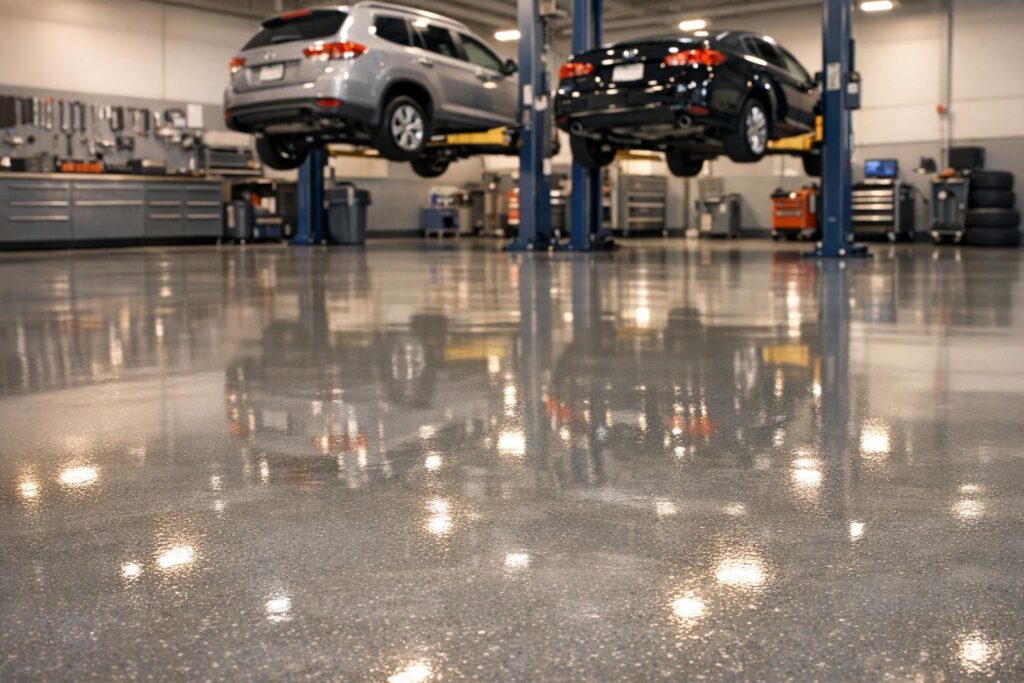
Polyurea coatings are the go-to solution for automotive facility floors, offering unmatched durability, flexibility, and chemical resistance. These coatings outperform epoxy in key areas like curing time, temperature tolerance, and longevity, making them ideal for high-traffic spaces like service bays, showrooms, and storage areas. Here’s why they’re the best choice:
- Fast Curing: Ready for foot traffic in 2–4 hours and vehicle use within 24 hours, minimizing downtime.
- Durability: Four times stronger than epoxy and resistant to impacts, heavy machinery, and hot tire pick-up.
- Flexibility: Withstands temperature swings from -40°F to 250°F without cracking.
- Chemical Resistance: Non-porous surface resists oil, gasoline, and other automotive fluids.
- Low Maintenance: Easy to clean, with no grout lines or cracks for debris to collect.
Compared to epoxy, polyurea lasts longer (up to 15–20 years), resists UV damage, and performs better in extreme conditions. For automotive facilities, it’s a long-term investment that saves time and reduces maintenance costs.
Polyurea Concrete Coatings In-Depth: Problems & Benefits
sbb-itb-4b4bb37
Benefits of Polyurea Coatings in Automotive Facilities
Automotive facilities need flooring that can handle tough conditions. Thanks to its unique molecular structure, polyurea creates a dense, protective barrier that shields concrete from heavy wear and chemical damage. This makes it ideal for high-traffic areas like service bays, showrooms, and storage spaces. Its cross-linked bonds ensure long-lasting protection, maintaining the integrity of concrete even under constant stress.
Durability and Resistance to Heavy Wear
Polyurea stands out for its durability and flexibility, offering a clear advantage over rigid coatings. Its elastomeric properties allow it to absorb impacts from dropped tools, rolling tool chests, and heavy machinery. This flexibility is essential for automotive facilities, where constant vehicle and equipment movement puts flooring to the test. Additionally, polyurea can expand and contract with temperature changes, handling extreme swings from -40°F to 250°F with ease.
"Polyurea is very elastic and can stretch with expansion and shrink with contraction and not crack." – Andy Roe, Founder and CEO, RoePaint.com
Another key benefit is its resistance to hot tire pick-up, a common issue where heated tires bond to coatings and pull them away from the surface. Polyurea is engineered to prevent this, ensuring the coating remains intact for 15 to 20 years with minimal maintenance.
Protection Against Automotive Chemicals
Automotive fluids like oil, gasoline, brake fluid, and antifreeze can wreak havoc on flooring. Polyurea’s non-porous surface forms a chemical-resistant barrier, preventing these substances from seeping into the concrete. Its seamless design allows fluids to bead on the surface, making cleanup quick and easy – even after extended exposure. With 98% more solids than traditional epoxy, polyurea delivers unmatched performance.
This coating also resists damage from road salts, de-icers, and industrial degreasers, making it perfect for facilities that use aggressive cleaning agents. Its rapid curing process ensures a flawless, chemical-resistant seal from the moment it’s installed, without the risk of air pockets or moisture compromising the bond. Beyond its chemical resistance, polyurea simplifies daily maintenance, making it a practical choice for busy automotive environments.
Simplified Maintenance and Cleaning
Polyurea’s seamless surface eliminates cracks and grout lines where dirt, oil, and debris often collect. Routine cleaning is effortless – a quick sweep or pass with a microfiber mop removes dust in no time. For deeper cleaning, soap and water or pH-neutral cleaners are all you need. Plus, polyurea’s 100% UV stability ensures the coating won’t yellow or fade, even in areas exposed to sunlight through large bay doors or windows. This helps maintain a polished, professional look over the years.
For added safety, the coating can be applied with a textured finish using decorative chips, enhancing slip resistance in areas prone to oil or water spills. This combination of durability, chemical resistance, and easy maintenance makes polyurea a standout solution for automotive facilities.
Polyurea vs. Epoxy: Why Polyurea Works Better for Automotive Shops
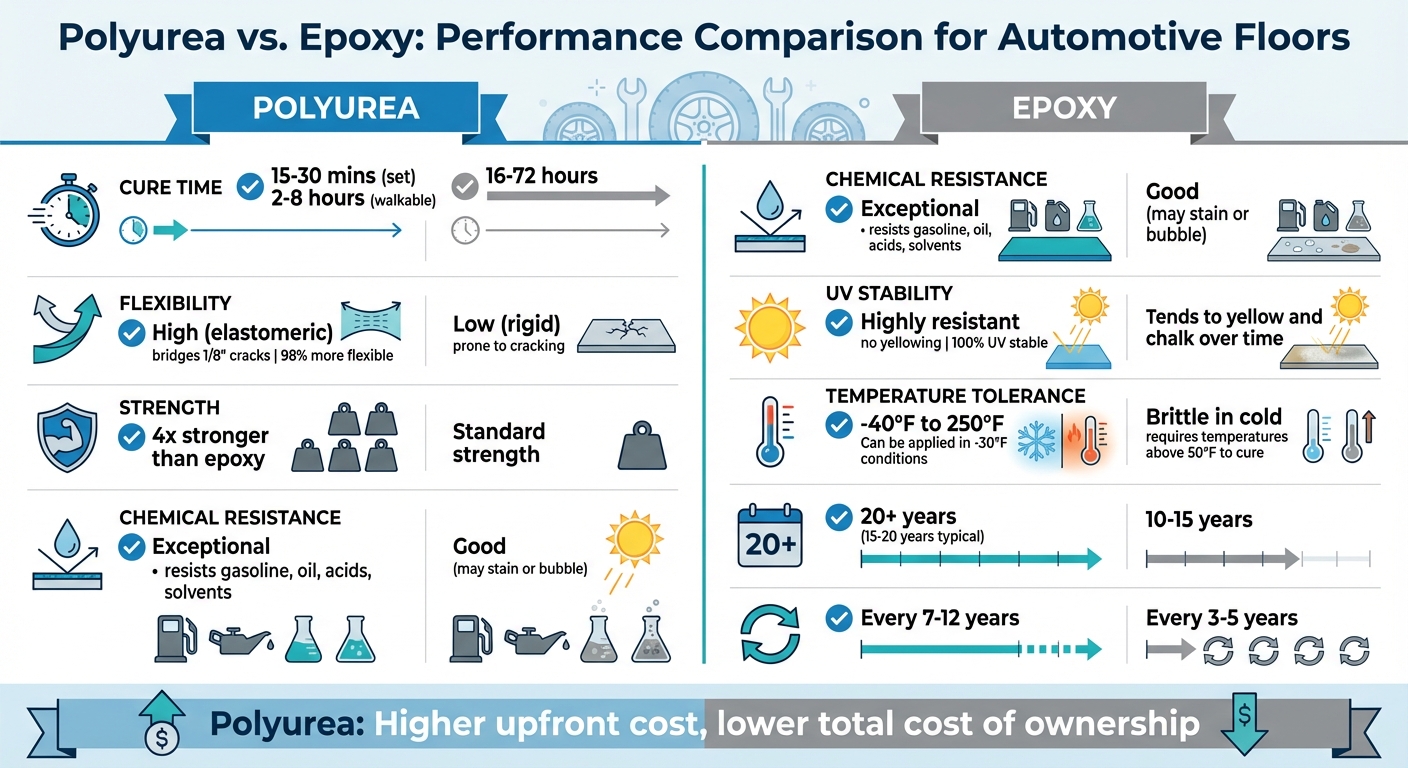
Polyurea vs Epoxy Coatings Comparison for Automotive Floors
When comparing polyurea to epoxy for automotive shop floors, the benefits of polyurea become clear. While epoxy has been a popular choice for years, polyurea stands out with faster curing times, greater flexibility, and better tolerance for extreme temperatures. These advantages directly impact installation efficiency, durability under demanding conditions, and long-term maintenance costs.
Curing Time
One of the most noticeable differences is how quickly polyurea sets. It cures in just 15–30 minutes and can be walked on within 2–8 hours. Epoxy, on the other hand, takes much longer – typically 16–72 hours before the surface is ready for use. This rapid turnaround means that polyurea installations can often be completed over a weekend, reducing downtime and minimizing revenue loss for busy automotive shops.
Flexibility
Polyurea’s elastomeric properties make it highly resistant to cracking caused by substrate movement. In contrast, epoxy is rigid and more likely to crack if the underlying surface shifts. Chris Lavin, Owner of National Concrete Polishing, explains:
"The key difference between polyurea and epoxy garage floors is that polyurea garage floors are more flexible and durable than epoxy, with a faster curing time of about 24 hours. However, epoxy takes several days to cure and becomes brittle over time."
This flexibility is crucial for automotive shops, where heavy equipment and constant activity can stress the flooring.
Temperature Tolerance
Polyurea also handles extreme temperatures exceptionally well. It remains flexible at temperatures as low as -40°F and can withstand heat up to 250°F. It can even be applied in temperatures as cold as -30°F. Epoxy, however, becomes brittle in cold conditions and requires ambient temperatures above 50°F to cure properly. For shops in colder climates or those with unheated workspaces, polyurea is the more practical choice.
Key Performance Comparison
The table below highlights the differences between polyurea and epoxy coatings:
| Feature | Polyurea Coatings | Epoxy Coatings |
|---|---|---|
| Cure Time | 15–30 mins (set); 2–8 hours (walkable) | 16–72 hours |
| Flexibility | High (elastomeric); bridges 1/8" cracks | Low (rigid); prone to cracking |
| Chemical Resistance | Exceptional (resists gasoline, oil, acids, solvents) | Good (may stain or bubble) |
| UV Stability | Highly resistant; no yellowing | Tends to yellow and chalk over time |
| Temperature Tolerance | -40°F to 250°F; can be applied in -30°F conditions | Brittle in cold; requires temperatures above 50°F to cure |
| Service Life | 20+ years | 10–15 years |
Longevity and Cost-Effectiveness
Polyurea’s durability is another standout feature. It can withstand impacts from heavy tools and equipment without chipping. While polyurea has a higher initial cost, its extended service life makes it a more economical choice in the long run. Reapplication is typically needed every 7–12 years, compared to epoxy’s 3–5 year cycle. For automotive shops, this means fewer interruptions and lower maintenance costs over time.
Where to Use Polyurea Coatings in Automotive Facilities
Polyurea coatings excel in various areas of automotive facilities. Knowing where to apply them helps you get the most out of your investment while ensuring each space is well-protected.
Service Bays and Repair Areas
Service bays and repair areas are some of the most demanding parts of any automotive facility. Floors here endure constant stress from heavy tools, hydraulic equipment, and rolling tool chests. Polyurea’s impact resistance – four times stronger than standard epoxy – handles these challenges without chipping or cracking.
Chemical spills are another big concern in repair zones. Motor oil, brake fluid, gasoline, and transmission fluid often end up on the floor. Polyurea’s non-porous surface forces these liquids to bead up, making cleanup quick and easy. Plus, its flexibility – 98% greater than epoxy – ensures it can handle the daily wear and tear without breaking down.
"Polyurea is four times as strong but 98% more flexible [than epoxy]" – Andy Roe, Founder and CEO, Roe Paint
Hot tire pickup, a common issue where heated tires pull up epoxy coatings, is no match for polyurea. Its resistance to this problem makes it a standout choice for service areas.
Showrooms and Customer Areas
First impressions matter, especially in customer-facing areas like showrooms. Polyurea provides a sleek, professional appearance while standing up to heavy foot traffic and occasional vehicle movement. One of its standout features is its 100% UV stability, meaning it won’t yellow or fade even when exposed to sunlight through large windows or open bay doors.
Unlike epoxy, polyurea retains its color over time, even with prolonged sun exposure. Decorative chip systems are particularly popular for showrooms, offering a combination of high-end aesthetics and industrial-level durability while keeping maintenance straightforward.
Parts Storage and Warehousing Areas
Storage and warehousing areas demand flooring that can handle heavy loads and constant movement. Forklifts, pallet jacks, and loaded carts put significant pressure on floors, but polyurea’s 98% greater elasticity compared to epoxy lets it flex with the concrete, reducing the risk of cracks.
"Polyurea’s unique chemical structure allows it to expand and contract with your concrete floor as temperatures fluctuate, preventing cracking and delamination" – FloorTech Concrete Coatings
This coating also resists peeling under the weight of heavy shelving units and holds up well in humid conditions. Another bonus? Polyurea-coated floors are walkable in just 2 to 4 hours, minimizing downtime and keeping operations running smoothly.
These examples highlight how polyurea coatings meet the specific needs of different areas in an automotive facility, delivering both durability and functionality where it’s needed most.
Long-Term Cost Savings and Maintenance Benefits
Polyurea coatings might come with a higher upfront price tag, but they deliver substantial savings over time. While the initial costs for materials and installation are higher compared to epoxy options, the overall expense of maintaining and repairing the surface is significantly lower. Why? Because polyurea’s durability means fewer repairs and a longer lifespan. In fact, many professional polyurea systems include a 15-year warranty, and installations often perform exceptionally well with minimal upkeep.
One of the standout features is its non-porous surface, which makes cleaning a breeze. Automotive spills like motor oil, brake fluid, or antifreeze simply bead up, allowing for quick and easy cleanup. This not only saves time but also cuts down on cleaning costs.
"Yes, the upfront cost may be more than a DIY epoxy kit, but the total cost of ownership is significantly lower. You pay once, and you get a surface that resists wear, protects your slab, looks great, and performs under pressure, year after year." – Top Coat Concrete Coatings
Polyurea’s flexibility is another game-changer. It expands and contracts along with the concrete, reducing the likelihood of cracks and delamination – issues that can lead to expensive repairs. Plus, its strength is impressive, being four times tougher than epoxy. This means it can handle heavy impacts, such as dropped tools or machinery, without chipping or peeling.
The benefits go beyond durability. Polyurea coatings cure in just 4 to 6 hours, significantly reducing downtime compared to epoxy, which can take 48 to 72 hours. Additionally, polyurea’s resistance to hot tire pickup and its UV stability help lower maintenance costs over the long haul.
Why Choose Atlas Concrete Coatings for Automotive Facility Floors
Atlas Concrete Coatings has been a trusted name in automotive floor protection since 2010, offering polyurea-based solutions designed to handle the demands of high-traffic environments. Their expertise in flooring systems ensures that modern automotive facilities get durable, reliable, and efficient coatings.
Atlas Concrete Coatings’ Industrial Flooring Solutions
Atlas specializes in polyurea flooring systems that are built to endure the tough conditions of automotive facilities. These coatings are ready for use within just 24 hours, significantly reducing downtime for businesses. The polyurea base coat penetrates deeply into concrete, forming a bond that resists peeling and delamination – even under the stress of hot tire pick-up. In fact, this system is four times stronger than standard epoxy.
"The polyurea solution bonds to the concrete and is stronger and more flexible than epoxy. The base coat finds to open pours in the concrete and adheres deep into the concrete becoming a permanent part of the floor." – Atlas Concrete Coatings
Atlas’s flooring systems are also designed to perform under extreme temperature conditions. Their 100% UV-stable formula ensures that floors in sunlit areas maintain their clarity and color over time, avoiding discoloration or fading.
Customizable and Durable Floor Coating Options
Atlas doesn’t just focus on durability – they also offer customization to meet both the functional and aesthetic needs of your facility. Their polyurea coatings are known for their chemical resistance and long-lasting performance, but they also go a step further with options like the Formcove system. This seamless floor-to-wall transition is ideal for spaces that require easy cleaning, especially in chemical-heavy environments. Decorative chip coatings are another option, adding texture for improved traction while enhancing the overall look of the space – perfect for areas exposed to oil, brake fluid, or antifreeze spills. For a sleek, polished appearance, their glossy polyurea finishes maintain their shine without clouding or uneven wear.
"Our various composites make it easy to customize your level of protection, traction, and personalized style." – Atlas Concrete Coatings
Atlas’s materials are designed to last 10–15 years, making them a long-term investment. They offer free consultations to help clients choose the right combination of traction and impact resistance for high-traffic areas. Pricing is straightforward, based on square footage, and includes preparation, materials, and professional installation.
"Atlas did a great job on our garage floors. The previous owner installed epoxy and it failed… The floors were done same day and we are very happy with the results." – Ben Bender
Conclusion: The Best Flooring Solution for Automotive Facilities
Polyurea coatings stand out as a top choice for automotive facilities, offering durability that’s four times stronger than epoxy. These coatings can handle extreme temperatures ranging from -40°F to 250°F and resist staining from automotive fluids. With a quick curing time (ready in just 24 hours) and a non-porous surface that makes spill cleanup effortless, they’re perfectly suited for the demands of service bays. Their flexibility prevents cracks by allowing the floor to expand and contract with temperature changes, while the UV-stable formula ensures no yellowing in areas exposed to sunlight. When properly installed, these floors can last up to 15 years with minimal maintenance.
Expert installation takes these benefits even further. Atlas Concrete Coatings uses a multi-layer polyurea system that forms a permanent bond with your concrete, ensuring unmatched strength and safety. Their Penntek-certified professionals focus on meticulous surface preparation and application, creating a chemical bond that penetrates deep into the concrete. This system not only delivers exceptional durability but also offers customizable aesthetics and slip-resistant textures – essential for maintaining safety in areas prone to fluid spills.
For automotive facilities looking for a flooring solution that minimizes downtime, simplifies upkeep, and stands up to the rigors of heavy machinery and chemical exposure, polyurea coatings installed by Atlas Concrete Coatings are an excellent investment. Their straightforward pricing – calculated by square footage – covers preparation, materials, and professional installation. Plus, they offer free consultations to tailor the solution to your facility’s unique needs. With polyurea coatings and the expertise of Atlas Concrete Coatings, you’re choosing a long-lasting, reliable flooring option designed to meet the challenges of modern automotive facilities.
FAQs
How does polyurea reduce downtime compared to epoxy for floor installations?
Polyurea coatings are a game-changer when it comes to reducing downtime during floor installation projects. Their quick-curing nature means floors are usually ready for foot traffic within just 24 hours and can often handle full use in as little as 1–3 days. This speed makes them an ideal option for high-traffic spaces like automotive facilities, where prolonged closures simply aren’t an option.
On the other hand, epoxy coatings take significantly longer to cure. Floors treated with epoxy may require several days – or even up to a week – before they’re ready for use. For businesses where every hour counts, polyurea offers a much faster and more practical alternative.
Why are polyurea coatings a durable choice for automotive facility floors?
Polyurea coatings stand out for their durability, thanks to their combination of flexibility and strength. This unique property means they can handle the constant expansion, contraction, and impacts that are common in automotive facilities. Unlike many other materials, polyurea doesn’t crack under pressure or when exposed to temperature fluctuations.
What’s more, polyurea is highly resistant to chemicals, abrasion, UV rays, and heat, making it a perfect choice for spaces that face oil spills, tire friction, and the weight of heavy machinery. Its quick curing process creates a strong bond with the floor, delivering the lasting protection and resilience needed in high-traffic environments.
Are polyurea coatings suitable for floors exposed to extreme temperature changes?
Polyurea coatings are built to withstand extreme temperature changes with ease. Their flexibility and resistance to thermal cycling allow them to expand and contract without cracking or compromising their strength. This makes them a reliable option for spaces like automotive facilities, where floors often face fluctuating temperatures.
Atlas Concrete Coatings delivers polyurea systems that offer strong performance and durable protection, ensuring your floors stay tough and dependable no matter the climate.