

Slippery floors are a major safety hazard, causing 15% of accidental deaths in the U.S. annually. Slip-resistant coatings effectively reduce the risk by increasing floor friction, even on wet or oily surfaces. These coatings, made from materials like polyurea or epoxy, are widely used in residential, commercial, and industrial settings. They improve safety by raising the Coefficient of Friction (CoF), making surfaces less prone to slips.
Key Takeaways:
- How It Works: Coatings create textured surfaces that maintain grip, even in challenging conditions.
- Applications: Suitable for homes, kitchens, hospitals, factories, and pool decks.
- Benefits of Polyurea: Stronger, flexible, long-lasting, and quick to install.
- Maintenance: Regular cleaning and inspections keep coatings effective.
Slip-resistant coatings are a practical way to enhance floor safety while ensuring durability and easy upkeep.
How to safely apply epoxy anti slip paint to a concrete floor | Rizistal
sbb-itb-4b4bb37
How Slip-Resistant Coatings Improve Floor Safety
Slips happen when there’s not enough friction between your foot and the floor to keep you steady. Slip-resistant coatings address this issue by boosting the Coefficient of Friction (CoF) – a scale from 0 to 1 that measures how much grip a surface provides. The higher the CoF, the better the traction. For reference, OSHA considers a static CoF of 0.5 safe, while the Americans with Disabilities Act (ADA) recommends 0.6 for flat surfaces and 0.8 for ramps. These coatings work by creating tiny grip points that cut through the thin liquid layer often present between shoes and floors. This is why they’re effective even in areas contaminated with oils. Russ Kendzior, President and CEO of the National Floor Safety Institute, highlights their impact:
High-traction surfaces have been clinically proven to reduce slip-and-fall claims by 50% to 90%.
This insight lays the groundwork for understanding how to choose and apply slip-resistant coatings effectively. Let’s dive deeper into the role of friction in slip resistance.
Understanding Slip Resistance and Friction
Friction plays a key role in preventing slips, and there are two types to consider: static friction (SCOF), which measures the force needed to start moving, and dynamic friction (DCOF), which gauges resistance once you’re in motion. Both are crucial since slips can happen either when you first step onto a surface or while walking. According to national standards, a non-slip floor typically requires a CoF of at least 0.42, meaning 42% of your body weight must translate into grip.
The material of the coating itself also influences slip resistance. For example, epoxy coatings can be more slippery because their slow drying time allows solid particles to sink, leaving a smoother surface. On the other hand, polyaspartic and polyurea coatings cure quickly, keeping the anti-slip aggregates near the surface, which improves traction. These faster-curing options also maintain a thinner layer, allowing the natural texture of the underlying concrete to show through. However, there’s a trade-off: adding more texture for safety often makes the floor harder to clean. These friction principles are key when selecting the right coating and aggregates for different environments.
Slip-Resistant Coatings for Different Spaces
The level of traction needed varies depending on the space, and every environment requires a balance between grip and cleanability. For residential areas, lighter aggregates like polymer beads are popular because they’re easier to clean. In contrast, commercial and industrial spaces demand tougher materials, such as aluminum oxide or steel grit, to handle constant moisture and heavy foot traffic .
Durability is another critical factor, especially in high-traffic areas. While silica sand is a low-cost option, it tends to break down quickly under repeated use. Aluminum oxide, however, is a much more durable choice for commercial and industrial settings, as it’s harder and holds its texture longer . John Barnett, Concrete Coating Division Lead at Roe Painting, explains how aggregates affect the floor’s appearance:
The more anti-skid or aggregate you put in the actual finish, the more it’s going to change the look of the floor. With the lightest ones… it just gives the floor kind of a bumpy look – like the size of a sugar grain.
For pool decks, polystyrene beads are a common choice. They provide effective traction without sharp edges, making them more comfortable for bare feet.
Benefits of Polyurea Slip-Resistant Coatings
Polyurea coatings bring together safety, durability, and style in one impressive package. These coatings are engineered to be four times stronger and more flexible than traditional epoxy, making them capable of handling temperature fluctuations without cracking or peeling. This flexibility is especially important for floors that endure freeze-thaw cycles or heavy loads, where rigid coatings often fall short.
Long-Lasting Durability
What sets polyurea apart is how it bonds with concrete. It penetrates deep into the concrete’s pores, creating a permanent, interlocking bond. Atlas Concrete Coatings explains:
The polyurea solution bonds to the concrete and is stronger and more flexible than epoxy. The base coat finds open pores in the concrete and adheres deep into the concrete, becoming a permanent part of the floor.
This deep adhesion, combined with resistance to UV rays, chemicals, oil spills, and extreme temperatures, ensures polyurea floors can last 10 to 20 years or more with proper maintenance. In fact, high-performance polyurea systems used in large-scale infrastructure projects are designed to last up to 125 years. For residential installations, professional services often include a 15-year warranty, providing peace of mind for homeowners and businesses alike.
Design Options and Finishes
Functionality doesn’t mean you have to compromise on looks. Polyurea coatings come in a wide range of colors, patterns, and finishes – from metallic effects to quartz blends and vinyl flakes – so you can achieve the perfect aesthetic while maintaining slip resistance . Decorative chips not only enhance the visual appeal but also improve traction by adding texture.
Another standout feature is UV stability. Unlike epoxy or aromatic polyurea, aliphatic polyaspartic/polyurea systems resist yellowing or discoloration when exposed to sunlight through windows or open garage doors. This makes them a great choice for spaces with natural light, ensuring your floor looks as good as new for years to come.
Fast Installation and Easy Maintenance
For businesses, downtime can be costly. Polyurea’s rapid curing process – up to 70 times faster than epoxy – means many installations can be completed in just one day. Surfaces are typically walkable within 4 to 6 hours and ready for vehicle traffic within 24 hours. This quick turnaround is a huge advantage for commercial spaces that can’t afford extended closures.
Another benefit is its all-weather application. Unlike epoxy, polyurea isn’t affected by humidity and can be applied in extreme temperatures ranging from -20°F to high heat . Alan Cain, Group Leader and Research Chemist at Chemline Inc., highlights this adaptability:
Polyurea spray coatings can be applied in a broader range of conditions and endure in harsher environments. Unlike polyurethanes, polyureas are not sensitive to humidity and can withstand extremely low temperatures (-20ºF) during application.
Once installed, the non-porous, seamless surface resists stains from oil, chemicals, and moisture, making cleanup as simple as sweeping or mopping . This ease of maintenance saves both time and money over the life of the floor. Next, we’ll explore the step-by-step installation process that ensures these coatings deliver maximum safety and performance.
Installation Process for Slip-Resistant Coatings
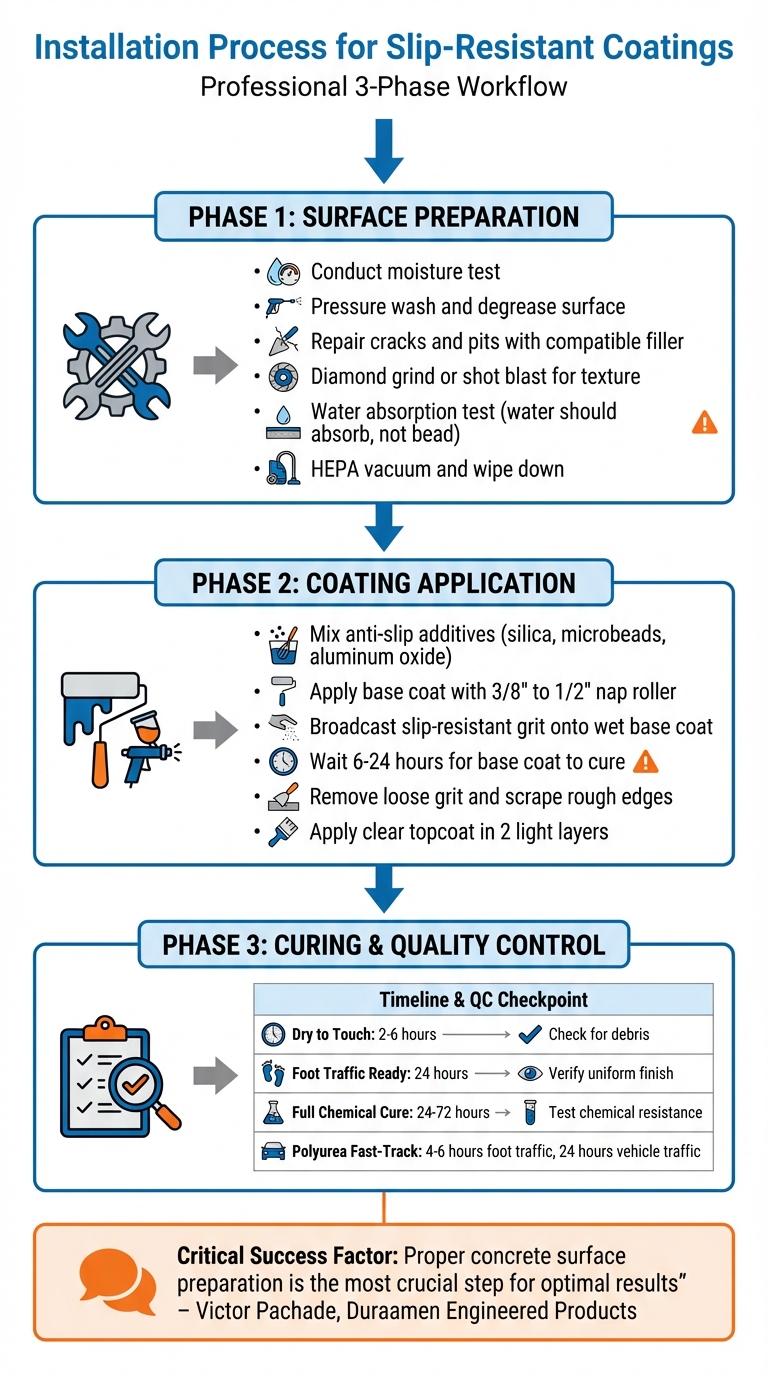
Step-by-Step Installation Process for Slip-Resistant Floor Coatings
Getting slip-resistant coatings right boils down to two key things: thorough preparation and precise application. Victor Pachade from Duraamen Engineered Products drives this point home:
Proper concrete surface preparation is the most crucial step in achieving optimal results with epoxy and other flooring materials.
This highlights how critical surface prep is when aiming for a durable and effective coating.
Preparing the Surface
The first step is ensuring the concrete surface is ready for the coating to bond properly. Start with a moisture test – excess moisture can lead to bubbling or peeling. If needed, apply a moisture-control primer. Next, clean the surface thoroughly. Use a pressure washer or industrial degreasers to remove dirt, oil, and debris, as even small grease spots can disrupt adhesion. Repair any cracks, pits, or spalling using a compatible filler to create a smooth, even surface.
Mechanical profiling is another must. Techniques like diamond grinding or shot blasting open up the concrete’s pores, giving it the rough texture needed for the coating to stick. A quick water test can confirm readiness: sprinkle water on the surface – if it absorbs, you’re good to go; if it beads up, more abrasion is required. Finish by vacuuming with HEPA-filtered equipment and wiping down to eliminate fine dust, which can cause imperfections in the final coating.
Applying the Coating
Once the surface is prepped, it’s time to mix and apply the coating. If you’re using anti-slip additives like silica, microbeads, or aluminum oxide, mix them in with a slow-speed mixer to avoid clumps. Apply the base coat in small sections to keep a wet edge and ensure even coverage. Use a roller with a 3/8- to 1/2-inch nap or a flat blade squeegee for application. For broadcast systems, sprinkle the slip-resistant grit directly onto the wet base coat – this can be done manually or with a mechanical spreader.
After the base coat cures (usually within 6–24 hours), remove any loose grit by sweeping or vacuuming. For chip-based systems, scrape down any rough edges to achieve a smooth, textured finish. Apply a clear topcoat in two light layers instead of one thick coat. This locks in the aggregate while maintaining the slip-resistant texture.
Curing and Quality Inspection
Curing is the final step, and it’s just as important as the application. Protect the coated surface during this phase. While coatings typically dry to the touch within hours, they reach full strength in 24–72 hours. Polyurea coatings cure faster, allowing foot traffic in as little as 4 to 6 hours and vehicle traffic within 24 hours. Keep the area clear of foot traffic, debris, and moisture during this time.
Inspect the surface carefully before applying the topcoat. Look for bare spots or areas with too much grit – these can affect both appearance and functionality. After the topcoat is applied, verify that the aggregate is securely locked in and that the slip-resistant texture is intact. Any cloudy, discolored, or uneven areas might signal a curing problem that may need professional attention.
| Coating Phase | Typical Duration | Critical Action Items |
|---|---|---|
| Dry to Touch | 2–6 Hours | Ensure no debris has landed on the wet coating. |
| Ready for Foot Traffic | 24 Hours | Check for a uniform finish and confirm it’s no longer tacky. |
| Full Chemical Cure | 24–72 Hours | Confirm resistance to cleaning agents and heavy loads. |
| Post-Grit Application | 6–24 Hours | Inspect grit distribution and remove any loose particles. |
Maintaining Slip-Resistant Coatings
To keep your slip-resistant coating effective, regular maintenance is key. Start with daily sweeping using a soft broom or mechanical sweeper to prevent dust buildup. Add weekly scrubbing with a mop or scrubber to your routine. For high-traffic or oily areas, daily scrubbing is essential. Spills should be cleaned up immediately using the right cleaners – TSP for grease, ammonia-based products for dried spills, and citric acid for rubber burns. Placing entryway mats can also help reduce moisture and abrasive particles from being tracked onto the surface. Beyond cleaning, make it a habit to inspect your floors regularly to catch early signs of wear.
Cleaning and Inspection Schedule
Consistent cleaning and inspections are crucial for preserving the safety benefits of slip-resistant coatings. The cleaning frequency largely depends on the environment. Carboline highlights this point:
"The greater the accumulation of soilage and the harsher the environment, the more frequently your floor coating should be cleaned."
High-traffic or high-risk areas, like pool decks, demand extra attention. Inspections are equally important. If the coating starts to feel smooth or you notice water beading heavily on a surface designed to be porous, it might be time to reapply a topcoat. A simple water absorption test can help you assess the coating’s condition.
Repairing and Reapplying Coatings
Address any scratches or gouges promptly to prevent moisture from seeping in. To repair, clean the damaged area with TSP, lightly sand it with 100-grit paper, smooth the edges, rinse, dry, and then reapply the coating. For minor wear, touch-up products can do the trick.
Epoxy coatings typically need resurfacing every 2–5 years, while polyurea coatings can last 10–15 years. Atlas Concrete Coatings explains the durability of polyurea:
"Polyurea is 98% more flexible and moves with applied forces instead of cracking or peeling."
After reapplying a coating, make sure the area remains free of foot traffic for at least 24 hours to allow the bond to set properly.
Conclusion
Slip-resistant coatings are a practical way to reduce accidents and enhance safety in a variety of settings. Whether in homes, businesses, or industrial facilities, these coatings play a key role in creating safer environments for everyone.
Beyond their safety benefits, modern slip-resistant coatings also bring durability and design flexibility to the table. The best systems strike a balance between safety, longevity, and visual appeal, making them suitable for spaces as varied as residential garages and commercial kitchens. Polyurea-based coatings, in particular, stand out for their durability and ability to maintain slip resistance over time with proper care.
To keep these coatings effective, regular maintenance is essential. Simple routines like daily sweeping, weekly scrubbing, and occasional inspections ensure that the floors maintain their grip and functionality. If signs of wear appear, addressing them promptly through repairs or reapplication can help maintain safety standards without resorting to a full replacement.
Atlas Concrete Coatings offers tailored slip-resistant solutions designed to meet the needs of residential, commercial, and industrial spaces. Their polyurea-based coatings combine strength with design versatility, ensuring safety without sacrificing style. From pool decks to industrial floors, their expert team provides professional installation that guarantees long-lasting performance. Visit Atlas Concrete Coatings to schedule a free consultation and discover how their slip-resistant solutions can make your space safer and more functional.
FAQs
What makes slip-resistant coatings a better choice for floor safety?
Slip-resistant coatings offer a reliable and long-lasting way to improve floor safety, outperforming temporary fixes like mats or tapes. These coatings are formulated with embedded aggregates or micro-beads that enhance traction, ensuring they meet or exceed ANSI A326.3 standards. Unlike short-term solutions, they deliver consistent performance, resist wear, and safeguard the underlying surface from damage.
Polyurea-based slip-resistant coatings are particularly noteworthy. They cure quickly – within just 15 to 30 minutes – offer UV resistance, and maintain their grip even in wet or oily conditions. Compared to many epoxy-based finishes, which may crack or lose traction over time, polyurea coatings provide superior durability. They also create a surface that’s not only easy to clean but also compliant with OSHA safety standards, all while improving both the strength and appearance of the floor.
How do I maintain a polyurea-coated floor to keep it slip-resistant?
Maintaining a polyurea-coated floor is straightforward and helps keep its slip-resistant qualities intact. Start by sweeping or vacuuming daily to clear away dust and debris that might wear down the coating over time. For routine cleaning, use a mop with warm water and a mild, pH-neutral detergent. Stay away from acidic or harsh chemical cleaners, as they can harm the surface.
When spills happen, wipe them up right away with a damp cloth to prevent staining or damage. Avoid using abrasive tools like steel wool or rough scrub pads; instead, opt for soft-bristle brushes or non-scratch pads for spot cleaning. To give the floor a deeper clean, schedule a quarterly cleaning with a floor-safe solution. This helps restore the coating’s shine and maintain its performance.
By sticking to these simple steps, you can keep your polyurea-coated floor looking great, performing well, and staying safe for years to come.
Can slip-resistant coatings be applied in extreme weather conditions like heat, cold, or rapid temperature changes?
Modern slip-resistant coatings, especially those crafted with polyurea, are built to handle extreme weather conditions. Thanks to its flexibility, polyurea can expand and contract with temperature shifts without cracking. This makes it a perfect choice for areas with scorching summers, freezing winters, or the unpredictable weather often seen across the U.S. These coatings are also UV and moisture-resistant, which means their slip-resistant qualities hold up even after extended exposure to sunlight, rain, snow, or ice.
For optimal results, proper surface preparation is key when applying these coatings in challenging environments. The surface needs to be clean, dry, and meet the manufacturer’s temperature guidelines, usually above 40°F. One of polyurea’s standout features is its quick curing time, allowing for fast application and reducing weather-related delays. Atlas Concrete Coatings offers dependable polyurea-based slip-resistant solutions, ensuring quick installation and lasting durability, even in the toughest conditions.