
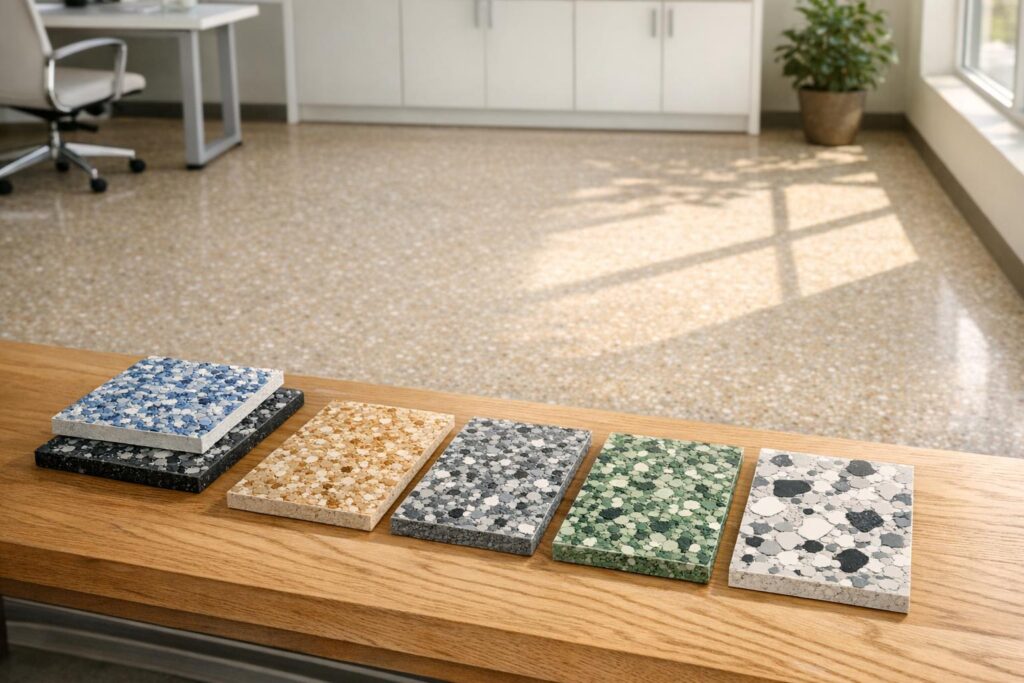
Choosing chip colors for your floors can drastically improve both the appearance and functionality of your space. Here’s what you need to know:
- Light Colors: Brighten dim spaces and make rooms feel larger.
- Dark Colors: Hide dirt and stains in high-traffic areas while creating a cozy feel.
- Neutral Tones: Ideal for workspaces, garages, and industrial settings.
- Bold Shades: Energize gyms or recreational areas.
- Multi-Color Blends: Camouflage imperfections like cracks or scuffs.
Key Considerations:
- Space Usage: Match colors to the purpose of the room (e.g., garages need dirt-hiding tones, gyms benefit from vibrant hues).
- Base Coat: Use a base coat that complements the chip colors for a polished look.
- Chip Size: Larger chips suit big areas, while smaller chips work better in compact spaces.
- Durability: Polyurea coatings with UV-stable chips last over a decade, outperforming epoxy.
For a personalized finish, explore custom blends and coverage densities to achieve the right balance of style and durability.
Chip Materials and Their Properties
What Are Vinyl Chips?
Vinyl chips, also known as polymer flakes, are aggregates made from acrylic and vinyl resins. These chips come in irregular shapes and range in size from 1/32" to 1" in diameter, with a thickness of about 4–5 mils. They are broadcast onto a wet polyurea base coat, where they embed securely.
The most popular chip size is 1/4", commonly used in U.S. residential garages. This size creates an epoxy terrazzo-like finish that effectively conceals dirt and debris. When applied to "full refusal" (a method where chips are added until no more can adhere), they contribute at least 5 mils of thickness, improving both durability and impact resistance.
These basic properties are essential for selecting chips that balance visual appeal with reliable performance.
Key Properties to Consider
The unique characteristics of vinyl chips not only enhance the longevity of flooring systems but also affect how colors and textures perform under different conditions. Here are some standout features of vinyl chips:
- Durability and flexibility: Thanks to their resin-based structure, vinyl chips allow the coating system to flex under variable loads without cracking. Floors with polyurea coatings and vinyl chips are up to 20 times stronger than standard epoxy flooring. This flexibility is especially beneficial for concrete surfaces, which naturally expand and contract with temperature changes.
- UV stability: Unlike epoxy resins that can yellow over time, vinyl chips combined with a UV-stable polyurea topcoat maintain their color and finish even under direct sunlight. This ensures the flooring looks fresh and vibrant for years.
- Slip resistance and chemical protection: Vinyl chips create a subtle "orange peel" texture, which enhances slip resistance in wet conditions. They also protect against stains from gasoline, oil, salt, and grease. Additionally, their multi-colored patterns help mask dirt, scuffs, and surface imperfections like spider cracks in the concrete.
How to Choose Chip Color Blends for Garage Epoxy Floors?
Matching Chip Colors to How You Use the Space
When choosing chip colors for your flooring, think about how the space will be used. For example, a garage floor needs to hide oil stains and tire marks, while a gym thrives on colors that energize and inspire.
Neutral Colors for Work Spaces
Shades like gray, beige, and taupe are perfect for garages, workshops, storage rooms, and industrial areas. These muted tones create a clean, professional look without clashing with tools, equipment, or stored items. For an even more cohesive design, match the base coat to the chip color family – gray chips with gray base coats, beige chips with tan base coats, and so on.
Bright Colors for Active Spaces
For gyms, home fitness rooms, or recreational areas, bold colors like blues, reds, or even neon shades can bring the space to life. These vibrant colors brighten up darker rooms and create an energetic atmosphere that motivates activity. A brightly colored floor also helps define the room’s purpose, making it feel distinct from more subdued spaces.
Dark Colors for Busy Areas
If you’re working with high-traffic areas like retail spaces, commercial facilities, or busy workshops, darker or mixed chip colors are a smart choice. These blends are excellent at hiding dirt, scuffs, and stains that come with constant use. Multi-colored options, like "Black Marble Sparkle", not only mask grime but also add depth and visual interest.
For tailored solutions that balance style and durability, Atlas Concrete Coatings offers chip floor coatings that can be customized to suit your specific needs. Up next, explore how to coordinate chip colors with base coats and décor to create a seamless, polished look.
Coordinating Chip Colors with Base Coats and Room Design
Working with the Base Coat
Using a neutral base coat – commonly gray or tan – can make chip colors pop while adding depth to the floor. To achieve a seamless look, stick to a base coat that matches the tone of your chips. For instance, pair gray chips with a gray base coat or beige chips with a tan one. This approach avoids color mismatches and ensures a polished, cohesive finish. The interaction between the chips and the base coat not only enhances the visual appeal but also helps disguise imperfections like spider cracks or patchy areas in the concrete. A thoughtfully chosen base coat lays the groundwork for tying your floor design into the rest of the room.
Matching Your Current Decor
Once the base coat is set, focus on selecting chip colors that align with your room’s design. A well-coordinated floor should complement key elements like walls, furniture, and lighting. For darker or dimly lit rooms, opt for brighter chip colors to create a lighter, more open feel. Modern color-matching tools can make this process easier, helping you find chip shades that harmonize with your decor and look balanced from common viewing distances.
Chip size also plays a role in the overall aesthetic. Larger chips are ideal for expansive spaces over 800 square feet, while smaller chips work better in compact areas under 200 square feet. To frame a bold chip blend, consider adding a neutral border, such as Haze Grey, for a polished and balanced finish.
sbb-itb-4b4bb37
Choosing Chip Size and Coverage Density
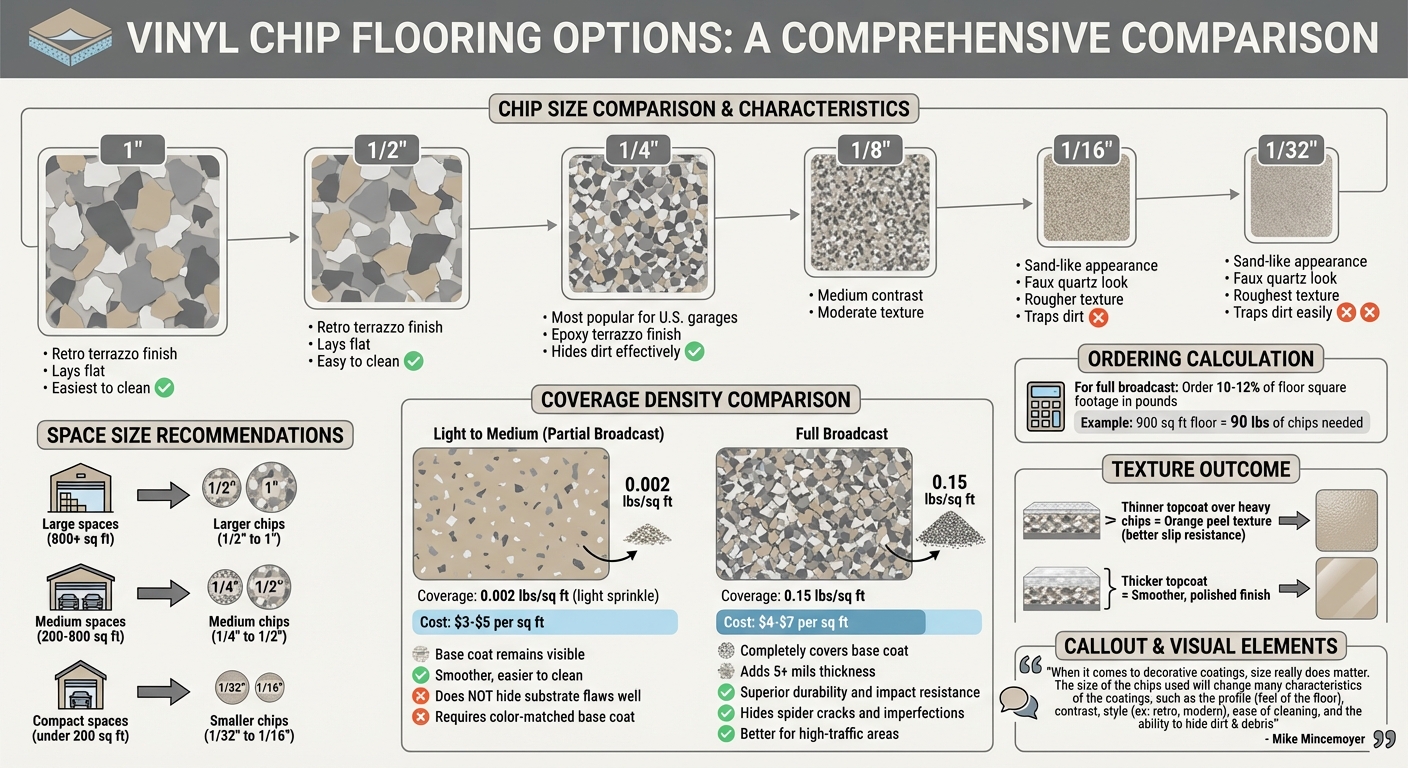
Vinyl Chip Flooring Size and Coverage Density Comparison Guide
Chip Size Options
Vinyl chips come in six standard sizes: 1", 1/2", 1/4", 1/8", 1/16", and 1/32". Each size offers a unique aesthetic and texture, allowing you to customize the look of your floor to suit your space and style preferences. For instance, 1/4" chips are a popular choice for U.S. garages, as they create an epoxy terrazzo finish that effectively hides dirt.
If you’re looking for a bolder, retro-style terrazzo finish, larger chips (1/2" to 1") are ideal. They not only make a statement but also lay flatter, making cleaning easier. On the other hand, smaller chips (1/32" to 1/16") offer a sand-like, faux quartz appearance with subtle contrast. However, these finer chips create a rougher texture that can trap dirt more easily. As Mike Mincemoyer, President of Stronghold Floors, puts it:
"When it comes to decorative coatings, size really does matter. The size of the chips used will change many characteristics of the coatings, such as the profile (feel of the floor), contrast, style (ex: retro, modern), ease of cleaning, and the ability to hide dirt & debris".
For larger spaces – those over 800 square feet – bigger chips usually work better, while smaller chips are more suitable for compact areas under 200 square feet. You can also mix chip sizes, such as combining 1/4" and 1/2", to create a random, chaotic pattern that’s excellent at concealing dirt in busy spaces.
Once you’ve selected your chip size, the next step is determining the right coverage density to balance durability and appearance.
Coverage Density Guidelines
Coverage density can range from a light sprinkle (0.002 lbs per square foot) to a full broadcast application, which uses 0.15 lbs per square foot. A full broadcast not only completely covers the base coat but also adds at least 5 mils of thickness. This extra layer significantly improves durability, impact resistance, and the ability to hide imperfections like spider cracks or patched areas in the concrete. Full broadcast applications typically cost between $4 and $7 per square foot.
For a more budget-friendly option, partial broadcast systems – ranging from light to medium coverage – cost around $3 to $5 per square foot. These systems leave some of the base coat visible, so color-matching the base coat is crucial. While they create a smoother, easier-to-clean surface, they don’t conceal substrate flaws as effectively as a full broadcast.
The topcoat also plays a role in the final texture. A thinner topcoat over heavy chips results in an "orange peel" texture that enhances slip resistance. In contrast, a thicker topcoat creates a smoother, more polished finish.
When applying chips, be sure to toss them evenly to achieve consistent coverage. And in areas where small items might be dropped or lost, it’s best to avoid heavy chip broadcasts, as they can make retrieval more challenging.
Popular Color Blends and Custom Options
Popular Color Blends
There are over 76 pre-mixed color blends available, designed to complement various spaces. These blends often combine shades of grey, black, white, and earthy tones to mimic the appearance of granite or terrazzo.
For a sleek and professional vibe in garages, workshops, or industrial settings, Domino (a mix of black, white, and grey) is a popular choice. In modern offices, retail spaces, or contemporary interiors, Fog (B-703) – a blend of light and dark greys – offers a refined and sophisticated look. If you’re working on patios, pool decks, or residential areas, Buckskin (also called Outback) features tans, browns, and creams, creating a warm, natural aesthetic.
For a high-end showroom or "man cave", Nightfall combines dark greys and blacks for a polished, upscale feel. In environments like hospitals, schools, or clean rooms, Savannah – a mix of white and light tans – provides a bright and clean appearance. For a more dynamic look, Tidal Wave (also known as Orbit) blends blues, greys, and whites, making it ideal for showrooms, active spaces, or basements.
Vinyl chips are sold in 10 lb boxes, with prices ranging from $3.00 to $60.00, depending on the blend. Specialty options, such as glow-in-the-dark or metallic mica flakes, are priced between $30.00 and $38.00 per pound or box. For full broadcast coverage, plan to order 10–12% of your floor’s square footage in pounds – for example, a 900 sq ft floor would require about 90 lbs of chips.
If you’re looking for something truly unique, custom chip blends offer endless possibilities for personalizing your space.
Creating Custom Chip Blends
Custom chip blends give you the freedom to design a completely personalized finish, with over 150 individual colors available for mixing. You can choose your colors, adjust their ratios, and have the custom blend factory-mixed and shipped directly to you. Experts suggest using three to four colors to create a visually balanced and appealing blend.
To get started, select one dark color and one light color – like black and white – then add a medium tone for contrast. This combination creates a harmonious look, especially when paired with a matching base coat. Many manufacturers offer interactive tools like "Blend Builders" or "Color Designers", which allow you to experiment with colors, tweak ratios, and preview your design in real time before placing an order.
For an even more distinct look, consider hybrid blends, which mix different chip sizes – such as 1/8", 1/4", and 1/2". This approach creates a non-uniform, "chaotic" style that not only stands out but also helps conceal dirt, making it ideal for high-traffic areas or irregularly shaped rooms.
If you’re working on outdoor spaces like patios or pool decks, opt for UV-stable blends to prevent fading. Avoid intense colors like Lime Green, Hot Pink, or Dark Blue, as these may fade or change within 1–2 years of sun exposure. Many online tools allow you to upload a photo of your space and preview how different chip blends will look, helping you make an informed decision before purchasing.
When you’re ready to upgrade your floor with a custom chip blend, Atlas Concrete Coatings offers expert advice and installation services to help you achieve a durable, one-of-a-kind finish.
Summary and Next Steps
When selecting chip colors, think about how they’ll complement your space’s purpose and design. Consider whether you need to camouflage stains, make dropped items easier to spot, or define safety zones clearly. Next, decide on the coverage density – ranging from light accents to a full broadcast – to strike the right balance between durability and appearance. These choices lay the groundwork for expert recommendations to help you get the best results.
Keep in mind that polyurea coatings are up to 20 times stronger than traditional epoxy. They can also handle heat levels over 200°F, reducing common problems like hot tire pick-up.
For a customized solution, consulting with professionals is key. Atlas Concrete Coatings offers free consultations to help you pick the right products, create custom blends, and address specific needs like UV exposure or chemical resistance. Their polyurea chip systems can be installed and ready to use in just 24 hours, backed by a 15-year product warranty and a lifetime residential warranty.
"After a quick discussion with our experts, you’ll know exactly which variety is the best option for your needs." – Atlas Concrete Coatings
Visit https://atlasonedayfloors.com to connect with Atlas Concrete Coatings. Their team can guide you in choosing the ideal chip colors and provide professional installation, giving your space a durable and personalized finish.
FAQs
How can I pick the best chip color for a high-traffic floor?
When selecting the perfect chip color for a high-traffic floor, it’s all about finding the right mix of durability, style, and practicality. Start by thinking about how the space will be used – whether it’s a garage, showroom, or office, each setting has its own requirements. For areas that see a lot of dirt or wear, darker or mixed tones are great for camouflaging stains, while lighter shades make it easier to spot dirt for quick cleaning.
To make sure the floor ties in with the overall look of the space, consider matching the chip colors to existing design elements like walls, cabinets, or even branding. If safety is a concern, you can choose chip colors that work well with slip-resistant topcoats for added traction. For a floor that’s not just durable but also stylish and easy to maintain, it’s worth consulting with an Atlas Concrete Coatings specialist to customize the color, pattern, and finish to suit your needs.
What makes vinyl-chip flooring a better choice than traditional epoxy coatings?
Vinyl-chip flooring, particularly when combined with a polyurea base, stands out for its toughness and adaptability, making it a great choice for homes and commercial spaces alike. The textured surface not only adds a layer of style but also boosts slip resistance, while the chips offer a wide range of color options to suit virtually any design preference.
When stacked against traditional epoxy coatings, vinyl-chip systems excel with improved UV stability, stronger resistance to abrasions and chemicals, and a finish that lasts longer. These qualities make it a dependable and stylish pick for busy areas or environments that face tough conditions.
How do I choose chip colors to match my decor?
Choosing the right chip colors to match your decor is straightforward with Atlas Concrete Coatings’ customizable chip system. Start by focusing on the main colors in your space – think wall paint, furniture finishes, or standout accent pieces. Then, pick chip colors that reflect those shades to create a unified and polished appearance. You can even tweak the blend ratios to highlight specific colors or introduce subtle contrasts for a balanced effect.
To ensure you’re happy with the final look, request a physical sample to see how the blend works with your space’s lighting. Once you approve the design, Atlas crafts a long-lasting, custom floor coating tailored to your style. Their polyurea-based chip system delivers a smooth, stylish finish that’s built to last while complementing your space beautifully.