

Polyurea coatings are a smart choice for enhancing floor safety across homes, commercial spaces, and industrial facilities. Here’s why:
- Slip Resistance: Reduces slip-and-fall risks with customizable traction options.
- Impact Resistance: Handles heavy traffic, dropped tools, and temperature changes without cracking.
- Chemical Resistance: Protects against spills, stains, and corrosive substances.
- Waterproofing: Prevents water damage with a seamless, durable barrier.
- Low VOC & Fire Safety: Ensures healthier air quality and fire-resistant options for safe environments.
These coatings are durable, strong, and quick to install, making them ideal for long-term safety and functionality in various settings.
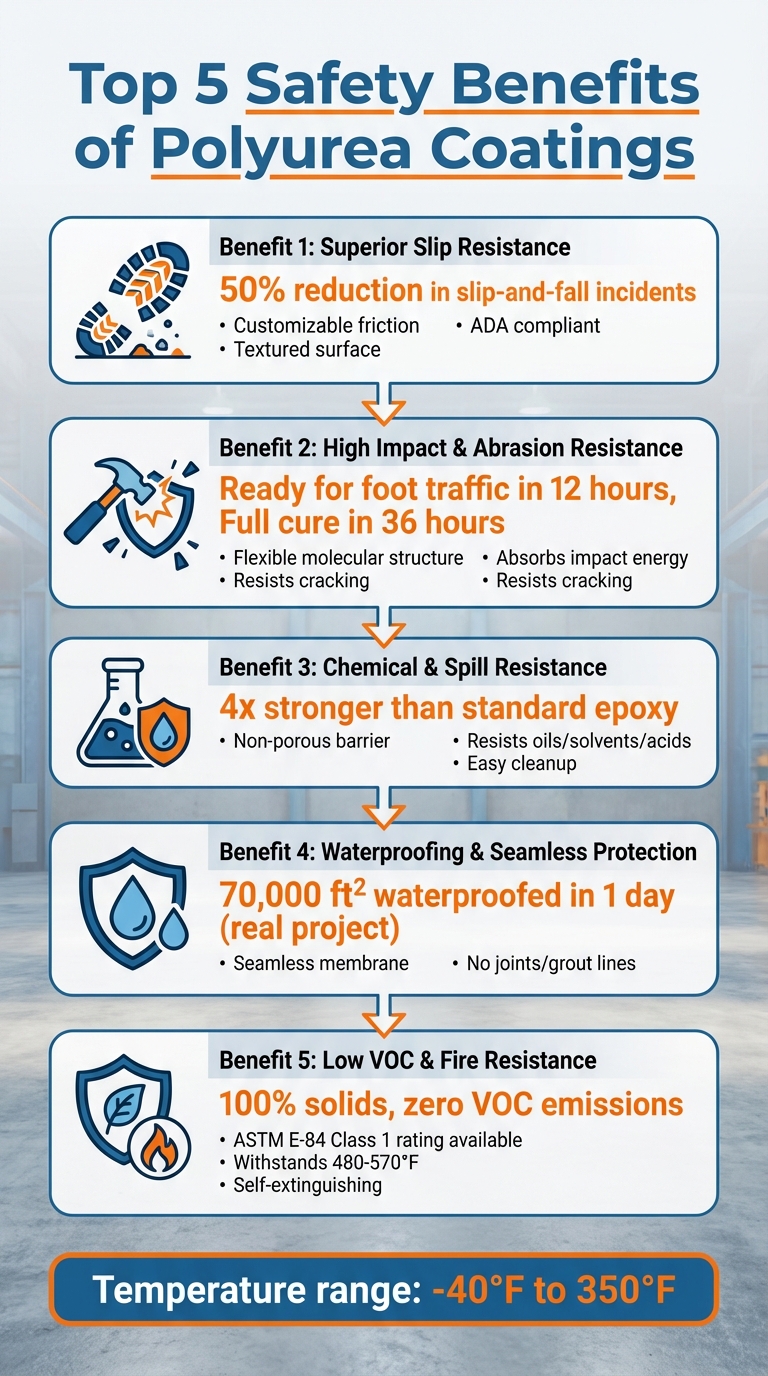
5 Safety Benefits of Polyurea Coatings for Floors
Polyurea Concrete Coatings In-Depth: Problems & Benefits
sbb-itb-4b4bb37
1. Superior Slip Resistance
Slips and falls are a leading cause of workplace accidents, but polyurea coatings can significantly reduce these risks thanks to their adjustable friction properties. These coatings are specifically designed to meet exact slip resistance standards, whether you’re dealing with a home garage or a bustling commercial kitchen.
One of the key benefits of polyurea coatings is their ability to adapt to different environments. Manufacturers can fine-tune the friction coefficient to meet specific safety requirements by incorporating various anti-slip aggregates. For example, silica sand works well for general settings, while aluminum oxide is ideal for areas prone to oily spills. Techniques like broom or trowel finishes can further enhance traction. In fact, a manufacturing plant reported a 50% drop in slip-and-fall incidents after switching to polyurea floor coatings.
These coatings also feature a waterproof, textured surface that prevents moisture from seeping in while maintaining grip – even in wet or oily conditions. This dual functionality makes them a great choice for meeting ADA compliance standards, ensuring safe surfaces for everyone, including those with mobility challenges.
"Maintaining the cleanliness of polyurea floors is vital for preserving their slip resistance. Regular cleaning helps remove spills and debris that can compromise traction." – NewTec Group
To keep these safety benefits intact, regular maintenance is essential. Cleaning up spills promptly with a mild detergent and inspecting the surface for scratches or buildup will help maintain the coating’s slip resistance over time.
For those looking for dependable and customizable solutions, Atlas Concrete Coatings offers expertly crafted systems that prioritize safety. These coatings not only enhance slip resistance but also deliver impact protection, making them a comprehensive choice for both residential and commercial spaces.
2. High Impact and Abrasion Resistance
When heavy equipment is dropped or forklifts roll over floors, you need a coating that can handle the pressure. Polyurea’s flexible molecular structure makes it stand out from more brittle coatings. Instead of cracking on impact, it absorbs and distributes the energy, thanks to its isocyanate-resin reaction. This creates a resilient surface with high tensile strength, capable of withstanding dropped tools and heavy objects without chipping.
Chipped floors aren’t just unsightly – they’re dangerous. Jagged edges and scattered debris can lead to trips and falls. Polyurea eliminates these risks by maintaining a smooth, flawless surface even under constant vehicle traffic or rolling toolboxes. Its strong bond to concrete creates a seamless layer that resists the mechanical stress of daily use, ensuring durability and safety. Plus, this toughness comes with excellent thermal performance.
Temperature changes can wreak havoc on many coatings, but not polyurea. It remains flexible in freezing conditions and stable in high heat, resisting the thermal cracks that other materials might develop. This thermal stability reduces the need for frequent repairs, keeping floors safe and intact through all seasons.
"It’s not just about hardness – it’s about resilience. Epoxy coatings can be tough, but they’re also brittle. Under pressure, temperature fluctuations, or heavy use, they’re more likely to chip, peel, or degrade." – Alexander Concrete Coatings
With Atlas Concrete Coatings, polyurea systems are ready for light foot traffic in just 12 hours, can support lighter items after 24 hours, and reach full cure in 36 hours. This quick turnaround ensures your surfaces remain hazard-free, even in high-traffic environments.
3. Chemical and Spill Resistance
Spills – whether from motor oil or industrial degreasers – can wreak havoc on concrete surfaces. They don’t just create slipping hazards; chemicals seep into the concrete’s pores, leading to permanent stains, surface wear, and even structural damage over time. Polyurea coatings tackle this problem head-on by creating a tough, impermeable barrier that keeps harmful substances on the surface. This barrier works hand-in-hand with polyurea’s slip-resistant and impact-durable properties, offering well-rounded floor safety.
Thanks to its non-porous, cross-linked structure, polyurea causes liquids to bead up on the surface, making cleanup a breeze – even if the spill sits for a while. Dried paint, for instance, can be peeled off without harming the coating underneath.
Polyurea is highly resistant to a broad range of chemicals, including automotive fluids like motor oil, gasoline, and antifreeze; household solvents such as adhesives and paint strippers; and industrial agents like cutting oils and hydraulic fluids. It even holds up against strong disinfectants with acidic or alkaline properties. Compared to standard epoxy systems, polyurea coatings are four times stronger, and their flexibility helps prevent tiny cracks that could allow chemicals to seep in.
For spaces where spills are common, Atlas Concrete Coatings offers polyurea systems with textured finishes – such as decorative chips – that maintain slip resistance even on wet or oily surfaces. This combination of chemical resistance, easy maintenance, and traction ensures your floors stay both safe and functional, reinforcing the all-around benefits of polyurea coatings.
4. Waterproofing and Seamless Protection
Polyurea takes safety and durability to the next level by offering exceptional waterproofing and seamless protection. Water infiltration can lead to slip hazards and structural damage, and traditional solutions like sheet membranes or tile flooring often fall short. Why? They rely on seams, joints, and grout lines – vulnerable spots where water can seep in, encouraging mold and bacteria growth. Polyurea eliminates these weak points, creating a continuous barrier that enhances both durability and safety.
As a spray-applied elastomer, polyurea forms a seamless, weld-free membrane that bonds directly to concrete. This direct bond eliminates gaps and seams where moisture might sneak through. Pete DiGiovanni, Manager of Technical Services at Carlisle Weatherproofing Technologies, highlights its unique chemistry:
"The chemistry forms a cross-linked, flexible, weld-free membrane that cures within minutes to create a seamless barrier resistant to cracking, puncture, and chemical attack".
Unlike brittle epoxy, polyurea is flexible enough to expand and contract with a building’s natural movements. It bridges cracks and maintains a watertight seal, even during structural shifts. Plus, its ability to fully bond with the substrate prevents water from migrating, even if the surface gets punctured.
Real-world applications show just how effective polyurea can be. Between 2024 and 2025, Tyler Brown, Vice President of Baltimore Waterproofing, used polyurea to waterproof nearly 70,000 ft² of commercial decks in Baltimore – all in a single day. The result? Immediate UV and moisture protection with "little to no callbacks".
At Atlas Concrete Coatings, we rely on polyurea’s seamless, waterproof properties to deliver long-lasting safety and structural integrity for every project.
5. Low VOC Emissions and Fire Resistance
Maintaining good indoor air quality is essential, whether you’re at home, in a garage, or a commercial space. Many traditional coatings release volatile organic compounds (VOCs) during application and curing, which can negatively impact air quality and potentially harm health. Polyurea coatings, however, are usually formulated as 100% solids, meaning they produce virtually no VOC emissions. With a curing time that takes just seconds, there’s little opportunity for chemical evaporation, resulting in minimal odor and a safer application process for both contractors and those occupying the space [14, 16].
"Polyurea coatings are not only effective but also environmentally responsible. They contain 100% solids with no VOCs, solvents, or ozone-depleting ingredients, making them a more sustainable choice". – Karli Logan, Owner and President of IMC Distributors
This reduced environmental impact adds to polyurea’s reputation for safety.
In addition to its low VOC emissions, polyurea offers impressive fire resistance. Though its base formulation is organic and flammable, fire-retardant versions can achieve ASTM E‑84 Class 1 ratings. These specialized coatings are designed to be self-extinguishing, meaning they stop burning once the flame source is removed [20, 21]. Additives like melamine polyphosphate further enhance its fire resistance, allowing it to withstand temperatures of 480–570°F (250–300°C) by creating a protective char layer [20, 24].
Polyurea’s combination of low VOC emissions and fire resistance makes it a dependable choice for challenging environments. For example, in May 2015, a major oil company in Canada applied polyurea to a recovered bitumen tank overflow sump. The project required a coating that could endure extreme cold, resist chemical exposure, and meet strict fire safety standards – and polyurea met all those demands. Whether in industrial facilities, warehouses, or any space where fire risks are a concern, fire-rated polyurea provides critical protection without compromising durability or functionality.
At Atlas Concrete Coatings, we focus on both air quality and fire safety. Our polyurea-based coatings create a healthier and safer environment for your home or business, eliminating harsh fumes and reducing downtime compared to older coating technologies.
Conclusion
Polyurea coatings address the safety concerns we outlined earlier with five standout features. They offer excellent slip resistance to reduce accidents, high impact and abrasion resistance to keep surfaces smooth and safe, and chemical and spill resistance to protect against hazardous substances. Their waterproofing and seamless coverage guard against moisture damage and block contaminants, while their low or zero VOC emissions help maintain healthier indoor air quality.
What makes polyurea truly impressive is its balance of flexibility and strength. It performs reliably in extreme temperatures ranging from -40°F to 350°F and can restore safety in just 12 hours, achieving full curing within 36 hours.
Whether it’s a garage, kitchen, warehouse, or industrial facility, polyurea delivers durability and safety that outperforms traditional coatings. Its seamless, non-porous surface is easy to clean – just a quick sweep or mop prevents contaminant buildup in busy areas.
At Atlas Concrete Coatings, we specialize in polyurea flooring solutions tailored for residential, commercial, and industrial needs. With lifetime warranties on our chip systems and a fast, one-day installation process, we ensure your floors provide top-notch protection and safety from the very first day.
FAQs
How do I choose the right slip-resistant texture for my space?
When selecting a slip-resistant texture, focus on a few key aspects. First, surface texture plays a big role in improving traction. Adding materials like silica sand can further boost grip. Proper installation is crucial to ensure these safety features work effectively, and regular maintenance helps keep them intact over time.
Additionally, think about your specific safety needs. For example, does your space need to meet OSHA standards? Consider the environmental conditions too – factors like moisture, chemical exposure, or heavy foot traffic can influence which texture is the best fit for your space.
Will polyurea hold up to hot tires, forklifts, and temperature swings?
Polyurea coatings stand out for their impressive resistance to heat, impact, and temperature changes. This makes them a solid choice for tough environments, including spaces that deal with hot tires, forklifts, or heavy foot and vehicle traffic. Their strength ensures they hold up well over time, even in the most challenging conditions.
How soon can I walk or park on a new polyurea-coated floor?
You can typically walk or park on a polyurea-coated floor just an hour after it’s applied. The coating sets incredibly fast – becoming walkable in less than a minute – and reaches full curing within approximately 24 hours. This quick curing process makes polyurea coatings a great choice for reducing downtime in both homes and businesses.