
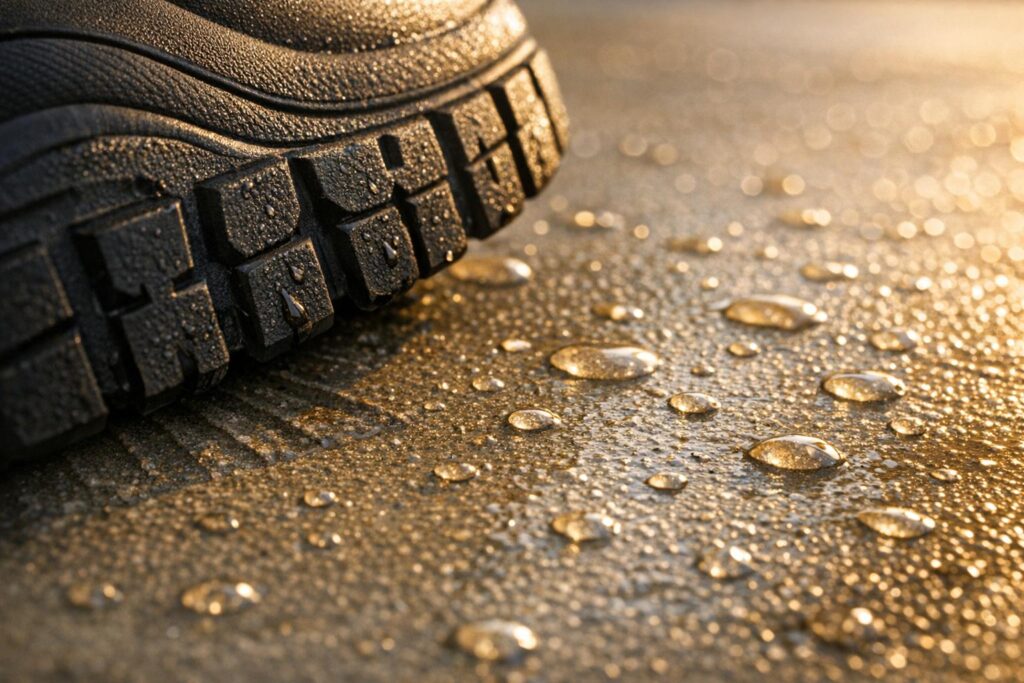
Slippery surfaces are a major safety concern, particularly in wet or high-traffic areas like pool decks, garages, and industrial floors. Textured concrete offers an effective solution by improving traction and reducing the risk of accidents. Here’s what you need to know:
- Why Slippery Surfaces Are Dangerous: Wet concrete drastically reduces friction, increasing the likelihood of falls. Smooth finishes or thick sealers without anti-slip additives make this worse.
- How Textured Concrete Helps: Textures like broom or salt finishes create tiny projections that break through liquid films, restoring friction. Adding materials like quartz or polymer grit enhances grip further.
- Where It’s Used: Pool decks, garages, driveways, and commercial spaces benefit from slip-resistant coatings.
- Safety and Durability: Textured finishes meet OSHA and ADA standards, reduce liability, and last longer than smooth surfaces.
- Advanced Coatings: Polyurea-based systems with embedded grit provide extra traction and withstand heavy use, UV exposure, and wear.
Slip-resistant concrete not only prevents accidents but also minimizes maintenance costs and improves long-term safety. Companies like Atlas Concrete Coatings specialize in durable, textured solutions for residential and commercial spaces.
The Problem with Slippery Surfaces
What Makes Surfaces Slippery
Slippery concrete happens when substances like water, oil, grease, or chemicals create a thin film that interrupts the solid connection between a foot and the floor. Without that direct contact, friction essentially vanishes, making slips almost unavoidable.
Surfaces with smooth, shiny, or hard-troweled finishes are especially risky. When glossy acrylic or urethane sealers are applied – particularly without non-skid additives – they form a slick plastic layer that becomes even more hazardous when wet. The danger increases if these coatings are applied in thick layers.
"Any wetness introduced between the bottom of the foot and the floor surface decreases or eliminates solid-to-solid contact. No solid contact means little or no friction." – Concrete Decor
Over time, regular foot traffic and heavy machinery wear down surface texture, further reducing traction. Even stamped concrete can become a problem if the stamping process doesn’t create deep enough textures due to the concrete being too hard during application.
These physical issues not only pose safety risks but also lead to financial consequences, making it clear why textured finishes are essential for maintaining traction and minimizing liability.
Costs and Consequences of Slip-and-Fall Accidents
The financial fallout from slippery surfaces goes well beyond the immediate injuries. Slip-and-fall accidents can rack up steep medical bills, lead to legal claims, and disrupt productivity – leaving property owners exposed to serious financial risks.
"Generally, your client assumes the responsibility for providing a safe walking or driving surface, and if they are left with a slippery surface, they may be liable for any resulting slip-and-fall accidents that occur." – Bob Harris, Decorative Concrete Institute
For businesses, these costs can escalate quickly. Beyond medical expenses, injuries can lead to lost productivity, workers’ compensation claims, and in some cases, even force small contractors out of business due to prolonged legal battles. Safety guidelines from the Occupational Safety and Health Administration (OSHA) suggest walking surfaces should have a minimum Static Coefficient of Friction (SCOF) of 0.5, while the Americans with Disabilities Act (ADA) has stricter recommendations: 0.6 for flat surfaces and 0.8 for ramps.
How to Achieve Anti-Slip Concrete Floor
How Textured Concrete Prevents Slips
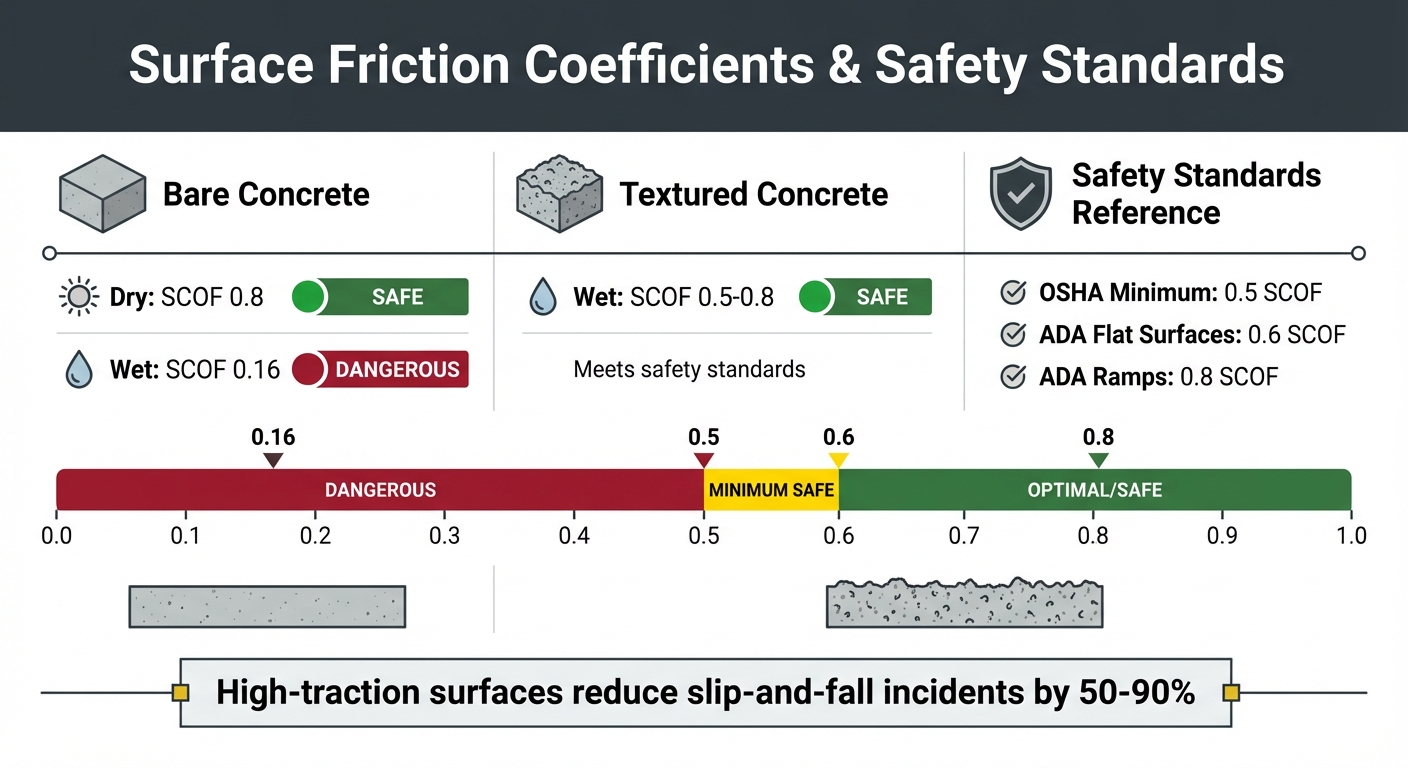
Concrete Surface Friction Coefficients: Wet vs Dry Conditions and Safety Standards
How Textured Finishes Create Traction
Textured concrete works by introducing tiny projections, known as asperities, that cut through the thin layer of water, oil, or other liquids on a surface. These micro-projections engage directly with shoe soles or tire treads, creating a mechanical grip that smooth surfaces simply can’t offer.
For context, bare concrete has a Static Coefficient of Friction (SCOF) of 0.8, but this can plummet to as low as 0.16 when the surface gets wet. Adding texture brings the SCOF back above OSHA’s recommended threshold of 0.5 and aligns with ADA standards of 0.6–0.8.
Different texturing methods produce distinct types of traction. A broom finish creates grooves that footwear can grip, while a salt finish leaves behind a pitted, speckled surface that provides multi-directional traction. These textures interlock with footwear or tires, maintaining grip even in wet conditions.
"By adding sand or polymer grit, you are creating thousands of little islands in that lake. These islands stick up above the sealer surface and give the surface more ‘bite’ or traction." – Chris Sullivan, Regional Sales Manager, QC Construction Products
This natural boost in traction paves the way for advanced coatings, such as polyurea, which further enhance slip resistance.
Why Polyurea Coatings Work for Slip Resistance
Polyurea coatings take the traction provided by textured surfaces to the next level. These coatings encapsulate anti-slip additives – like quartz, aluminum oxide, or polymer grit – creating a rough surface that offers additional grip while shielding the underlying texture from wear and environmental damage.
The thickness of the coating plays a critical role. High-performance options like polyaspartic coatings are thinner than traditional epoxies, allowing the underlying concrete texture to remain effective rather than being buried under a thick, smooth layer. For optimal slip resistance, about 30% to 50% of each grit particle should be embedded in the resin. If too little is embedded, the particles may dislodge; if too much is covered, the surface loses its traction.
Proper installation is key. Contractors must ensure that anti-slip additives are evenly distributed to maintain consistent traction. Lightweight polymer grit, for instance, stays suspended throughout the coating, ensuring an even application. Timing is also crucial – particularly with stamped concrete. If the material hardens too much during the stamping process, the texture becomes less pronounced, increasing the risk of slipperiness.
"If the concrete starts getting hard during the stamping process, this greatly reduces the amount of texture that can be achieved, which… can contribute to a slippery surface." – Bill Palmer, Concrete Network
Surfaces with high traction have been shown to reduce slip-and-fall incidents by 50% to 90%, making professionally applied polyurea coatings a smart investment for safety.
Benefits of Slip-Resistant Textured Concrete
Improved Safety and Lower Liability
Slip-resistant textured concrete plays a critical role in reducing slip-and-fall accidents by increasing surface friction. This added friction helps to break the thin layer of liquid that can lead to hydroplaning. By meeting industry friction standards, these surfaces provide property owners with a proactive way to reduce liability concerns. Beyond the safety aspect, these finishes are also known for their long-lasting performance.
Durability and Long-Term Performance
Textured polyurea coatings are built to last, far outliving traditional concrete surfaces. These installations can last three to four times longer than standard concrete decks and up to 10 times longer than DIY epoxy applications. The coating creates a protective barrier that resists water penetration, UV rays, and damage from prolonged sun exposure. Hard mineral additives, like aluminum oxide or silica sand, enhance durability by forming a tough, wear-resistant surface. This rugged design holds up against heavy foot traffic and equipment use while maintaining its slip-resistant properties over time. The result? Reduced maintenance costs and reliable traction for years to come.
Customizable Appearance Options
These coatings don’t just deliver safety and durability – they also allow for a wide range of design possibilities. Textured concrete finishes can be tailored with various colors, metallic effects, and patterns that mimic natural materials. The texture can be adjusted to meet specific needs, from light finishes that offer a polished look with added grip to heavy textures designed for maximum traction in industrial environments. Techniques like stenciling make it possible to create borders, medallions, and embossed designs without sacrificing durability or slip resistance. For outdoor areas like pool decks, cool deck coatings in light colors with textured finishes help reflect heat, keeping surfaces comfortable for bare feet while maintaining dependable traction. By incorporating slip-resistant materials – such as quartz aggregate, aluminum oxide, glass beads, or polypropylene beads – directly into the coating, these surfaces achieve a perfect balance of functionality and style.
sbb-itb-4b4bb37
Where to Use Textured Concrete for Safety
Textured concrete finishes are more than just visually appealing – they play a crucial role in improving safety across various environments. Let’s explore where these finishes make the most impact.
Pool Decks
Smooth concrete around pools can quickly become a safety hazard when wet, increasing the risk of slips and falls. Textured finishes are a game-changer here, as they disrupt the thin water film responsible for hydroplaning. For example, knockdown textures like SUNDEK Classic Texture provide excellent traction while remaining cool enough for bare feet, even on sunny days. Light-colored spray overlays not only improve grip but also reflect heat, making the surface more comfortable to walk on. For pool decks in hotter regions, specialized cool deck coatings can reduce surface temperatures by as much as 38%, all while maintaining slip resistance. These tailored solutions ensure safety without compromising comfort.
Garages and Driveways
Garages face unique challenges, with oil, water, and constant vehicle traffic creating slippery conditions. Smooth concrete surfaces can become dangerously slick, but textured epoxy coatings – commonly referred to as "shop floor" finishes – offer a practical solution. These coatings enhance grip for both foot traffic and vehicles, even under heavy use. On sloped driveways, broom finishes or textured overlays are particularly effective, especially during rain or icy conditions. The added friction helps tires and shoes maintain secure footing on inclined surfaces, reducing the risk of accidents.
Commercial High-Traffic Areas
In commercial spaces like retail stores, warehouses, and manufacturing facilities, smooth floors can wear down quickly under constant foot traffic and heavy machinery, becoming increasingly hazardous over time. Textured solutions, such as embedding quartz aggregate, aluminum oxide, or glass beads, provide immediate grip and long-lasting resistance to wear and tear. For warehouses and factories, heavy-texture shop floor epoxy or urethane cement is often used to handle the demands of forklift traffic and chemical exposure. Meanwhile, retail spaces typically opt for light to medium textures, striking a balance between safety and maintaining a polished, professional look.
Textured finishes not only improve safety but also adapt to the unique needs of various environments, ensuring functionality and durability where it’s needed most.
Atlas Concrete Coatings: Slip-Resistant Flooring Solutions
When it comes to creating safer surfaces, Atlas Concrete Coatings delivers with its advanced slip-resistant flooring systems. Designed for areas where traction is critical, their durable coatings turn textured surfaces into reliable, long-lasting, non-slip floors.
Polyurea-Based Coatings for Strength and Safety
Atlas uses a three-layer chip system that combines durability with safety. The process starts with a polyurea basecoat that penetrates concrete pores, followed by a layer of custom-blended vinyl chips to enhance grip. Finally, a protective polyurea topcoat seals the system, offering a textured finish that performs well even in wet conditions [23, 25].
"Our chip solution will provide a slip resistant texture along with extra grip." – Atlas Concrete Coatings
This material is not only four times stronger and more flexible than standard epoxy but also withstands heavy loads without cracking or peeling. Unlike epoxy, which can yellow or degrade under sunlight, polyurea remains UV-stable, making it ideal for outdoor spaces like pool decks. Its heat-resistant formulation ensures surfaces stay cool to the touch, even under direct sunlight, while maintaining their slip-resistant properties. For added peace of mind, Atlas offers a 15-year product warranty on residential installations [23, 25].
Quick and Professional Installation
Atlas pairs its durable coating system with fast and efficient service. Most projects are completed in a single day, and surfaces are ready for use within just 24 hours – seventy times faster than traditional epoxy systems [25, 28]. One customer, Ben Bender, shared his positive experience, noting that Atlas not only completed the job quickly but also returned at no additional cost to address a water infiltration issue.
"The floors were done same day and we are very happy with the results… Atlas came back and corrected the situation [after water infiltration]. We highly suggest their services." – Ben Bender, Customer
Service Areas and Free Consultations
Atlas caters to both residential and commercial clients in Pennsylvania (Bucks, Montgomery, Philadelphia) and New Jersey [23, 24]. They offer free consultations and estimates, giving property owners the opportunity to discuss specific traction needs for their spaces. Customers can also request custom chip blends to match their décor while ensuring the right level of slip resistance [23, 24].
Conclusion
Textured concrete is a reliable way to reduce slip hazards in both homes and businesses. By incorporating materials like quartz aggregate, aluminum oxide, or polypropylene beads, these finishes maintain excellent traction – even when wet. This makes them a perfect choice for areas like pool decks, garages, driveways, and other high-traffic spaces.
In addition to boosting safety, textured concrete coatings are more durable than smooth finishes. They can handle heavy foot traffic, equipment loads, and exposure to the elements, ensuring long-lasting performance. Whether you’re aiming for a subtle texture to complement a modern residential design or a more pronounced texture for industrial-grade traction, these finishes can be tailored to meet both functional and aesthetic goals.
Atlas Concrete Coatings offers advanced polyurea-based chip systems designed for durable, slip-resistant floors that are installed efficiently.
To top it off, Atlas provides free consultations and custom chip blends to address your specific safety needs. Serving Pennsylvania and New Jersey, their experts can evaluate your space and recommend the best textured concrete solution. Reach out to Atlas Concrete Coatings today to schedule a consultation and take the first step toward safer, longer-lasting floors.
FAQs
What are the benefits of choosing slip-resistant textured concrete for your surfaces?
Slip-resistant textured concrete brings a host of benefits that make it stand out from traditional concrete surfaces. One of its biggest perks? It makes spaces safer by cutting down the chances of slips and falls. This makes it a go-to option for places like pool decks, garages, or any area prone to heavy foot traffic or moisture.
On top of that, textured concrete is built to last. Its durability means it can handle wear and tear while keeping its look and functionality intact for years. And let’s not forget its style – textured concrete can be finished in various designs, offering a blend of safety and visual appeal.
How do polyurea coatings improve the safety and durability of textured concrete surfaces?
Polyurea coatings play a key role in boosting the safety and durability of textured concrete surfaces. They create slip-resistant finishes, making them a great choice for spaces like pool decks, garages, and walkways. By adding materials like quartz or other aggregates during application, these coatings improve traction, which helps reduce the chances of slips and falls – especially in wet or high-traffic areas.
Beyond safety, polyurea coatings are built to last. They stand up to wear and tear, UV rays, and tough weather conditions. Their flexibility and quick curing process help prevent cracks, ensuring the surface stays intact even with heavy use. This combination of safety and durability makes polyurea coatings a dependable option for both residential and commercial settings where long-lasting performance matters.
Where is slip-resistant textured concrete most beneficial?
Slip-resistant textured concrete works wonders in spaces where wet or slippery conditions are a concern. Think about pool decks, patios, driveways, walkways, and other areas that see a lot of foot traffic. Thanks to its textured surface, it helps minimize the chance of slips and falls, making it a smart choice for boosting safety in homes and commercial spaces alike.
On top of that, textured concrete is built to last. Its durability and adaptability mean it can handle heavy use without losing its slip-resistant properties. It’s a practical option for places where safety and long-term performance matter most.