
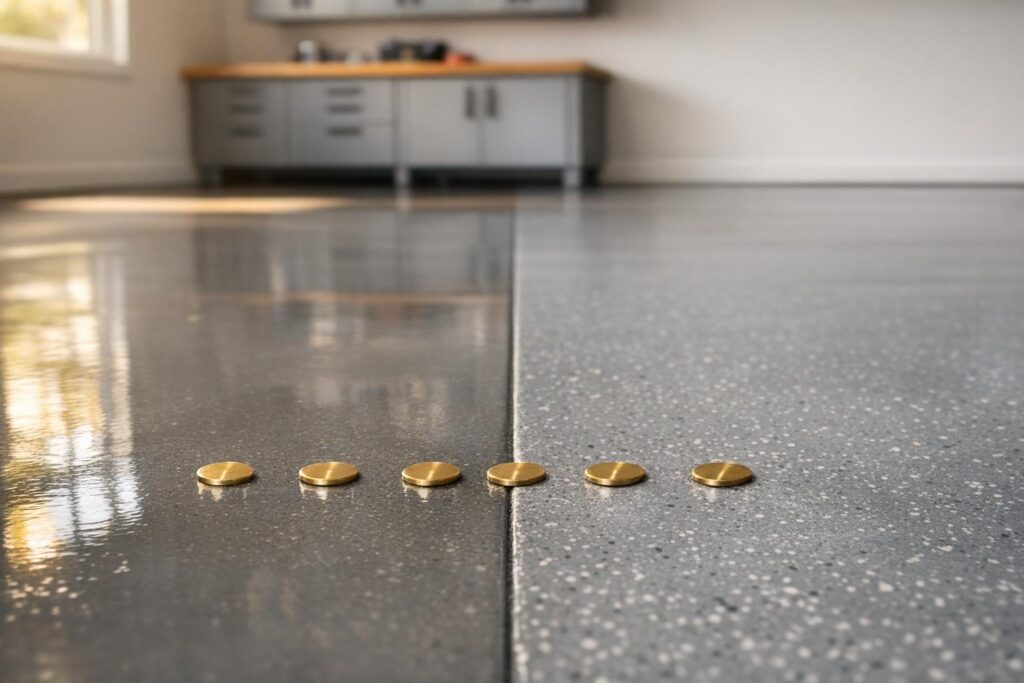
Choosing between polyurea and epoxy coatings depends on more than just price. While epoxy costs less upfront ($4–$7 per sq. ft.), polyurea ($7–$12 per sq. ft.) offers better durability, faster curing, and lower long-term costs. Here’s what you need to know:
- Initial Cost: Epoxy is cheaper upfront, but polyurea lasts 20+ years compared to epoxy’s 5–10 years, reducing replacement costs.
- Installation Time: Polyurea cures in 24 hours, while epoxy takes up to 7 days, saving time and labor.
- Surface Prep: Both require grinding and repairs, but polyurea may need extra moisture barriers ($2–$10 per sq. ft.).
- Maintenance: Polyurea resists UV damage, cracks, and chemicals better, making upkeep easier.
- Additional Features: Polyurea performs better in cold weather and outdoor applications.
Quick Comparison
| Factor | Epoxy | Polyurea |
|---|---|---|
| Cost (per sq. ft.) | $4–$7 | $7–$12 |
| Lifespan | 5–10 years | 20+ years |
| Curing Time | 2–7 days | 6–24 hours |
| UV Resistance | Prone to yellowing | Highly resistant |
| Temperature Range | Above 50°F | As low as 20°F |
Polyurea’s higher upfront cost pays off with fewer replacements, faster installation, and better performance. If you’re planning for the long haul, it’s worth considering.
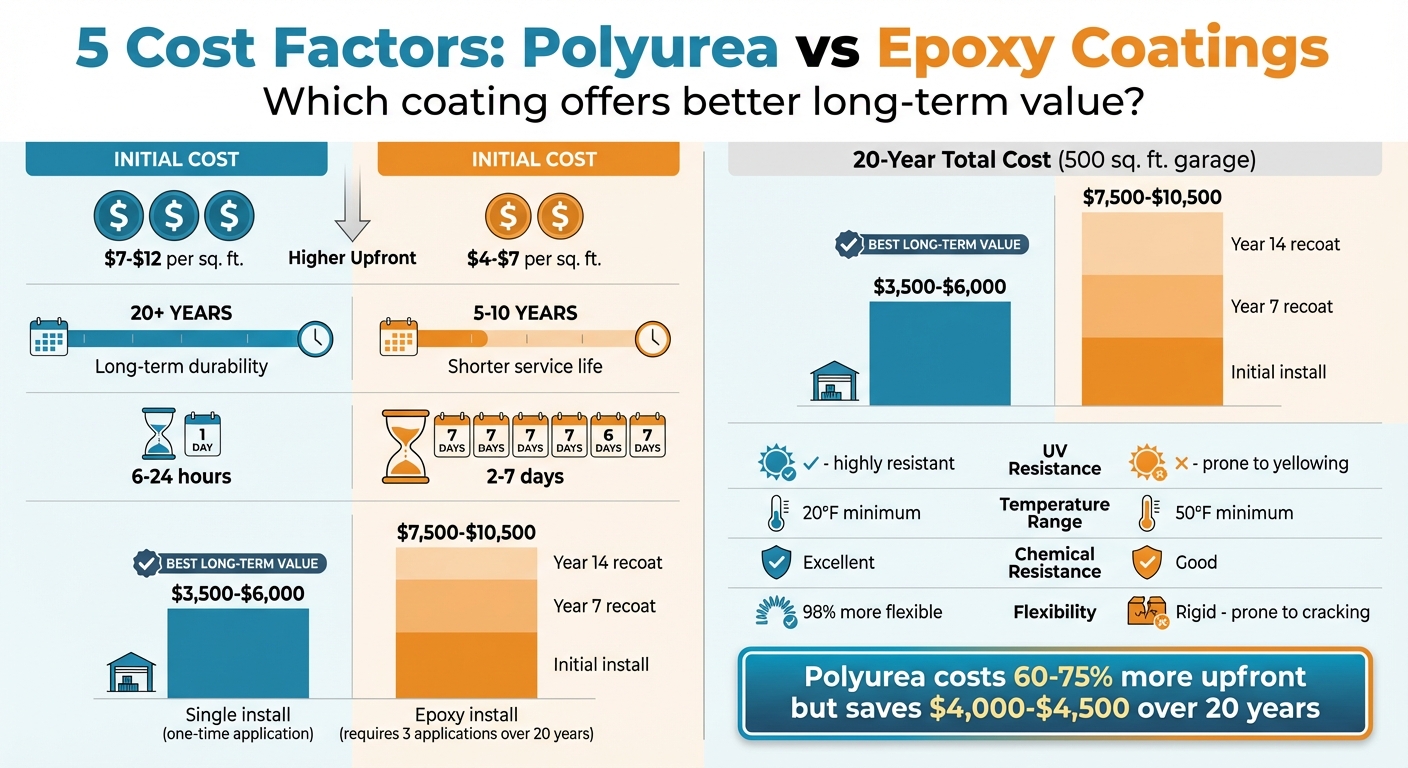
Polyurea vs Epoxy Coatings: Cost Comparison Over 20 Years
Epoxy Versus Polyurea Flooring (Which is Better?)
Cost Factor 1: Initial Material and Installation Prices
The biggest distinction between polyurea and epoxy lies in their upfront costs. Polyurea coatings typically range from $7 to $12 per square foot, making them about 60% to 75% more expensive than epoxy options. This price difference reflects the higher material quality and enhanced performance that polyurea offers compared to epoxy.
High-quality epoxy costs between $45 and $150 per gallon and usually requires professional installation. On the other hand, water-based epoxy, priced at $30 to $50 per gallon, may seem like a budget-friendly option but often needs to be replaced every 1 to 3 years. Polyurea’s higher price tag is justified by its superior durability – up to five times stronger than traditional epoxy – and its ability to cure much faster. While epoxy takes 2 to 5 days to fully cure, polyurea sets in under 24 hours, significantly reducing downtime. However, installing polyurea requires specialized tools and skilled professionals familiar with its fast-setting nature, which contributes to its higher installation costs.
Price Comparison for Residential Garages
For residential garages, the cost difference becomes even clearer. A standard two-car garage (approximately 400 to 500 square feet) typically costs $1,500 to $6,000 for an epoxy system, while polyurea coatings range from $2,000 to $6,900. On average, the national cost for a professionally coated garage floor is around $2,441.
Here’s a breakdown of costs for different garage sizes:
| Garage Size | Area (sq. ft.) | Epoxy Cost Range | Polyurea Cost Range |
|---|---|---|---|
| 1-Car Garage | 250 | $750 – $3,000 | $1,200 – $3,500 |
| 2-Car Garage | 400 – 500 | $1,500 – $6,000 | $2,000 – $6,900 |
| 3-Car Garage | 750 – 864 | $2,250 – $9,000 | $3,500 – $10,400 |
These prices include both materials and installation. Larger garages often benefit from a lower cost per square foot. Additional options, like UV protection, can add about $0.50 per square foot, while moisture mitigation may increase costs by $1.00 per square foot. While these add-ons are available for both epoxy and polyurea, they’re more commonly associated with polyurea due to its sensitivity to moisture during application.
Cost Factor 2: Surface Preparation and Repair Costs
Surface preparation accounts for a significant chunk of the overall project – about 75% of the total cost. While both polyurea and epoxy coatings require meticulous prep work, the specifics vary and can directly influence your budget. Polyurea, for instance, creates a chemical bond by penetrating the concrete’s pores, whereas epoxy relies on a mechanical bond. This distinction makes polyurea less forgiving when moisture is present.
"Proper surface preparation is vital for long-term durability. The concrete surface must allow the coating to absorb into the surface of the concrete to create a strong mechanical bond." – Garage Flooring LLC
Moisture testing is especially crucial for polyurea installations. If high moisture-vapor emissions are detected, a vapor barrier must be installed, which can add $2 to $10 per square foot to your costs, following a moisture test that typically runs between $200 and $500. While epoxy systems are slightly more tolerant of damp conditions, excessive moisture can still compromise both coatings.
Beyond moisture concerns, additional surface corrections may be necessary. Both systems require industrial grinding to roughen the surface and open the concrete pores, ensuring proper adhesion. If existing coatings need to be removed, costs can climb to $3 to $8 per square foot. Crack repairs are another factor, with minor fixes ranging from $250 to $800, while major structural repairs can exceed $1,000 depending on the extent of the damage.
Breakdown of Preparation Costs
| Preparation Task | Cost Range | Details |
|---|---|---|
| Moisture Testing | $200 – $500 | Crucial for polyurea; recommended for epoxy |
| Moisture Vapor Barrier | $2 – $10 per sq. ft. | Needed for high moisture levels |
| Small Crack Repairs | $250 – $800 | Prevents surface flaws from showing through |
| Major Structural Repairs | $1,000+ | Depends on the severity of the damage |
| Existing Coating Removal | $3 – $8 per sq. ft. | May require multiple grinding passes |
| Surface Grinding | $1 – $5 per sq. ft. | Integral to overall prep work |
Skipping these essential preparation steps to cut costs might seem tempting, but it often leads to premature issues like peeling or delamination. The result? Paying far more for complete removal and reapplication later. Investing in proper prep work upfront is the smarter, more cost-effective choice in the long run.
Cost Factor 3: Labor Costs and Installation Time
When it comes to labor costs, there’s a noticeable difference between polyurea and epoxy coatings. Polyurea installations typically cost around $7 to $12 per square foot, compared to epoxy’s more modest $4 to $7 per square foot. Why the disparity? Polyurea applications require specialized skills, equipment, and tools like spray systems and diamond grinders to ensure proper chemical bonding. Additionally, polyurea’s fast curing time – just 10 to 45 minutes – demands precise and quick application, which adds to the labor complexity.
"Many polyurea systems cure in as little as a few hours, so you can walk or even drive on them sooner." – Crayton Caudill, Expert, Level 10 Coatings
One of polyurea’s major advantages is its speed. Installations can often be completed in a single day, whereas epoxy requires a more time-intensive process. Epoxy installations typically involve multiple days, with 12 to 48 hours of curing time between coats. A polyurea-coated garage can handle vehicle traffic in just 24 hours, while epoxy requires a full 7 days to fully cure. This efficiency makes polyurea especially appealing for commercial projects where downtime can directly affect revenue. For instance, MotorCity Floors and Coatings shared a case in October 2025 where a Michigan warehouse saved over $50,000 in potential revenue losses by opting for polyurea’s 1-day installation and 24-hour cure time.
Temperature also plays a crucial role in scheduling and costs. Polyurea can be applied in conditions as low as 20°F, making it a viable option for year-round projects. Epoxy, on the other hand, requires temperatures above 50°F, which can lead to delays during colder months.
"If you can’t afford to have your garage out of commission for a week, polyurea is the clear winner." – AllBright Painting
While polyurea may come with higher hourly labor rates, its shorter installation time often offsets these costs. This is particularly true for businesses, where every day of downtime can be costly. By minimizing project duration, polyurea not only reduces overall labor expenses but also limits operational disruptions, making it a smart choice for those prioritizing efficiency and long-term benefits.
sbb-itb-4b4bb37
Cost Factor 4: Lifespan and Maintenance Costs
When evaluating coatings, it’s essential to look beyond just the upfront price and consider their lifespan. Epoxy coatings, commonly used in residential garages, generally last 5 to 10 years before needing replacement. In contrast, polyurea systems can maintain their integrity for 20 years or more, significantly reducing long-term expenses.
The difference in durability stems from how these coatings adhere to surfaces. Epoxy relies on mechanical adhesion, making it more vulnerable to cracking due to temperature changes. On the other hand, polyurea forms a chemical bond that resists peeling and delamination. Its flexibility also helps prevent cracking, which not only extends its lifespan but makes it easier to maintain.
"While the initial cost of polyurea coatings is higher than that of epoxy, the long-term value it provides makes it a superior choice for garage floors." – Croc Coatings
Polyurea also stands out in terms of maintenance. Its chemical and abrasion resistance makes cleaning a breeze, and it resists issues like UV yellowing. Epoxy, however, demands more careful upkeep to avoid dulling and is more prone to problems such as hot tire pick-up, staining, and fading from UV exposure. These factors make polyurea a more practical and cost-effective option over time.
20-Year Cost Projections
At first glance, epoxy might seem like the more affordable option for a standard 500-square-foot garage. However, when you factor in the need for multiple reapplications over 20 years – including the labor-intensive grinding required to remove the old coating – the numbers tell a different story.
| Cost Factor | Epoxy System | Polyurea System |
|---|---|---|
| Initial Installation | $2,500 – $3,500 | $3,500 – $6,000 |
| Reapplication (Year 7) | $2,500 – $3,500 | $0 |
| Reapplication (Year 14) | $2,500 – $3,500 | $0 |
| Total 20-Year Cost | $7,500 – $10,500 | $3,500 – $6,000 |
Note: These estimates are based on average costs of $5–$7 per square foot for epoxy and $7–$12 per square foot for polyurea.
For homeowners planning to stay in their home for more than seven years, the higher upfront cost of polyurea can quickly pay off. By eliminating the need for reapplications, polyurea saves on both materials and labor while sparing you the hassle of repeated projects. Companies like Atlas Concrete Coatings offer polyurea systems that deliver long-lasting durability and minimal maintenance. Over two decades, the investment in polyurea not only saves money but also provides peace of mind, making it a smart choice for those focused on long-term value.
Cost Factor 5: Additional Features and Environmental Performance
When assessing costs, it’s important to consider additional performance features that impact both upfront expenses and long-term value. For instance, moisture vapor barriers are often required when dealing with concrete slabs that have high moisture-vapor emission rates. These barriers prevent issues like delamination but add an extra day to the project timeline, increasing overall costs. While both epoxy and polyurea coatings may require moisture mitigation, polyurea is particularly sensitive to moisture during application. Proper testing is crucial to avoid complications. These moisture-related considerations pave the way for analyzing other performance features like UV and temperature resistance.
UV protection is a notable area where these coatings differ. Polyurea generally handles UV exposure better than epoxy, but for outdoor surfaces like pool decks and patios, applying a 100% polyaspartic topcoat is recommended for maximum stability. Companies like Atlas Concrete Coatings use polyurea-based systems with UV-resistant topcoats to ensure outdoor installations maintain their appearance over time.
"Epoxy coatings will experience yellowing and degradation when exposed to prolonged UV radiation, impacting their appearance and longevity over time." – Floor Shield Coatings
Temperature performance is another critical factor. Epoxy requires a minimum temperature of 50°F to cure properly and won’t cure at all if temperatures drop below 40°F. On the other hand, polyurea can be applied in conditions as cold as 20°F, making it the better choice for winter projects or installations in colder climates. This flexibility helps avoid delays during colder months and ensures timely project completion. Such environmental adaptability adds to the long-term practicality of polyurea.
Chemical resistance also plays a significant role in determining the suitability of a coating. Both epoxy and polyurea offer strong protection against chemicals, but polyurea outperforms epoxy in resisting a broader range of corrosive substances like oil, gasoline, and harsh cleaning agents. This makes polyurea especially well-suited for industrial settings. Additionally, polyurea’s elastomeric properties allow it to handle temperature fluctuations without cracking, a challenge often faced by epoxy’s more rigid structure.
While polyurea typically comes with a higher price tag – ranging from $7 to $12 per square foot compared to epoxy’s $4 to $7 per square foot – its durability, reduced maintenance needs, and longer lifespan can translate into significant cost savings over time.
Conclusion: Comparing Costs and Long-Term Value
When looking at the numbers, epoxy flooring typically costs between $4 and $7 per square foot, while polyurea comes in at a higher range of $7 to $12. However, that higher price tag often translates into greater long-term value.
One of the most striking differences is durability. A professionally installed polyurea floor can last 20+ years, whereas epoxy generally holds up for only 5 to 10 years. Over two decades, epoxy may need to be replaced two or even three times. As Crayton Caudill from Level 10 Coatings points out:
"The diminished need for future repairs or re-coatings may ultimately save you money in the long run, particularly if you plan on staying in your home".
Polyurea also offers practical advantages, curing in just 24 hours compared to epoxy’s multi-day process. Its chemical bond reduces the risk of delamination and future repairs. On top of that, polyurea is up to five times stronger and 98% more flexible than epoxy, making it far more resistant to cracking, peeling, and chemical damage.
Companies like Atlas Concrete Coatings specialize in polyurea-based chip floor systems that offer quick, one-day installations and lifetime warranties. These systems deliver a tough, UV-resistant finish that keeps its appearance intact for years, making it a smart investment for homeowners.
For those planning to stay in their homes longer than five years, polyurea’s higher upfront cost is often balanced out by its lower maintenance needs and longer lifespan. It’s a choice that not only saves money in the long run but also reduces the hassle of frequent upkeep.
FAQs
What are the long-term cost advantages of polyurea compared to epoxy floor coatings?
Polyurea coatings offer long-term savings thanks to their durability and resistance to wear, UV exposure, and chemicals. Unlike epoxy coatings, which usually last 5–10 years, polyurea can exceed 20 years with minimal upkeep. This extended lifespan helps cut down on repair and replacement expenses.
What sets polyurea apart is its flexibility and strength. It resists cracking and peeling, even in areas with heavy foot traffic or extreme temperature changes. This reliability means fewer interruptions and lower maintenance costs, making it a practical choice for both residential and commercial applications.
How does polyurea’s installation time compare to epoxy, and why does it matter?
Polyurea coatings set much quicker than epoxy, often curing within just 15–30 minutes, compared to epoxy, which can take anywhere from 16 to 72 hours to fully cure. This rapid curing process allows polyurea installations to wrap up much faster, cutting down on project time significantly.
This speed is a game-changer for areas like garages, commercial spaces, or industrial facilities where getting back to regular use quickly is crucial. A faster installation process doesn’t just save time – it also helps reduce interruptions to your daily life or business activities.
Why is polyurea better than epoxy in certain environmental conditions?
Polyurea tends to outperform epoxy in settings where extreme temperatures, constant UV exposure, or harsh chemicals are present. Thanks to its flexibility, it can handle temperature swings without cracking. Its strong resistance to UV light ensures it won’t yellow or fade under direct sunlight. On top of that, polyurea stands up well against chemical spills, making it a solid choice for tough industrial or outdoor environments.