

Concrete floors are no longer just functional – they’re now a design centerpiece for commercial spaces. Here’s what’s trending in 2025:
- Polished concrete: Eco-friendly finishes with recycled materials and reflective surfaces that reduce energy use. Costs range from $3–$15+ per square foot depending on design.
- Custom colors: Stains and dyes allow businesses to match brand colors, mimic luxury materials, and create bold statements.
- Textured finishes: Exposed aggregate and stamped patterns offer slip resistance and visual appeal, ideal for high-traffic areas.
- Matte sealers: Low-gloss options are replacing high-shine finishes, reducing glare and hiding imperfections.
- High-performance options: Steel fiber-reinforced and densified polished concrete ensure durability for industrial and retail spaces.
- Polyurea chip coatings: Quick-to-install, durable, and customizable for slip resistance and branding.
These trends prioritize durability, cost-effectiveness, and style, making concrete floors a top choice for modern businesses.
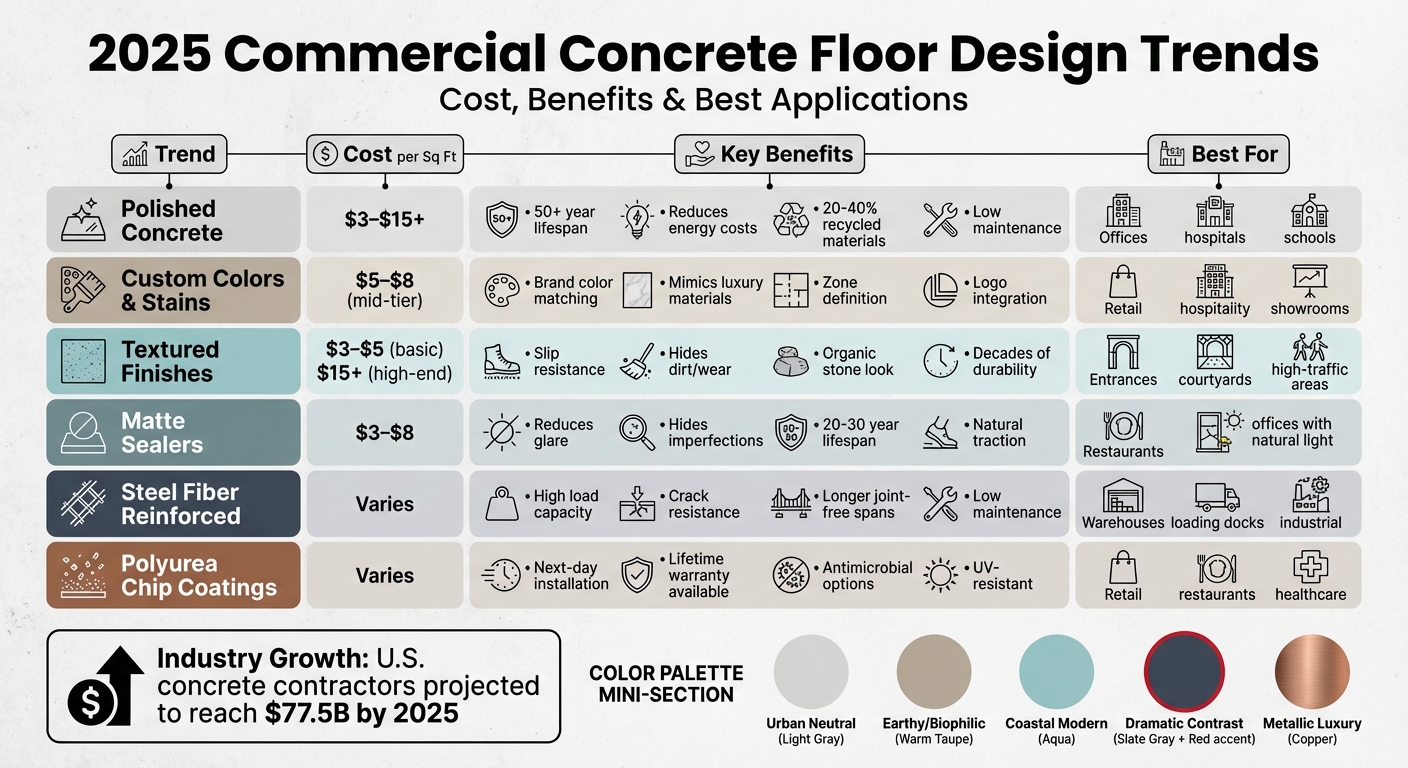
2025 Commercial Concrete Floor Design Trends Comparison Guide
Stained Concrete Floors: Design Trends for 2025
sbb-itb-4b4bb37
Eco-Friendly Polished Finishes
Polished concrete is gaining traction as a sustainable design choice, offering a way to transform existing slabs into finished surfaces without the need for additional adhesives, underlayments, or waste materials. This approach minimizes environmental impact by making use of what’s already there.
Sustainability is further enhanced by incorporating mixes that include 20%–40% recycled materials. Byproducts like fly ash, slag, and crushed glass are used without compromising the structural strength of the concrete. These recycled elements can also add striking visual appeal, especially when decorative aggregates, such as river rock or reclaimed marble, are exposed during the grinding process.
Polished concrete also stands out for its practical benefits. Its high reflectivity helps amplify both natural and artificial light, leading to lower energy bills for lighting. Additionally, its thermal mass properties allow it to absorb heat during the day and release it at night, helping to stabilize indoor temperatures and reduce HVAC demands. And with a lifespan of 50 years or more, polished concrete significantly outlasts materials like carpeting or vinyl flooring in commercial settings.
Benefits of Polished Finishes
One of polished concrete’s standout features is its durability and low maintenance requirements. It only needs pH-neutral cleaners, prevents dust and allergen buildup, and generates minimal replacement waste over its lifetime. These qualities make it especially appealing for environments like hospitals, schools, and offices, where air quality and ease of maintenance are critical.
"Concrete floors typically provide a flat, simple surface where there can be literally no place for dirt to hide. It’s also surprisingly affordable to maintain and looks fantastic!" – 3M Facility Management Solutions
Polished concrete also supports healthier indoor environments. The use of low- or zero-VOC densifiers and sealants reduces harmful emissions, while the diamond polishing process eliminates the need for harsh chemicals, resulting in a smooth and breathable surface.
These features not only enhance functionality but also align with recognized sustainability standards.
Green Building Certifications
Polished concrete is a valuable asset for projects seeking LEED certification. In the Materials and Resources (MR) category, reusing the existing slab and incorporating recycled materials help earn points for reducing waste and sourcing sustainably. Additional points can be gained in the Indoor Environmental Quality (IEQ) category by using low-emitting materials, and in the Energy and Atmosphere (EA) category through the light reflectivity and thermal mass properties that reduce energy consumption for lighting and HVAC systems.
For example, in 2025, a commercial office building in Dallas, Texas, achieved LEED Gold certification by using polished concrete. The project reused the existing slab to cut down on waste, installed UV-reflective polished concrete for outdoor walkways to combat heat island effects, and applied low-VOC sealants, resulting in notable energy savings.
"Sustainable concrete flooring systems can contribute to multiple LEED credit categories, including Materials and Resources, Indoor Environmental Quality, and Energy and Atmosphere." – Chris Lavin, Owner, National Concrete Polishing
Experts like Atlas Concrete Coatings emphasize the importance of sustainable practices in commercial projects. For architects and contractors, keeping detailed records of material sources, recycled content percentages, and transportation distances is essential for ensuring all potential LEED credits are secured. By meeting these standards, polished concrete continues to play a key role in contemporary, eco-conscious commercial design.
Custom Colors and Stains
In commercial spaces, customizable colors are becoming a go-to strategy for reinforcing brand identity and creating memorable environments. Thanks to modern staining and coating techniques, concrete can now mimic materials like marble, natural stone, or even liquid metal – while maintaining its durability. This evolution in color application reflects the design trends of 2025, which emphasize blending style, functionality, and sustainability.
Color choices are no longer just aesthetic; they’re a branding tool. Businesses are embedding logos and brand-specific colors into their floors, turning these surfaces into bold statements. Custom colors also serve practical purposes, like defining zones in open layouts or improving safety in warehouses and manufacturing facilities.
"Colour is more than just an aesthetic decision in commercial settings; it’s an integral component of the brand experience." – Premix
Take, for example, a juice bar in Bakersfield that, in January 2026, replaced its outdated tile with a seamless "Graphite Flake" flooring system. This upgrade not only modernized the brand’s look but also created a cohesive atmosphere that resonated with customers. Similarly, a Tucson resort spa in 2025 used a soft aqua base with white and pearl flake accents to complement its ocean-themed décor. The UV-stable polyaspartic finish allowed for quick installation and left patrons describing the space as "refreshing and luxurious".
2025 Color Palettes
The color trends for commercial concrete floors in 2025 have shifted significantly. Warm neutrals – such as soft browns, sand tones, terracotta, and ochre – are replacing the cool grays of past years. These earthy tones create inviting, calming spaces that align with biophilic design principles, which favor nature-inspired colors like forest greens, moss greens, and weathered stone grays.
| 2025 Trend Palette | Primary Colors | Common Accents | Best Commercial Application |
|---|---|---|---|
| Urban Neutral | Light Gray, Dove White | Charcoal, Frost Blue | Industrial offices, modern garages |
| Earthy/Biophilic | Warm Taupe, Sand, Olive | Copper, Terracotta | Hospitality, naturalistic retail |
| Coastal Modern | Aqua, Muted Navy | White, Pearl Flakes | Wellness centers, spas, patios |
| Dramatic Contrast | Slate Gray, Charcoal | Fire-engine Red, Yellow | Auto bays, retail feature zones |
| Metallic Luxury | Copper, Silver | Iridescent Blue | High-end showrooms, lobbies |
Metallic and iridescent finishes are also making waves in high-end retail and showrooms. Copper, silver, and iridescent blue metallic epoxies create stunning, three-dimensional effects. For instance, a Phoenix auto showroom in 2025 used a light-gray base with black and silver flake accents, topped with a clear aliphatic polyaspartic coating. This created an upscale, low-glare surface that effectively masked dirt between cleanings.
When choosing colors, darker or mid-tone palettes with larger flake chips are ideal for high-traffic areas since they hide wear and dirt better. Testing on-site sample patches is essential, as lighting – whether natural or fluorescent – can dramatically affect how colors appear. Coordinating floor colors with existing walls, cabinetry, and machinery ensures a cohesive look throughout the space.
"These intelligent colors maintain aesthetic balance 24/7 while providing excellent hiding properties for minor wear." – Chris Lavin, Owner, National Concrete Polishing
Staining Techniques
The variety of staining techniques available today allows for even more customization of concrete surfaces. Two main methods dominate commercial use: acid-based stains and water-based stains, each offering unique visual effects and levels of durability.
Acid-based stains chemically react with the calcium hydroxide in concrete, creating a permanent, variegated finish that resembles natural stone. This technique is perfect for spaces aiming for an organic, textured look. The color becomes part of the concrete itself, making it highly durable and resistant to peeling or fading. However, after application, the surface must be neutralized with a baking soda solution to stop the chemical reaction.
Water-based stains, on the other hand, use pigments and acrylic polymers to penetrate the surface. These stains offer a broader and more consistent color palette, making them ideal for projects requiring vibrant or pastel colors. They are also non-toxic, low-odor, and contain fewer VOCs, making them suitable for eco-conscious projects. However, they require high-quality sealers to protect against UV fading and wear.
| Feature | Acid-Based Stains | Water-Based Stains |
|---|---|---|
| Mechanism | Chemical reaction | Pigment penetration |
| Color Range | Limited (Earth tones) | Broad (Vibrant/Pastels) |
| Appearance | Translucent, mottled | Opaque, uniform |
| Durability | Highest (Permanent) | High (Requires sealer) |
| Drying Time | Long (4–6 hours) | Moderate (1–2 hours) |
For outdoor spaces or areas with heavy sun exposure, water-based stains paired with UV-resistant polyurethane topcoats are highly recommended to prevent color fading. It’s critical to ensure the concrete is free of sealers or contaminants beforehand – pressure washing is often necessary for outdoor surfaces. Testing on a small area is also crucial, especially with acid stains, as the outcome can vary depending on the concrete’s mineral composition.
"Whether you’re reclaiming a beautiful old warehouse space for a loft or office, or designing a retail space from scratch, you can do so much more now with concrete flooring than just traditional polished gray." – Sue Wadden, Director of Color Marketing, Sherwin-Williams
Another option for vibrant, quick-drying colors is concrete dyes, which penetrate deeply and are perfect for intricate designs or logos. Some metallic flooring systems now offer up to 30 mix-and-match colors, allowing for custom "marbling" effects. Companies like Atlas Concrete Coatings specialize in polyurea-based coatings that provide extensive color customization, quick installation, and long-lasting durability.
Textured Finishes: Exposed Aggregate and Imprinted Patterns
Textured finishes bring a new dimension to concrete design, combining safety with tactile and visual appeal. These finishes are especially popular in 2025’s commercial spaces, where they enhance both functionality and aesthetics. Unlike smooth concrete, which can become slippery when wet, textured finishes provide much-needed slip resistance. This makes them ideal for areas like entrances, courtyards, and walkways where safety is a priority.
Textured concrete also offers incredible design versatility. For example, exposed aggregate reveals decorative materials like river rocks, recycled glass, metallic flakes, or crushed marble. This creates natural, eye-catching patterns that feel both organic and refined [3, 9]. On the other hand, imprinted patterns use advanced stamping techniques to replicate the look of premium materials such as wood, slate, or brick [11, 29]. Both options are not only visually appealing but also built to last, with durability spanning decades. These finishes expand on earlier trends in custom colors and stains, seamlessly blending style with practicality.
"The recent craze is for the use of textured finishes, where safety meets style. Though being two separate aspects, this flooring seamlessly blends both by offering slip resistance without sacrificing visual appeal." – Sealwell Inc
Beyond safety, textured finishes offer functional benefits. Custom patterns and geometric scoring can define work zones in open-plan spaces, guide foot traffic in large facilities like airports, and even incorporate company logos to reinforce branding [2, 11]. With the U.S. concrete contractors industry projected to hit $77.5 billion by 2025, the demand for high-performance, visually striking surfaces is clearly on the rise.
Exposed Aggregate Finishes
Exposed aggregate achieves its signature look by removing the top layer of concrete paste, revealing decorative stones or glass embedded beneath [3, 9]. The result is a textured, industrial-chic surface that not only provides excellent traction but also stays cooler underfoot compared to materials like asphalt or tile – perfect for outdoor areas in warm climates. Designers can choose between finishes like "Salt-and-Pepper", which reveals smaller stones, or "Full Aggregate", which showcases larger pieces reminiscent of terrazzo. This flexibility allows for a variety of styles, from eco-friendly designs using recycled glass to nature-inspired looks with river rocks [2, 9].
"Exposed aggregate concrete finishes… provide slip resistance essential for ensuring safety and visual texture, giving it a luxurious, organic stone-like look." – Premix
Pricing depends on design complexity: basic finishes cost $3–$5 per square foot, mid-level finishes range from $5–$8 per square foot, and high-end options can exceed $15 per square foot. While the initial cost may be higher, exposed aggregate floors require less maintenance than tiled surfaces, as they lack grout lines where dirt and bacteria can accumulate [4, 7]. Proper preparation, such as moisture testing and mechanical profiling, is essential for a successful installation. For added safety, especially in areas like commercial kitchens or entryways, anti-slip additives can be incorporated into the final sealer.
Imprinted Pattern Designs
If exposed aggregate offers a rugged, natural look, imprinted patterns bring a more refined, customizable aesthetic to the table. Using advanced stamping technology, imprinted concrete can mimic high-end materials like wood planks, slate tiles, or brick with stunning accuracy. This process involves pressing specialized mats into freshly poured concrete, creating textures that are both visually appealing and durable enough to withstand heavy commercial use [7, 29]. Without grout lines, maintenance is easier, and the seamless surface reduces areas where dirt can collect [4, 7].
"In 2025, we’re seeing a shift toward more expressive and customized concrete designs. Home and business owners alike are embracing striking stained finishes, hyper-realistic stamped textures, and unique engravings." – Power Rental & Sales
Current trends favor bold geometric patterns like hexagons and triangles, as well as custom engravings that showcase logos or artistic designs [2, 11]. Linear scoring and radial patterns can enhance the flow of large, open spaces, making them popular in retail, hospitality, and corporate settings where branding and visual impact are key. When planning imprinted designs, careful placement of joints is critical to accommodate movement and prevent cracking in larger slabs. For outdoor or humid environments, proper sealing is essential to protect the concrete from moisture damage.
Both exposed aggregate and imprinted patterns represent a powerful combination of style, safety, and durability, making them standout options for commercial and residential spaces alike.
Matte and Low-Gloss Sealers
High-gloss finishes have been a go-to in commercial design for years, but 2025 is seeing a clear pivot toward more understated options. Matte and low-gloss sealers are now gaining traction as the fastest-growing segment in the concrete sealer market. These finishes offer a refined look that balances both aesthetics and functionality, delivering a natural, quarried-stone appearance that fits seamlessly with biophilic design trends. This design approach – incorporating organic materials like wood and stone – aims to enhance well-being in commercial spaces. The result? A shift that combines style with practicality, especially in high-demand environments.
One of the key benefits of matte finishes is their ability to minimize imperfections. They hide scratches, dirt, and scuff marks while also reducing glare in spaces flooded with natural light. Dennis Florianovich, Owner of FloriArtisan, highlights this advantage:
"If the floor is really glossy it will bounce the light too much and you’ll need more window coverings to tone down the reflection… In this instance, I think a matte finish would be more beneficial."
This makes matte sealers a great choice for restaurants, office spaces with large south-facing windows, and retail settings where visual comfort matters most.
Richard Cofoid, National Sales Manager at Increte Systems, adds:
"The matte finish looks more realistic if you are going for that quarried-stone look. You don’t see a lot of shiny rocks in nature."
From a maintenance perspective, matte surfaces shine (figuratively, of course). They’re much better at concealing traffic patterns and scuff marks, meaning less frequent buffing is needed. Additionally, their natural traction makes them safer for high-traffic areas like entryways and commercial kitchens. Pricing for matte finishes typically starts at $3–$5 per square foot, with mid-tier options ranging from $5–$8 per square foot. With proper care, these sealed floors can last anywhere from 20 to 30 years.
Designers are also getting creative with mixed sheen effects. For instance, some are using matte "area rugs" or borders on glossy floors, or incorporating glossy logos within matte sections to add subtle depth. These finishes pair beautifully with neutral tones like warm taupe, soft grays, and earthy browns, creating spaces that feel both modern and inviting. Altogether, matte and low-gloss sealers offer an appealing mix of style, safety, and long-term durability for commercial interiors.
High-Performance Flooring for Industrial-Commercial Spaces
Warehouses, manufacturing plants, and retail stores demand flooring that can handle heavy use without compromising on appearance. Thanks to modern concrete technologies, businesses no longer have to choose between strength and style – today’s solutions combine both seamlessly.
Each facility has unique needs. For instance, areas with heavy machinery require flooring with higher tensile strength, while customer-facing spaces benefit from a polished, refined look. Steel fiber reinforced concrete is ideal for high-impact zones like loading docks and warehouse racking systems because the embedded fibers improve tensile strength and resist cracking. On the other hand, densified polished concrete transforms an existing slab through a multi-step process using diamond abrasives and chemical hardeners. The result? A durable, polished surface that’s perfect for retail spaces where aesthetics matter.
"Polished concrete is not a separate layer – it’s a treatment of the existing concrete base, making it an efficient and environmentally friendly option." – Chad Davis, President of CD Construction Inc.
This approach reduces material costs and speeds up installation, making it practical for many commercial applications.
Steel Fiber Reinforced vs. Densified Polished Concrete
While these two flooring options serve different purposes, they can also work together. Steel fiber reinforced concrete strengthens the foundation by integrating fibers directly into the mix during pouring. In contrast, densified polished concrete is a surface treatment applied after the slab cures. Many projects combine these methods, using steel fiber for structural integrity and polishing the surface for a sleek, professional finish.
Here’s a breakdown of their key features:
| Feature | Steel Fiber Reinforced | Densified Polished Concrete |
|---|---|---|
| FF/FL Tolerance | High – supports longer joint-free spans | Moderate – achieves smoothness through progressive grinding |
| Load Capacity | Excellent – handles heavy machinery with high flexural strength | Good – enhances surface hardness but depends on the slab underneath |
| Maintenance Requirements | Low – reduces joint repairs and structural upkeep | Low – requires only water or pH-neutral cleaners |
Both options help keep long-term maintenance costs in check. Steel fiber reinforced concrete minimizes joint repairs by allowing wider spacing between control joints. Meanwhile, polished concrete eliminates the need for waxing, stripping, or recoating – routine cleaning with neutral cleaners is all it takes to maintain its polished appearance. When properly cared for, these flooring solutions deliver durability, cost-efficiency, and style, aligning with the evolving demands of commercial spaces in 2025.
Polyurea Chip Coatings for Commercial Floors
Polyurea chip coatings are stepping into the spotlight as a fast, customizable flooring option tailored for modern commercial spaces. With their quick installation process and polished finish, they allow businesses to resume operations as soon as the next day. The system includes a polyurea basecoat, a decorative chip layer, and a UV-stable topcoat that resists yellowing over time.
Businesses can choose from chip blends like "Tuxedo", "Orbit", or "Gravel" to align with branding or visually define specific areas. These blends not only add visual appeal but also come with practical advantages, which we’ll explore next.
Benefits of Polyurea Chip Coatings
The embedded chips in these coatings create a textured surface that significantly improves slip resistance – essential for high-risk areas like restaurant floors, retail entrances, and healthcare facilities where spills or moisture are common. These coatings are also built to withstand chemicals, scratches, and heavy foot traffic. Some newer formulations even include antimicrobial properties, ideal for kitchens and medical offices where hygiene is a priority.
Atlas Concrete Coatings offers polyurea chip systems backed by a lifetime warranty. Their UV-resistant topcoats are particularly useful for spaces with large windows or outdoor areas. The seamless, non-porous finish eliminates grout lines, simplifying cleaning routines to just daily dusting and weekly mopping. This combination of durability and ease of maintenance makes these coatings a practical choice for a wide range of commercial applications.
Commercial Applications
Retail spaces and showrooms gain a high-end, polished look with these coatings. Chips made from materials like marble, quartz, or glass can mimic the appearance of terrazzo at a fraction of the cost. Restaurants and food service environments benefit from the seamless surface, which makes cleaning quick and straightforward, while industrial warehouses appreciate the durability that handles heavy equipment and constant traffic.
This trend aligns with the growing preference for low-gloss finishes in commercial design. Additionally, businesses are leaning toward warmer, nature-inspired tones like soft beige, honey brown, and terracotta to create inviting and comfortable spaces.
Conclusion
By 2025, commercial concrete flooring has transformed into much more than just utilitarian gray slabs. The trends shaping this evolution – like eco-conscious polished finishes, earthy stains, textured exposed aggregates, and polyurea chip coatings – highlight concrete’s dual role as a durable foundation and a stylish design element. Businesses are increasingly choosing flooring solutions that combine toughness, versatility, and easy upkeep, creating spaces that reflect their brand while standing up to heavy use.
The shift toward matte and low-gloss sealers reduces glare and masks minor flaws, making floors safer and easier to maintain. At the same time, advanced options like steel fiber-reinforced concrete and densified polished systems ensure that even high-traffic industrial or commercial spaces can handle wear and tear without sacrificing aesthetics. These durable solutions, when maintained properly, deliver excellent longevity, offering a cost-effective choice for the long haul.
Atlas Concrete Coatings is at the forefront of these advancements, offering cutting-edge options like polyurea chip coatings with lifetime warranties, UV-resistant topcoats, and customizable finishes. Their quick installation process minimizes downtime, while seamless, non-porous surfaces make cleaning as simple as daily dusting and weekly mopping.
Whether you’re upgrading a retail showroom, refreshing a restaurant floor, or equipping an industrial warehouse, choosing the right concrete flooring involves balancing safety features (like slip resistance), environmental considerations (such as low-VOC materials), and visual appeal. The trends of 2025 prove that commercial spaces can achieve both style and functionality. Atlas Concrete Coatings is ready to help you bring these trends to life with durable, tailored solutions that meet your needs.
FAQs
What is the best concrete floor finish for my business?
The right finish for your concrete depends on what your business needs and the overall style you’re aiming for. Polished concrete works well in high-traffic spaces like offices or retail stores because it’s tough and easy to maintain. For outdoor areas or spaces that transition between indoors and outdoors, exposed aggregate concrete provides a slip-resistant surface with a natural aesthetic. If you’re looking to make a bold statement, metallic epoxy coatings or decorative overlays can deliver eye-catching, custom designs that align with your brand’s personality.
How do I choose between stains, dyes, and chip coatings?
When deciding between stains, dyes, and chip coatings, it all comes down to the look you want, how durable it needs to be, and what the space requires.
- Stains give you natural, earthy tones with a lot of depth and variation, perfect for creating a warm and organic feel.
- Dyes are your go-to for bold, vibrant, and uniform colors, great for making a statement or achieving a sleek, modern design.
- Chip coatings provide a textured, slip-resistant surface, making them an excellent choice for areas with heavy foot traffic or where safety is a priority.
Think about your style preferences, how the space will be used, and its overall environment to make the right choice.
What’s the easiest concrete floor option to maintain long-term?
Polished concrete stands out as a low-maintenance flooring choice. Its durability ensures it can handle heavy use, while requiring only minimal care to keep it in great condition. Plus, its high light reflectance not only enhances the brightness of a space but also adds a sleek, professional look – making it a practical and visually appealing option for commercial environments.