
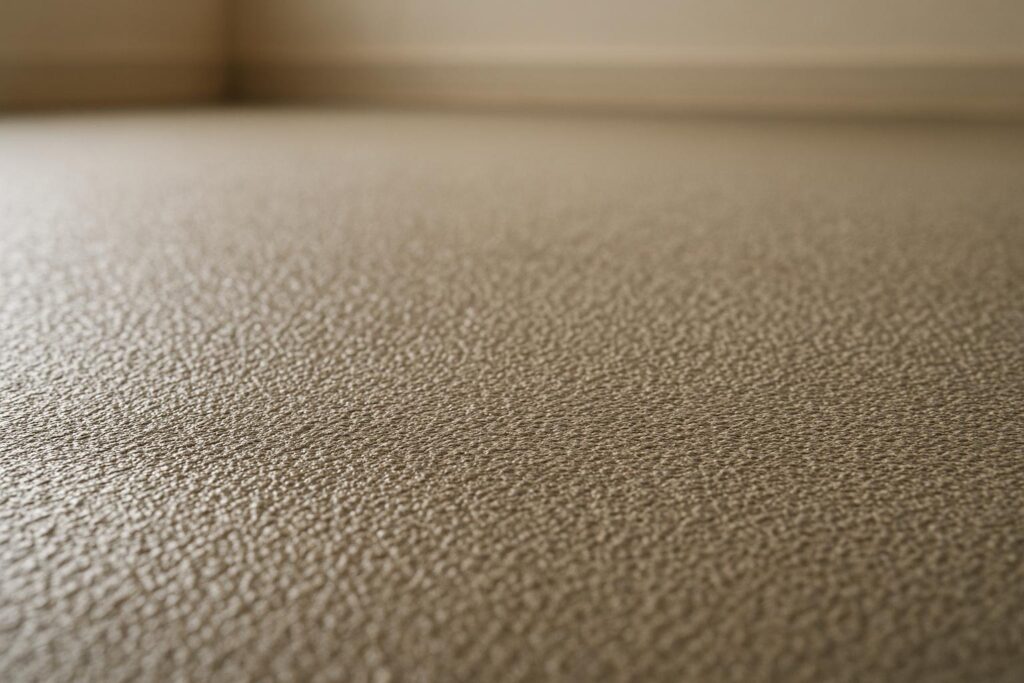
Textured polyurea floors are durable, slip-resistant, and perfect for high-traffic spaces like garages, pool decks, and commercial areas. But to keep them looking and performing well for over 15 years, proper cleaning and maintenance are essential. Here’s how you can care for them effectively:
- Daily Sweeping: Use a soft-bristle broom or microfiber mop to remove dirt and debris.
- Weekly Mopping: Clean with lukewarm water and a pH-neutral cleaner. Avoid harsh chemicals like bleach or ammonia.
- Spill Cleanup: Blot spills immediately and use appropriate cleaners for oil, grease, or acidic substances.
- Seasonal Care: Remove snow and wet leaves promptly and ensure proper drainage for outdoor floors.
- Protective Measures: Use floor mats, furniture pads, and avoid dragging heavy items to prevent scratches.
- Inspection and Repairs: Check monthly for chips, cracks, or wear. Address minor issues early to avoid costly repairs.
- Resealing: Reseal every 2–7 years, depending on traffic and usage, to maintain the floor’s protective layer.
With these steps, your polyurea floors will stay functional, safe, and attractive for years. Let’s dive into the details.
Polyurea Garage Floors: Lifespan, Maintenance Tips, and Value Boost
Cleaning Tools and Supplies You Need
Using the right cleaning tools is key to preserving the finish and durability of textured floors. The wrong equipment can leave scratches or damage the protective coating, so choosing wisely ensures effective maintenance.
Best Cleaning Tools for Textured Surfaces
Soft-bristle brooms and microfiber mops are excellent for sweeping away dust and debris without risking scratches. Unlike stiff-bristled options, these tools are gentle on the surface while still being effective.
For deeper cleaning, a low-pressure washer can help remove dirt lodged in the grooves. Always set the washer to its lowest pressure to avoid causing damage.
When dealing with stubborn stains, soft brushes paired with a mild detergent are a reliable choice. For solid spills, plastic scrapers are ideal as they won’t scratch the surface. A vacuum with soft brush attachments is also handy for clearing loose debris, which could otherwise act like sandpaper and wear down the finish. Keeping grooves clean not only protects the floor but also enhances traction and reduces the risk of slipping.
Safe Cleaning Products to Use
Pairing the right tools with safe cleaning products is just as important. pH-neutral cleaners are the go-to option for maintaining polyurea floors. They effectively lift dirt and stains without discoloring or degrading the protective layer. For routine cleaning, a mix of mild dish soap and warm water works well, offering a gentle yet effective solution.
Always have absorbent cloths or paper towels on hand to quickly clean up spills before they seep into the textured grooves.
Avoid harsh products like bleach, ammonia, acidic or alkaline cleaners, and abrasive formulations. These can harm the floor’s surface and reduce its lifespan.
| Tool Category | Recommended |
|---|---|
| Brooms | Soft-bristle brooms |
| Mops | Microfiber mops |
| Scrapers | Plastic scrapers |
| Pressure Washers | Low-pressure setting |
Note: Avoid stiff-bristle brushes, traditional mops, metal tools, and high-pressure washers, as they can damage the coating.
Before using any cleaning product, check the label and test it on a small, inconspicuous area first. With the right care, polyurea floors can maintain their finish and functionality for over 15 years. These tips work hand-in-hand with the detailed cleaning steps in the next section.
Daily and Weekly Cleaning Steps
Keeping your textured polyurea floors in great shape starts with a consistent cleaning routine. Gentle cleaning methods that work with the floor’s texture are key. Below, you’ll find practical daily and weekly steps to help maintain your floors and extend their lifespan.
How to Sweep and Mop Textured Floors
Sweep high-traffic areas daily using a soft-bristle broom or microfiber dust mop. Use overlapping strokes to pick up loose debris, and focus on corners and doorways where dirt tends to collect. This prevents grit from scratching the floor’s surface.
For weekly mopping, mix lukewarm water with a few drops of mild dish soap or a pH-neutral floor cleaner. Make sure to wring out the mop thoroughly to avoid excess water pooling on the floor. Start cleaning from the farthest corner and work your way toward the exit, tackling small sections at a time. Replace the cleaning solution once it gets dirty to avoid spreading grime.
Atlas Concrete Coatings emphasizes these methods for keeping your floors in prime condition.
Cleaning Stains and Spills
Spills can quickly become stains if not addressed promptly. Use an absorbent cloth or paper towel to blot spills immediately – don’t rub, as this can push the liquid deeper into the textured grooves.
For oil or grease spills, which are common in garages, apply a polyurea-compatible degreaser. Let it sit as instructed, then gently scrub the area.
For acidic spills like battery acid, neutralize the spill by applying a paste made from baking soda and water. Let the mixture fizz and neutralize the acid before cleaning the area with a pH-neutral cleaner.
When dealing with solid spills like food or mud, use a plastic scraper to carefully lift the debris. Start at the edges and work inward to avoid spreading the mess further.
Proper Drying Methods
Textured floors can trap water in their grooves, so thorough drying is essential to avoid water spots or streaks. After mopping, allow the floor to air dry completely. Good airflow, like opening garage doors or using fans, helps speed up the process.
For any pooled water, use a dry microfiber cloth to absorb the excess. Taking your time with drying is important – water spots are especially noticeable on textured finishes and can be tough to remove once they set.
| Cleaning Task | Frequency | Key Tips |
|---|---|---|
| Sweeping | Daily | Use a soft-bristle broom or microfiber mop; focus on high-traffic areas. |
| Mopping | Weekly | Use lukewarm water with mild soap or a pH-neutral cleaner; wring mop thoroughly. |
| Spill Cleanup | Immediately | Blot spills; use the right cleaner for each type of spill. |
Adjust the cleaning frequency based on your floor’s usage. For example, high-traffic commercial spaces or garages with frequent vehicle use may need more frequent care, while low-traffic residential areas can often go longer between cleanings.
How to Protect Your Floor’s Texture and Finish
Keeping your floor clean is just the start; taking additional steps to protect it helps maintain its texture and extend its life. While polyurea floors are known for their durability, a few simple practices can go a long way in keeping them looking and performing their best.
Floor Protection Accessories
Using the right accessories can minimize wear and tear on your textured polyurea floors. Floor mats are an excellent first step, especially in entryways where dirt and debris tend to collect. For garages, place rubber-backed mats under vehicles and at doorways to catch grit before it reaches the floor.
Another must-have is furniture pads. Adding felt pads to the legs of chairs, tables, and other furniture prevents scratches caused by everyday movement. These small additions can significantly reduce damage. Research even shows that spaces using these accessories experience fewer scratches and impact marks over time.
When moving heavy items, always lift rather than drag them to avoid damaging the floor. Commercial spaces that implemented this practice, along with strategic mat placement, reported fewer instances of coating damage and longer-lasting finishes.
"The incredible flexibility of our advanced floor coating solutions provides unrivaled surface stability, even when heavy and high-friction loads are applied. Thanks to polyurea’s innovative composition, it can adapt to variable loads without cracking or peeling as traditional epoxy flooring solutions do under extreme forces." – Atlas Concrete Coatings
Outdoor and Seasonal Floor Care
Outdoor polyurea floors, like patios and pool decks, require special attention due to exposure to the elements. Proper drainage is essential – make sure gutters and drains are clear to prevent standing water, which can lead to mold or mildew, even though polyurea resists moisture.
In the winter, promptly remove snow and ice to avoid slip hazards. While polyurea handles extreme temperatures well, clearing snow helps prevent ice formation. During summer, check for areas where water might collect, such as near planters or corners, after rain or irrigation.
Fall maintenance is all about keeping the surface free of leaves and organic debris. Wet leaves can stain and create slippery conditions if left to sit. Fortunately, polyurea coatings resist UV damage, so you won’t have to worry about fading or discoloration from sunlight.
"Our advanced polyurea blends remain consistent when facing cold, heat, UV radiation, and even caustic chemicals." – Atlas Concrete Coatings
By combining these seasonal care practices with routine cleaning, you can keep your outdoor floors functional and visually appealing year-round.
Quick Spill Cleanup
Spill management is another critical part of protecting your floor’s finish. Cleaning up spills immediately helps maintain its appearance and prevents damage. For oil and grease spills, common in garages, blot the area with absorbent materials and follow up with a polyurea-compatible degreaser.
Chemical spills need special attention, too. While polyurea is resistant to many harsh substances, it’s best not to let chemicals like battery acid, paint thinners, or strong solvents sit on the surface. Clean them up quickly and rinse thoroughly with water.
For spills that settle into grooves, take extra care to clean them out completely. Use appropriate cleaning solutions based on the spill type, and always rinse with clean water afterward. Avoid using harsh chemicals like bleach, strong acids, or abrasive cleaners during regular maintenance, as these can degrade the protective coating. Stick to mild detergents or pH-neutral cleaners for best results.
| Protection Method | Application | Expected Benefit |
|---|---|---|
| Rubber-backed mats | Under vehicles, high-traffic areas | Reduces scratches and impact damage |
| Felt furniture pads | Chair/table legs, equipment bases | Prevents surface scratching |
| Proper lifting techniques | Moving heavy objects | Eliminates dragging damage |
| Prompt snow removal | Winter outdoor floors | Prevents ice buildup and moisture damage |
sbb-itb-4b4bb37
Floor Inspection, Repair, and Resealing
Keeping polyurea floors in top shape requires regular maintenance. By staying proactive, you can catch minor issues early and avoid expensive repairs down the road.
Checking Your Floor for Damage
Monthly inspections are a smart way to prevent major floor problems. Pay close attention to high-traffic areas, as they’re more prone to wear and tear. Look for scratches, scuffs, changes in texture, faded shine, cracks, chips, or any signs of general wear and aging .
Take photos of any damage to track changes over time and to support warranty claims if needed. Be on the lookout for color inconsistencies, peeling, delamination, chemical stains, or impact damage. While monthly checks are helpful, consider scheduling a professional inspection annually, especially for floors exposed to harsh chemicals or weather. Professionals can spot subtle issues that might otherwise go unnoticed. Early detection makes repairs easier and keeps your floor looking great.
Fixing Small Chips and Scratches
If you notice minor damage, address it promptly. Polyurea’s flexibility makes it resistant to damage, but small scratches and scuffs can still happen. Start by cleaning the area thoroughly before attempting repairs. For larger issues like chips, cracks, peeling, or delamination, it’s best to call in a professional.
"Unlike epoxy floor coatings that can begin to chip, peel, and discolor, our concrete floor coating experts utilize the latest in professional-grade polyurea to fortify surfaces with consistency. An alternative to epoxy floor coating, polyurea is stronger, more flexible, and proven to outlast residential epoxy flooring options of the past." – Atlas Concrete Coatings
For deeper cleaning or restoring the floor’s original shine, professional services are highly recommended. Experts can ensure that repairs maintain the durability and appearance of your floor.
When and How to Reseal Textured Polyurea
After inspections and minor repairs, resealing is the next step to protect your floor’s finish. Depending on usage and conditions, textured polyurea floors typically need resealing every 2 to 7 years. High-traffic areas may require resealing more often, while lightly used or well-protected spaces can go longer between applications.
Before resealing, clean the surface thoroughly to remove dirt, grease, or debris, and repair any damage to ensure the new sealant adheres properly. The ideal temperature for resealing is between 50°F and 90°F, and the floor must be completely dry. Plan for some downtime, as the curing process takes time.
Allow 24 to 48 hours for the sealant to cure fully. During this period, avoid foot traffic for at least 24 hours and keep vehicles off the floor for 72 hours to ensure the sealant bonds effectively and provides maximum protection.
| Resealing Timeline | Usage Level | Environmental Factors |
|---|---|---|
| Every 2–3 years | High-traffic commercial | Harsh chemicals, extreme weather |
| Every 4–5 years | Moderate residential use | Normal indoor conditions |
| Every 6–7 years | Light residential use | Protected indoor environments |
Resealing services typically cost $2–$5 per square foot. To further extend the life of your floor, stick to a regular cleaning routine – daily sweeping and weekly mopping with a pH-neutral cleaner – and avoid using harsh chemicals .
Atlas Concrete Coatings: Your Local Polyurea Flooring Experts

Atlas Concrete Coatings specializes in installing and maintaining textured polyurea floors in Pennsylvania and New Jersey. Their expertise ensures that floors not only perform well but also stand the test of time.
Using polyurea technology that’s four times stronger than traditional materials and resistant to UV damage, Atlas delivers floors designed for the local climate. This advanced material keeps your floors looking vibrant and smooth, without fading or developing uneven patches. Founded by Scott Payne, the company has earned a reputation for creating installations that are both durable and visually appealing when properly cared for.
One of the standout advantages of Atlas is their fast installation process. Unlike conventional concrete, their polyurea floors are ready for foot traffic within 24 hours and vehicle use in just 72 hours. This quick turnaround minimizes disruption to your home or business, making it a practical choice for busy schedules.
Atlas also offers custom flooring systems tailored to specific needs, enhancing features like traction, moisture resistance, and slip prevention. These benefits make their floors ideal for areas such as garages, commercial spaces, and pool decks.
What sets Atlas apart is their deep understanding of the Northeast’s unique climate. From harsh winter snow and spring rains to summer heat and fall debris, they design and maintain floors that can handle it all. Their local expertise ensures installations are optimized for these conditions, and they provide maintenance tips to keep floors in top shape year-round.
But Atlas’s support doesn’t stop after installation. They offer ongoing maintenance services and recommend annual professional inspections to catch any early signs of wear or damage. Their team also provides expert advice on resealing, typically suggested every 2 to 7 years, depending on how the floors are used.
Here’s what one satisfied customer, Ben Bender, had to say about his experience:
"Atlas did a great job on our garage floors. The previous owner installed epoxy and it failed. Anthony took the time to explain the process and how it was superior to the product previously used. He answered every question we had. The floors were done same day and we are very happy with the results. Even when we noticed an area where water had infiltrated during the cure period, Atlas came back and corrected the situation."
With proper care, Atlas polyurea floors can last over 15 years, requiring minimal upkeep. Their commitment to using high-quality materials, expert installation techniques, and reliable customer support makes Atlas Concrete Coatings a trusted choice for anyone looking to invest in long-lasting, textured polyurea flooring.
Key Points for Textured Polyurea Floor Care
Taking care of textured polyurea floors boils down to three main habits: regular cleaning, smart prevention, and timely professional maintenance. These simple steps not only protect your investment but also help your floors stay in great shape for decades.
Start with daily sweeping using a soft-bristle broom and mop weekly with a mild, pH-neutral cleaner. Steer clear of harsh chemicals, bleach, or abrasive tools, as these can damage the textured surface.
Preventive measures also go a long way in extending the life of your floors. Place floor mats at entryways, use furniture pads to avoid scratches, and always lift heavy items properly instead of dragging them.
Make it a habit to inspect your floors monthly. Keep an eye out for scratches, chips, cracks, or fading – especially in high-traffic areas or near expansion joints. Addressing small issues early can save you from costly repairs down the line.
For long-term upkeep, consider professional resealing every 2–7 years. This process helps restore the floor’s protective layer and keeps it looking its best.
Lastly, don’t forget to clear snow and debris promptly to avoid weather-related damage.
With these care practices, your polyurea floors can last 15 years or more with minimal maintenance. Thanks to their composition, they’re four times stronger than epoxy and offer excellent UV resistance.
FAQs
How often should textured polyurea floors be resealed to maintain their durability and appearance?
Textured polyurea floors are built to last and are impressively low-maintenance. Thanks to the durability of polyurea coatings, resealing is rarely required. That said, keeping your floors in great shape does call for regular cleaning and attentive care.
For floors subjected to heavy traffic or tough conditions, it might be worth reaching out to a professional, such as Atlas Concrete Coatings, to assess whether any touch-ups or maintenance could be beneficial. With the right care, these floors can stay both practical and visually stunning for years to come.
What cleaning products should I avoid to protect my textured polyurea floors?
To maintain your textured polyurea floors in great shape, steer clear of harsh chemicals like bleach, ammonia, or acidic cleaners. These can harm the surface and weaken its durability over time. Similarly, avoid using abrasive tools like steel wool or stiff-bristled brushes, as they can scratch or dull the finish.
Instead, opt for mild, pH-neutral cleaners paired with soft cleaning tools, such as microfiber mops or soft-bristled brushes. Sticking to a gentle cleaning routine with the right products will help keep your floors looking and performing their best for years.
How can I maintain outdoor textured polyurea floors during extreme weather?
To keep your outdoor textured polyurea floors looking great and performing well through extreme weather, regular maintenance is key. Start with frequent cleaning to prevent dirt and debris from accumulating. A quick sweep or a rinse with a garden hose should handle loose particles, while a mild, non-abrasive cleaner works best for deeper cleaning when necessary.
In freezing temperatures, steer clear of metal shovels or harsh de-icing chemicals, as they can harm the surface. Instead, use a plastic shovel and a calcium chloride-based ice melt, which is much gentler on the coating. For hot weather, make sure the area is well-ventilated and avoid leaving heavy objects on the surface for long periods, as they could leave indentations.
With these straightforward tips, you can keep your polyurea floors in excellent shape, no matter the weather.