

When choosing between chip floor coatings and solid color coatings, it comes down to style, functionality, and usage. Both are durable polyurea-based systems, outperforming traditional epoxy with better flexibility, UV stability, and stain resistance. Here’s a quick breakdown:
- Chip Floor Coatings: Textured, multi-color finish with decorative flakes resembling terrazzo. Ideal for garages, pool decks, and high-traffic spaces due to slip resistance and ability to hide dirt and scratches.
- Solid Color Coatings: Smooth, uniform look with customizable colors. Perfect for modern spaces like showrooms, retail areas, and garages prioritizing a polished aesthetic.
Quick Comparison
| Feature | Chip Floor Coatings | Solid Color Coatings |
|---|---|---|
| Appearance | Textured, speckled, terrazzo-like finish | Smooth, sleek, uniform color |
| Durability | Hides scratches and dirt well | Equally durable but shows wear more easily |
| Slip Resistance | Higher due to textured surface | Lower due to smooth finish |
| Customization | Flake sizes, colors, metallic pigments | Wide range of solid colors, branding match |
| Installation | Multi-step process, longer time | Simpler, faster installation |
| Best For | Garages, pool decks, high-traffic areas | Showrooms, retail, modern garages |
| Maintenance | Low, dirt concealed by flakes | Low, but dust and spots more visible |
| Cost | Higher due to materials and labor | Lower due to simpler process |
Both options are low-maintenance, long-lasting, and resistant to stains, chemicals, and UV damage. Chip floors are better for hiding imperfections, while solid color coatings deliver a clean, modern aesthetic. Your choice depends on the space’s purpose, style preferences, and budget.
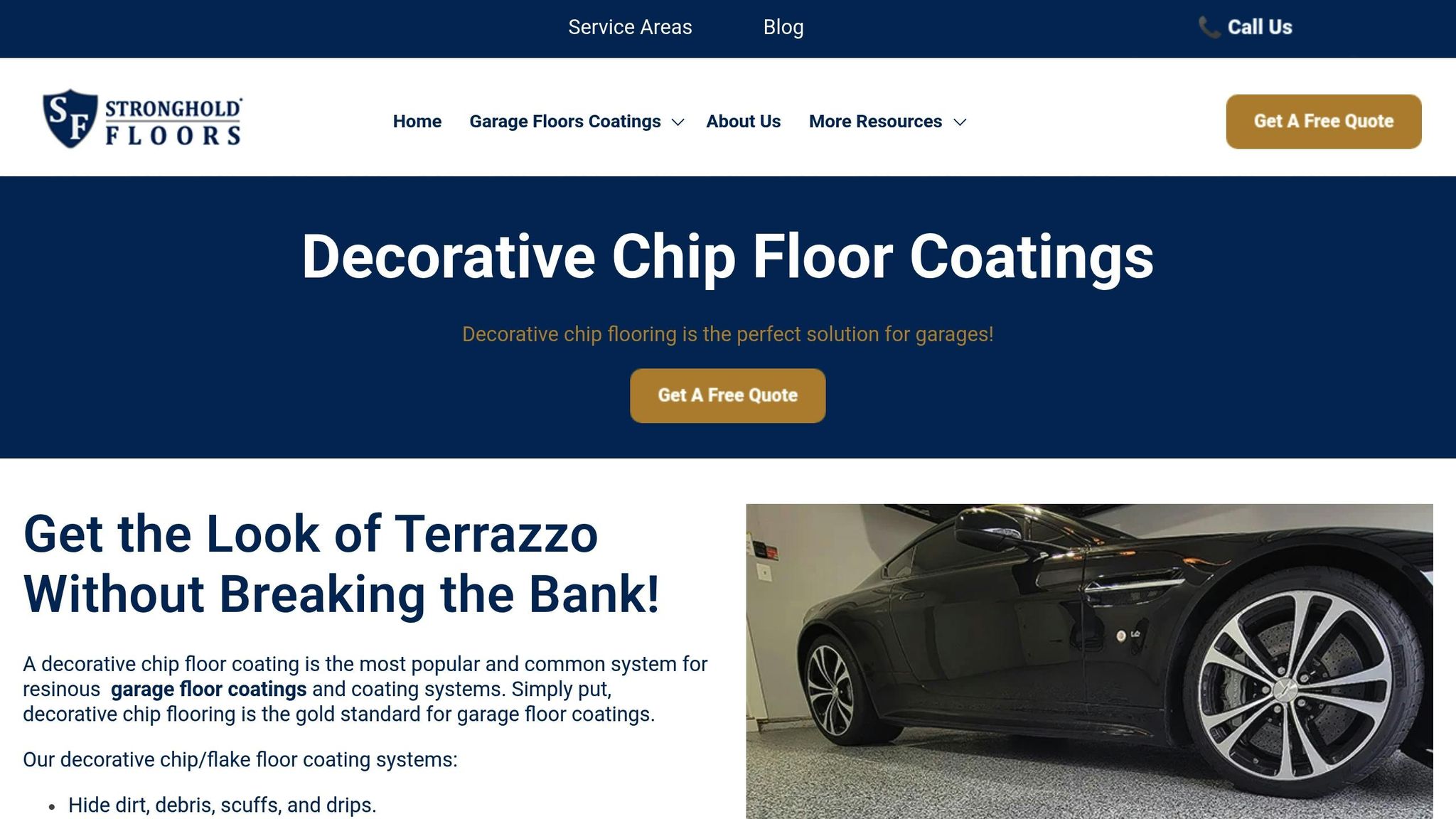
Stronghold Floors Podcast: Decorative chip sizes and colors for garage floor coatings
What Are Chip Floor and Solid Color Coatings?
Chip floor and solid color coatings share the same core chemistry. Both are created through a chemical reaction between two main components: isocyanates (the "A" side) and amines or synthetic resin blends (the "B" side). This reaction forms a tough polymer, giving polyurea its well-known durability and performance.
The main difference between these two systems lies in their additives and application processes, which result in distinct looks and functional benefits.
Chip Floor Coating Basics
Chip floor coatings offer a textured, multi-color finish that resembles granite or terrazzo. The process starts with a pigmented adhesive polyurea base coat applied directly to a prepared concrete surface.
While the base coat is still tacky, decorative vinyl chips (also called flakes) are spread over it. These chips come in a variety of sizes and color combinations, giving you the freedom to personalize the final design. The chips embed into the base coat, creating a speckled, textured appearance.
A clear polyurea topcoat is then applied to seal the flakes, adding both shine and protection. For areas needing extra durability, a second topcoat may be added.
This system is ideal for garages, pool decks, and high-traffic commercial spaces where you want both style and functionality. The textured surface provides better slip resistance, while the speckled design helps conceal dirt, tire marks, and small scratches between cleanings.
Solid Color Coating Basics
Solid color coatings create a smooth, consistent finish with uniform color across the entire surface. These systems use a multi-layer approach, starting with a Hardbond Polyurea Basecoat that provides strong adhesion while delivering the primary color.
In some cases, an optional primer layer is added to improve adhesion on more challenging surfaces. Pigment packs are used to achieve the desired opaque color, which can also be applied as a clear sealer.
A Hardbond Polyaspartic 2000 Topcoat is applied to create a glossy, durable finish. This top layer enhances chemical resistance, UV stability, and long-lasting performance. For added protection and extra shine, an additional clear polyaspartic topcoat may be included.
This system works well in areas requiring a clean, polished look, such as retail showrooms, modern garages, commercial kitchens, or industrial floors. The smooth surface is easy to clean, and the uniform color complements contemporary design trends.
One of the biggest advantages of solid color systems is their customization potential. Whether you need to match corporate branding, coordinate with existing décor, or achieve a specific aesthetic, solid color coatings offer endless possibilities without the visual complexity of chip patterns.
Next, we’ll explore how these systems compare in terms of design, durability, and maintenance.
Appearance and Design Options
Visual Differences and Color Choices
Chip floor coatings create a textured, terrazzo-like finish with decorative flakes spread throughout the surface, giving it a multi-dimensional and eye-catching look [11, 12, 14]. On the other hand, solid color coatings deliver a smooth, uniform appearance, making them perfect for spaces that lean toward sleek, modern simplicity [11, 13].
With chip floors, you get over 20 pre-designed color blends to choose from, plus the option to create custom shades using the RAL color system. Flake sizes vary from as small as 1/16 inch to as large as 1 inch, offering effects that range from subtle shimmer to bold, dramatic patterns.
Chip floors can also be upgraded with metallic pigments, custom logo inlays, and different gloss levels, from satin to high-gloss finishes. The speckled surface does a great job of masking wear and tear, while the smooth finish of solid color coatings can make imperfections more noticeable over time [13, 14].
These unique design elements make each option ideal for specific purposes and settings.
Where Each Coating Works Best
The design features of these coatings also influence their practicality in different environments. For garages, chip floors are a standout choice because they effectively hide oil stains, cracks, and other common surface issues [12, 14]. Around pool decks, chip or metallic coatings offer heat resistance and customizable designs, while light-colored solid coatings help reflect heat, keeping the surface cooler [11, 12, 14].
In commercial spaces, chip floors shine by allowing for custom branding, such as logo inlays and multi-tone designs that reinforce a business’s identity [12, 13, 14]. Meanwhile, solid color coatings are often the go-to for industrial spaces – like warehouses, manufacturing plants, and medical facilities – that prioritize a clean, professional look. High-traffic areas such as retail stores and restaurants also benefit from the durability of chip floors, which maintain their appearance despite heavy use [11, 12, 14, 15].
Ultimately, your choice depends on whether you want a floor that acts as a bold design statement (chip floors) or one that provides a subtle, polished backdrop (solid colors) to complement your space.
Durability and Maintenance Needs
Strength and Resistance Properties
Chip floor and solid color polyurea coatings create a durable, flexible, and non-porous surface that stands up to heavy use. These coatings can handle impacts, vehicle loads, and foot traffic without cracking or peeling. They’re also resistant to automotive fluids, pool chemicals, cleaning agents, and de-icing salts. Thanks to their UV stability, they won’t fade, yellow, or break down under sunlight, making them a great choice for outdoor spaces like patios, pool decks, and commercial walkways.
Chip floors have the added benefit of camouflaging minor scratches, while solid color coatings, though equally strong, may make wear more visible. However, this doesn’t compromise their structural performance.
Both types of coatings perform well in a variety of climates across the United States, remaining flexible without becoming brittle or overly soft, even under extreme temperature changes.
Cleaning and Upkeep Requirements
When it comes to maintenance, both chip floor and solid color coatings are refreshingly low-maintenance. Their non-porous surfaces make cleaning quick and easy – soap and water usually do the trick.
Chip floors are particularly forgiving in high-traffic areas, as their decorative flakes naturally disguise dirt, dust, and minor stains. A quick sweep or light mop is often all that’s needed to keep them looking fresh.
Solid color coatings, on the other hand, offer a smooth finish that makes spills easy to wipe away. This uniform surface can make it easier to spot areas needing extra attention, though it may also highlight dust, footprints, and water spots more noticeably between cleanings.
Both coatings resist staining from common substances like motor oil, coffee, wine, and pool chemicals. For a deeper clean, pressure washing or stronger cleaning agents can be used without harming the surface. Seasonal upkeep is minimal – an occasional deep clean with a degreasing agent can help maintain their appearance, and there’s no need for resealing, waxing, or other time-consuming treatments often required by traditional flooring options.
Warranty Coverage and Lifespan
Long-term durability is another key factor, and Atlas Concrete Coatings backs its chip floor systems with a lifetime warranty, reflecting their resilience. While solid color coatings don’t come with a lifetime warranty, they’re still built to provide years of reliable performance. Proper installation and routine care can extend the lifespan of both options, though heavy commercial use may cause visible wear more quickly.
Both coatings are designed to retain their appearance and functionality for years. Warranty coverage typically includes protection against issues like delamination, excessive wear, and coating failure but excludes damage caused by extreme impacts, untreated chemical spills, or improper maintenance. With thorough surface preparation during installation and regular care, these coatings offer a long-lasting solution, reducing the need for frequent floor replacements or refinishing over time.
sbb-itb-4b4bb37
Installation Process and Space Requirements
Installation Time and Curing Process
When it comes to polyurea coatings, both chip floor and solid color systems are known for their quick installation process. The foundation for both starts with thorough surface preparation, which includes concrete repair and meticulous cleaning. These steps are critical to ensure proper adhesion and durability over time.
The process diverges after the base coat is applied. For solid color systems, a tinted primer serves as the base coat and is followed by a clear top coat. This straightforward method simplifies the process by reducing intermediate steps.
Chip floor systems, on the other hand, require additional work to achieve their signature look. After applying the base coat, decorative chips are spread across the wet surface. Once cured, the excess chips are scraped off and vacuumed before the final top coat is applied.
"We scrape it hard with a floor scraper to clean up the vinyl chips… That makes it smoother and also reduces the amount of product needed in the top coat to cover the vinyl chips."
One of polyurea’s standout features is its rapid curing time. Most installations can be completed in just one day. Foot traffic is typically allowed within 4 to 6 hours, while vehicle traffic is possible within 24 hours.
"The coating cures within 24 hours, allowing you to complete your project in a fraction of the time it would take with an epoxy coating."
This fast curing, combined with precise application techniques, ensures the coatings deliver excellent performance across a variety of applications.
Best Spaces and Surface Preparation
Chip floor coatings are a great choice for areas that see a lot of activity and need to mask minor imperfections or wear. They are ideal for residential garages, workshop floors, commercial spaces, and even outdoor areas like pool decks.
Solid color coatings, by contrast, are perfect for spaces that demand a sleek, uniform look. They shine in showrooms, retail locations, and modern garages, where their smooth finish complements contemporary design styles.
Both systems are durable enough to handle the range of temperature conditions found across the United States. However, in regions with freeze-thaw cycles, the natural movement of concrete can stress the coating. This makes careful surface preparation even more critical. Installers address this by working with control joints to accommodate the concrete’s natural expansion and contraction, minimizing the risk of cracking.
The condition of the concrete base is a key factor for success. Both chip floor and solid color systems require a structurally sound substrate with proper moisture levels. For new concrete, a curing period of at least 28 days is necessary before applying the coating. Older concrete may need additional preparation to ensure strong adhesion.
Once the installation process and surface preparation are complete, the next step is evaluating which system offers the best value for your specific needs.
Pricing and Return on Investment
Initial Costs and Price Factors
When it comes to polyurea coatings, understanding the cost structure can help you decide between chip floor and solid color systems. Several factors influence pricing, and knowing these can guide you toward the best choice for your needs.
The size of the project plays a big role in determining costs. Larger areas generally have lower per-square-foot pricing compared to smaller spaces. For instance, a 400-square-foot residential garage will likely cost more per square foot than a 2,000-square-foot commercial facility. The finish type also impacts the price. Solid color coatings are typically more affordable because they require fewer materials and less labor. In contrast, chip floor systems involve additional steps, including applying the chips, scraping them down, and cleaning up – making them more labor-intensive and material-heavy.
Surface preparation is another cost variable. If your concrete is already in good shape, expenses will be lower. On the other hand, extensive prep work can drive up costs. Customization also affects pricing. Whether it’s matching a specific color for solid color coatings or choosing high-end decorative chips, personalized options come with a higher price tag. Location matters, too. Urban areas often have higher costs due to transportation fees and local labor rates, while rural areas may be more budget-friendly.
For residential garages, costs typically fall in the moderate to high range, depending on size and design choices. Commercial projects, however, can vary significantly based on square footage, surface conditions, and specific performance needs.
Long-Term Financial Benefits
Investing in chip floor or solid color polyurea coatings offers financial advantages that extend well beyond the initial costs. These systems are designed to save money over time by reducing maintenance needs and lasting significantly longer than untreated concrete.
Polyurea coatings eliminate many of the hassles associated with untreated concrete, like frequent sealing, crack repairs, and specialized cleaning. When properly installed, these coatings can last for decades, sparing you the expense and inconvenience of recoating every few years – a common requirement for standard concrete sealers.
There’s also a boost in property value to consider. A professionally coated floor enhances the overall appeal of a space. For homeowners, an upgraded garage floor can increase the perceived value of the property. In commercial settings, the improved aesthetics and reduced maintenance needs make spaces more attractive to tenants and buyers alike.
Atlas Concrete Coatings adds even more value with a lifetime warranty on their chip systems. This warranty provides peace of mind by covering potential issues, reducing the risk of unexpected costs, and ensuring your investment remains protected.
When you look at the total cost of ownership over 15–20 years, the savings on maintenance, the durability of the coatings, and the added security of warranty coverage make the upfront investment well worth it in the long run.
Choosing Between Chip Floor and Solid Color Coatings
Deciding between chip floor and solid color coatings comes down to your design preferences, performance requirements, and how you plan to use the space. Both options offer distinct advantages, so it’s essential to weigh what works best for your specific needs.
Chip floor coatings are a great choice if you need to hide imperfections in your concrete, want a textured finish with added depth, or require excellent slip resistance. The decorative chips not only create a visually appealing surface but also help mask minor flaws while improving traction. This makes them a practical option for garages – especially where wet vehicles are involved – pool decks where safety is critical, or commercial spaces with heavy foot traffic. Plus, with a variety of chip colors and sizes available, you can customize the look to match your space. Another perk? Chip floors are great at concealing dirt and scuff marks, making them perfect for high-traffic areas.
Solid color coatings, on the other hand, are ideal if you’re after a clean, uniform look that highlights the natural texture of the concrete. These coatings are well-suited for spaces where a sleek, modern aesthetic is the goal. Think showrooms, retail spaces, or residential garages where simplicity and sophistication are key.
The size and purpose of your space can also guide your decision. Large commercial areas often benefit from chip systems because they handle heavy use and provide enhanced traction, while smaller residential spaces can feel more open and polished with a solid color finish.
Practical factors also come into play. Atlas Concrete Coatings offers both options, with chip coatings backed by a lifetime warranty for added peace of mind. Their team can evaluate your space, discuss your design goals, and recommend the best solution within your budget.
If you’re unsure which option suits your project, consider scheduling a free consultation with Atlas Concrete Coatings. Their experts will assess your concrete, go over your aesthetic preferences, and provide a detailed estimate to help you understand the long-term benefits of each choice.
FAQs
What should I consider when deciding between chip floor and solid color coatings for my space?
When choosing between chip floor coatings and solid color coatings, it’s important to weigh factors like appearance, durability, maintenance requirements, and the intended use of the space. Chip floors stand out with their decorative, textured finish. They’re not only visually appealing but also provide excellent durability and slip resistance, making them a great choice for spaces like garages or pool decks. In contrast, solid color coatings deliver a sleek, uniform look that’s low-maintenance and works well in commercial settings or areas where a polished finish is desired.
To pick the right option, think about how the space will be used, the style you’re aiming for, and how much maintenance you’re willing to handle. Each option offers distinct advantages, so the decision ultimately depends on your specific needs and vision for the space.
What are the key differences in the installation process and timeline for chip floor and solid color coatings?
The process of installing chip floor coatings is straightforward yet effective. It starts with applying a base coat, followed by broadcasting decorative chips across the surface. Finally, a top coat is added to seal everything in place. Thanks to the quick-curing properties of polyurea coatings, this entire procedure is often wrapped up in just one day.
For solid color coatings, the curing time is also fast, but the overall timeline can vary. If the floor’s condition requires more extensive preparation, it might take a bit longer to complete. Once applied, both types of coatings allow for foot traffic within 4–8 hours, and vehicles can be driven on the surface after about 24 hours.
These systems are specifically designed to cut down on downtime compared to traditional epoxy coatings. However, factors like the floor’s condition and the specific application techniques used can slightly affect how long the project takes.
Can I personalize the look of chip floor coatings? What options do I have?
Chip floor coatings provide plenty of ways to customize your space and make it stand out. You can pick from different chip sizes, colors, and blends to match your personal style or complement the existing decor of your area.
Want to take it a step further? You can add decorative flakes, patterns, or even metallic finishes to give your floor a unique touch. These features let you design a floor that’s not only visually appealing but also tailored to your needs and preferences.