
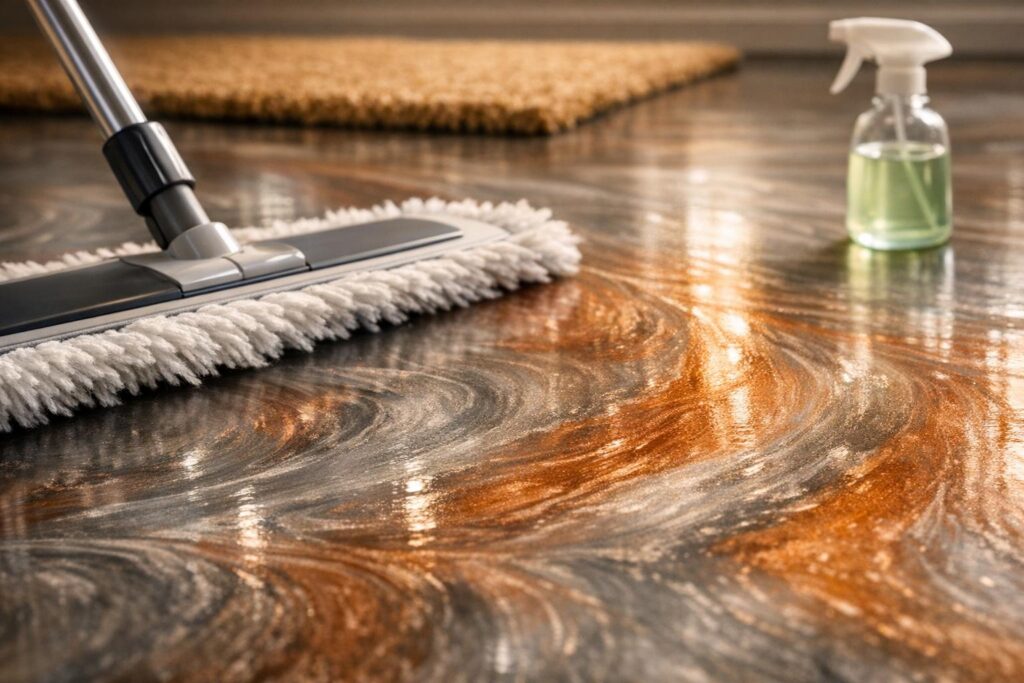
Maintaining metallic floor coatings is straightforward but requires consistent care to preserve their shine and durability. These floors, made from metallic pigments and epoxy resin, can last 30–60 years with proper upkeep. Here’s how to keep them in top condition:
- Sweep or dust mop regularly to prevent micro-scratches from dirt and grit.
- Mop weekly with a pH-neutral cleaner to avoid damaging the surface.
- Clean spills immediately to prevent stains or weakening of the coating.
- Use mats at entryways and under heavy furniture to minimize wear.
- Avoid dragging heavy objects to prevent scratches and dents.
- Deep clean monthly to remove hidden grime and maintain the glossy finish.
- Control moisture and humidity to prevent bubbling or peeling.
- Inspect for wear regularly and address scratches or chips promptly.
- Use parking pads in garages to protect against hot tire damage and fluid leaks.
- Avoid abrasive tools and harsh chemicals that can dull or damage the coating.
Epoxy Floors Looking Dull? Here’s the Fix!
sbb-itb-4b4bb37
1. Sweep or Dust Mop Weekly
Dirt, sand, and grit might seem harmless, but they act like tiny pieces of sandpaper on metallic coatings, creating micro-scratches that can dull the shine over time.
To keep your floors looking their best, sweep 3–4 times a week in most homes – or daily if you have high-traffic areas. Use tools like a soft-bristled broom, a microfiber dust mop, or an electrostatic mop. Just steer clear of beater bars, as they can damage the surface. For larger spaces, a dust mop between 24 and 36 inches wide can make the job quicker and more efficient than a standard broom.
Pay extra attention to entryways and busy walkways where grit tends to collect. This simple 5-minute habit not only keeps your floors clean but also makes wet mopping easier and more effective by eliminating abrasive debris beforehand. Regular sweeping helps protect the metallic finish and extends its polished look.
2. Mop with pH-Neutral Cleaner Weekly
Once you’ve swept your floor, it’s time to mop using a pH-neutral cleaner. Why? Epoxy and polyaspartic coatings are sensitive to pH levels, so sticking to a cleaner with a neutral pH (around 7) is essential. These cleaners effectively remove grease, smudges, and dust without harming the protective topcoat that gives your floor its signature reflective shine.
Using acidic cleaners like vinegar or citrus-based solutions can cause serious damage. As Madison Coatings Company explains, "The acidity breaks down the epoxy finish". This breakdown can result in permanent cloudiness and diminish that mirror-like reflectivity you love. Similarly, heavy-duty soaps often leave behind a hazy residue that traps dirt and dulls the metallic sheen over time.
To avoid these issues, stick to a simple mopping routine. Here’s how:
- Mix a few drops of a pH-neutral cleaner (like Zep Neutral pH Floor Cleaner, Simple Green, or even a mild dish soap like Dawn) with one gallon of warm water.
- Use a damp microfiber mop to clean the floor gently.
- Rinse the floor with clean, warm water to remove any leftover cleaner.
- Dry the surface immediately using a squeegee or a soft towel to prevent water spots.
One more tip: skip the steam mop. The high heat can weaken the epoxy bond and damage the topcoat. By sticking to these gentle cleaning practices, you can keep your metallic floor looking vibrant and reflective for years to come.
3. Spot Clean Spills Immediately
Metallic epoxy floors are designed to be tough and non-porous, but quick action on spills is still essential. Letting spills sit for too long can harm the finish, dull its glossy look, and even weaken the bond between the epoxy and the concrete below. For instance, an oil leak that’s left unattended for weeks can be much harder to clean than one that’s dealt with right away. Acting fast is crucial to maintaining the floor’s durability and appearance.
Certain substances – like acidic liquids, petroleum-based products, and pigmented solutions – are especially harmful. They can cause cloudiness, leave behind stains, or weaken the epoxy coating’s adhesion.
"The sooner you clean a spill, the easier it is to remove. Epoxy coatings resist absorption, but wiping up oil immediately prevents spreading and slipperiness." – Superior Garage Floors USA
When spills happen, blot them instead of rubbing. Use a soft cloth to gently absorb the liquid, as rubbing can push the spill into tiny scratches on the surface. For oil-based spills, sprinkle cornstarch over the area to soak up excess oil before wiping it clean. After blotting, rinse the spot thoroughly with warm water to eliminate any leftover residue.
Take the example of Carlos M., a homeowner in Phoenix, Arizona. He spilled motor oil on his brand-new metallic epoxy floor but cleaned it up immediately. Thanks to his quick action, the floor’s glossy finish remained intact, with no permanent stains. Prompt cleanup not only keeps your floor looking great but also helps it maintain its longevity – lasting anywhere from 30 to 60 years.
4. Use Entryway and Protective Mats
Placing mats at entrances and high-traffic areas is a simple yet effective way to keep dirt, moisture, and debris from reaching your metallic floor coating. Without this barrier, gritty particles can scratch and dull the glossy finish you worked hard to achieve.
"Small particles of dirt and grit act like sandpaper underfoot. Over time, they can dull that high-gloss finish you fell in love with." – Madison Coatings Company
A smart approach is to use two mats: one outside and one inside each entrance. This double-layered defense is particularly useful for doorways in garages, where it helps block debris and moisture before they can spread onto your floor.
In addition to entryways, think about placing area rugs or runners in heavily used areas for added protection. For offices with rolling chairs, protective mats are a must to avoid concentrated scratching. If you park vehicles on your metallic floor, use parking pads or tire mats under the tires to prevent issues like hot tire pickup or fluid drips. Keep in mind that mats themselves need regular cleaning – if they become saturated with dirt, they can shift and end up causing scratches instead.
5. Avoid Dragging Sharp or Heavy Objects
Taking care when moving objects is just as important as regular cleaning to keep your metallic floor coating in top shape.
Dragging sharp or heavy items across metallic coatings can lead to scratches, dents, and even gouges. While these coatings are tough, they’re not invincible.
"Dragging metal across your floor is a guaranteed way to leave marks." – Madison Coatings Company
The damage doesn’t stop at surface marks – dirt trapped under dragged items can act like sandpaper, wearing down the topcoat. Even worse, deep gouges can let moisture seep under the coating, which might cause peeling or lifting over time.
The fix? Simple. Always lift and carry objects instead of dragging them. For furniture or items that need frequent moving, attach felt pads or rubber glides to the legs. If lifting isn’t an option for heavier equipment, place a protective cloth underneath before sliding it.
For large, stationary items like tool chests or machinery, use caster cups or rubber coasters to distribute weight evenly and avoid dents. These small precautions go a long way in preserving your floor’s sleek, reflective finish for years to come.
6. Perform Monthly Deep Cleaning
Weekly upkeep keeps your metallic floor looking sharp, but a monthly deep cleaning tackles the grime that regular mopping misses. This extra step ensures your floor maintains its stunning finish over time.
Start by sweeping or vacuuming the floor with a soft-bristle attachment to remove dirt and debris that could scratch the surface. Then, prepare a cleaning solution by mixing warm water with a pH-neutral cleaner or adding 2–3 ounces of ammonia per gallon of water. Apply this mixture and gently scrub the floor using a soft-bristle brush or a microfiber mop, paying special attention to areas under furniture where dirt tends to accumulate.
Rinsing is critical – any leftover soap can leave a dull residue. Use clean water to thoroughly rinse the floor, and dry it immediately with a microfiber cloth or squeegee to prevent water spots and preserve the floor’s glossy finish.
For tough stains like tire marks or oil spots, apply the ammonia solution and let it sit for 3–5 minutes before scrubbing gently with a soft nylon brush. If the stain still lingers, try a paste made from baking soda and water to lift it away.
Avoid using vinegar, citrus-based cleaners, or steam mops, as they can damage the floor’s protective coating. Stick with safe, pH-neutral products like Zep Neutral pH Floor Cleaner, Simple Green All-Purpose Cleaner, or OdoBan Professional Series for the best results.
7. Control Moisture and Humidity
Too much moisture can seriously impact the durability and look of your flooring. Humidity levels above 60% can disrupt the chemical reactions that allow epoxy to cure properly, leading to long-term issues with the coating’s performance and appearance. Managing ambient moisture is just as important as routine cleaning when it comes to preserving your floor’s finish.
If moisture gets trapped in the concrete, it can cause bubbling, peeling, or even delamination of the epoxy layer.
"When moisture escapes from the concrete and penetrates the epoxy layer, it can cause the flooring to bubble, blister, or delaminate. This not only affects the aesthetic appeal of the floor but also compromises its structural integrity." – Epoxy Pro Solutions
Signs of moisture damage can include a cloudy or waxy film on the surface, trapped air bubbles, or, in more severe cases, "amine blush", which leaves the floor sticky or soft to the touch. These issues don’t just harm the floor’s appearance – they also weaken its resistance to scratches and impact over time.
To prevent these problems, keep indoor humidity levels below 60%. You can use a portable dehumidifier or an air conditioning system to reduce moisture, especially in damp areas like basements. Avoid swamp coolers, as they add moisture to the air, and improve ventilation by running exhaust fans or opening windows when outdoor humidity is lower.
After wet cleaning, always dry the floor thoroughly with a microfiber cloth or a squeegee to prevent water from settling. When moisture is properly managed, your metallic epoxy floor can last anywhere from 30 to 60 years.
8. Inspect for Wear Regularly
Keeping an eye on your flooring is a smart way to avoid expensive fixes down the road. Spotting small issues early – like faint scratches or a cloudy surface – can save you from bigger headaches later. Even tiny scratches can trap dirt, which gradually wears down the metallic finish.
"The key is catching problems early. Addressing small issues promptly prevents them from becoming expensive repairs." – Madison Coatings Company
This regular attention works hand-in-hand with your cleaning routine to preserve the floor’s sleek, polished look.
Aim for a thorough visual inspection every six months. Pay close attention to high-traffic areas, such as entryways, garage thresholds, and spots around heavy furniture, as these are more prone to wear and tear. Look for signs like dullness (a warning that the topcoat is thinning), surface scratches, chips, cracks, yellowing caused by UV exposure, or peeling along the edges.
In between these biannual checks, make it a habit to do quick daily spot checks. These can help you catch spills or damage right away. Your weekly cleaning routine is also a great opportunity to check hidden areas – like under furniture or in corners – for stains or unnoticed damage. If the floor still looks dull after a deep clean, it’s likely time to reseal the protective topcoat professionally.
Address any chips or cracks as soon as you find them to keep the coating intact. With consistent inspections and care, metallic floors can last an impressive 30 to 60 years.
9. Use Parking Pads for Vehicles
Using rubber mats or parking pads under your car’s tires can shield your metallic coating from common issues like hot tire damage, fluid leaks, and tire marks.
When you drive, your tires heat up – typically reaching temperatures between 140°F and 180°F, and sometimes as high as 200°F during high-speed driving in hot conditions. This heat can soften the coating on your garage floor, leading to a problem called "hot tire pickup." As Armor Guard Coatings explains:
"Hot tire pickup occurs when heated tires from driving create a chemical bond with your garage floor surface, literally pulling away pieces of concrete, paint, or coating when you drive away".
Parking pads act as a thermal barrier, preventing excessive heat from transferring directly to your floor. This simple solution works well alongside other maintenance measures.
But heat isn’t the only concern. These mats also catch oil, petroleum, and chemical leaks before they can damage your metallic finish. Make it a habit to check underneath the mats to ensure fluids haven’t pooled against the coating. Opt for non-abrasive rubber mats that are thick enough to evenly distribute your car’s weight. Avoid using cardboard – it provides little protection and can trap moisture, which could lead to further issues.
If your floor has a more delicate coating, let your tires cool for 15–30 minutes before parking directly on the metallic surface. While professional-grade coatings can handle temperatures up to 250°F, less durable or DIY coatings may fail at significantly lower temperatures. By using parking pads and taking these precautions, you can help maintain your floor’s look and durability for years to come.
10. Avoid Abrasive Tools and Salts
Using abrasive tools or harsh cleaners can severely damage the finish of your metallic floor. Items like stiff-bristled brushes, steel wool, scouring pads, or gritty cleaners such as Ajax or Comet can wear down the glossy surface, leaving behind scratches and a dull, hazy film. This not only diminishes the floor’s striking 3D shimmer but also shortens its lifespan. As Gresham Concrete Coatings advises:
"Avoid abrasive scrubbers or stiff brushes that can scratch the epoxy surface."
Beyond tools, it’s equally important to steer clear of certain chemicals, especially during winter. De-icing salts, for example, can corrode the epoxy finish. If these salts seep through scratches into the concrete below, they can weaken the bond of the coating. According to Global Garage Flooring® & Design, cleaners containing acids like acetic, hydroxyacetic, citric, or hydrofluoric can also harm concrete surfaces.
To keep your metallic floor in top condition, stick to gentle cleaning methods. Use soft-bristle brooms, microfiber mops, and pH-neutral cleaners. A simple mix of warm water and a few drops of mild dish soap works great – just make sure to rinse thoroughly to avoid residue buildup. During winter, consider placing heavy-duty mats at entryways or implementing a no-shoes policy to prevent salt and grit from reaching the surface. For tougher stains, skip aggressive scrubbing and try a paste made from baking soda and water instead.
Maintenance Do’s and Don’ts
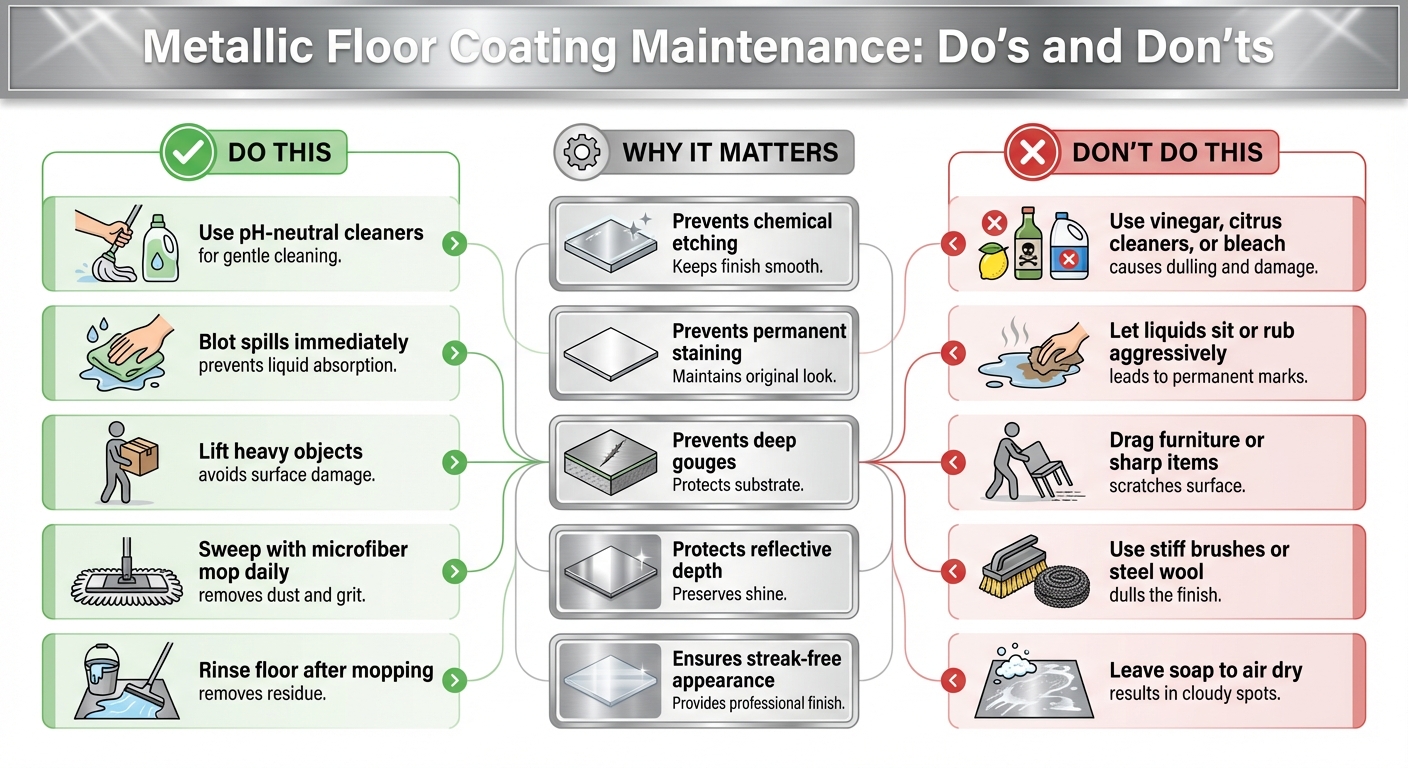
Metallic Floor Coating Maintenance Do’s and Don’ts Guide
Keeping your metallic finish in top condition requires consistent care and avoiding common pitfalls. These practices help maintain the chemical bond and preserve the stunning visual appeal of your coating. On the flip side, neglect or improper cleaning can lead to scratches, etching, or even costly repairs.
Daily sweeping is essential. Use a soft-bristled broom or a microfiber mop to gently remove debris. Stay away from vacuums with beater bars or stiff plastic bristles – they can leave micro-scratches that dull the finish over time.
When it comes to weekly mopping, stick to pH-neutral cleaners or mix ½ cup of ammonia with a gallon of hot water. Always rinse afterward to prevent residue buildup that could cloud the surface. As Madison Coatings Company advises:
"The acidity [in vinegar] breaks down the epoxy finish… When in doubt, stick with pH-neutral options. Your floor will thank you".
Essential Tips:
- Lift, don’t drag: Heavy objects should be lifted rather than dragged across the floor. Use felt pads or rubber coasters under furniture to avoid deep scratches.
- Blot spills immediately: Use a soft cloth to blot rather than rub, which can push contaminants into micro-scratches.
- Avoid steam mops or high-pressure washers: These tools can cause heat damage, leading to delamination and cloudiness.
- Place walk-off mats at entryways: Mats trap abrasive dirt and grit, preventing up to 80% of outdoor debris from reaching your floor.
Here’s a quick reference table to summarize the do’s and don’ts:
| Do This | Don’t Do This | Why It Matters |
|---|---|---|
| Use pH-neutral cleaners | Use vinegar, citrus cleaners, or bleach | Prevents chemical etching |
| Blot spills immediately | Let liquids sit or rub aggressively | Prevents permanent staining |
| Lift heavy objects | Drag furniture or sharp items | Prevents deep gouges |
| Sweep with microfiber mop daily | Use stiff brushes or steel wool | Protects reflective depth |
| Rinse floor after mopping | Leave soap to air dry | Ensures streak-free appearance |
Conclusion
Your metallic floor is an investment that deserves proper care. Simple habits like daily sweeping and weekly mopping with pH-neutral cleaners can protect the finish and keep abrasive particles from dulling the surface. These steps not only safeguard the stunning 3D effects but also help maintain that showroom-quality shine for years to come.
Sticking to this routine does more than preserve the floor’s appearance – it also significantly extends its lifespan. With proper care, a metallic epoxy floor can last anywhere from 30 to 60 years.
"Regular care isn’t about babying your floor: it’s about protecting your investment and maximizing its lifespan".
Of course, maintenance is only part of the equation. Quality installation is equally important. Atlas Concrete Coatings offers durable, customizable metallic coating solutions, installed by experts to ensure proper bonding and long-lasting protection.
So whether you’re caring for an existing floor or planning a new installation, remember that expert craftsmanship and consistent upkeep go hand in hand to ensure your floor remains flawless over the years.
FAQs
What cleaner is safest for metallic epoxy floors?
For the safest results, stick with a pH-neutral cleaner like diluted Dawn or Simple Green. Pair it with a microfiber mop or a soft-bristle brush for gentle cleaning. Steer clear of harsh chemicals like bleach or vinegar – they can harm the coating and compromise the surface.
How can I fix small scratches or dull spots?
To fix small scratches or dull areas on metallic or reflective floor coatings, start by gently sanding the affected spot with 400-grit wet sandpaper to smooth out imperfections. After sanding, clean the area thoroughly to remove any residue. Next, apply a fresh layer of clear epoxy or urethane coating to restore the finish. If you’re dealing with dull spots, polishing with a suitable epoxy polish or using a light polish specifically made for epoxy floors can help revive the shine.
When should I call Atlas Concrete Coatings for resealing?
If your concrete coatings show signs of wear – like scratches, chips, dull spots, or other visible damage – it’s time to reseal. These issues can affect both the look and protective qualities of the coating. This kind of wear usually develops after years of use or due to unexpected damage. While regular maintenance can help prolong the life of your floors, resealing is a necessary step when these problems appear. Reach out to Atlas Concrete Coatings to restore your flooring’s durability and appearance.