
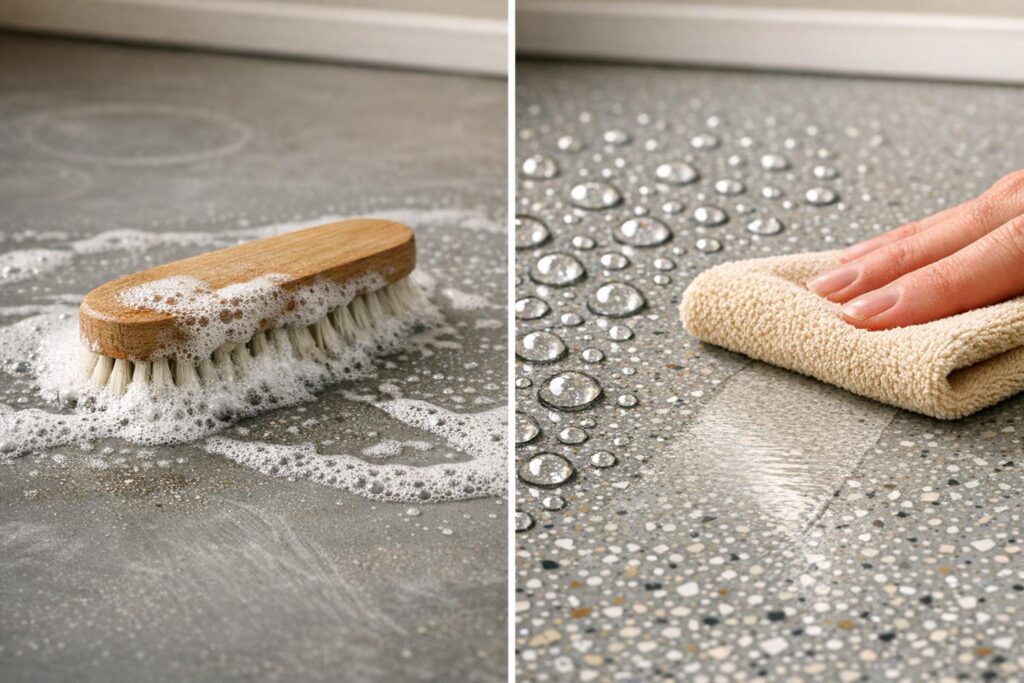
When deciding between epoxy and polyurea floor coatings, cleaning and maintenance are key factors. Here’s a quick breakdown:
- Epoxy floors: Require regular sweeping and mopping to prevent scratches and stains. They can handle spills but may stain if not cleaned promptly. Over time, cracks and chips can trap dirt, making cleaning more labor-intensive.
- Polyurea floors: Offer a non-porous, stain-resistant surface that’s easier to clean. Spills can be wiped away effortlessly, and the material resists cracking, reducing long-term cleaning needs.
Quick Comparison
| Feature | Epoxy Floors | Polyurea Floors |
|---|---|---|
| Cleaning Effort | Moderate; requires regular upkeep | Low; easy to maintain |
| Spill Resistance | Good; can stain with delays | Excellent; hydrophobic surface |
| Durability | Prone to cracking over time | Flexible; resists cracking |
| Lifespan | 5–10 years with maintenance | 15–20+ years with minimal upkeep |
For a low-maintenance, long-lasting solution, polyurea is the better choice, especially for high-traffic or outdoor areas. Epoxy may still work for budget-conscious, low-traffic spaces.
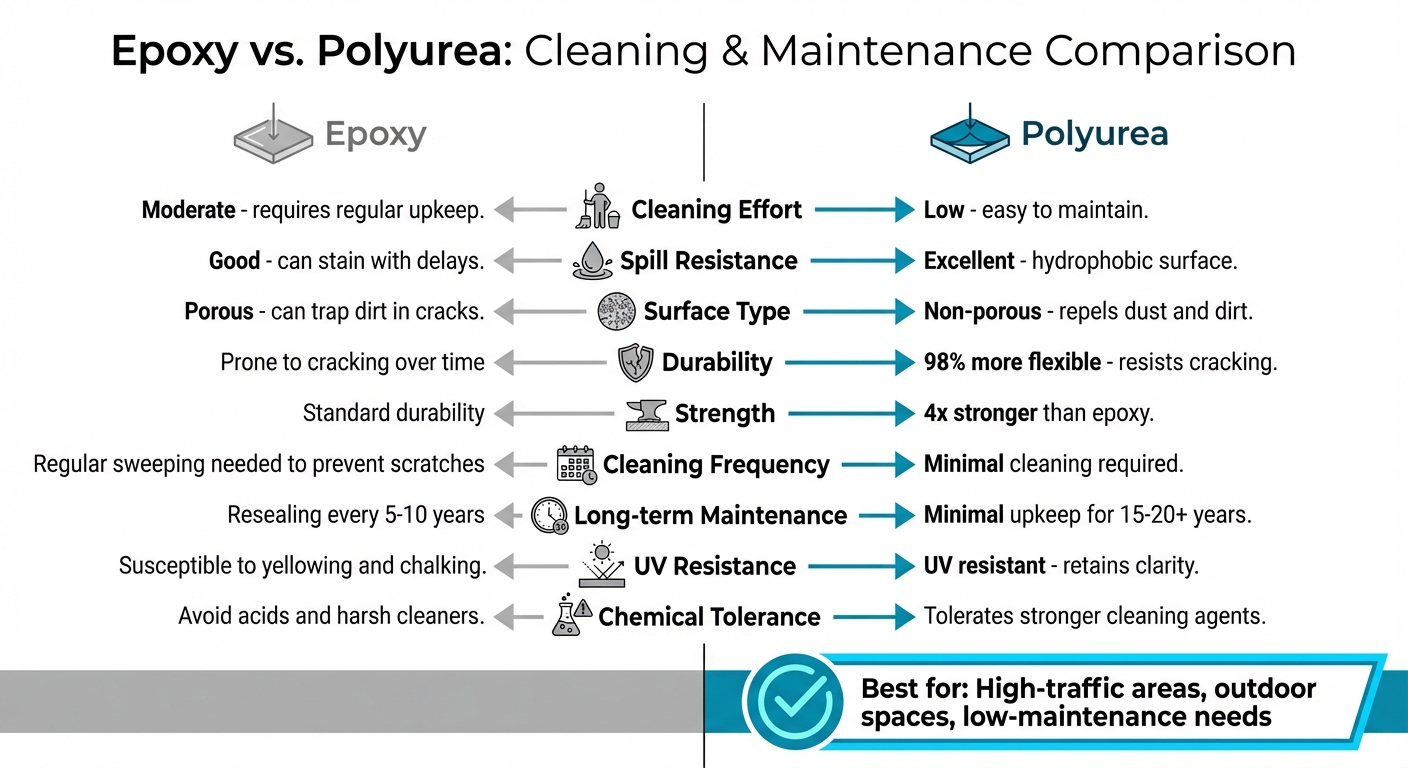
Epoxy vs Polyurea Floor Coatings: Cleaning and Maintenance Comparison
6 Months & Oil Spill Later: Cleaning my Polyurea Garage Floor 1st Time!
sbb-itb-4b4bb37
How to Clean Epoxy Floors
Epoxy floors require regular upkeep to keep their shine and durability intact. While the surface is excellent at resisting stains, it can still scratch if abrasive debris is left unchecked. Using the right cleaning tools and products is crucial to maintaining their appearance and functionality.
Best Cleaning Tools and Products for Epoxy
For daily sweeping, stick to soft-bristle brooms or microfiber dust mops. Outdoor dirt and grit can cause tiny scratches that dull the floor’s finish over time. When it comes to wet cleaning, microfiber mops are ideal – they prevent streaks and won’t damage the surface. If scrubbing is necessary, always opt for soft nylon brushes; avoid steel wool or wire brushes, as they can cause permanent damage.
When choosing a cleaner, go with pH-neutral floor cleaners mixed with warm water. Another option is diluted ammonia (2–3 ounces per gallon of water), which can help restore shine and erase scuff marks. Stay away from acidic cleaners like vinegar or citrus-based products, as well as bleach, pine-based cleaners, and soap-based detergents. These can leave a dull residue or even strip the floor’s protective coating. With proper care, epoxy floors can last 30–50% longer.
Removing Stains and Spills from Epoxy
Daily cleaning helps, but spills should be addressed immediately to avoid permanent stains. Blot spills right away using paper towels to prevent them from spreading. For oil, grease, or tire marks, apply diluted ammonia or an epoxy-safe degreaser, let it sit for 3–5 minutes, and scrub with a stiff nylon brush. Tire residue is one of the most common stains in garages. For rust stains, use a non-acidic rust remover specifically designed for epoxy floors. Apply it for no more than two minutes, then rinse thoroughly with cold water. Always rinse the floor with clean water after using any cleaning product to avoid leaving behind a cloudy residue.
How Often to Clean Epoxy Floors
The cleaning frequency depends on how the space is used. High-traffic areas like gyms, commercial showrooms, or auto shops benefit from daily sweeping and mopping. Residential garages, on the other hand, should be swept weekly and damp-mopped either weekly or bi-weekly. A deeper clean is recommended monthly for homes and quarterly for industrial spaces to tackle residue buildup. Regular cleaning not only keeps the floor looking great but also ensures the coating continues to perform at its best, preserving its durability and stain resistance over time.
How to Clean Polyurea Floors
Polyurea floors are much easier to maintain compared to epoxy, thanks to their durability and resistance to chemicals. For daily cleaning, use a soft-bristle broom or a vacuum with a soft brush attachment. When mopping, stick to a microfiber mop combined with warm water and a few drops of dish soap. For stubborn stains, mix trisodium phosphate (TSP) with water, scrub gently using a soft, non-abrasive pad, and rinse thoroughly. Since polyurea is non-porous, spills stay on the surface and won’t seep in – making cleanup quick and hassle-free. These simple steps highlight the resilient nature of polyurea floors.
Why Polyurea Floors Are Easier to Clean
Polyurea’s seamless finish and flexibility make it resistant to dirt buildup. Unlike epoxy, which can develop micro-cracks and chips that trap grime, polyurea flexes with the concrete substrate, ensuring a smooth, continuous surface. This flexibility – up to 98% greater than epoxy – helps prevent dirt from settling in hard-to-reach areas. Additionally, polyurea is up to four times stronger than epoxy. When paired with a polyaspartic topcoat and decorative flakes, the textured surface also helps mask dust and debris between cleanings.
Using Stronger Cleaners on Polyurea
One of polyurea’s standout qualities is its ability to withstand harsh cleaning agents without degrading. Unlike epoxy, which can discolor or weaken when exposed to certain chemicals, polyurea creates a durable barrier against corrosive substances and a wide range of cleaning products. This means you can tackle tough stains like oil, grease, or tire marks with confidence. However, it’s still a good idea to avoid strong solvents or acids that might dull the finish over time.
"Polyurea is non-porous and stain-resistant – no scrubbing, no stains."
– Epic Concrete Coatings
This chemical resistance not only simplifies cleaning but also enhances safety and reduces long-term maintenance.
Slip Resistance and Reduced Maintenance Needs
Many polyurea systems include slip-resistant additives, improving safety while making dirt and debris easier to manage. Its UV resistance also prevents outdoor surfaces from yellowing or chalking over time. Thanks to its crack resistance, chemical durability, and UV stability, polyurea floors require less deep cleaning, allowing you to enjoy a polished, low-maintenance surface for years to come.
Epoxy vs. Polyurea: Cleaning Comparison
When it comes to cleaning, the differences between epoxy and polyurea floors can save you a lot of time and effort. Epoxy floors need moderate maintenance – regular sweeping helps prevent scratches, and dried spills often require scrubbing to remove. On the other hand, polyurea floors feature a non-porous, hydrophobic surface that makes cleaning much easier. Most spills can simply be wiped away with little effort. These distinctions affect not only your daily cleaning routine but also the long-term upkeep of the flooring.
Epoxy does a decent job resisting oil and chemicals, but it can stain if spills are left unattended or if micro-cracks develop. By contrast, polyurea offers 98% greater flexibility and is four times stronger, making it less prone to cracking and chipping. This durability ensures a smoother surface, which is much easier to clean.
Long-term maintenance also highlights the differences. Epoxy floors typically need resealing or repairs after 5–10 years, while polyurea floors can last 15–20 years or more with minimal upkeep. Additionally, epoxy is susceptible to yellowing and chalking when exposed to UV light, often making outdoor surfaces look dirtier over time. Polyurea, especially when paired with a polyaspartic topcoat, retains its clarity and finish much longer, making it a better choice for areas exposed to sunlight.
Cleaning Features Comparison Table
| Cleaning Feature | Epoxy Floors | Polyurea Floors |
|---|---|---|
| Cleaning Frequency | Moderate; regular sweeping needed to prevent scratches | Low; non-porous surface repels dust and dirt |
| Recommended Products | Mild soap, ammonia-water solution; avoid acids | Mild soap and water; tolerates stronger cleaners |
| Effort Level | Moderate; scrubbing required for dried spills | Low; most spills wipe away instantly |
| Spill Resistance | Good; resistant to oil but can stain if spills remain | Excellent; hydrophobic and stain-proof |
| Long-term Maintenance | May require resealing every 5–10 years | Minimal; lasts 15–20+ years |
| Impact on Cleaning | Brittle; chips and cracks can trap dirt | Flexible; smooth surface remains intact |
Temperature also plays a big role in both performance and maintenance. Epoxy needs at least 50°F to cure properly and won’t set at all below 40°F, which can lead to installation issues that impact durability. Polyurea, however, can be applied even in temperatures as low as –20°F. This ability to cure in extreme conditions ensures a strong bond that resists peeling and bubbling. A solid curing process means less surface damage over time, reducing cleaning demands even further. This makes polyurea an excellent choice for spaces where easy cleaning is a priority.
Why Polyurea Requires Less Maintenance
Polyurea stands out for its ability to expand and contract without cracking, thanks to its elastomeric structure. Unlike epoxy, which can become brittle over time, polyurea maintains a smooth surface that resists dirt buildup. This flexibility means fewer crevices where grime can settle, so keeping it clean often requires nothing more than a quick sweep or mop.
Its seamless, moisture-resistant surface is another major advantage. According to Top Coat Concrete Coatings, "Polyurea has superior resistance to corrosive substances like gasoline, oils, cleaning agents, and other chemicals that can stain or degrade epoxy floors". This means spills are easy to clean up without worrying about permanent damage.
Chemical Resistance and Durability of Polyurea
One of polyurea’s standout features is its resistance to harsh chemicals. Unlike epoxy, it can tolerate stronger cleaning agents without breaking down. Its antimicrobial properties make it especially useful in environments like healthcare facilities, commercial kitchens, and food processing plants, where cleanliness is critical.
Polyurea is also highly durable – estimated to be 4 times stronger than epoxy. It can even bridge concrete cracks up to 1/8 inch due to its elasticity. This resilience helps protect against damage from heavy loads or impacts, reducing the need for frequent repairs or touch-ups. These qualities make polyurea a low-maintenance solution for demanding spaces.
Atlas Concrete Coatings‘ Polyurea Floor Systems
Polyurea’s benefits translate seamlessly into practical applications. Atlas Concrete Coatings specializes in polyurea-based chip floor coatings that are both durable and easy to maintain. Their system uses a polyurea basecoat and a polyaspartic topcoat to create a textured, slip-resistant surface. This finish not only hides dirt and salt but also remains easy to clean with a broom or mop. Additionally, the coating serves as a moisture-vapor barrier, protecting the underlying concrete from liquids that can cause damage and odors, particularly in basements and garages.
With a lifetime warranty on chip systems and a service life of over 20 years, Atlas Concrete Coatings’ floors are built to last with minimal upkeep. Installation is quick – most projects are completed and ready for use within 24 hours – ensuring minimal disruption while delivering a clean, durable surface that stands the test of time.
Conclusion
When it comes to ease of cleaning and maintenance, polyurea takes the lead over epoxy. Its non-porous surface makes wiping up spills a breeze, while epoxy’s tendency to crack can trap dirt, requiring more effort to keep clean.
Durability is another area where polyurea shines. It’s four times stronger and 98% more flexible than epoxy. This flexibility helps it resist cracking, chipping, or peeling as the concrete beneath expands and contracts with temperature changes. Epoxy, with its rigid structure, is more prone to these issues, leading to higher maintenance needs over time.
For homeowners or businesses wanting a low-maintenance solution, polyurea is the clear choice. It stands up to harsh chemicals, resists UV yellowing, and maintains its appearance with just a quick mop. These features not only make day-to-day care easier but also help the floor last longer. While epoxy might work for budget-friendly, low-traffic indoor spaces, polyurea is the better option for areas like garages, commercial properties, or outdoor spaces where durability and longevity are essential.
If you’re looking for a flooring solution that resists stains, handles impacts, and requires minimal upkeep, polyurea offers the performance and long-term value that make it a smart investment.
FAQs
Can I use a pressure washer on polyurea or epoxy floors?
Polyurea coatings can withstand pressure washing, but it’s essential to proceed with care. These coatings are tough and durable, making them more resistant to damage. On the other hand, epoxy floors are more delicate and can be vulnerable to issues like cracking or peeling when exposed to high-pressure water. To minimize risks, always opt for a low-pressure setting and use a wide spray nozzle. If you’re dealing with epoxy, take extra precautions to protect the surface from potential damage.
What cleaners should I avoid on epoxy and polyurea coatings?
Avoid using harsh chemicals or abrasive cleaners on epoxy and polyurea coatings. These can harm the surface and weaken its durability over time. Instead, opt for gentle cleaning products specifically designed to work with these coatings, ensuring their look and performance stay intact.
How do I keep garage tire marks from staining my floor?
To keep tire marks from staining your garage floor, applying a stain-resistant, non-porous coating like polyurea is a smart choice. This type of coating is not only easy to clean but also highly effective at resisting stains.
For regular maintenance, make it a habit to sweep or vacuum the floor often and clean up spills quickly using mild soap and water. If you’re looking for extra protection, consider adding a slip-resistant finish. This can help prevent tire slippage while also keeping your floor looking good for the long haul.