
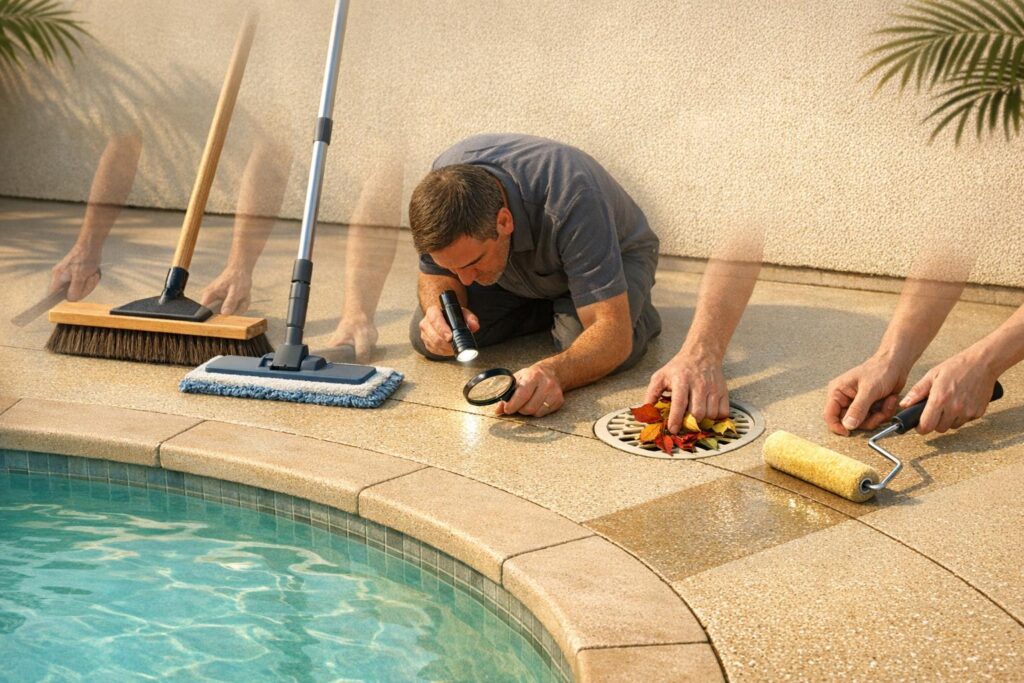
Polyurea pool deck coatings are durable, UV-stable, and long-lasting, often outliving traditional epoxy coatings by decades. However, proper maintenance is essential to preserve their finish and safety features. Here’s what you need to know:
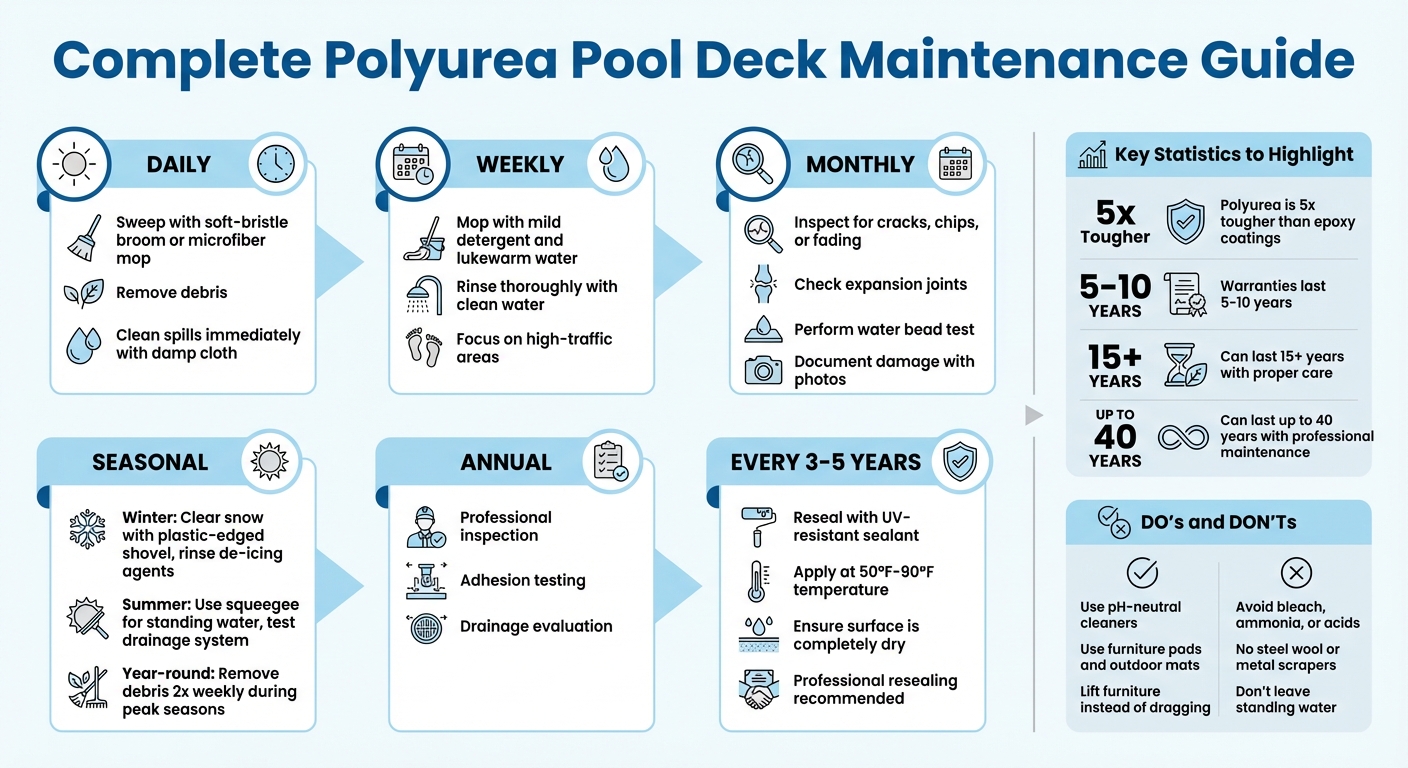
- Daily Cleaning: Sweep with a soft-bristle broom or microfiber mop to remove debris.
- Weekly Mopping: Use a mild detergent with lukewarm water, followed by a clean water rinse.
- Monthly Inspections: Look for cracks, chips, or fading and address minor damage promptly.
- Seasonal Care: Protect against snow, ice, and standing water; ensure proper drainage.
- Resealing Every 3–5 Years: Apply a UV-resistant sealant to maintain color, texture, and slip resistance.
Quick action on spills, avoiding abrasive tools, and using protective accessories (like furniture pads and outdoor mats) can further extend the life of your coating. Professional inspections and resealing services can also help catch hidden issues and ensure long-term durability.
Polyurea Pool Deck Coating Maintenance Schedule and Best Practices
Cleaning a Polyurea Chip Floor
sbb-itb-4b4bb37
Daily and Weekly Cleaning
Regular cleaning is key to keeping your polyurea coating looking its best. Daily and weekly maintenance routines help prevent dirt and debris from dulling the finish. While polyurea is highly resistant to many chemicals, spills like sunscreen, pool chemicals, or food residue should be cleaned up immediately. If left, these can leave marks. Simply wipe spills with a damp cloth and dry the area thoroughly to avoid water spots.
Here’s a quick reference guide for maintaining your polyurea coating:
| Task | Frequency | Tools & Products |
|---|---|---|
| Debris removal | Daily | Soft-bristle broom or microfiber mop |
| Mopping | Weekly | Mild detergent and lukewarm water |
| Rinsing | After each mopping | Fresh, clean water |
| Spill cleanup | Immediately | Damp cloth |
Daily Cleaning
Daily cleaning helps prevent small particles from building up and causing wear. Start by sweeping the pool deck every day with a soft-bristle broom or a microfiber dust mop. This removes fine particles without scratching the surface. Microfiber mops are especially effective at picking up dust and pollen that traditional brooms might miss.
To further reduce debris, place floor mats at entry points. These mats help catch dirt and grit before it’s tracked onto the deck. Avoid using stiff brushes or abrasive pads, as they can damage the coating’s texture and reduce its slip-resistant properties.
Weekly Mopping
Weekly mopping provides a deeper clean and removes any lingering residue. Use a pH-neutral detergent mixed with lukewarm water – hot water isn’t necessary and can sometimes leave streaks. Focus on high-traffic areas like spots near pool ladders or lounge chairs, where oils and residue tend to accumulate.
After mopping, rinse the deck thoroughly to remove any soap residue. As DFW Classic Coatings explains, "Regular sweeping with a soft-bristle broom or microfiber dust mop will help remove debris and prevent these issues". Skipping the rinse step can leave a film that attracts dirt and makes the surface slippery. Use a clean mop or a hose for rinsing, and let the deck air dry completely.
During your weekly routine, take a moment to inspect the surface for any signs of chips, scratches, or peeling. If you spot any damage, it’s best to contact a professional for repairs.
Monthly Inspection and Maintenance
Taking time each month to inspect your pool deck can save you from costly repairs down the line. A quick check-up helps you spot small problems early. While most polyurea coatings come with warranties lasting 5 to 10 years, consistent monthly maintenance can help extend their lifespan significantly.
Checking for Surface and Structural Damage
Begin by clearing the deck with a broom or leaf blower – debris can easily hide cracks or chips. Once the surface is clean, carefully examine the deck, especially the edges and transitions, for any signs of hairline cracks, chips, peeling, or delamination. If you notice the coating lifting or separating from the concrete, it’s no longer offering proper protection.
Look for discoloration or fading in areas exposed to direct sunlight, and perform a quick water test: if water beads on the surface, the coating is still effective; if it soaks in, the protective layer has likely worn down. Don’t forget to check expansion joints for signs of wear or separation. Also, note any areas where water tends to pool after rain or cleaning – this may point to drainage problems.
Keep a record of any damage you find. Take photos or jot down notes in a maintenance log to monitor whether the issues worsen over time. As Extreme Concrete Makeover wisely states:
An ounce of prevention is worth a pound of cure.
Fixing Minor Issues Quickly
Addressing small issues as soon as they appear is key to avoiding bigger problems. Start by cleaning the damaged area thoroughly, then lightly sand it before applying epoxy, polyurethane fillers, or concrete patching compounds. These materials seal cracks, blend seamlessly with the deck, and help prevent tripping hazards.
For spills and stains, act fast. Chemical spills from pool treatments or sunscreen can cause permanent discoloration if left untreated. Wipe up spills with a damp cloth and mild detergent, then rinse the area thoroughly. If scratches appear from moving patio furniture, consider using furniture pads under heavier items to prevent future damage.
If the surface feels less slip-resistant or appears dull, it might be time for a fresh topcoat – this will be discussed further in the resealing section. Staying on top of these small fixes each month helps set the stage for more thorough seasonal maintenance.
Seasonal Maintenance
Seasonal upkeep is key to protecting your polyurea deck from the challenges posed by changing weather. These routines work hand-in-hand with your monthly inspections, tackling weather-specific concerns to keep your deck in top shape.
Winter Care for Snow and Ice
During winter, the polyurea coating acts as a waterproof shield, keeping snowmelt and ice from seeping into the concrete below. This helps prevent the freeze-thaw cycles that can cause cracks in unprotected surfaces. Before temperatures drop, inspect your deck and repair any chips or cracks using a concrete patching compound. This simple step can help avoid costly freeze-thaw damage.
When it comes to clearing snow, stick with a broom or a plastic-edged shovel to avoid scratching or gouging the protective layer. After clearing, rinse off de-icing agents like road salt, sand, and magnesium chloride. These substances can corrode the surface and compromise the coating’s anti-slip properties, so removing them promptly is essential. As the seasons shift, moisture management becomes the focus during summer.
Summer Moisture Management
Summer brings heat, humidity, and increased water exposure, especially around pools. Standing water can accumulate on your deck after heavy rain or frequent pool use. To prevent this, use a squeegee to direct water toward drains, paying extra attention to edges and seams where moisture tends to linger. Test your drainage system monthly with a hose to ensure water flows properly and clear any blockages.
Although polyurea coatings resist UV damage and fading, it’s wise to check high-traffic areas near the pool for scuffs or early signs of wear. When moving patio furniture or pool equipment, lift items instead of dragging them to avoid scratching the surface. These small actions help maintain the deck’s slip-resistant finish, as highlighted in earlier cleaning tips.
Year-Round Debris Removal
Keeping your deck free of debris like leaves, pollen, sand, and grass clippings is crucial year-round. These materials can create friction that dulls the coating over time. Sweep the deck at least twice a week during peak debris seasons to protect its finish. For dry debris, a leaf blower offers a quick and easy solution without risking surface damage. For wet debris or mud, use a floor squeegee to push it toward drains, then clean the area with warm water and a neutral-pH cleaner.
To avoid accidental damage, store seasonal items like snow shovels or bags of salt on shelves or mats instead of placing them directly on the deck. This simple habit helps prevent staining or scarring, ensuring your deck stays in excellent condition.
Preventing Common Damage
Polyurea coatings are designed to endure – it’s about five times tougher than traditional epoxy coatings. But with a little care, you can keep it looking great and performing well for years.
Using Protective Accessories
Beyond regular cleaning, adding some simple protective accessories can go a long way in preserving your deck’s finish.
- Furniture pads: Place felt or rubber pads under heavy furniture to prevent scratches and dents. Rubber mats under pool equipment are also a good idea – they help distribute weight evenly, reduce pressure points, and catch any drips.
- Outdoor rugs or mats: High-traffic areas, like pool entrances or walkways, benefit from rugs or mats that trap dirt and grit before it can grind into the coating. This small step prevents debris from acting like sandpaper and wearing down the surface prematurely.
These accessories not only protect against physical damage but also help maintain the coating’s appearance over time.
Avoiding Harmful Practices
How you clean and care for the surface is just as important as preventing physical wear.
- Choose the right cleaners: Stick to pH-neutral cleaners. Harsh chemicals like bleach, ammonia, or acids can break down the coating. For everyday cleaning, warm water mixed with mild dish soap is all you need.
- Gentle tools only: Avoid steel wool, metal scrapers, or stiff brushes, as they can scratch the finish. Instead, use soft-bristled brooms or microfiber mops.
- Manage spills quickly: While polyurea resists many chemicals, letting substances like sunscreen, oils, or pool chemicals sit too long can cause staining or damage. Wipe up spills immediately with a soft cloth and clean the area with soapy water.
- Remove standing water: Water left sitting for too long can lead to surface issues. A quick swipe with a squeegee can prevent this.
Resealing Polyurea Pool Deck Coatings
In addition to routine maintenance, resealing your polyurea pool deck every 3–5 years is key to preserving its color, slip resistance, and overall finish. While the base polyurea coating itself can last over 15 years with proper care, the protective sealer gradually wears away due to UV rays, pool chemicals, and regular foot traffic.
"Reseal decorative coatings every 3–5 years to protect it from UV rays and pool chemicals." – Decorative Concrete Orlando
For areas with heavy use or extreme weather conditions, resealing closer to the 3-year mark is often necessary. Meanwhile, areas with lighter use can typically wait up to 5 years before resealing.
When and How to Reseal
Start by clearing the deck of any debris using a broom or leaf blower. Next, scrub the surface with warm, soapy water and a soft brush, then follow up with a pressure washer to remove grime and chlorine residue. Make sure the deck is completely dry before proceeding to avoid issues like bubbles or blisters.
Before applying the sealant, inspect the surface for cracks or chips and repair them as needed. Once the repairs are complete and the surface is clean and dry, apply a UV-resistant sealant. Be sure to rinse away any leftover soap residue beforehand to prevent slippery spots. The fresh coating typically cures within a few hours to a day, though achieving full hardness may take more time.
Best Weather Conditions for Resealing
Timing and weather conditions are crucial for successful resealing. Ideally, apply the sealant when the temperature is between 50°F and 90°F. Avoid resealing if the substrate temperature is within 3°F of the dew point, as moisture can lead to blistering or poor adhesion. During summer, late afternoon or early evening is the best time to reseal, as cooler temperatures reduce the risk of pinholes caused by trapped air or moisture. Always check the weather forecast to ensure no rain is expected and that humidity levels are low enough for proper adhesion.
If you’d rather leave it to the experts, consider reaching out to Atlas Concrete Coatings. They specialize in pool deck resurfacing and offer professional resealing services to help maximize the lifespan of your polyurea coating.
Professional Maintenance and Inspections
While regular upkeep is essential, annual professional inspections add another layer of protection by identifying problems that might go unnoticed during routine maintenance. These inspections can catch early signs of delamination, subtle color changes that indicate decay, and potential drainage issues.
During these evaluations, professionals use a hands-on approach to detect surface irregularities, perform adhesion tests to spot early detachment, and conduct water bead tests to ensure proper sealing. This level of expertise helps pinpoint problems that might otherwise be missed, ultimately extending the life of your polyurea coating and supporting your overall maintenance plan.
"A well-maintained pool deck not only looks better but is also safer." – Extreme Concrete Makeover
Benefits of Professional Services
Atlas Concrete Coatings offers comprehensive pool deck inspections and repair services to keep your deck in top shape for years to come. Their team is skilled at identifying wear patterns, especially at expansion joints and coating bonds, which can signal structural movement. Using effective repair methods, such as epoxy or polyurethane-based injections, they prevent water infiltration and maintain the deck’s integrity.
Additionally, professional services provide valuable advice on choosing UV-resistant sealants tailored to your local climate and how you use your deck. With proper maintenance, polyurea coatings can last at least 40 years. Atlas Concrete Coatings also offers free consultations and can create a maintenance schedule based on your deck’s specific traffic levels and environmental conditions, helping you avoid expensive structural repairs down the road.
Conclusion
Taking care of your polyurea pool deck doesn’t have to be complicated. Stick to a simple routine: sweep daily, mop weekly with a mild detergent, and inspect monthly for any signs of damage. These small efforts go a long way in preventing debris from causing wear and stopping minor problems before they turn into expensive repairs.
Seasonal care is equally important to protect your deck throughout the year. In winter, clear snow promptly to avoid moisture damage. During summer, applying a UV-resistant sealant helps shield the surface from sun exposure. In the fall, removing leaves prevents unsightly stains. Resealing the deck every 2 to 3 years ensures the protective barrier stays intact, keeping your deck resilient against the elements.
"Caring for your pool deck is like caring for a cherished garden; it requires attention, effort, and a bit of knowledge." – Extreme Concrete Makeover
While regular cleaning and inspections can handle most maintenance needs, professional evaluations are invaluable for catching hidden issues that might escape notice. These proactive measures can extend the life of your deck significantly. With proper care, polyurea coatings typically last between 5 and 15 years, proving the importance of consistent upkeep.
For expert advice and maintenance services, reach out to Atlas Concrete Coatings. A combination of regular cleaning, seasonal protection, timely repairs, and professional care ensures your deck remains a durable, safe, and visually appealing highlight of your pool area for years to come.
FAQs
Can I pressure wash a polyurea pool deck?
Yes, you can pressure wash a polyurea pool deck, but it’s important to do so with care to prevent damage. Stick to a low-pressure setting and use a wide-angle nozzle to clean the surface gently. Before starting, test a small, hidden area to ensure the pressure doesn’t harm the coating. Avoid high-pressure settings, as they can weaken or damage the polyurea coating.
What’s the best way to remove sunscreen or chlorine stains?
To tackle sunscreen or chlorine stains on a polyurea-coated pool deck, act quickly. Start by mixing dishwashing liquid with warm water and gently scrubbing the area using a nylon brush. Once cleaned, rinse thoroughly. For more stubborn stains, opt for a mild, pH-neutral cleaner. Avoid harsh chemicals or abrasive tools to prevent damaging the coating. Prompt and gentle cleaning helps keep the surface in good condition.
How do I know when my pool deck needs resealing?
Your pool deck might be due for resealing if you start noticing certain signs of wear. These include a loss of shine, slippery surfaces, cracks, flaking, or visible stains. Catching these issues early is crucial, so regular inspections can save you time and effort down the line. If any of these problems appear, it’s a clear signal that resealing or recoating is necessary to keep your deck looking great and staying durable.