
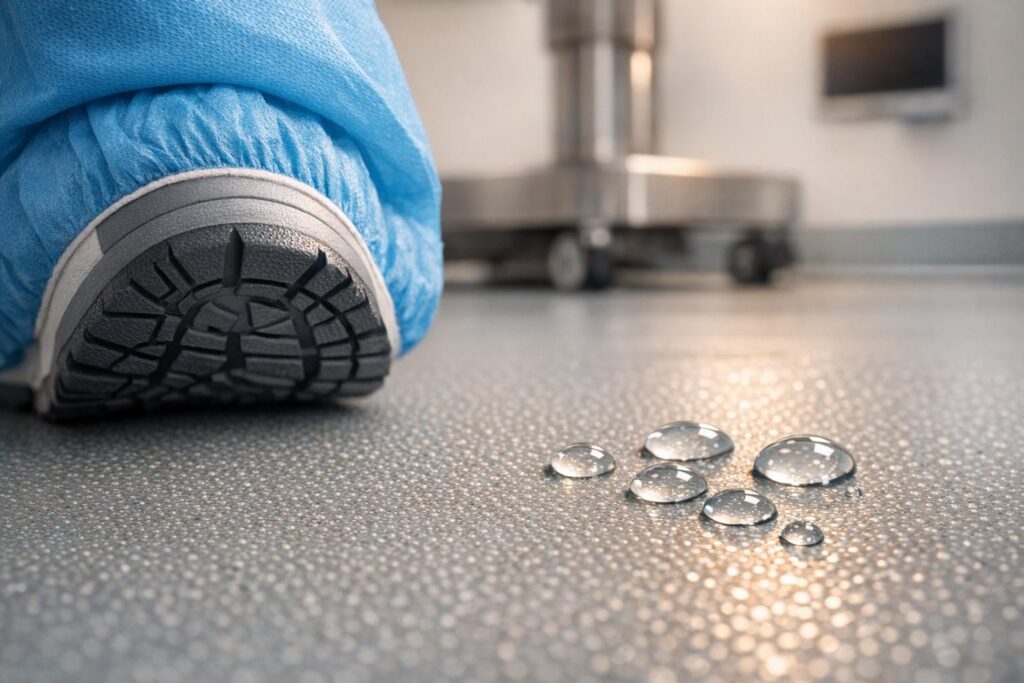
Operating rooms demand flooring that ensures safety, sterility, and durability under extreme conditions. Slip-resistant coatings address these needs by reducing falls, preventing bacterial growth, and withstanding heavy equipment and harsh cleaning agents. Unlike traditional flooring options, these coatings offer seamless, non-porous surfaces that enhance infection control and provide customizable traction for wet environments. With rapid installation times and long-lasting performance, they minimize downtime and maintenance costs.
Key Benefits of Slip-Resistant Coatings:
- Safety: Reduces slips, trips, and falls with tailored traction.
- Hygiene: Non-porous surfaces prevent bacterial buildup.
- Durability: Resists damage from heavy equipment and chemicals.
- Efficiency: Quick installation minimizes operating room downtime.
- Customization: Adjustable finishes for specific needs.
Polyurea-based coatings, like those from Atlas Concrete Coatings, are particularly effective, offering rapid curing, chemical resistance, and a lifetime warranty. These systems are designed to handle the unique challenges of operating rooms, ensuring safety and efficiency without compromising performance.
Flooring Hazards in Operating Rooms
Wet and Slippery Surfaces
Operating room floors frequently come into contact with fluids like blood, saline, disinfectants, and cleaning agents, making them slippery and hazardous. Water splashes from surgical scrub sinks often spread moisture across the floor, further increasing the risk of slips. This constant dampness creates an environment where mold, fungi, and bacteria can thrive, raising the likelihood of healthcare-associated infections. Slips, trips, and falls are no minor issue – they account for 15% of all accidental deaths, second only to motor vehicle accidents. Adding to the challenge, the high foot traffic and movement of equipment in these areas exacerbate the strain on operating room flooring.
High Foot Traffic and Heavy Equipment
The operating room is a hub of activity, with nurses walking an estimated 4–8 miles per shift. On top of that, heavy equipment such as surgical tables, anesthesia machines, and monitors are constantly in use, placing immense pressure on the floors. Hospital floors must endure static loads of up to 1,200 PSI without damage. However, poor installation can lead to detachment or cracks, which can harbor up to 140,000 bacteria cells. These physical stresses not only test the durability of flooring materials but also increase the chances of delays and infections, creating a dual challenge for hospital staff and patients alike.
Injury and Delay Risks
Flooring problems in operating rooms don’t just pose injury risks – they can also disrupt critical procedures and impact hospital finances. Slips, trips, and falls are the second leading cause of lost workdays, and in the high-stakes environment of an operating room, a fall can jeopardize staff safety and interrupt vital surgeries. Considering that operating rooms can account for up to 70% of a hospital’s total revenue, any downtime caused by flooring issues can have serious financial consequences. Additionally, hard flooring surfaces amplify noise from monitors and equipment, which can heighten stress levels and interfere with clear communication – both of which are crucial during surgical procedures.
Why Slip-Resistant Coatings Work for Operating Rooms
Safety and Sterility Combined
Operating rooms are high-risk environments where wet floors and constant activity can lead to accidents and contamination. Slip-resistant coatings address both concerns by creating a seamless, non-porous surface that enhances safety while maintaining sterility. These coatings eliminate areas where bacteria can hide, such as grout lines, and reduce the risk of slips. As Michelle from Westcoat notes:
"Seamless solutions eliminate problem areas like grout lines, while antimicrobial options take protection a step further."
The seamless design, including a watertight transition from floor to wall, plays a key role in preventing bacterial buildup in hard-to-clean corners. This is critical because even a tiny crack – just 0.1 mm wide and 1 cm deep – can harbor up to 140,000 bacteria cells. Considering that ingesting as few as 10 bacterial cells can cause illness, the importance of a monolithic surface becomes clear. Additionally, textured finishes or slip-resistant additives provide traction, even when floors are wet from surgical spills, saline, or constant cleaning. This combination of safety and sterility ensures these coatings meet the rigorous demands of operating rooms.
Durability and Chemical Resistance
Beyond safety, durability is a must in operating rooms. Slip-resistant coatings are designed to withstand chipping, gouging, and damage from harsh cleaning agents, ensuring that no pits or cracks form where contaminants could settle. These coatings are tough enough to handle dropped instruments and frequent cleaning cycles. Silikal emphasizes this point:
"The very act of cleaning means that the various contaminants are still going to remain imbedded in that flooring structure [if it is chipped or gouged]."
These coatings are resistant to strong disinfectants like hydrogen peroxide, maintaining their integrity without softening, cracking, or discoloring. Some antimicrobial epoxy options, such as EC-40, go a step further by actively combating bacteria, fungi, and algae that can cause odors and degrade the coating over time. This durability and resistance make them a reliable choice for maintaining the hygiene and functionality of operating rooms.
Resinous Flooring Experts Discuss Healthcare Flooring Solutions
sbb-itb-4b4bb37
Features and Benefits of Polyurea Slip-Resistant Coatings
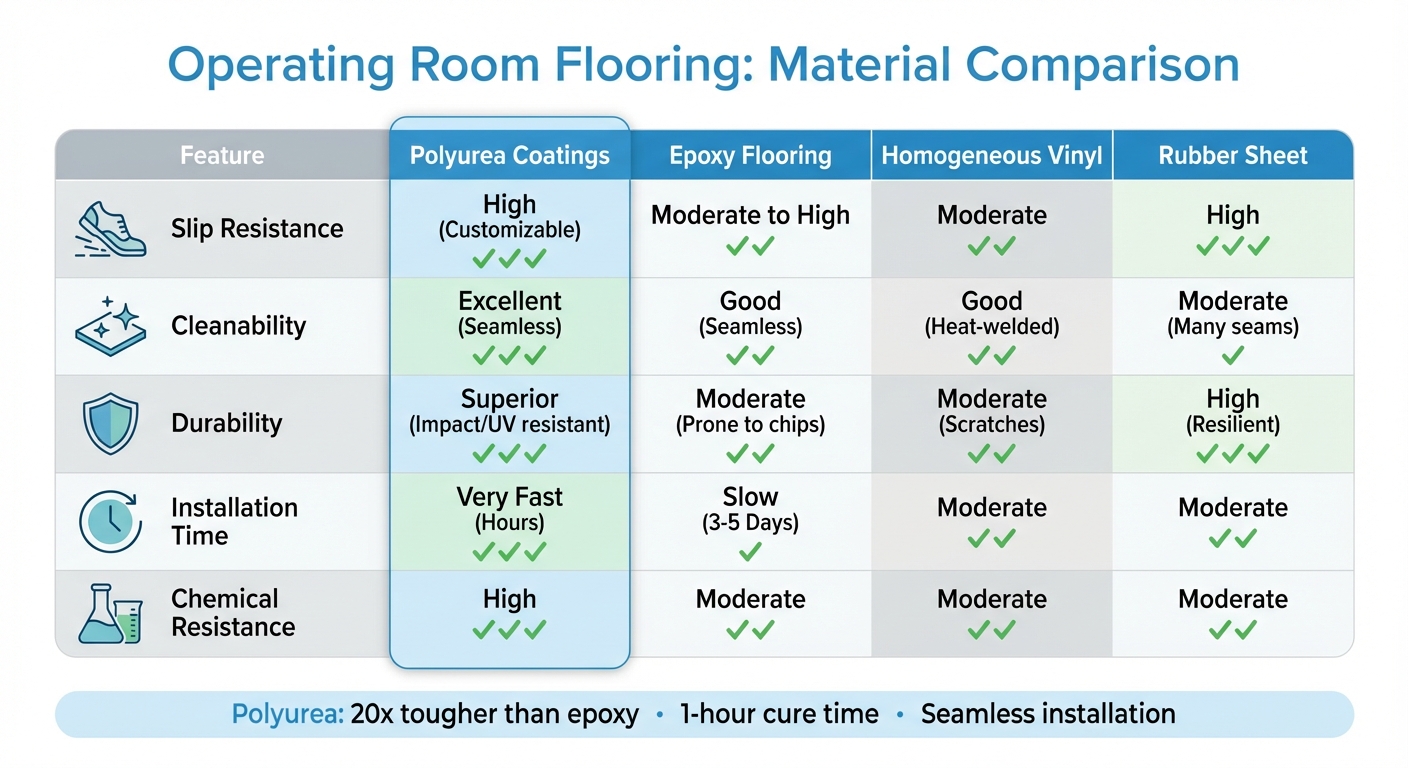
Polyurea vs Traditional Operating Room Flooring Comparison
When it comes to safety and durability, polyurea slip-resistant coatings bring a range of features that cater specifically to the high demands of operating rooms.
Customizable Slip Resistance
One standout feature of polyurea coatings is their ability to offer tailored traction. By incorporating specific additives or broadcast materials, these coatings can be adjusted to achieve precise slip-resistance ratings, such as R11 to R13. This customization doesn’t interfere with the smooth, non-porous surface that’s critical for maintaining a sterile environment. The result? Floors that provide a dependable grip – even when wet – while also supporting mobility. This balance helps reduce staff fatigue and ensures smooth movement of heavy medical equipment.
Quick Installation and Long-Term Performance
Polyurea coatings are known for their rapid curing time, which can have operating rooms back in service in as little as one hour. As Silikal America highlights:
"Silikal is first of all completely cured one hour after installation, thus the operating room will not have to be kept closed for longer."
Beyond speed, polyurea is incredibly durable. Industrial-grade polycuramine, for instance, is up to 20 times tougher than epoxy. These coatings are built to handle the challenges of operating rooms – whether it’s the impact of dropped surgical tools, the weight of heavy equipment, or exposure to harsh disinfectants. They resist peeling, chipping, and cracking, all while maintaining low levels of volatile organic compounds (VOCs). This means improved air quality during installation and less disruption to hospital operations, as there’s no need to shut down large areas due to fumes. These attributes make polyurea a clear upgrade over traditional flooring options.
Traditional Flooring vs. Polyurea Coatings
| Feature | Polyurea Coatings | Epoxy Flooring | Homogeneous Vinyl | Rubber Sheet |
|---|---|---|---|---|
| Slip Resistance | High (Customizable) | Moderate to High | Moderate | High |
| Cleanability | Excellent (Seamless) | Good (Seamless) | Good (Heat-welded) | Moderate (Many seams) |
| Durability | Superior (Impact/UV) | Moderate (Prone to chips) | Moderate (Scratches) | High (Resilient) |
| Installation Time | Very Fast (Hours) | Slow (Days) | Moderate | Moderate |
| Chemical Resistance | High | Moderate | Moderate | Moderate |
This table highlights why polyurea is increasingly the go-to choice for operating rooms. Unlike heat-welded vinyl or rubber sheets, polyurea creates a seamless surface. And while epoxy flooring has some advantages, its three- to five-day curing time is a major drawback for busy surgical environments. Though sheet flooring can be less expensive upfront, the long-term benefits of polyurea often outweigh the initial cost.
Atlas Concrete Coatings: Operating Room Flooring Solutions
Atlas Concrete Coatings delivers specialized flooring solutions built on the strength and reliability of polyurea technology, tailored for the unique demands of operating rooms.
Polyurea-Based Industrial Flooring
The polyurea flooring systems from Atlas Concrete Coatings are designed to handle the rigorous conditions of operating rooms. These floors can endure heavy rolling loads, dropped instruments, and constant stress without peeling or chipping – problems often seen with traditional coatings.
One of the standout features of these coatings is their resistance to chemicals. Operating rooms rely on strong disinfectants and sterilization agents like Betadine and bleach, which can quickly damage standard flooring materials. Atlas’s polyurea coatings not only resist these harsh substances but also create a seamless surface, aiding in infection control.
Customizable Styles and Finishes
Safety and aesthetics go hand in hand with Atlas Concrete Coatings. Their range of finishes includes options like multi-colored quartz aggregates and decorative flake blends. These finishes are available in satin or low-glare textures, which help reduce reflections and minimize eye strain for medical staff working in high-intensity environments.
The slip resistance of the flooring can also be customized to suit specific needs. Whether the space experiences high traffic or frequent spills, Atlas offers surface textures ranging from mild to aggressive profiles to ensure safety in any scenario.
Service Areas and Professional Installation
Operating in Pennsylvania and New Jersey, Atlas Concrete Coatings specializes in installing rapid-cure polyurea systems. These systems can have operating rooms – spaces that can generate up to $100,000 in daily revenue – back in service within just 48 hours.
The company provides free consultations and ensures quick installations that adhere to industry standards. Their polyurea systems come with a lifetime warranty and are customized specifically for healthcare settings, setting them apart from standard options on the market.
Conclusion
The flooring in operating rooms plays a crucial role in ensuring patient safety and supporting staff performance. Research highlights that even tiny cracks – just 0.1 mm wide – can lead to serious issues, including injuries and infections within hospitals.
To address these risks, a flooring solution that goes beyond traditional materials is essential. Polyurea coatings meet these demands by offering seamless, non-porous surfaces that prevent bacteria from settling and withstand the challenges of harsh disinfectants and heavy equipment. Additionally, these coatings can be tailored for slip resistance, minimizing the chance of falls during critical medical procedures.
Atlas Concrete Coatings specializes in polyurea systems for healthcare facilities in Pennsylvania and New Jersey, offering quick installation, customizable finishes, and the assurance of a lifetime warranty.
FAQs
How do slip-resistant coatings enhance safety in operating rooms?
Slip-resistant coatings are essential for improving safety in operating rooms. They provide strong traction, even in spaces where moisture, spills, or contaminants are common. This helps lower the risk of slips and falls, safeguarding both medical staff and patients from potential harm.
Built to endure the challenging conditions of operating rooms, these coatings are not only long-lasting but also maintain a polished, professional look. By enhancing floor safety, they support a more secure and effective healthcare setting.
Why are polyurea coatings more durable than traditional flooring materials?
Polyurea coatings are known for their durability, thanks to their ability to resist chemicals, UV exposure, and heavy impacts. This makes them a great choice for areas that experience heavy use, such as operating rooms. Plus, their flexible nature helps prevent cracking, ensuring they hold up well over time – even in tough conditions.
Can slip-resistant coatings be tailored to provide different levels of traction?
Yes, slip-resistant coatings can be customized to deliver the exact level of traction needed for specific environments, like operating rooms. By tweaking the texture or finish during the application process, these coatings can strike the perfect balance – offering reliable grip while preserving durability and ease of cleaning. This approach ensures a safer environment without sacrificing the polished, professional look that’s essential in such settings.