
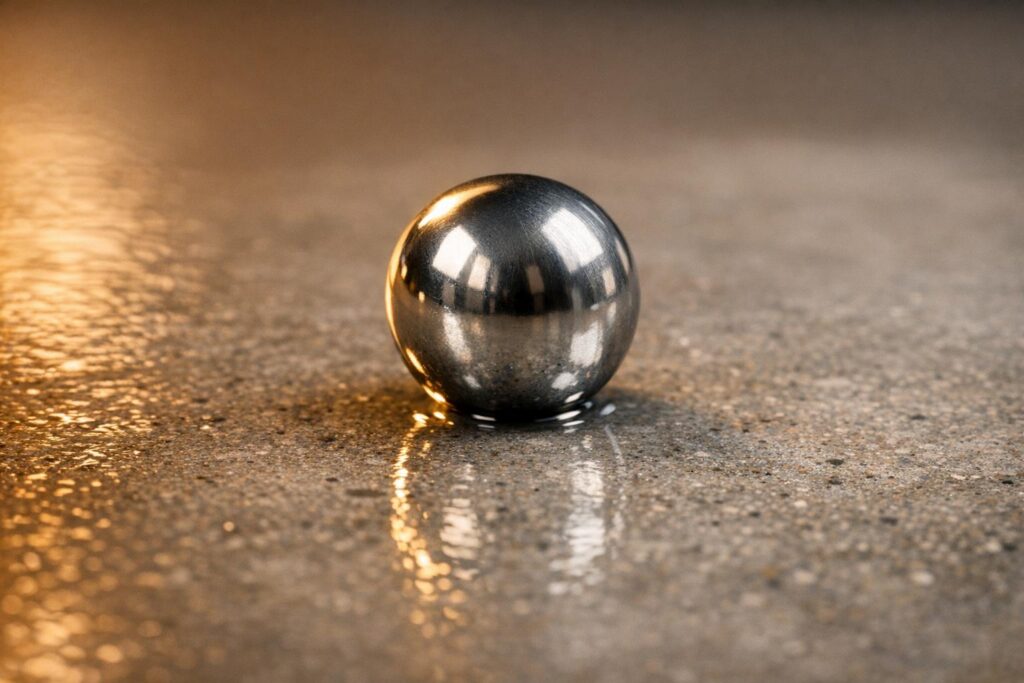
Polyurea coatings are a durable solution for protecting concrete floors from impact damage. These coatings are sprayed on, cure in just 2–4 hours, and can handle extreme temperatures (-40°F to 250°F). Their flexibility, tensile strength, and ability to stretch prevent cracks and chips, making them 2–4 times stronger than epoxy. Polyurea is widely used in residential garages, industrial warehouses, and outdoor spaces like pool decks due to its resistance to wear, chemicals, and UV exposure. Proper surface preparation and application are critical for achieving maximum performance.
Key takeaways:
- Quick curing: Ready for use in hours, reducing downtime.
- High durability: Absorbs and disperses impact to protect concrete.
- Versatile applications: Suitable for homes, industries, and outdoor areas.
- Temperature resilience: Performs well in extreme heat or cold.
Atlas Concrete Coatings offers professional polyurea solutions with a 15-year warranty for residential use, ensuring long-lasting protection for various settings.
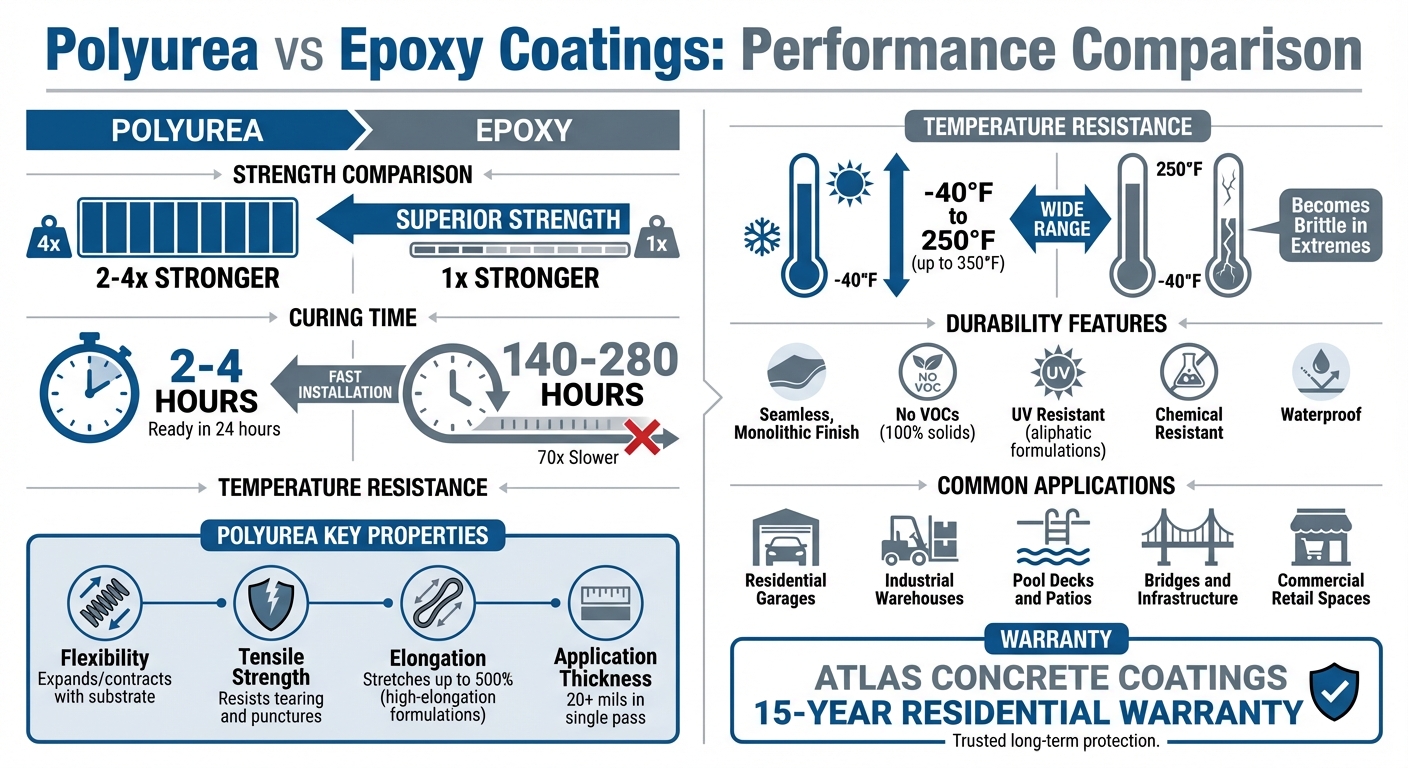
Polyurea vs Epoxy Coatings: Strength and Performance Comparison
The strength tests of Polyurea coating
How Polyurea Coatings Resist Impact Damage
Polyurea’s elastomeric, rubber-like properties are the secret to its ability to handle impact. When something heavy falls or equipment moves across its surface, the coating absorbs and disperses the energy, preventing the force from concentrating in one spot. This process reduces the risk of localized damage. Additionally, its seamless, monolithic finish eliminates weak points like joints and grout lines, which are typically where damage begins.
The coating itself is created through a reaction between isocyanate and a synthetic resin containing amines. This reaction forms urea linkages, resulting in a material that combines strength with flexibility. The ability of polyurea to stretch and return to its original form protects the structural integrity of the coated surface. These qualities are central to its performance, as outlined in the next section.
Key Properties of Polyurea Coatings
Polyurea’s capacity to resist impact comes down to three main properties:
- Flexibility: The coating can expand and contract along with the concrete substrate, whether it’s due to temperature changes or heavy loads, reducing the risk of cracking.
- Tensile strength: The chemical bonds between the isocyanate and resin make the coating resistant to tearing and punctures.
- Elongation: Polyurea can stretch to cover cracks and adapt to substrate movement, maintaining a continuous protective seal.
"Polyurea coatings are revolutionizing the protective coatings industry with their superior performance characteristics and versatile applications. This advanced technology offers unparalleled durability, flexibility, and rapid curing times." – American Polyurea
Thermal stability is another critical factor. Unlike traditional coatings that can become brittle in extreme cold or degrade in high heat, polyurea holds up across a wide temperature range – from -40°F to 350°F. This means it won’t crack under thermal shock or lose its protective qualities when exposed to freezing conditions or hot equipment. These features make polyurea a reliable choice for a range of demanding environments.
Where Impact-Resistant Polyurea Coatings Are Used
Thanks to its durability and flexibility, polyurea finds use in a variety of applications.
In residential garages, it protects against damage from dropped tools, car jacks, and heavy storage items.
Industrial warehouses and factories depend on polyurea to handle the wear and tear from heavy machinery, forklift traffic, and dropped equipment. On pool decks and patios, it resists impact from furniture, planters, and foot traffic while maintaining UV stability to prevent yellowing over time.
For infrastructure projects like bridges, pipelines, and water tanks, polyurea offers a combination of impact resistance, waterproofing, and protection against corrosion. Retail stores and commercial spaces also turn to polyurea for high-traffic areas, where it withstands constant foot traffic and equipment movement without deteriorating like unprotected concrete would.
Impact Resistance Testing and Standards
Common Impact Resistance Tests
ASTM C722-18 is the leading U.S. standard for evaluating chemical-resistant monolithic floor coatings applied over concrete. This standard includes testing urethane-based systems, such as polyurea, to assess their resistance to cracking, delamination, or other damage caused by impact. These tests are essential for confirming how well polyurea systems perform under stress and their ability to withstand impact-related challenges.
How Polyurea Performs in Testing
Polyurea’s elastomeric qualities give it a unique edge in these tests. It can absorb and disperse impact energy effectively, proving to be 2 to 3 times stronger than traditional epoxy floors – and sometimes even up to four times stronger. Its performance remains consistent across a wide temperature range, from -40°F to 250°F, ensuring it resists delamination during thermal cycling. When applied at thicknesses exceeding 20 mils in a single pass, polyurea forms a durable impact barrier, delivering outstanding results even under the most rigorous testing conditions.
sbb-itb-4b4bb37
Benefits of Polyurea Coatings for Concrete Floors
Durability in High-Impact Environments
Polyurea coatings are built to withstand demanding conditions, making them a top choice for floors in high-traffic, high-impact environments. These coatings are four times stronger than epoxy, which is why they are widely used in warehouses, manufacturing facilities, and commercial garages where heavy equipment and tools are the norm.
What sets polyurea apart is its flexibility. While traditional epoxy coatings are prone to cracking under repeated stress, polyurea adapts to movement and bonds deeply with the concrete surface. This flexibility allows it to handle thermal expansion and contraction across a range of temperatures without peeling or losing its protective qualities.
Another standout feature is its quick curing time. Polyurea hardens 70 times faster than epoxy, meaning floors can be ready for use in as little as 24 hours. This rapid turnaround minimizes downtime, making it a practical solution for businesses seeking uninterrupted operations.
Customizable Solutions for Different Spaces
Polyurea coatings aren’t one-size-fits-all – they can be adjusted to meet the needs of different environments. For example:
- Industrial settings: Formulations with Shore D hardness ratings of 60–90 handle heavy machinery and forklift traffic with ease.
- Vibration-prone areas: High-elongation formulations, capable of stretching up to 500%, prevent cracking under constant movement.
- Residential garages: Decorative vinyl chips can be added for slip-resistant, visually appealing finishes.
- Outdoor areas: Aliphatic polyurea formulations resist UV damage, ensuring surfaces like pool decks don’t yellow over time.
Additionally, polyurea is made with 100% solids and contains no VOCs, making it safe for use in enclosed spaces. Its resistance to petroleum-based chemicals and automotive fluids ensures protection against spills and leaks, further extending the lifespan of the flooring.
Atlas Concrete Coatings leverages these customizable features to tailor solutions for every project, ensuring the right balance of durability, safety, and style.
Atlas Concrete Coatings‘ Polyurea Solutions
The benefits of polyurea translate into practical, long-lasting solutions for a variety of applications. Atlas Concrete Coatings specializes in professional-grade polyurea systems, serving residential, commercial, and industrial clients across Pennsylvania and New Jersey. Their certified installation teams emphasize proper surface preparation, which is key to achieving the deep adhesion that makes polyurea coatings a permanent fixture.
For residential projects, Atlas Concrete Coatings offers a 15-year warranty on their polyurea-based chip floor systems, underscoring their confidence in the product’s durability. These systems combine impact resistance with customizable aesthetics, while specialized options – like pool deck resurfacing or industrial flooring – address specific challenges. Pricing is based on square footage and includes all aspects of the project, from preparation to materials and professional labor, ensuring a seamless experience for clients seeking tailored flooring solutions.
Factors That Affect Polyurea Impact Performance
Substrate Preparation and Coating Thickness
The foundation of impact resistance lies in how well the substrate is prepared. Proper preparation ensures strong adhesion and long-lasting durability. Without it, even the best polyurea coatings can fail under stress.
Start by removing all contaminants like dirt, dust, grease, and oil from the substrate. These substances prevent proper bonding and can lead to cracks or delamination when the coating faces repeated impacts. Before mechanical profiling of concrete or metal surfaces, chemical cleaning is essential to eliminate residues.
Moisture is another critical factor. Concrete must be completely dry before applying polyurea. Applying the coating to damp surfaces can lead to shrinkage or craze cracking, and the natural expansion and contraction of concrete can cause fractures if the bond is weak.
"The best way to prevent polyurea coatings from cracking is to prepare them carefully before application and properly cure afterward." – Tyler Gleckler, Chemist, ArmorThane
Thickness matters too. Applying polyurea at the correct thickness ensures durability over time, but this only works if the substrate is prepped according to the manufacturer’s guidelines.
Environmental conditions during and after application also play a key role in maintaining the coating’s impact resistance.
Environmental Factors and Maintenance
Beyond the coating’s inherent resistance, external factors significantly influence its performance. For instance, temperature swings exceeding 40°F (22°C) can make polyurea coatings brittle if not applied properly. This is especially relevant in environments like warehouses or outdoor areas that experience extreme seasonal temperature changes.
For outdoor applications, aliphatic polyurea is the better choice over aromatic types, as it resists yellowing and fading caused by UV exposure.
Adhering to manufacturer-recommended drying and curing times is equally important. Polyurea reacts quickly – often within 60 seconds or less – so rushing the process can compromise its integrity. As noted by an expert:
"Proper maintenance is key in ensuring the lifetime of any protective coating; regular inspections should be made for signs of damage or deterioration." – ArmorThane
To achieve maximum impact resistance, controlling environmental conditions during installation and following up with regular inspections is essential.
Conclusion: Why Choose Polyurea Coatings for Impact Resistance
Polyurea coatings offer outstanding impact resistance for concrete floors in residential, commercial, and industrial settings. Their combination of strength and flexibility allows them to absorb heavy impacts without cracking or peeling, making them perfect for high-traffic areas where durability is key.
These coatings are also incredibly practical, ready for use within just 24 hours. They penetrate deeply into the concrete’s pores, creating a permanent bond.
"The base coat penetrates open pores in the concrete and adheres deeply, becoming a permanent part of the floor." – Atlas Concrete Coatings
Atlas Concrete Coatings takes this a step further by using certified professionals trained by Penntek to guarantee precise installation and strong adhesion. Their polyurea systems are backed by a 15-year warranty for residential use and can withstand extreme temperatures ranging from -40°F to 250°F. Whether you’re looking for a slip-resistant garage floor, a rugged industrial workspace, or a UV-protected outdoor deck, their solutions are built with long-term performance in mind.
FAQs
How does polyurea perform compared to epoxy when it comes to impact resistance?
Polyurea tends to handle impact better than epoxy, thanks to its flexible and durable properties. Its elastomeric design allows it to absorb impacts efficiently, making it a solid choice for concrete floors in areas with heavy foot traffic or industrial use where frequent impacts occur.
On the other hand, epoxy is more rigid and can crack under repeated impacts, particularly in settings with significant temperature changes. This makes polyurea a sturdier option for ensuring long-lasting performance and minimizing surface damage in tough environments.
Why is surface preparation important for applying polyurea coatings?
Surface preparation is the backbone of a successful polyurea coating application. It ensures the coating bonds effectively to the surface, delivering durability and long-term performance. Neglecting this step can result in problems like peeling, blistering, or delamination, often caused by contaminants, moisture, or an uneven surface.
The process involves several key steps: thorough cleaning to remove dirt, oil, and debris, repairing cracks and damage, and mechanically profiling the surface to create the right texture for the coating to adhere. Skipping any of these steps can lead to expensive repairs down the line and a reduced lifespan for the coating.
When done correctly, surface preparation allows polyurea coatings to handle heavy use and maintain their integrity for 15–20 years, even in the toughest conditions.
Can polyurea coatings be tailored for specific environments?
Polyurea coatings offer impressive flexibility to meet a wide range of needs and environments. They can be specially designed for impact resistance, chemical resistance, UV stability, and even slip resistance. This makes them a great choice for diverse settings, from pool decks and garage floors to industrial areas, whether indoors or outdoors. For outdoor applications, specific formulations ensure that the coating maintains its color and gloss even after prolonged UV exposure.
To improve traction in wet or heavily used areas, textured finishes can be created using materials like silica sand or aluminum oxide. Thanks to their fast curing time and excellent adhesion, polyurea coatings deliver durable, customized solutions that reduce downtime while addressing the specific requirements of each environment.