

Keeping your polyurea-coated garage floor clean requires the right tools and techniques to avoid damage and maintain its durability. Here’s a quick guide to the essentials:
- Soft-Bristled Broom: Sweeps away debris without scratching the surface.
- Microfiber Mop: Ideal for wet cleaning with a pH-neutral cleaner like diluted Dawn or Simple Green.
- Soft-Bristle Brush: Tackles stubborn spots like tire marks gently.
- Pressure Washer or Garden Hose: Rinses off soap and grime; use low pressure to avoid damage.
- Non-Abrasive Sponges: Perfect for spot cleaning spills or tight corners.
Stick to mild, pH-neutral cleaners and avoid harsh chemicals like bleach or vinegar. Quick action on spills, using absorbent materials like kitty litter, prevents stains and keeps the floor looking great. Regular sweeping and weekly mopping are key to preserving the floor’s appearance and protective coating.
How to Maintain your Polyaspartic Garage Floor
sbb-itb-4b4bb37
Must-Have Tools for Cleaning Polyurea Garage Floors
Using the right tools is key to maintaining your polyurea garage floor’s sleek finish without causing damage. Soft materials are a must – abrasive tools can scratch the surface and compromise the protective seal. Here’s a breakdown of the tools you’ll need.
Soft-Bristled Broom
A soft-bristled broom is perfect for sweeping away grit, sand, and other debris that could scratch your floor. These tiny particles act like sandpaper, dulling the finish over time. Aim to sweep at least once a week, or more often if your garage sees heavy use. If you prefer vacuuming, use a hard floor attachment to avoid damage.
After sweeping, follow up with a microfiber mop for a polished, streak-free result.
Microfiber Mop
For weekly wet cleaning, a microfiber mop is your go-to tool. Its flat head and replaceable pads glide effortlessly across the floor, picking up fine dust and grime instead of just pushing it around. Pair it with a pH-neutral cleaner like diluted Dawn dish soap or Simple Green mixed with warm water to maintain the floor’s pristine appearance.
"Choose one [microfiber mop] with a flat head and replaceable pads to glide smoothly without scratching the surface." – George Apap
Soft-Bristle Brush
Sometimes, you’ll encounter tough spots like dried mud or tire marks that need extra care. A deck brush with nylon bristles is ideal for these situations, especially when used with a mild detergent. Avoid wire brushes, steel wool, or stiff-bristled tools, as they can scratch or permanently damage the floor’s glossy coating.
Pressure Washer or Garden Hose
Rinsing is an essential step to remove any leftover soap that could leave streaks or create a slippery surface. A garden hose works well for regular rinsing, while a pressure washer can handle deeper cleaning tasks. If using a pressure washer, keep it on a low-pressure setting and maintain a safe distance from the floor, especially around edges or seams, to avoid damaging the coating.
After rinsing, use a squeegee to direct water toward the drain, then dry the surface completely with towels or a fan to prevent water spots.
Non-Abrasive Sponges
For small spills or tight corners, non-abrasive sponges – like white or red nylon scrub pads – are a great option. They provide gentle scrubbing power without scratching the surface. Keep a few handy for quick cleanups between regular cleaning sessions.
With these tools in hand, you’ll have everything you need for both daily maintenance and more thorough weekly cleaning, ensuring your polyurea floor stays in top condition. The next section will cover the best cleaning products to pair with these tools.
Best Cleaning Products for Polyurea Floors
Using the right cleaning products is crucial for maintaining the durability and appearance of your polyurea floor. Harsh chemicals can damage the coating over time, so it’s important to stick with gentle, pH-neutral cleaners that protect the surface.
pH-Neutral Cleaners
For everyday cleaning, warm water mixed with a mild detergent like Dawn dish soap or diluted Simple Green works wonders for removing dirt and grime without harming the finish.
"Dawn dish soap is a great, readily available option. Diluted Simple Green also works well. Avoid cleaners with harsh acids, citrus, or abrasives." – Garage Flooring LLC
If you’re dealing with more stubborn stains, Trisodium Phosphate (TSP) diluted in water can handle tough grime. Apply it sparingly using a soft-bristle brush for spot cleaning. However, avoid bleach, ammonia, citrus-based cleaners, and vinegar, as these can damage or discolor the coating. Similarly, oil-based cleaners and waxes should be skipped – they leave a slippery residue that attracts dirt.
To maintain the floor’s integrity, clean spills promptly to prevent stains or surface damage.
Absorbent Materials for Spills
When oil, grease, or automotive fluids spill on your floor, quick action is key. For larger spills, spread kitty litter or sawdust to soak up liquids before sweeping them away. For smaller drips, blot the area immediately with paper towels or cotton rags to stop the spill from spreading.
"For big spills, kitty litter or sawdust can come in handy. As soon as you notice a spill, apply those absorbent materials over it to soak up the liquids." – Garage Force
If the spill involves acidic substances like battery acid or antifreeze, neutralize the area using a paste made from baking soda and water. Rinse thoroughly afterward to ensure no residue remains.
Once the spill is cleaned, finish by wiping the surface to restore its shine.
Microfiber Cloths
Microfiber cloths are perfect for completing the cleaning process. After rinsing, they help eliminate water and residue, leaving your floor streak-free and polished. These cloths are also ideal for quick touch-ups, whether dampened with a mild detergent or used dry to prevent water spots. Their soft texture won’t scratch the surface, and they’re excellent at trapping fine dust and debris, making them a go-to for maintaining a spotless finish between deep cleans.
Choosing Tools for Daily and Weekly Maintenance
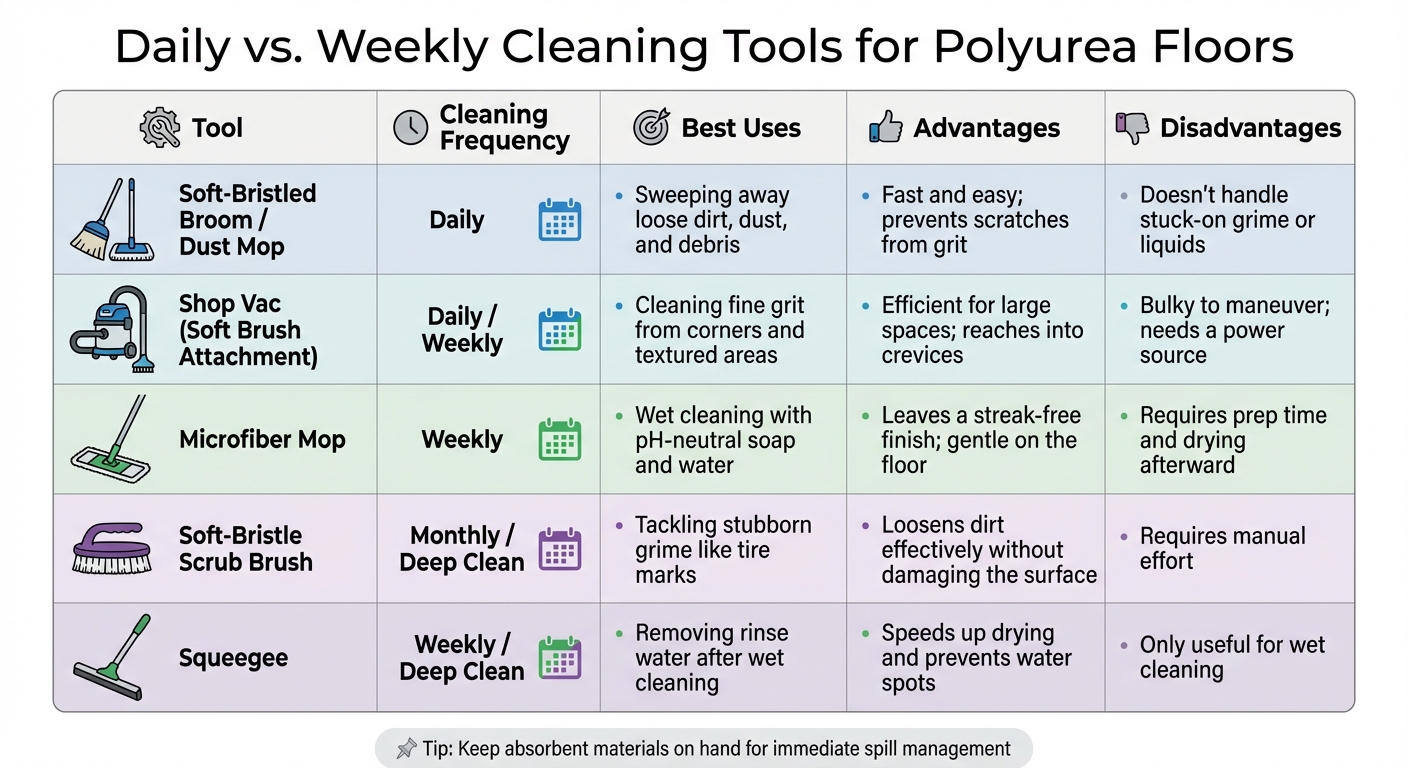
Daily vs Weekly Polyurea Floor Cleaning Tools Comparison Chart
To keep your polyurea floor in top shape, it’s important to choose the right tools for your cleaning routine. Daily maintenance is all about clearing away grit and debris that can act like sandpaper on the surface. For this, stick to dry cleaning tools such as soft-bristled brooms, dust mops, or shop vacuums equipped with soft brush attachments.
Your cleaning approach should align with how heavily your garage is used.
For weekly cleaning, you’ll need a microfiber mop combined with a pH-neutral cleaner to tackle oils, dirt, and grime. For tougher spots, like tire marks or dried mud, a soft-bristle scrub brush works wonders. After wet cleaning, a squeegee is helpful for removing excess water to prevent streaks or water spots.
"A clean concrete floor doesn’t just look better – it lasts longer." – George Apap
If your garage experiences heavy use – think frequent vehicle traffic, DIY projects, or lots of foot traffic – aim to sweep or vacuum daily. For less active spaces, a few times a week might be enough. Regardless of use, weekly mopping is essential to preserve the floor’s appearance and protective coating.
Daily vs. Weekly Tools Comparison
Here’s a quick breakdown of how different tools fit into daily and weekly cleaning routines:
| Tool | Cleaning Frequency | Best Uses | Advantages | Disadvantages |
|---|---|---|---|---|
| Soft-Bristled Broom / Dust Mop | Daily | Sweeping away loose dirt, dust, and debris. | Fast and easy; prevents scratches from grit. | Doesn’t handle stuck-on grime or liquids. |
| Shop Vac (Soft Brush Attachment) | Daily / Weekly | Cleaning fine grit from corners and textured areas. | Efficient for large spaces; reaches into crevices. | Bulky to maneuver; needs a power source. |
| Microfiber Mop | Weekly | Wet cleaning with pH-neutral soap and water. | Leaves a streak-free finish; gentle on the floor. | Requires prep time and drying afterward. |
| Soft-Bristle Scrub Brush | Monthly / Deep Clean | Tackling stubborn grime like tire marks. | Loosens dirt effectively without damaging the surface. | Requires manual effort. |
| Squeegee | Weekly / Deep Clean | Removing rinse water after wet cleaning. | Speeds up drying and prevents water spots. | Only useful for wet cleaning. |
It’s also smart to keep absorbent materials on hand to handle spills right away, ensuring your floor stays protected.
Maintenance Tips for Atlas Concrete Coatings Floors

Atlas Concrete Coatings’ polyurea floors are known for their durability and quick installation. Keeping them in top shape is straightforward with regular care. By following these maintenance tips, you can ensure your floor stays in excellent condition for years to come.
Routine Cleaning Guidelines
Daily upkeep goes a long way in protecting your Atlas floor from unnecessary wear and tear. Removing debris regularly is key to preventing scratches on the surface.
"An ounce of prevention is worth a pound of cure! … Sweeping away dirt, dust, and debris with a soft-bristled broom or a microfiber mop will prevent them from scratching the surface as you walk around." – Brian Deas, Owner, Deas Garage Floors
For weekly cleaning, mop the floor using a pH-neutral cleaner to maintain its shine. Be sure to rinse thoroughly afterward and dry the surface with a squeegee or towel to avoid water spots.
"Maintaining your new floor doesn’t require harsh chemicals or labor-intensive routines… A neutral pH cleaner and warm water are usually all you need for general maintenance." – George Apap, George Apap Painting
Stay away from harsh chemicals like bleach, citrus-based cleaners, or strong acids, as they can damage the polyurea coating. Even though Atlas’s polyurea floors are resistant to chemicals, sticking to pH-neutral solutions ensures better long-term results. Additionally, avoid dragging heavy tools, furniture, or bikes across the floor. Instead, lift these items or use protective mats to prevent scratches or scuffs.
Besides routine cleaning, addressing spills quickly is just as important for maintaining the floor’s finish.
Spill Management Best Practices
While polyurea coatings are resistant to spills, certain substances – like battery acid or brake fluid – can dull the surface if left unattended. For small spills, blot the area immediately with paper towels or a clean rag. For larger spills, use kitty litter or sawdust to absorb the liquid before cleaning.
When handling hazardous spills, always wear gloves and eye protection. If battery acid is involved, neutralize it with a baking soda and water paste before rinsing. After cleaning any spill, rinse the area thoroughly with fresh water and dry it with a towel or squeegee to prevent water spots or residue buildup.
Conclusion
Taking care of your polyurea garage floor is simple when you have the right tools on hand. Essentials like soft-bristled brooms, microfiber mops, pH-neutral cleaners, and non-abrasive sponges help protect your floor’s appearance and strength. By sticking to proper cleaning methods, you can avoid scratches, chemical damage, and unnecessary wear.
Polyurea floors from Atlas Concrete Coatings make maintenance even easier. Their seamless, smooth surface eliminates dirt-trapping cracks and pits, while their excellent resistance to oils and fuels ensures long-lasting performance. Plus, the flexibility of these floors helps them withstand temperature changes without cracking. With this thoughtful design and regular care, your garage floor will stay clean and durable for years.
FAQs
What mop is safest for polyurea floors?
The best way to clean polyurea floors is by using a microfiber mop dampened with warm water and a mild, pH-neutral cleaner. This method protects the floor’s durability and finish while avoiding any potential damage.
Can I use a pressure washer on polyurea?
Yes, you can use a pressure washer on polyurea-coated floors, but it’s important to do it the right way. Stick to a low-pressure setting and keep the nozzle at a safe distance to prevent any damage or weakening of the coating. Handle the equipment cautiously to maintain the floor’s strength and keep it looking its best.
How do I remove tire marks without scratching?
To get rid of tire marks on a polyurea or epoxy garage floor without causing damage, start by applying a non-filming detergent such as SunKleen, 409, or Fantastic directly to the affected area. Allow the detergent to soak in for a few minutes to loosen the marks. Then, gently scrub the spot with a soft-bristle brush to avoid scratching the floor. Once scrubbed, rinse the area thoroughly using a high-pressure nozzle. If needed, repeat the process until the marks are completely gone. Using the right tools and cleaners ensures the floor stays protected while being cleaned effectively.