
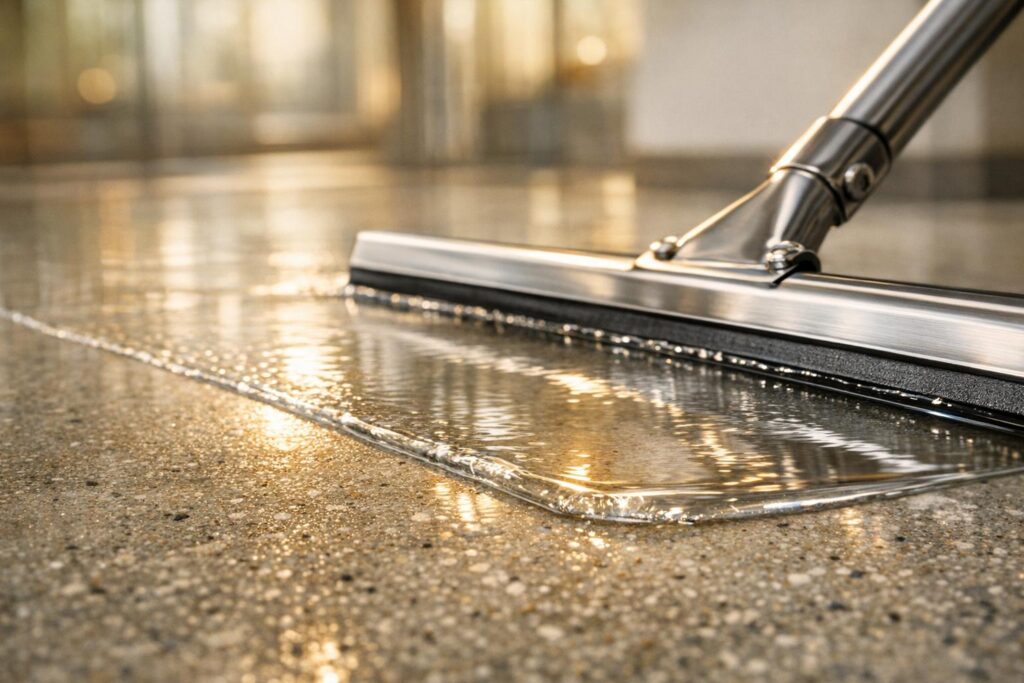
UV-resistant coatings are essential for protecting commercial flooring from sunlight damage, which can cause fading, cracking, and material degradation. These coatings form a protective barrier that absorbs and deflects harmful UV rays, extending the lifespan of floors and reducing long-term maintenance costs. Here’s a quick overview of what you need to know:
- Why It Matters: UV exposure weakens flooring, causing discoloration, cracks, and brittleness, especially in high-traffic areas like retail stores and office lobbies.
- Signs of UV Damage: Yellowing, chalking, dullness, cracks, and uneven fading ("shadowing") are common indicators.
- Best Coating Options:
- Polyurea: Fast-curing, durable, and highly resistant to UV and temperature changes.
- Polyaspartic: UV-stable, chemical-resistant, and ideal for frequent cleaning.
- UV-Enhanced Epoxy: Cost-effective for moderate sunlight exposure.
- Polyurethane Topcoats: Adds durability and UV protection when used as a finishing layer.
- Benefits: Longer floor lifespan, reduced maintenance costs, and better appearance over time.
- Installation Steps: Includes surface preparation, applying multiple layers, and proper curing.
- Maintenance Tips: Regular cleaning, timely repairs, and reapplication as needed ensure long-term performance.
Choosing the right coating and professional installation are key to protecting your floors from UV damage while maintaining their durability and visual appeal.
Polyurea vs. Epoxy – This Changed Everything for Garage Floors
sbb-itb-4b4bb37
How UV Rays Damage Commercial Flooring
UV radiation gradually breaks down floor coatings and the materials underneath them, often going unnoticed until serious damage occurs. Tom Dassie from CustomCrete puts it plainly:
"The invisible rays from the sun and even indoor electric lighting can break down your floor coatings, leaving them faded and degraded with use."
This damage typically starts with loss of color and gloss, resulting in dull patches or yellowing, particularly in epoxy coatings. As the coating deteriorates further, it exposes flaws in the flooring beneath, making the surface look neglected even with regular maintenance. Over time, the molecular structure of the materials breaks down, causing them to become brittle and lose tensile strength, which increases the risk of cracking under normal use.
Another telltale sign is "shadowing" – uneven fading caused by objects that block UV rays from reaching certain areas of the floor. This creates stark contrasts between protected and exposed sections. Left unchecked, this uneven wear can lead to the need for full floor replacement rather than minor repairs. These chemical changes often show up as visible signs, which are outlined below.
Signs of UV Damage
Spotting UV damage early can prevent costly replacements. One of the most common signs is yellowing near windows, especially with epoxy coatings that undergo a chemical reaction known as "ambering". Another indicator is chalking, which appears as a powdery residue on the surface.
You might also notice dull or uneven areas where the original shine has faded, cracks forming in areas that were previously smooth, and a brittle texture where the flooring should still have some flexibility. These issues often show up first in high-exposure areas like entryways or near large windows.
Why Commercial Spaces Face Higher UV Exposure
Commercial buildings are particularly vulnerable to UV damage due to their design. Features like large windows, glass storefronts, and open loading docks allow sunlight to flood interior spaces for extended periods. Retail showrooms with big display windows often create "greenhouse" effects, speeding up pigment fading and coating damage.
But it’s not just sunlight. Indoor electric lighting can also emit UV radiation, contributing to the wear and tear of floor coatings over time. This means commercial floors face UV exposure even at night or in areas without windows. In colder regions, snow reflects UV rays, amplifying their impact and accelerating damage even during winter months. Recognizing these risks is critical for choosing the right protective measures, especially in high-traffic zones like reception areas, entryways, and loading docks, where maintaining floor durability is crucial.
Types of UV-Resistant Coatings for Commercial Use
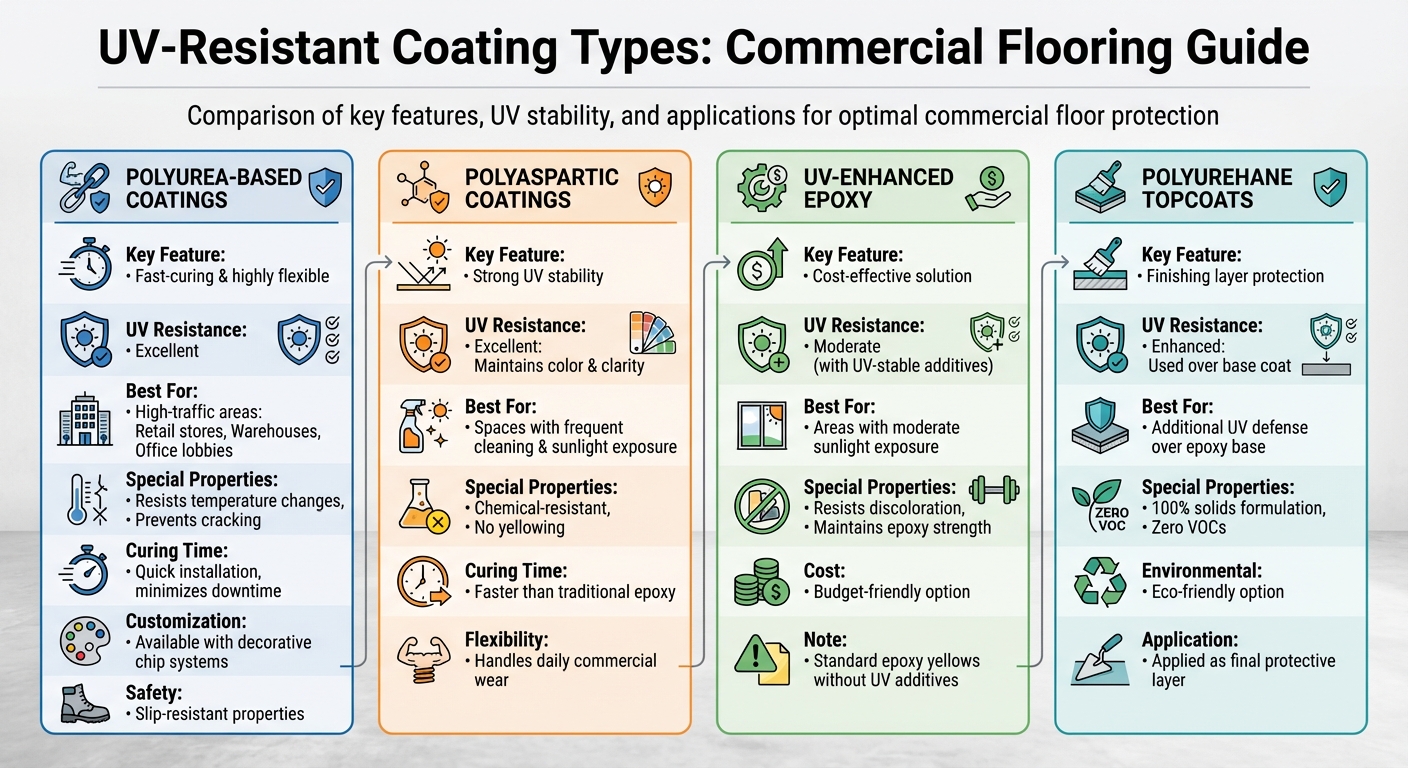
UV-Resistant Coating Types Comparison for Commercial Flooring
When it comes to protecting commercial spaces from UV damage, selecting the right coating is crucial. Factors like foot traffic, sunlight exposure, and maintenance costs all play a role in the decision-making process. Below is a breakdown of some of the most effective UV-resistant coatings available for commercial applications.
Polyurea-Based Coatings
Polyurea coatings are known for their excellent UV resistance and quick installation, which helps minimize downtime. Thanks to their fast-curing properties and flexibility, they’re a great fit for high-traffic areas like retail stores, warehouses, and office lobbies. These coatings are also highly resistant to cracking caused by temperature changes. Companies like Atlas Concrete Coatings specialize in polyurea-based chip floor coatings, which not only provide UV protection but also offer customizable designs – perfect for businesses that prioritize both durability and aesthetics.
Polyaspartic Coatings
Polyaspartic coatings deliver strong UV stability and are resistant to chemicals, making them ideal for spaces exposed to sunlight and frequent cleaning. They maintain their color and clarity over time and cure faster than traditional epoxy coatings, reducing disruptions to business operations. Their flexibility allows them to handle the wear and tear of daily commercial use without yellowing. For businesses seeking a balance of affordability and moderate UV protection, UV-enhanced epoxy options can also be considered.
Epoxy with UV-Stable Additives
Standard epoxy coatings tend to yellow or amber under prolonged UV exposure, but formulations with UV-stable additives significantly improve their performance. These enhanced epoxies are well-suited for commercial areas with moderate sunlight exposure, offering the strength and cost-effectiveness of traditional epoxy while resisting discoloration. This makes them a practical choice for spaces near windows or other sunlit areas.
Polyurethane Topcoats
Polyurethane topcoats are often applied as a finishing layer to enhance UV resistance and overall floor durability. They can be formulated as 100% solids, which means they contain no volatile organic compounds (VOCs), making them an environmentally friendly option for commercial use. When used over an epoxy base coat, polyurethane topcoats provide an added layer of protection, extending the lifespan of the floor by shielding it from direct sunlight and wear. This combination is especially useful in spaces requiring both structural strength and enhanced UV defense.
Benefits of UV-Resistant Coatings in Commercial Spaces
In busy commercial environments, UV-resistant coatings play a key role in preserving both the durability and appearance of flooring.
Longer Floor Lifespan
Constant UV exposure can cause colors to fade and flooring materials to weaken over time. UV-resistant coatings act as a protective barrier, preventing brittleness and cracking. This added protection helps extend the life of your floors, cutting down on the need for frequent and expensive renovations.
Better Appearance Over Time
Floors coated with UV-resistant materials retain their vibrant finish while standing up to abrasions, scratches, and wear. A polished and well-maintained floor not only enhances the space but also reflects positively on your brand, leaving a strong impression on customers. Plus, these coatings make routine maintenance easier, keeping your floors looking fresh with less effort.
Lower Long-Term Costs
While UV-resistant coatings involve an initial investment, they can lead to significant savings over time. By reducing the need for frequent repairs and prolonging the life of your flooring, they help lower overall maintenance costs. For instance, a protective UV layer can cost less than $10 per 1,000 units, offering an affordable way to achieve long-term benefits. Regular inspections – ideally twice a year – can also help identify wear early, minimizing repair expenses even further.
For businesses looking to balance durability with aesthetics, Atlas Concrete Coatings provides customized UV-resistant flooring solutions designed to improve performance and reduce maintenance costs. Choosing the right coating can make all the difference in ensuring your floors stand the test of time.
Installation Process for UV-Resistant Coatings
Getting UV-resistant coatings installed correctly is key to making the most of their protective qualities. The process involves three main steps that demand precision and the right tools.
Surface Preparation and Cleaning
Begin with a thorough visual inspection to spot cracks, chips, or other damage that needs fixing. Once these issues are addressed, use a pressure washer and a water-chlorine solution to clean the surface. This step is crucial for removing dirt, oil, and any contaminants that could interfere with the coating’s adhesion.
After washing, allow the surface to dry completely for at least 12 hours. Moisture trapped beneath the coating is one of the leading causes of adhesion failure, so double-check that the surface is bone dry before proceeding. Fill any remaining cracks with patching compound, then apply a primer coat. Use a one-inch nap roller, a paintbrush, or an airless sprayer with a minimum output of one gallon per minute and a .021 tip for this step.
Application Methods
UV-resistant coatings are typically applied in multiple layers, including a primer, a first coat, and a second coat. To ensure even coverage, apply each layer in a perpendicular "checkerboard" pattern. For instance, if you roll the primer north to south, apply the next coat east to west. The primer should be applied at a thickness of 12-16 mils when wet, which dries to 4-7 mils.
If you’re using tape to reinforce seams or cracks, press it into the wet primer within 15 minutes of application, before the primer begins to dry. For UV-curable coatings, the process involves photoinitiators in the liquid resin reacting to UV light, which triggers an instant hardening process called polymerization.
Once all layers are applied, proper curing is essential to achieve the desired performance.
Curing and Quality Check
After applying the layers, ensure the coating cures as required. UV coatings harden within seconds to a few minutes under UV light exposure, typically at wavelengths between 365 nm and 405 nm. However, areas where UV light doesn’t reach – like corners or shadowed spots – require additional curing methods. In these cases, a moisture-cure process is used, which generally takes 24 to 72 hours to fully harden.
Once the final coat has cured, divide the floor into 1,000 ft² sections and use a dry film gauge to confirm the thickness meets specifications. The target dry film thickness for a complete multi-coat system is usually around 20 mils. To identify any gaps or pinholes, UV tracers can be a helpful tool.
Maintenance Tips for UV-Resistant Coatings
To keep your UV-resistant coating performing at its best, regular maintenance is key. While these coatings are designed to be low-maintenance, a consistent care routine ensures they continue protecting your commercial floors effectively for years.
Regular Cleaning Practices
Keeping the surface clean helps maintain the coating’s ability to reflect UV radiation. Dirt, leaves, and debris not only dull the surface but can also trap moisture, leading to potential adhesion issues. Use a soft-bristle mop or broom alongside mild detergent and warm water for cleaning. Avoid abrasive tools and harsh chemicals, as they can damage the coating. For high-traffic areas, consider placing walkway pads at entrances to minimize scratches. Scheduling professional inspections twice a year – ideally after winter and summer – can help identify early problems like cracks or brittleness before they escalate into costly repairs. Regular cleaning and inspections create a solid foundation for timely upkeep and reapplication when needed.
Addressing Minor Damage
Small scratches or cracks can quickly escalate if left unattended. As soon as you notice damage, clean the area thoroughly and use UV-resistant repair materials, such as elastomeric coatings or fibrated aluminum, to restore the surface. Be sure to match the repair material with your existing system for consistent performance. It’s always a good idea to consult licensed contractors and check your warranty guidelines before proceeding with repairs. Prompt fixes help maintain the coating’s effectiveness until the next scheduled reapplication.
When to Reapply Coatings
The reapplication schedule largely depends on the intensity of UV exposure and the level of foot traffic in your space. Look out for signs like fading, chalking, or reduced gloss, as these indicate the coating’s UV protection is wearing down. High-traffic areas or spaces exposed to intense sunlight may require more frequent reapplications, while coatings in moderate-use areas might last longer. Always consult the manufacturer’s recommendations and keep detailed maintenance records to determine the best reapplication interval for your specific needs.
Selecting the Right UV-Resistant Coating for Your Space
Now that we’ve covered the benefits and maintenance of UV-resistant coatings, it’s time to focus on selecting the best option for your specific needs. The right choice depends on factors like foot traffic, UV exposure, budget, and design preferences. For instance, a retail showroom with moderate traffic and large windows has very different needs compared to a warehouse loading dock exposed to constant sunlight and heavy equipment. Below, we’ll explore key coating properties, highlight why polyurea stands out, and discuss the value of professional installation.
Comparing Coating Properties
When evaluating UV-resistant coatings, it’s essential to consider how they perform in several key areas:
- Durability: High-traffic areas demand coatings that can withstand heavy loads without losing their integrity.
- UV Resistance: Some coatings maintain their color and gloss longer under intense sunlight, which is critical for spaces with significant UV exposure.
- Chemical Resistance: If your space involves frequent spills or strong cleaning agents, a coating with strong chemical resistance is a must.
- Customization: Many coatings offer options to match specific color schemes or achieve particular finishes to meet aesthetic goals.
UV coatings are also solvent-free and emit zero VOCs, making them a great choice for maintaining indoor air quality in occupied commercial spaces. Additionally, their rapid curing process – activated instantly by ultraviolet light – means treated surfaces can be used right away. This quick turnaround minimizes downtime, which is a big advantage for businesses.
Advantages of Polyurea Coatings
Polyurea coatings are a standout option, offering unmatched speed and durability. These coatings cure quickly, allowing floors to be back in use within 24 hours. They also provide excellent UV resistance, ensuring long-term protection against fading or degradation. Their flexibility prevents cracking, even in environments with significant temperature changes.
Beyond durability, polyurea coatings are highly customizable. Decorative chip systems can be added to enhance both the strength and appearance of the surface. Additionally, their slip-resistant properties improve safety in busy areas, and the seamless application eliminates joints where moisture or dirt could seep in.
Working with Professional Installers
Choosing the right coating is just the first step – proper installation is crucial to ensure it performs as expected. Professional installers, like Atlas Concrete Coatings, specialize in polyurea-based systems tailored to commercial spaces. They assess factors like substrate condition, traffic levels, and UV exposure to recommend the most effective solution for your needs.
Atlas Concrete Coatings offers free consultations and estimates, making it easy to explore your options without commitment. Plus, their lifetime warranty on chip systems reflects their confidence in the durability of their work, giving you peace of mind for years to come. Investing in professional installation ensures your flooring meets both functional and aesthetic expectations, all while standing up to the demands of your space.
Conclusion
Protecting your commercial flooring is a smart way to safeguard your investment and avoid expensive repairs. UV radiation can seriously damage flooring by causing issues like cracking, chalking, and a decline in tensile strength. Applying the right coating not only extends the lifespan of your floors but also ensures they maintain a polished, professional look.
When selecting a UV-resistant coating, it’s important to consider the unique needs of your space. Think about factors like the amount of foot traffic, the intensity of UV exposure, and your budget. Polyurea-based coatings stand out for their fast curing times, outstanding durability, and excellent UV resistance. These qualities make them especially useful in commercial spaces where downtime must be kept to a minimum.
Professional installation plays a key role in ensuring your floor’s long-term performance. Skilled installers evaluate how materials perform under UV exposure, identify potential weak spots, and establish maintenance practices to keep the floor’s protective properties intact. Experts in the field agree that investing in UV-resistant materials upfront can significantly cut down on repair needs, reduce energy costs, and extend the overall service life of your flooring.
Atlas Concrete Coatings offers polyurea-based systems tailored for commercial spaces dealing with UV challenges. With a lifetime warranty on their chip systems and free consultations, they make it easy to explore the best options for your space. By choosing quality materials, relying on expert installation, and keeping up with routine maintenance, your commercial flooring can endure years of UV exposure while staying functional and visually appealing. Reach out to Atlas Concrete Coatings today for expert advice and durable floor protection.
FAQs
How do I know which UV-resistant coating is best for my space?
To pick the right UV-resistant coating, think about the type of surface you’re working with and the environmental factors it will face. Aliphatic polyurea coatings are an excellent choice for outdoor spaces. They offer strong UV resistance, maintain their color over time, and hold up well even in tough weather or areas with high moisture. This makes them perfect for places like pool decks or industrial floors. While other options might suit specific needs, polyurea is hard to beat when it comes to long-lasting performance.
Will UV-resistant coatings stop epoxy floors from yellowing near windows?
UV-resistant coatings, such as aliphatic polyurea, are effective at minimizing the yellowing of epoxy floors exposed to sunlight, particularly near windows. These coatings act as a shield against UV damage. However, it’s important to note that while they can significantly delay the process, they may not entirely stop the epoxy base coat beneath from yellowing as time passes.
How long will a UV-resistant floor coating last before it needs reapplication?
With regular upkeep, a UV-resistant floor coating such as polyurea can hold up for over five years before needing a reapplication. Even after 5,000 hours of UV exposure, it maintains more than 90% of its gloss, preserving both its durability and appearance over time.