
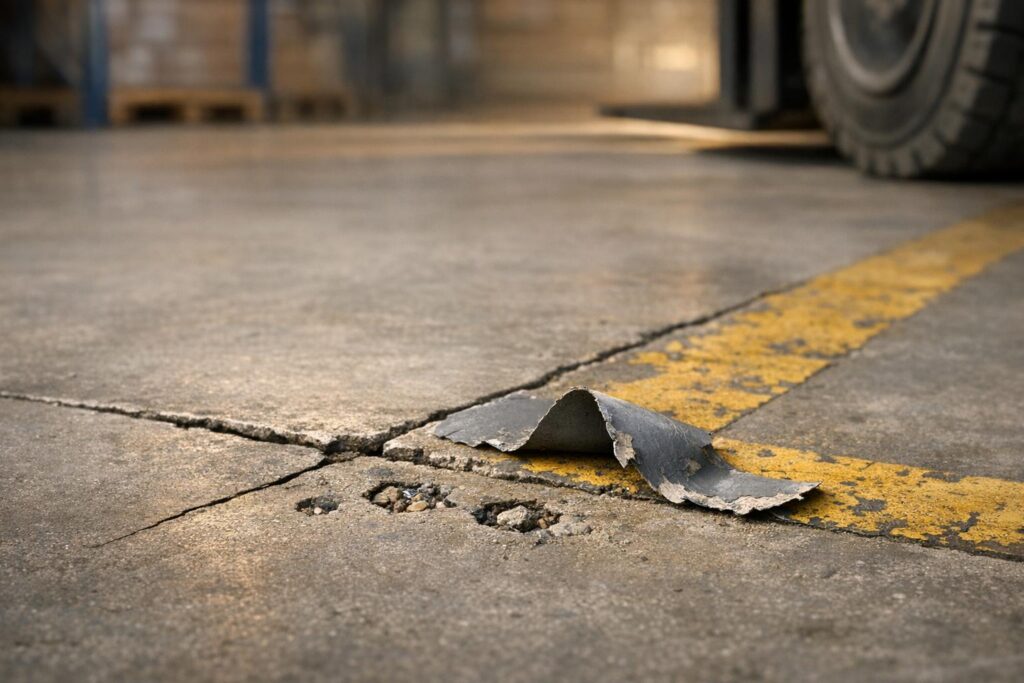
Your warehouse floor is the backbone of daily operations, and ignoring damage can lead to safety hazards, equipment wear, and costly repairs. Cracks, uneven surfaces, and peeling coatings are common warning signs that your floor needs attention. These issues can cause trip hazards, unstable loads, and even forklift damage. Moisture, chemicals, and heavy traffic worsen the problem over time.
Here’s what to watch for:
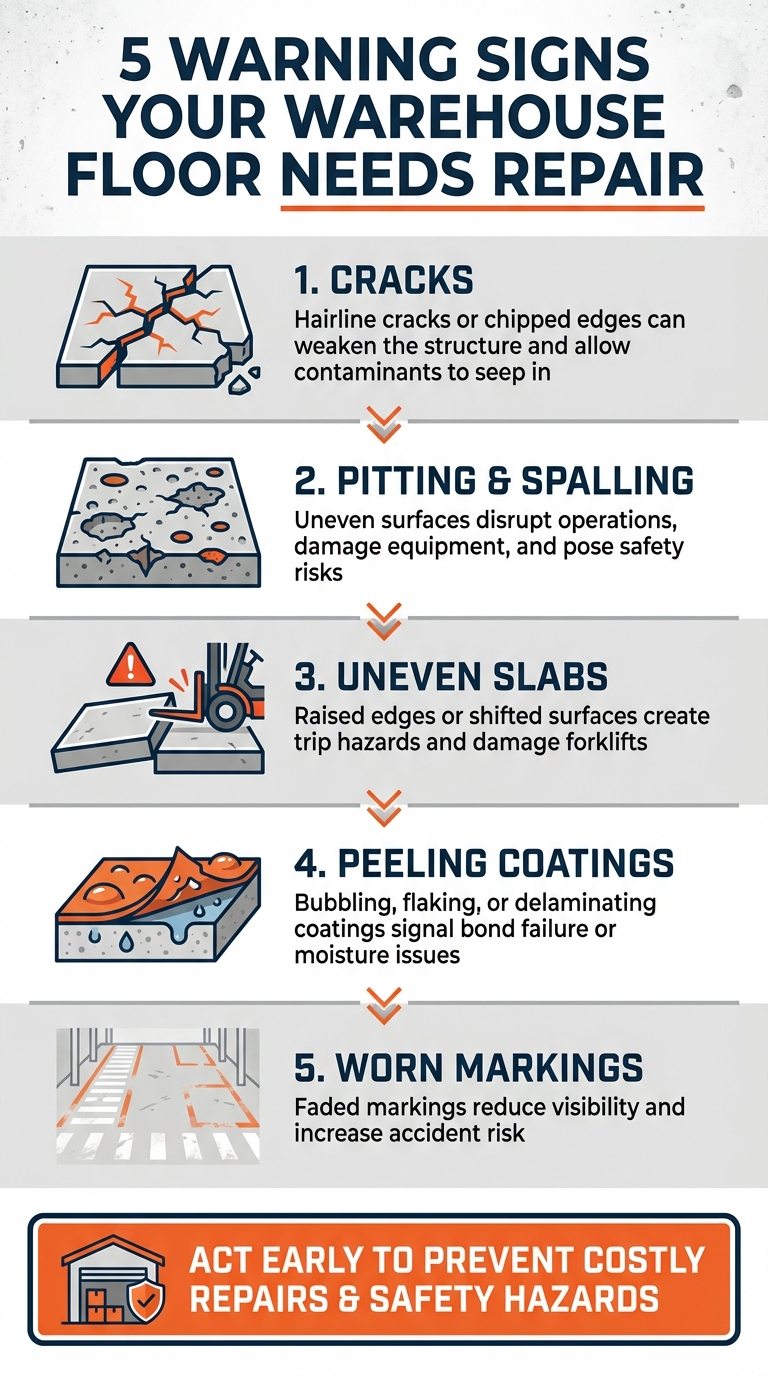
- Cracks: Hairline cracks or chipped edges can weaken the structure.
- Pitting and spalling: Uneven surfaces disrupt operations and damage equipment.
- Uneven slabs: Trip hazards and damage to forklifts often arise from shifted surfaces.
- Peeling coatings: Bubbling or flaking coatings signal bond failure or moisture issues.
- Worn markings: Faded floor markings reduce visibility and increase accident risk.
Acting early prevents small issues from escalating. Regular cleaning, inspections, and sealing cracks can extend the floor’s lifespan. For severe damage like delamination or structural cracks, professional repairs are essential. Specialists can resurface or replace floors using durable coatings that withstand heavy use. Don’t let neglect cost you – stay proactive to protect workers, equipment, and your budget.
5 Warning Signs Your Warehouse Floor Needs Repair
Warehouse Floor Repairs: Restoring Safety and Strength
sbb-itb-4b4bb37
Checklist: Signs Your Warehouse Floor Needs Repair
Keeping an eye on your warehouse floor is essential for spotting early warning signs of damage. Here’s a checklist of what to look for during your inspections.
Start with visible cracks and damage. Hairline cracks spreading from control joints or chipped edges are often the first signs of stress. These cracks may allow contaminants to seep into the concrete, weakening its structure over time. Catching these issues early can save you from costly structural repairs and ensure the safety of your operations.
Watch out for pitting and spalling. Pitting creates an uneven surface that can destabilize loads and pose risks to equipment safety. Spalling, which occurs when larger chunks of concrete flake off, is often caused by freeze-thaw cycles or worn-out sealants. Addressing these issues quickly can prevent damage to machinery and stop surface problems from turning into expensive repairs.
Look for uneven surfaces and trip hazards. Raised edges or shifted slabs are not just trip hazards – they can also damage equipment. Peeling, bubbling, or delaminating coatings are another warning sign, often caused by improper surface preparation or trapped moisture during installation. These issues can lead to "dusting", where fine concrete particles make cleaning difficult and signal that the floor is deteriorating. Acting early protects both workers and machinery while keeping repair costs down.
Don’t overlook floor markings. Faded or damaged markings reduce visibility, increasing the risk of accidents and operational inefficiencies. Clear, well-maintained markings are crucial for directing traffic safely and preventing workplace incidents that could lead to downtime or liability expenses.
When to Consult a Professional for Repairs
Some flooring issues are too serious to handle on your own and require the expertise of professionals. For example, if your floors are so uneven that forklift operators experience back pain or goods start sliding off skids, it’s a clear sign that immediate action is needed. These problems don’t just affect comfort – they can also reduce productivity and compromise safety over time.
Delamination and structural cracks are red flags. If your floor coating is peeling, bubbling, or flaking, it often points to bond failure between the concrete and the coating. This is typically caused by moisture problems or inadequate surface preparation. Large cracks or widespread damage can allow moisture, oils, and chemicals to seep into the concrete, which may weaken the structure. Simply reapplying a coating won’t address the root cause, making professional repairs essential in these cases.
Another serious issue is persistent dusting or chemical staining, which signals that the coating’s protective layer has broken down. If cleaning doesn’t get rid of dust or stains, it’s likely time to call in experts. Specialists, like those at Atlas Concrete Coatings, can evaluate whether your floor needs resurfacing – such as grinding and resealing – or if a complete replacement is necessary. Their use of polyurea-based industrial flooring ensures fast installation and long-lasting durability, reducing downtime while protecting your floors from heavy machinery and chemical exposure.
Professional repairs don’t just restore functionality – they also improve safety. By eliminating trip hazards and reducing the chance of accidents like tipped loads, you can protect both your workers and your equipment. Experts may use techniques like epoxy injection to repair cracks and apply high-performance coatings that can withstand extreme conditions, from heavy industrial use to temperature fluctuations. These solutions help maintain a safe and efficient working environment.
Preventive Maintenance Tips for Warehouse Floors
Keeping your warehouse floor in top condition doesn’t have to mean expensive repairs. A proactive maintenance routine can go a long way in preserving its integrity and functionality.
Regular Cleaning and Inspections
Daily cleaning with pH-neutral cleaners is your first line of defense against damage. Use well-wrung mops and carefully manage pressure washer flow to avoid water seeping into cracks, which can lead to moisture problems, mildew, or even structural weakening.
Debris like dirt and grit acts like sandpaper under forklift wheels, slowly eroding floor coatings. Regularly sweep or vacuum with industrial equipment to remove these particles. For spills, quick action is key – set up cleaning stations equipped with mops, buckets, and pH-neutral cleaners near busy areas so your team can handle them immediately.
Seasonal inspections are particularly important during periods of temperature fluctuation, as thermal expansion and contraction can cause cracks to form. Watch for signs like fine white powder (efflorescence), which indicates a breakdown in the protective coating. This might mean it’s time to apply a new layer. Also, ensure proper drainage by keeping slopes and drains clear – standing water is a common culprit behind moisture-related damage.
By catching small problems early, you can avoid bigger, more expensive repairs and minimize downtime.
Seal Cracks and Repair Damage Early
Small cracks can quickly become big problems if ignored. Use a flexible sealant to fill minor cracks as soon as you notice them, and don’t forget to renew joint sealants when needed. These small fixes can help maintain the floor’s integrity and save you from costly replacements down the road.
Reapply Coatings and Markings as Needed
Protective coatings are essential for preventing liquids from seeping into the concrete. However, these coatings wear down over time. For example, polished concrete floors typically require professional re-sealing every 2 to 3 years, depending on the level of traffic. In industrial settings, where heavy machinery and chemicals are common, polyurea-based coatings – offered by companies like Atlas Concrete Coatings – are a durable and quick-install option.
Floor markings also fade with frequent use, especially in high-traffic zones. Refresh these markings periodically to maintain safety and ensure clear traffic flow. Before reapplying coatings or markings, address any underlying moisture or surface issues to avoid recurring problems like delamination.
Conclusion
Your warehouse floor is the backbone of your operations. Ignoring damage doesn’t just affect its appearance – it can lead to faster equipment wear, create safety hazards, and drive up repair expenses.
"No matter what kind of coated concrete flooring you have, when the concrete coating starts to deteriorate, it can have ripple effects throughout your operations… damaging equipment, creating safety hazards, and ultimately leading to costly repairs if left unaddressed".
The silver lining? Acting early can save you a lot of money. Addressing a small crack or refreshing a worn coating is far less expensive than replacing the entire floor. Quick action prevents moisture and chemicals from seeping in and weakening the concrete. Keeping an eye on cracks, pitting, and peeling coatings, as outlined in our checklist, ensures you can act before the damage worsens. This approach not only extends the life of your floor but also highlights when it’s time to call in the experts.
Expert repairs are key to long-lasting results. Proper surface preparation, the right materials, and an accurate diagnosis mean repairs can stand up to heavy forklift traffic and chemical exposure. Atlas Concrete Coatings specializes in industrial flooring solutions, offering durable polyurea-based coatings built to handle these tough conditions.
Don’t let small issues snowball into costly problems. Regular inspections, timely repairs, and high-quality coatings will keep your warehouse floor safe, efficient, and built to last.
FAQs
Are floor cracks dangerous?
Cracks in floors can pose risks depending on their size, depth, and how they form. They might indicate deeper structural issues or deteriorate over time if left unchecked. Neglecting these cracks could result in safety hazards and more extensive damage to the flooring.
When should I call a pro?
If your warehouse floor is showing serious problems like large cracks, peeling or delaminating coatings, uneven spots, or areas of wear that compromise safety or usability, it’s time to call in a professional. These issues signal the need for expert evaluation and repairs to maintain the floor’s strength and ensure a safe working environment.
Which coating lasts longest?
Epoxy coatings are known for their resilience, especially in warehouse environments. They provide a tough, chemical-resistant surface capable of enduring heavy traffic for extended periods. While alternatives like urethane cement or polyurea-based coatings also offer durability, factors such as proper installation, regular maintenance, and surrounding conditions play a critical role in determining how long any coating will last.