
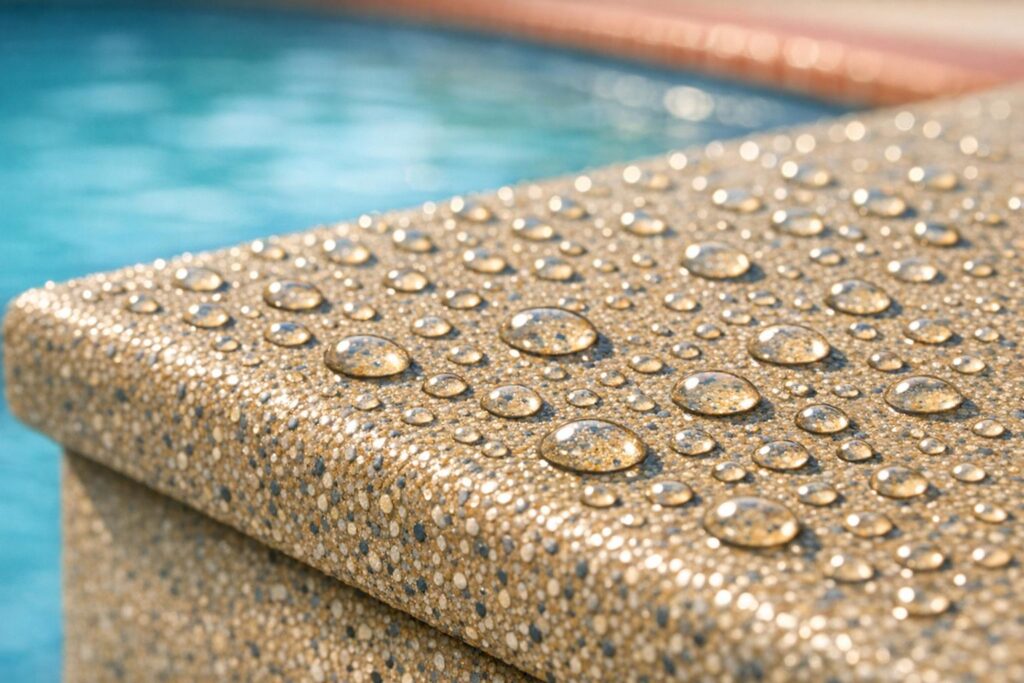
Slippery outdoor surfaces can quickly become hazardous, especially in areas like pool decks or patios. Wet conditions contribute to over 20% of slip-related injuries, and choosing the right coating is critical to prevent accidents. Two common options are polyurea and epoxy, but they perform very differently under outdoor conditions.
Here’s the key takeaway: UV-resistant polyurea outperforms epoxy in safety, durability, and long-term reliability for outdoor and wet environments. Polyurea maintains slip resistance for up to 20 years, resists UV damage, and requires minimal upkeep, while epoxy degrades quickly under sunlight, losing both its strength and safety features.
Quick Facts:
- Polyurea: Long-lasting (20–30 years), UV-stable, slip-resistant (wet COF ≥ 0.6), and withstands harsh weather.
- Epoxy: More affordable but prone to UV damage, yellowing, and reduced traction within 1–3 years outdoors.
For safer, low-maintenance surfaces in high-traffic or outdoor areas, polyurea is the better investment. Let’s dive into the details.
UV-Resistant Polyurea vs Epoxy: Safety, Durability & Cost Comparison
Is Epoxy And Polyaspartic Slippery?
sbb-itb-4b4bb37
Safety and Slip Resistance: Polyurea vs. Epoxy
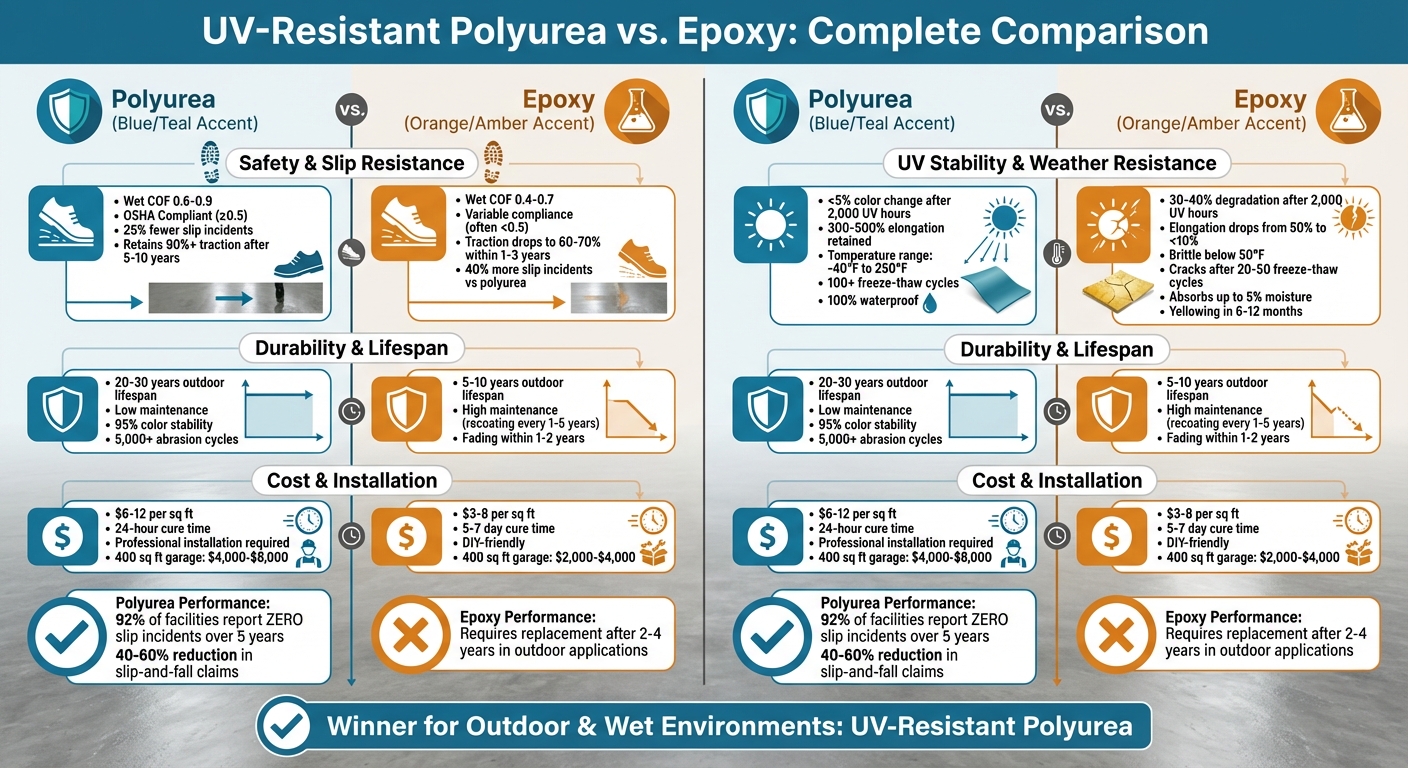
Slippery surfaces are a major safety concern, especially in outdoor areas. This is where the coefficient of friction (COF) plays a key role – it measures how much traction a surface provides when wet. OSHA guidelines, referencing ANSI A1264.2 and ASTM F1677, set the minimum wet static COF for pedestrian areas at 0.5. Polyurea coatings, especially with textured finishes, consistently meet or exceed this standard, often achieving a COF of 0.7 or higher. In contrast, epoxy coatings often struggle under wet conditions, particularly after extended exposure to outdoor elements. This difference becomes even more apparent when considering long-term durability.
One reason polyurea outperforms epoxy is its flexibility. It allows slip-resistant aggregates like silica sand or aluminum oxide to adhere more effectively. Epoxy, being more rigid, tends to lose its textured surface over time, especially as UV exposure causes degradation.
| Coating Type | Wet COF (Textured) | Texture Options | Long-Term Wet Traction | OSHA Compliance |
|---|---|---|---|---|
| Polyurea | 0.6–0.9 | Silica sand, aluminum oxide, flakes | Excellent (UV stable) | Consistently ≥ 0.5 |
| Epoxy | 0.4–0.7 | Silica sand, quartz | Fair (degrades outdoors) | Variable, often < 0.5 |
Over time, polyurea coatings maintain their slip resistance for 5–10 years or more in outdoor wet areas. Even in high-traffic zones, they retain over 90% of their original traction, despite prolonged UV exposure. On the other hand, epoxy coatings typically lose effectiveness within 1–3 years, with their traction dropping to 60–70% as the surface yellows, powders, and cracks. A 2023 study highlighted this difference, showing 25% fewer slip incidents in wet industrial settings with polyurea floors, based on OSHA incident records.
For applications like pool decks or garage floors, polyurea’s elastomeric properties make a noticeable difference. According to Atlas Concrete Coatings, polyurea’s 200% elongation capacity helps it hold onto texture aggregates better under wear and tear. Epoxy, with its brittleness, is more prone to chipping, which can create slippery spots. In practical testing, a commercial garage coated with polyurea saw a 40% drop in slip incidents compared to one coated with epoxy. These results highlight polyurea’s ability to deliver safer, more reliable traction in wet, high-traffic environments.
UV Stability and Durability: Polyurea vs. Epoxy
When it comes to outdoor coatings, UV stability and durability are just as important as slip resistance. Here’s where polyurea and epoxy really differ.
The main distinction lies in how they handle UV exposure. Polyurea, thanks to its aliphatic structure, naturally resists UV degradation without needing additives. On the other hand, epoxy’s aromatic structure breaks down under sunlight, leading to yellowing, chalking, and fading within 6–12 months of outdoor use. In ASTM G154 accelerated weathering tests, polyurea showed less than 5% color change after 2,000 hours, while epoxy experienced a significant 30–40% degradation.
UV exposure also impacts their flexibility. Epoxy suffers from photo-oxidation, which weakens its polymer chains and makes it less flexible. After 1,000 hours of UV exposure, epoxy’s elongation at break dropped from 50% to under 10%. In contrast, polyurea retained its impressive flexibility, with 300–500% elongation even after 2,000+ hours. This flexibility helps polyurea resist cracking and maintain traction, which is essential for safety over time.
When it comes to weather resistance, polyurea is built to endure. It handles extreme temperatures ranging from -40°F to 250°F, is 100% waterproof, and survives over 100 freeze-thaw cycles without cracking. Epoxy, however, absorbs up to 5% moisture, becomes brittle below 50°F, and starts cracking after only 20–50 freeze-thaw cycles.
| Aspect | Polyurea | Epoxy |
|---|---|---|
| Lifespan (Outdoor) | 20–30 years | 5–10 years |
| UV Resistance | Excellent (no yellowing or fading) | Poor (yellowing in 6–12 months) |
| Weather Resistance | High (withstands -40°F to 250°F, 100% waterproof, survives 100+ freeze-thaw cycles) | Moderate (absorbs moisture, becomes brittle below 50°F, cracks after 20–50 freeze-thaw cycles) |
| Maintenance | Low (occasional cleaning is sufficient) | High (requires recoating every 1–5 years) |
Real-world examples highlight these differences. On Florida pool decks, polyurea coatings resisted fading and cracking even after 7 years of intense UV and saltwater exposure. Meanwhile, nearby epoxy-coated surfaces began to crack and peel within just 2 years. Similarly, industrial warehouse floors with skylights showed polyurea lasting 12 years without issues, compared to epoxy failing after only 4 years.
For outdoor use, the choice is clear. Polyurea delivers a long-lasting solution with a lifespan of 20–30 years and minimal maintenance, while epoxy often requires recoating every 5–10 years due to UV damage.
Atlas Concrete Coatings relies on UV-resistant polyurea to protect outdoor surfaces like pool decks and industrial sites, ensuring they remain durable and visually appealing even under harsh sunlight.
Where UV-Resistant Polyurea Works Best
UV-resistant polyurea shines in outdoor and wet areas where sunlight, moisture, and heavy foot traffic pose safety challenges. Take pool decks, for example. These surfaces endure constant UV exposure, water splashes, and barefoot traffic. Polyurea’s slip-resistant texture achieves a friction coefficient above 0.6, while its light-colored formulas reflect 30–40% more solar heat. This keeps surfaces 20–30°F cooler – around 120°F instead of 150°F – under direct sunlight. This temperature difference makes walking barefoot more comfortable and reduces the risk of burns, a clear advantage over untreated concrete. But pool decks aren’t the only spaces that benefit.
Patios and outdoor living spaces also thrive with polyurea’s UV stability. These areas often face harsh weather conditions, yet polyurea resists the color fading and chalking that epoxy coatings typically experience. It can handle over 5,000 abrasion cycles in Taber testing and retains 95% of its color stability after 2,000 hours of UV exposure. A case study from California demonstrated this durability: over five years and more than 1,000 rain events, a commercial patio coated with polyurea maintained 98% of its color and slip resistance. In contrast, nearby epoxy-coated surfaces required replacement after only two years. This level of performance ensures safer outdoor spaces by preserving consistent traction in both residential and commercial settings.
For garages, polyurea offers unmatched resilience against oil spills, water, and sunlight. Garages with windows or open doors are often exposed to UV rays, but polyurea resists yellowing and maintains traction. Companies like Atlas Concrete Coatings provide garage floor coatings in metallic finishes and flake systems that not only look great but also maintain a 0.7 friction rating. Unlike epoxy, which can fade within 1–2 years, polyurea coatings in Texas garages have shown zero delamination after three years of intense UV and heat exposure. This durability ensures safer footing in areas prone to vehicle traffic and moisture hazards.
Customization is another strong point. Homeowners can choose specific flake blends, patterns, and anti-slip grit levels to match their aesthetic preferences while enhancing traction and durability. For instance, Atlas Concrete Coatings installed UV-stable polyurea chip coatings on a Florida pool deck in just one day. The result? A slip-resistant surface with a friction coefficient of 0.65, a temperature 25°F cooler underfoot, and a customized beach pebble design that has maintained its appearance for over a decade with no fading.
Another major advantage is the speed of installation. The process involves surface preparation, primer application, spraying a 60–80 mil polyurea base with anti-slip additives, broadcasting decorative flakes, and finishing with a UV-stable topcoat. The total cure time is just 4–6 hours, with the surface ready for full use within 24 hours. This quick turnaround, combined with its durability, makes UV-resistant polyurea a practical and reliable choice for pool decks, patios, and garages across the U.S., ensuring safety and performance in high-traffic outdoor areas for years to come.
Pros and Cons
When deciding between UV-resistant polyurea and epoxy, it’s important to weigh factors like safety, durability, budget, and specific application needs.
Polyurea is a strong contender for outdoor use, offering excellent safety with a slip resistance coefficient above 0.8. Its flexibility allows it to bridge cracks, and it boasts a lifespan of 15–20 years without issues like yellowing or chalking. However, it comes at a premium cost of $6–12 per square foot – 20–40% higher than epoxy. Installing polyurea also requires professional expertise and specialized equipment. For a standard 400-square-foot residential garage, the cost ranges from $4,000 to $8,000. On the bright side, polyurea cures quickly, often within 24 hours, minimizing downtime and delivering a better long-term return on investment.
Epoxy, on the other hand, is more budget-friendly, costing about $3–8 per square foot. This makes it a practical choice for indoor applications where UV exposure is minimal. A 400-square-foot garage coated with epoxy would cost around $2,000–$4,000. However, epoxy doesn’t handle UV exposure well; over time, it can yellow and chalk, reducing slip resistance and making surfaces slippery when wet. Additionally, epoxy’s curing process takes longer – typically 5–7 days – extending project timelines.
| Aspect | Polyurea (UV-Resistant) | Epoxy |
|---|---|---|
| Safety | Excellent slip resistance; flexible and crack-bridging | Good dry grip indoors; slippery when wet; brittle |
| Durability | UV-stable with a 15–20 year lifespan; abrasion and chemical resistant | Degrades under UV (yellowing and chalking within 5–7 years outdoors) |
| Cost | $6–12 per sq ft; higher upfront cost but better long-term value | $3–8 per sq ft; lower initial cost but may require frequent recoating |
| Application | Fast cure (often within 24 hours); professional installation required | Slow cure (5–7 days); DIY-friendly |
Conclusion
When it comes to outdoor and wet environments, UV-resistant polyurea coatings stand out for their safety, durability, and long-lasting performance compared to epoxy. Unlike epoxy, which can degrade quickly under outdoor exposure, polyurea offers a slip-resistant surface that holds up over time.
The numbers speak for themselves: 92% of facilities using polyurea report zero slip-related incidents over a five-year period. Additionally, polyurea-coated surfaces have been shown to reduce slip-and-fall claims by 40–60% in wet conditions. Considering that over 20,000 workplace slips occur annually on coated floors, these statistics highlight why polyurea is a smart choice for high-traffic, outdoor applications.
For residential and commercial projects where safety and longevity are critical, UV-resistant polyurea offers a practical solution. It installs quickly, requires minimal upkeep, and withstands harsh weather and heavy foot traffic, providing a solid long-term return on investment. Atlas Concrete Coatings specializes in delivering custom polyurea solutions designed for outdoor spaces.
If your project involves constant sun exposure, moisture, or heavy use, prioritizing safety is essential. Polyurea coatings provide a dependable, low-maintenance option to reduce accidents and ensure your surfaces remain functional and safe for years to come.
FAQs
How do I choose the right anti-slip texture for my space?
When choosing the best anti-slip texture, think about the specific conditions of your space – whether it’s outdoors, frequently wet, or experiences heavy foot traffic. Polyurea coatings are a great option because they provide UV resistance and can be tailored with slip-resistant finishes to match your needs. For areas with high traffic, a rougher texture can enhance safety, while smoother finishes are often better suited for spaces with lighter use. To make sure the texture aligns with both safety standards and durability expectations, it’s a good idea to consult with a professional.
Will a UV-resistant polyurea coating feel rough on bare feet?
A UV-resistant polyurea coating often has a slightly textured feel under bare feet. This texture isn’t just a design choice – it’s there to enhance safety. The slip-resistant finish helps minimize the risk of slipping, especially in wet or outdoor environments.
What maintenance keeps a polyurea surface slip-resistant long-term?
To keep a polyurea surface slip-resistant over time, regular cleaning is key. This helps remove debris and buildup that could compromise traction. Additionally, performing periodic inspections allows you to spot and resolve any wear or damage early on. Lastly, ensuring the surface is applied correctly during installation plays a crucial role in maintaining its slip-resistant qualities.