
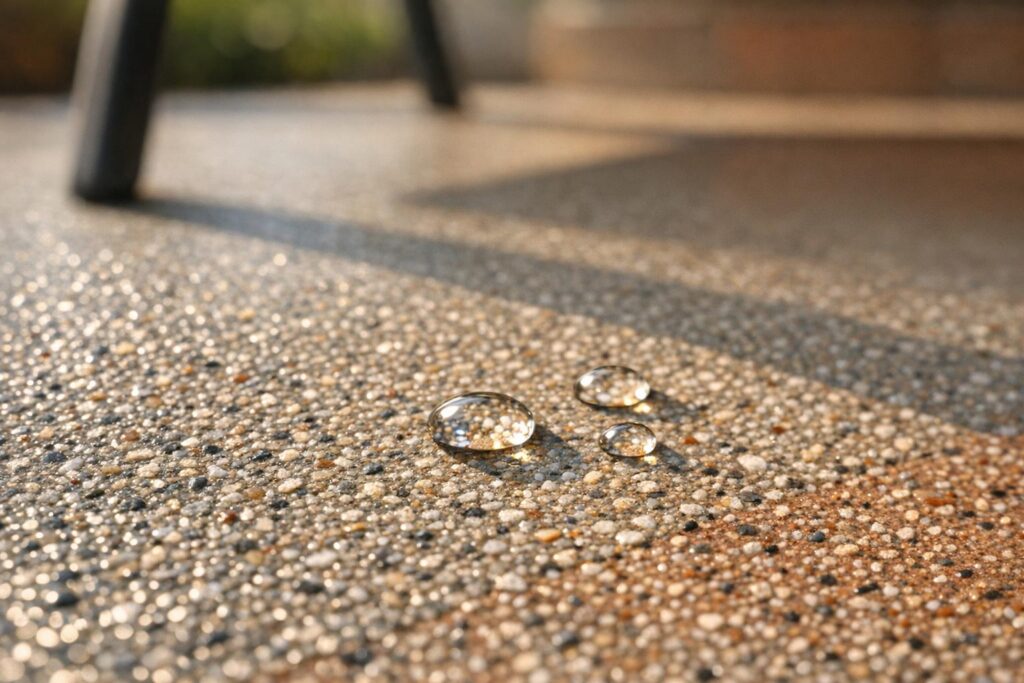
Want a safer, longer-lasting patio? Slip-resistant polyurea coatings are a game-changer for outdoor spaces. Unlike traditional concrete, these coatings drastically reduce slip-and-fall risks – cutting incidents by up to 50% – while offering durability that lasts 15–20 years with minimal maintenance.
Key benefits include:
- Safety: Textured surfaces meet ANSI standards with a friction coefficient above 0.6, even in wet conditions.
- Durability: Withstands extreme temperatures, UV exposure, and heavy use without cracking or fading.
- Quick Installation: Dries in hours, so your patio is ready the same day.
- Customizable Design: Choose from a variety of colors, finishes, and decorative flakes to match your style.
Polyurea outperforms epoxy in outdoor settings, offering superior UV stability, flexibility, and longevity. While it costs more upfront ($7–$12 per sq. ft.), its long-term value makes it the better choice for patios.
Problems with a Polyurea Concrete Coating (or Polyaspartic)
sbb-itb-4b4bb37
What Are Slip-Resistant Polyurea Coatings?
Polyurea is an elastomer, meaning it’s a flexible, rubber-like material. It’s created by combining isocyanates and amines, which react to form a fast-curing polymer layer that seamlessly bonds to concrete. The system typically involves two components: a polyetheramine resin (amine-terminated polyether) and an isocyanate prepolymer. When mixed, they produce a durable membrane that stands up to water and abrasion, making it ideal for outdoor applications.
So, what makes these coatings slip-resistant? The key lies in adding texture. This texture increases the surface’s grip, resulting in a coefficient of friction ranging from 0.6–0.8 when dry and 0.5–0.7 when wet, as measured by ASTM D2047 standards. This ensures a safer surface, even during rainy conditions.
Properties of Polyurea Coatings
Polyurea stands out for its impressive features, especially when used on patios. Its flexibility is a major strength – it can stretch 300–500% without tearing. This elasticity allows it to handle concrete’s natural movements, such as expansion and contraction due to temperature changes. It can even bridge cracks up to 1/8 inch and accommodate thermal expansion of up to 0.02% per 100°F, whether facing scorching heat above 100°F or freezing temperatures as low as –20°F.
Another highlight is its UV resistance. Unlike many sealers that degrade under sunlight, polyurea retains 95% of its tensile strength after 5,000 hours of UV exposure (based on ASTM G154 testing). This means your patio stays strong and visually appealing, even after prolonged sun exposure. It’s also incredibly durable, with tensile strength exceeding 4,000 psi, making it resistant to impacts from furniture or chemical damage from substances like pool chlorine. On top of that, it’s completely waterproof, with zero moisture vapor transmission, and can withstand temperatures from –40°F to 250°F.
The quick curing time is another practical advantage. Polyurea becomes walkable in just 5–10 minutes and fully cures within 24 hours. According to Atlas Concrete Coatings, its rapid gel time – under 10 seconds – allows for same-day project completion. For instance, a 500-square-foot patio can be prepped, coated, and ready for use in just 4–6 hours, minimizing inconvenience for homeowners.
How Slip Resistance Works
Polyurea’s toughness is enhanced by adding textures that improve grip. This is achieved by incorporating materials like aluminum oxide grit, silica sand, rubber particles, polymer beads, ceramic grit, or fine aggregates like walnut shell during the application process. Many installers use a "chip system", where colored flakes not only add a decorative touch but also improve traction. These materials create countless micro-contact points that grip shoe soles, even on wet surfaces.
Testing under wet conditions (ASTM C1028) shows that textured polyurea achieves a dynamic coefficient of friction above 0.5, significantly outperforming smooth concrete sealers. This enhanced traction has been shown to reduce slip-and-fall risks by 50–70%, according to industry studies. The coating is applied at a thickness of 2–10 mils, forming a permanent bond with the concrete surface.
Benefits of Slip-Resistant Polyurea Floors for Patios
Improved Safety for Outdoor Spaces
Polyurea coatings are a smart solution for enhancing patio safety, especially in wet conditions. Their textured surface provides dependable traction, even when exposed to water, making them ideal for areas like pool decks, outdoor dining spaces, and entryways. This feature is particularly useful for households with young children or elderly individuals who may be more vulnerable to slips and falls.
Steps, sloped areas, and high-traffic zones benefit greatly from this added grip. Unlike smooth concrete, which can become dangerously slick when wet, polyurea maintains its slip-resistant properties no matter the weather. This reliability directly addresses the unique safety challenges patios often face.
Durability in Different Weather Conditions
Polyurea coatings are built to handle the unpredictable weather conditions seen across the U.S. They resist cracking during freeze-thaw cycles and remain stable under intense heat, providing year-round protection for your patio.
Another standout feature is their UV resistance, which helps maintain the coating’s appearance over time. Unlike traditional paints or sealers that may fade or yellow under prolonged sun exposure, polyurea retains its color and structural integrity. Its non-porous surface also resists stains from grease, pool chemicals, barbecue spills, and organic debris, making cleanup a breeze and preventing lasting damage. Beyond durability, these coatings offer an array of design options to elevate the look of your patio.
Customizable Appearance Options
Polyurea coatings are not just practical – they’re also visually versatile. With a wide range of colors and textures, you can customize your patio to complement any architectural style. Whether you prefer a sleek high-gloss finish or a more understated matte look, there’s an option to suit your taste.
For added flair and functionality, chip or flake systems can be incorporated. These patterns not only enhance slip resistance but also mimic the appearance of natural materials like stone or granite, giving your patio an elegant touch. Because the coating bonds permanently to the concrete, these designs maintain their flawless finish without peeling or fading over time.
"These floor coatings come in so many color combinations and textures, you may find it hard to decide." – Spray ‘n Coat Painting
Polyurea vs. Epoxy for Patio Coatings
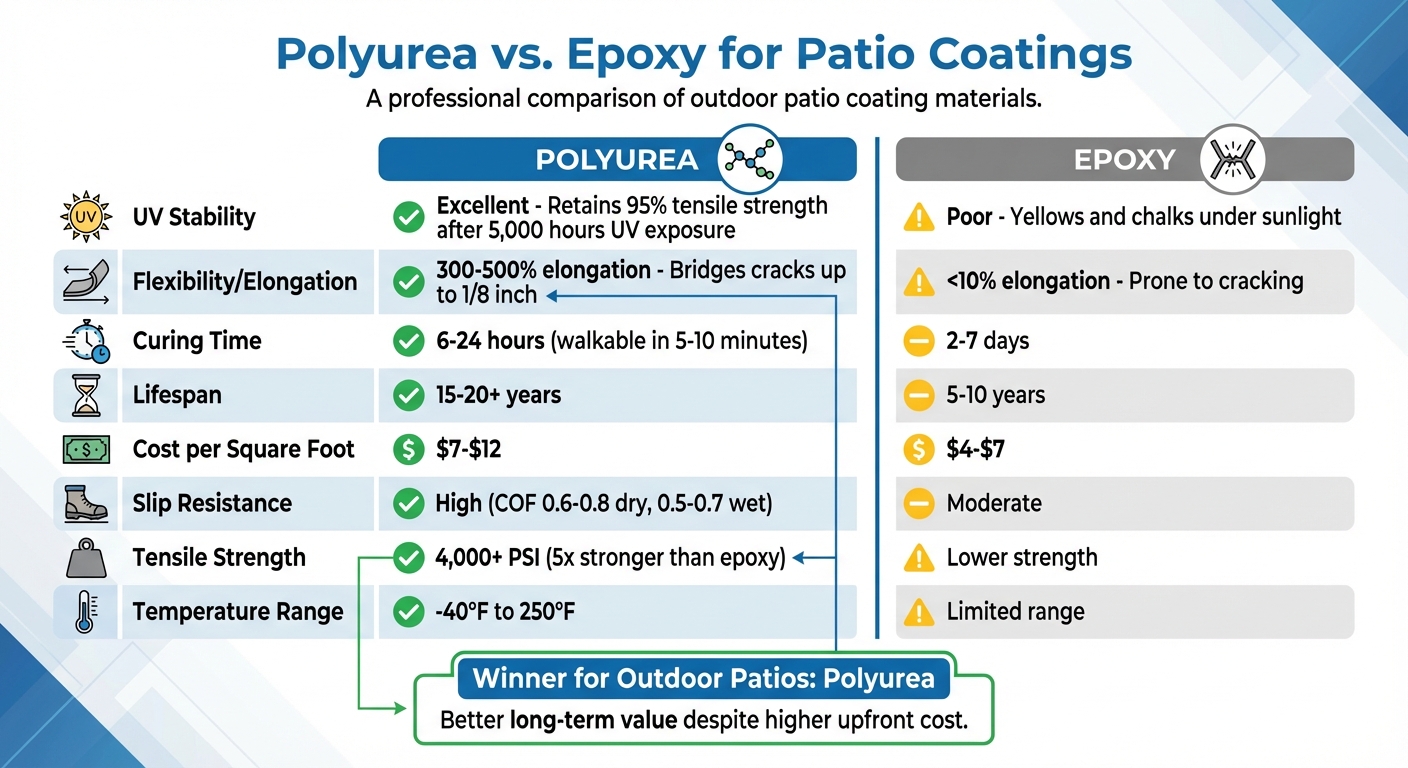
Polyurea vs Epoxy Patio Coatings Comparison Chart
When choosing between polyurea and epoxy for your patio, it’s essential to weigh their performance in outdoor settings. While epoxy performs well indoors, it often falls short when exposed to outdoor conditions. Polyurea, on the other hand, was specifically designed to handle the challenges patios face daily.
One of the biggest differences is UV stability. Standard epoxy resins degrade under direct sunlight, leading to yellowing, chalking, and surface damage. As Marvel Coatings explains, "There is no such thing as a truly UV-stable epoxy". In contrast, polyurea systems, especially when combined with a polyaspartic topcoat, retain their color and finish for decades, even under intense sunlight.
Another critical factor is flexibility. Outdoor patios experience constant expansion and contraction due to temperature changes and freeze-thaw cycles. Epoxy’s rigidity, with less than 10% elongation, makes it prone to cracking as the underlying concrete shifts. Polyurea, however, boasts over 300% elongation, allowing it to stretch and bridge small cracks without breaking. Crayton Caudill of Level 10 Coatings explains, "Polyurea’s flexibility – and the elongation it provides – allows the coating to stretch slightly without rupturing".
The curing time is another area where polyurea stands out. Epoxy requires 2–7 days to fully cure, which delays usability. Polyurea, on the other hand, cures in just 6–24 hours, making it a much faster option for patios that are key outdoor living spaces. This quick turnaround significantly reduces downtime.
Cost is another consideration. Polyurea typically costs $7–$12 per square foot, compared to epoxy’s $4–$7. However, polyurea offers greater durability, lasting 15 to 20+ years, whereas epoxy generally lasts only 5 to 10 years. Plus, polyurea is up to five times stronger than epoxy, providing better long-term value.
Comparison Table: Polyurea vs. Epoxy
| Feature | Polyurea | Epoxy |
|---|---|---|
| Slip Resistance | High | Moderate |
| UV Stability | Excellent | Poor |
| Curing Time | 1 day | Several days |
| Flexibility | High | Low |
| Cost per Square Foot | $7–$12 | $4–$7 |
With its combination of durability, safety, and design flexibility, polyurea stands out as the better choice for residential patios. Its superior performance ensures a safer and more visually appealing outdoor space.
How to Apply Slip-Resistant Polyurea Coatings
Applying polyurea coatings requires specialized tools and skilled professionals. With a rapid gelling time of just 5–15 seconds, the process demands high-pressure equipment (1,500–2,500 PSI) and experienced technicians to ensure proper application. Completing a 500-square-foot patio typically takes 1–2 days, with foot traffic allowed after 4–6 hours. Below is an overview of the professional steps involved.
Surface Preparation
Before applying the coating, the concrete surface must be thoroughly cleaned. Professionals use pressure washers operating at 3,000 to 4,000 PSI to eliminate dirt, oil, and debris. For stubborn stains, chemical degreasers are applied. Once the surface is clean, shot blasting or grinding is used to create a CSP 3 profile – a textured finish that ensures the polyurea adheres effectively. This step is critical for achieving long-term durability.
Moisture levels in the concrete must also be tested, as levels above 4% can lead to up to 70% delamination. Calcium chloride kits are typically used for this purpose. Any cracks or damage are repaired using epoxy mortar or fillers compatible with polyurea, creating a smooth and even base. Finally, a moisture-tolerant epoxy primer is applied to seal the surface and improve adhesion. This primer requires 4–6 hours to cure before moving to the next step.
Coating Application Process
The process begins with a base coat, applied using plural-component spray equipment. Since polyurea sets so quickly, the crew must work efficiently to ensure an even application. While the base coat is still tacky, slip-resistant additives – such as silica sand, aluminum oxide, or colored chips – are broadcast at a rate of 1–2 pounds per square foot. These additives are then rolled or scraped to secure them in place.
A 10–20 mil UV-stable topcoat is applied next. This layer seals the additives, protects the surface from wear, and prevents yellowing over time. The topcoat cures within 1–2 hours, and the patio is ready for full use after 24–48 hours. Professional installation costs range from $8 to $15 per square foot, offering a durable finish that lasts 15–20 years. This careful application process ensures the patio not only looks great but also meets high safety standards.
Design Ideas for Polyurea Patio Floors
Textured and Chip Systems
Decorative flake systems are a fantastic way to give patios both style and functionality. These systems use multi-colored chips to create a textured, slip-resistant surface. Homeowners often choose earthy tones like tan, brown, and gray for a natural look, but there are also vibrant options like blues, greens, and reds for a more modern vibe.
Another option is colored quartz systems, which offer a smoother, polished texture while still maintaining slip resistance. These systems are sealed with a clear aliphatic polyaspartic topcoat, creating a glossy finish that enhances the decorative colors and shields the surface from UV damage. Whether you’re going for subtle elegance or bold design, these systems combine safety and aesthetic appeal to suit a variety of patio styles.
Color Options and Visual Effects
Polyurea coatings can replicate the look of natural stone, tile, or terrazzo without the hassle of high maintenance. Thanks to UV-stable formulations, the colors stay bright and don’t fade, even under direct sunlight. Homeowners can choose neutral tones that blend seamlessly with their outdoor decor or go for bold accent colors to create a standout feature. Glossy finishes, achieved with polyaspartic topcoats, add depth to the design, creating dynamic effects that shift with light and brighten shaded areas. These features not only elevate the patio’s appearance but also enhance its overall functionality and feel.
Atlas Concrete Coatings Design Services
Atlas Concrete Coatings brings these design ideas to life with their polyurea-based chip floor coatings, offering a range of customizable options for residential patios. Their services include free consultations to help homeowners choose chip colors, textures, and finishes that match their outdoor spaces and safety requirements. The coatings are UV-resistant, slip-resistant, and backed by a lifetime warranty on chip systems, ensuring durability. With a quick installation process, homeowners can enjoy their revamped patios without long waits. Serving properties across Pennsylvania and New Jersey, Atlas combines top-tier materials with skilled installation teams to deliver professional results.
Conclusion
Slip-resistant polyurea coatings provide a practical solution for improving patio safety and durability. These coatings shield concrete from freeze-thaw damage while incorporating textured elements like silica aggregates or decorative flakes. The result? A sleek, high-gloss finish that doesn’t compromise on slip resistance.
The safety benefits are hard to overlook. Slip and fall accidents cost U.S. businesses over $80 billion annually. Ensuring surfaces have a coefficient of friction of at least 0.42 is essential for reducing these risks. Additionally, the aesthetic versatility of these coatings complements their functional benefits, making them a standout choice for patios.
For homeowners in Pennsylvania and New Jersey, Atlas Concrete Coatings offers a seamless combination of safety and style. They provide professional installation services and free consultations to help you customize chip colors, textures, and finishes to suit your space. Their polyurea-based systems, backed by a lifetime warranty on chip systems, ensure both immediate safety and lasting durability. With expert installation, they guarantee even aggregate distribution for the perfect balance of safety and design. Atlas Concrete Coatings is the go-to partner for transforming your patio into a safe, stylish, and long-lasting outdoor space.
FAQs
Will a polyurea patio feel rough on bare feet?
No, a polyurea patio won’t feel rough on bare feet. It provides a textured surface that’s slip-resistant while still being comfortable to walk on, making it a great choice for residential patios.
How do I choose the right slip-resistant texture level?
Choosing the right level of slip-resistant texture for your surface depends on your specific safety needs and the environment. For example, pool decks benefit from textured surfaces like polyurea, which offer dependable slip resistance – even when wet. Keep in mind, adding more texture can boost safety but might impact the look or feel of the surface. Striking the right balance between safety and aesthetics is key. For the best results, consult a professional to match the texture to your patio’s intended use and safety requirements.
Can polyurea be applied over cracked or previously sealed concrete?
Polyurea can be applied to cracked or previously sealed concrete, but preparation is key. The surface must be clean, dry, and free of contaminants to ensure the coating adheres properly. Taking the time to prepare the area thoroughly will result in a more durable and long-lasting finish.