
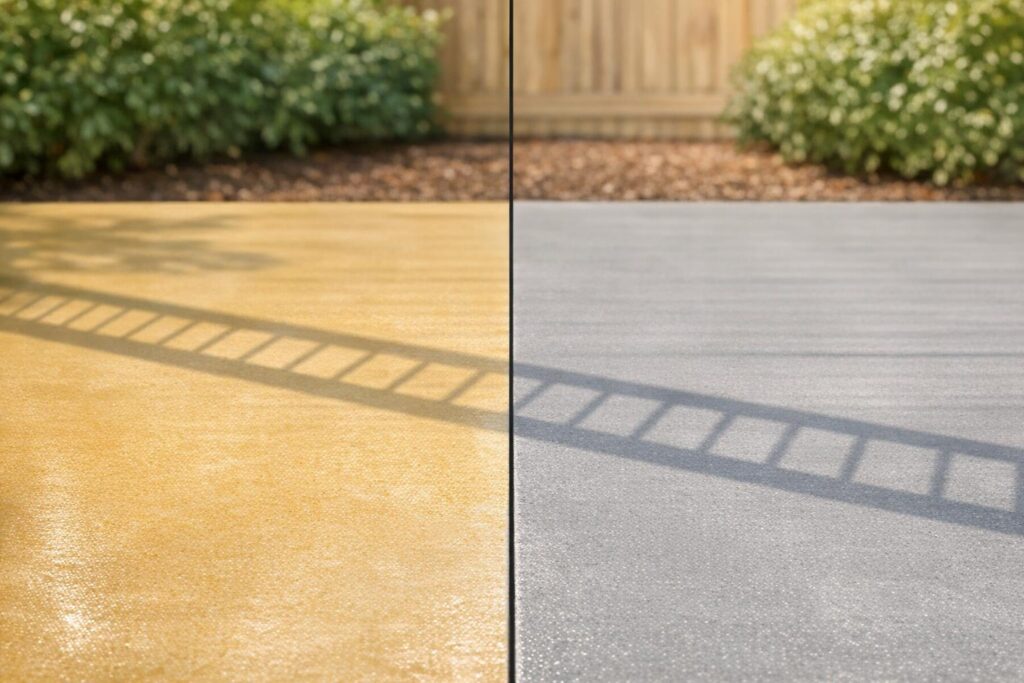
Choosing a floor coating for outdoor spaces? Here’s the key takeaway: Polyurea outperforms epoxy in UV resistance, durability, and longevity. Epoxy coatings often yellow, fade, and degrade under sunlight, making them better suited for indoor use. Polyurea, on the other hand, resists UV damage, retains color and gloss, and lasts over a decade outdoors.
Key Points:
- Epoxy: Affordable, durable for indoor use, but prone to yellowing, fading, and cracking under UV exposure.
- Polyurea: UV-stable, flexible, and long-lasting, making it ideal for patios, pool decks, and driveways.
- Cost Comparison: Epoxy ranges from $3–$7 per sq. ft., while polyurea costs $6–$12 per sq. ft., offering better long-term value.
Quick Comparison:
| Feature | Epoxy | Polyurea |
|---|---|---|
| UV Stability | Low | High |
| Yellowing Risk | High | Very Low |
| Outdoor Lifespan | 5–10 years | 10–15+ years |
| Flexibility | Rigid | High |
| Cost | $3–$7/sq. ft. | $6–$12/sq. ft. |
For outdoor applications exposed to sunlight, polyurea is the better investment due to its UV resistance, durability, and low maintenance.
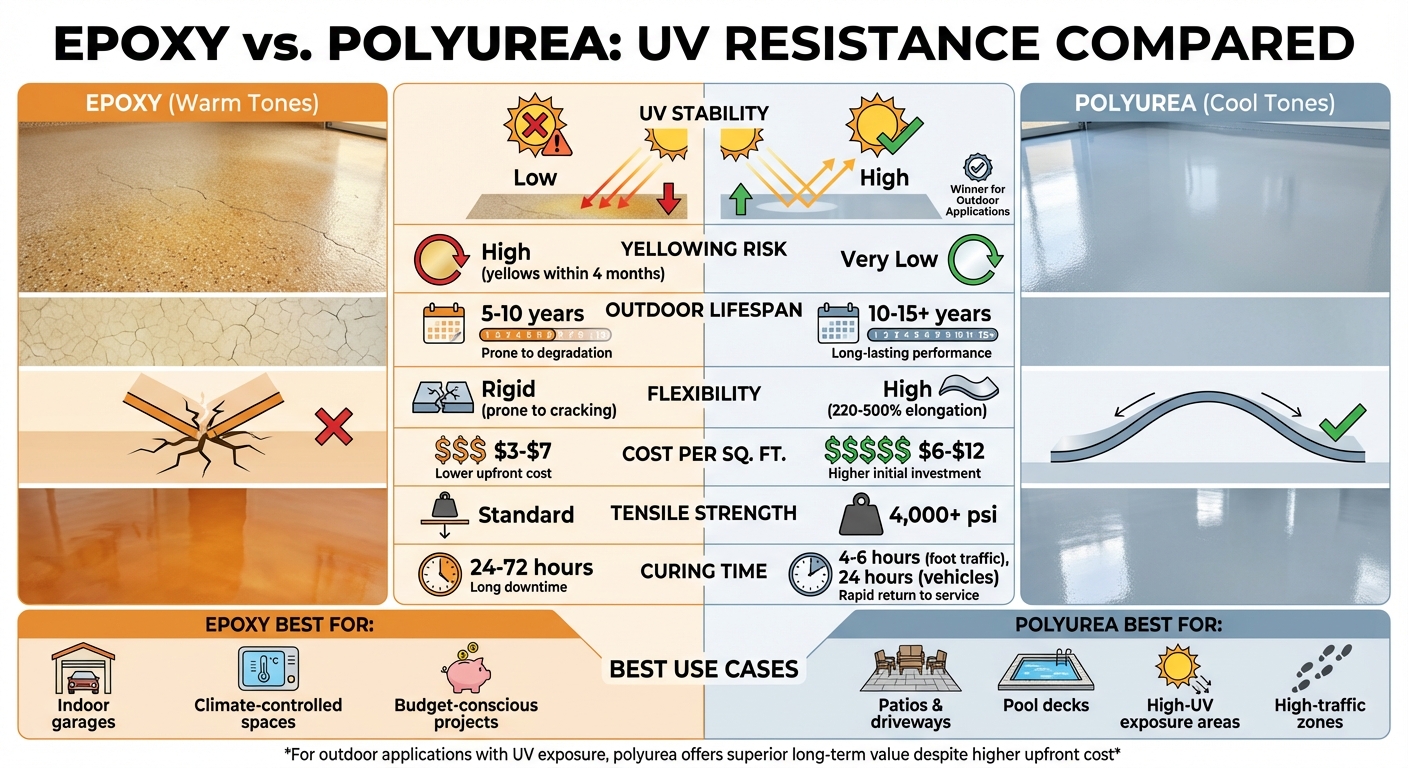
Epoxy vs Polyurea Floor Coating Comparison: UV Resistance, Cost, and Lifespan
How Epoxy Handles UV Exposure
Epoxy’s UV Stability
Epoxy, made from a mix of resin and hardener, creates a durable surface but is highly vulnerable to UV radiation. This exposure triggers a chemical breakdown in its molecular structure, leading to visible damage. Early signs include a loss of shine, with the surface becoming dull and chalky. Over time, this degradation worsens, causing the epoxy coating to crack and peel.
"Under constant sunlight, epoxy begins to degrade almost immediately. Within as little as four months, a once-shiny epoxy floor can turn dull and yellow." – Xano521 Concrete Coatings
To mitigate this issue, some installers incorporate UV-resistant fillers into the epoxy mix. While these additives can slow the process, they cannot stop it entirely. Once discoloration or chalking begins, the damage is permanent, and replacing the coating becomes the only solution. This chemical breakdown manifests as noticeable yellowing and fading.
Yellowing and Fading Problems
One of the most apparent effects of UV exposure on epoxy is yellowing, which often starts in areas with the most sunlight exposure – like the entrance of a garage. In regions with intense sun, prolonged UV exposure can make the surface chalky, leaving a residue that can be wiped off by hand. The once-glossy finish becomes flat and unappealing over time.
When Epoxy Works in Outdoor Areas
Despite its UV-related challenges, certain epoxy formulations and protective measures can improve its performance outdoors. Specialized products, such as hydrogenated epoxies or those made with cycloaliphatic amines, offer better resistance to UV damage.
"MOST epoxies will chalk and yellow in the sunlight. A few of us (manufacturers) can hydrogenate an epoxy to make it UV stable. It is also possible to use certain cycloaliphatic amines to increase resistance." – WolverineCoatings, Well-known member, The Garage Journal
Another approach is to apply a UV-stable topcoat, like polyurethane or polyaspartic, over the epoxy layer. However, even with these topcoats, UV rays can penetrate and cause the underlying epoxy to chalk, potentially leading to delamination of the topcoat itself. This makes epoxy a better fit for projects where cost is a priority and maintaining long-term color retention is less critical.
sbb-itb-4b4bb37
How Polyurea Handles UV Exposure
Polyurea’s UV Stability
Polyurea is designed with a unique molecular structure that forms a protective outer layer, shielding it from UV radiation. This prevents common issues like chalking, cracking, and surface degradation. A 2020 study highlighted how this molecular design not only provides UV resistance but also maintains flexibility, allowing the material to adapt to temperature changes without damage.
"Polyurea is engineered with a polymer structure that is inherently resistant to UV light." – Xano521 Concrete Coatings
Unlike epoxy, which often suffers surface damage under prolonged sunlight, polyurea remains intact. Its flexibility enables it to expand and contract along with the concrete, avoiding peeling or cracking. Additionally, polyurea is nearly five times stronger than traditional epoxy coatings, making it a more durable solution for outdoor use.
Color Retention Over Time
One of polyurea’s standout features is its ability to retain color and gloss over the years. While epoxy coatings can start yellowing within just four months in high-UV conditions, polyurea maintains its original appearance for over a decade. Even after constant exposure to direct sunlight, it resists fading, discoloration, and loss of shine.
"Polyurea is UV-stable. This means that no matter how much sun exposure it gets, it won’t fade, discolor, or yellow over time." – FloorTech Concrete Coatings
This exceptional color stability makes polyurea ideal for outdoor decorative surfaces. Whether it’s a patio, driveway, or pool deck, the coating keeps its vibrant and polished look year after year, eliminating the need for frequent touch-ups or reapplications.
Best Uses for Polyurea Outdoors
Polyurea thrives in environments with intense sunlight where epoxy coatings often fail. For instance, pool decks benefit from its chemical resistance and slip-resistant chip systems, ensuring safety even when wet. Patios and driveways maintain their aesthetic appeal while enduring heavy foot traffic and temperature fluctuations. Garages with large windows or open doors also gain reliable UV protection.
In addition to UV resistance, polyurea serves as a moisture vapor barrier and remains flexible enough to handle foundation shifts and temperature changes. These qualities contribute to its long lifespan, with high-quality polyurea coatings lasting over 10 years without significant wear or UV damage.
Epoxy vs. Polyurea: UV Performance Comparison
UV Resistance Comparison Table
When it comes to UV performance, epoxy and polyurea coatings show clear differences. Epoxy struggles under direct sunlight, often chalking, yellowing, and degrading over time. In contrast, polyurea – especially its polyaspartic variant – offers much better UV stability.
| UV Performance Factor | Epoxy Coating | Polyurea Coating | Polyaspartic Coating |
|---|---|---|---|
| UV Stability | Low (chalks and degrades) | Low to Moderate | High (naturally UV-stable) |
| Yellowing Risk | High (yellows within months) | Moderate (varies by formula) | Very Low |
| Outdoor Lifespan | 5–10 years (indoor preferred) | 10–15+ years | 15–20+ years |
| Color Retention | Poor (fades in sunlight) | Good | Excellent |
| Degradation Rate | High under UV exposure | Low | Very Low |
| Flexibility | Rigid (prone to cracking) | Very High (bridges cracks) | High |
The data highlights that polyurea and polyaspartic coatings outperform epoxy in critical areas like UV stability, color retention, and durability. While epoxy is cheaper upfront (around $3–$7 per square foot), its shorter lifespan and vulnerability to UV exposure can lead to higher long-term costs. Polyurea coatings, priced between $6–$12 per square foot, and polyaspartic coatings, ranging from $6–$10 per square foot, provide better value over time. With lifespans of 10–15 years for polyurea and up to 20 years for polyaspartic, they are better suited for outdoor applications.
But the differences go beyond just aesthetics. Over time, epoxy becomes brittle when exposed to sunlight, losing its mechanical integrity. This brittleness increases the likelihood of cracking, especially under UV stress. Polyurea, on the other hand, retains its flexibility and physical properties, making it more resilient. Its ability to handle thermal cycling – expansion and contraction due to temperature changes – gives it a significant edge over rigid epoxy coatings.
"Epoxy has low natural UV resistance, meaning it can yellow or fade when exposed to direct sunlight unless protected with a UV-stable topcoat." – Eric Marks
For spaces like garages where sunlight frequently hits the floor, polyaspartic coatings are particularly effective. They prevent the "yellowing line" often seen on epoxy floors near open doors. In areas with high UV exposure or extreme temperature fluctuations, polyurea’s flexibility ensures it can handle the stress of expanding and contracting concrete, reducing the risk of cracks. Choosing the right coating for UV performance is essential for maintaining both durability and appearance in sun-exposed environments.
Why Polyurea Works Better in High-UV Areas
Performance in Harsh Conditions
Polyurea stands out as a top choice for high-UV environments, thanks to its advanced aliphatic chemistry. This creates a dense, protective barrier that resists UV degradation while maintaining impressive flexibility. With an elongation range of 220%–500%, polyurea can expand and contract without cracking, even under extreme conditions like thermal cycling. Its tensile strength, exceeding 4,000 psi, further ensures durability, making it ideal for outdoor surfaces such as driveways, patios, and pool decks that endure daily exposure to intense sunlight.
"Polyurea coatings have a lifetime UV stability guarantee, ensuring that colors remain vibrant for years." – NewTec Group
Beyond its durability, polyurea reduces maintenance costs in high-UV areas. Its non-porous surface resists moisture, chemicals, and dirt, requiring only basic cleaning with soap and water. Compared to epoxy, which typically lasts 5–7 years, polyurea coatings offer a lifespan of 15+ years. While installation costs range from $5 to $7 per square foot, the long-term savings and reduced upkeep make polyurea a smart investment. These features highlight why Atlas Concrete Coatings relies on polyurea for their solutions.
Atlas Concrete Coatings‘ Polyurea Solutions
Atlas Concrete Coatings harnesses polyurea’s durability and UV resistance in their chip floor systems, tailored for outdoor use. These systems feature professional-grade aliphatic polyurea formulations that maintain color vibrancy, even under relentless sunlight. Their services include pool deck resurfacing and garage floor coatings, offering slip-resistant finishes and customizable colors to meet both safety and aesthetic needs on sun-exposed surfaces.
One of polyurea’s standout benefits is its quick curing time. Surfaces are ready for foot traffic in just 4 to 6 hours and can handle vehicle weight within 24 hours. This rapid installation minimizes downtime for homeowners and businesses alike. Atlas Concrete Coatings serves residential, commercial, and industrial clients across Pennsylvania and New Jersey, offering free consultations to evaluate UV exposure and recommend the best coating options. Plus, their lifetime warranty on chip systems gives property owners added confidence in their investment for long-term UV protection.
Conclusion
Main Differences Summary
Epoxy and polyurea differ significantly in how they handle sunlight, durability, and flexibility. Epoxy tends to degrade under UV exposure, leading to yellowing, fading, and a loss of gloss. It also lacks the flexibility to accommodate concrete expansion, making it best suited for indoor, climate-controlled environments. On the other hand, polyurea maintains its color and gloss even with extended sun exposure. Its flexibility allows it to bridge hairline cracks and adapt to substrate movement, making it a more versatile option for various applications.
Durability and curing times are other key factors. Epoxy typically lasts 5 to 10 years in residential settings, while polyurea often surpasses 10 years in commercial or industrial environments. Although epoxy is more cost-effective upfront, polyurea’s longer lifespan can result in lower maintenance costs over time.
These distinctions are crucial when deciding on the best coating for a specific project.
Selecting the Right Coating
Epoxy is a good choice for indoor projects with minimal UV exposure, such as enclosed garages or climate-controlled showrooms. Its affordability makes it appealing for budget-conscious applications.
Polyurea, however, shines in outdoor settings like patios, driveways, pool decks, and walkways, where UV resistance is essential. Its fast curing time and durability make it perfect for high-traffic areas or projects requiring quick completion. For example, Atlas Concrete Coatings provides polyurea-based chip systems with lifetime warranties, designed specifically for outdoor use in PA and NJ, offering both durability and UV protection.
The uv stability test: Penntek vs. Epoxy vs. Common Polyurea
FAQs
How can I tell if my outdoor epoxy is UV-damaged?
Prolonged exposure to sunlight and UV rays can cause noticeable changes in outdoor epoxy. Look out for yellowing, loss of gloss, surface cracking, or chalking – these are common signs of UV damage. Over time, UV light breaks down the material, leading to these visible effects. By routinely checking your epoxy for these issues, you can catch potential problems early and help preserve its look and strength.
Is polyurea or polyaspartic better for direct sun?
Polyurea is often the preferred choice for outdoor surfaces exposed to direct sunlight because of its strong UV resistance. It holds up well against yellowing, discoloration, and surface damage caused by prolonged sun exposure, making it a great option for areas like patios and driveways. While polyaspartic coatings also provide decent UV resistance, epoxy coatings fall short – they tend to yellow and break down when exposed to UV rays for extended periods.
What coating is best for a sunny garage floor?
Polyurea stands out as an excellent option for a sunny garage floor thanks to its strong UV resistance and durability. Unlike epoxy, which can fade or yellow when exposed to sunlight, polyurea maintains its color and structural integrity over time. This makes it a reliable choice for outdoor settings, providing a long-lasting and appealing finish for your garage floor.