
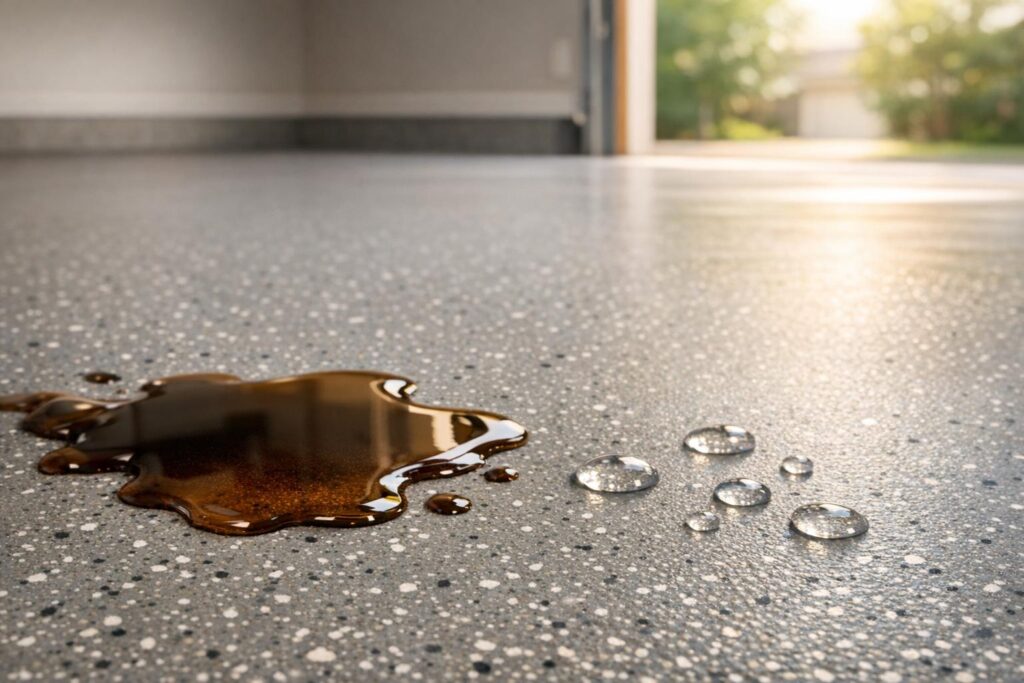
Bare concrete garage floors can be a hidden safety risk. They’re slippery when wet, absorb oil and grease, and degrade over time, creating hazardous conditions. Slip-resistant coatings solve this problem by improving grip, sealing the surface, and preventing dust and moisture buildup.
Key Points:
- Safety Standards: Bare concrete scores ~0.5 on the slip meter, below OSHA’s minimum of 0.6. Coatings with anti-slip additives can reach 0.7 or higher.
- Common Slip Hazards: Dust, moisture, oil, and chemical spills reduce traction.
- Coating Options:
- Epoxy: Strong base layer but needs additives for grip.
- Polyurethane: UV-resistant and flexible but requires an epoxy primer.
- Polyurea: Quick curing, durable, and highly flexible.
- Anti-Slip Additives: Materials like silica sand, aluminum oxide, and polymer grit create texture for better traction.
- Maintenance: Regular cleaning and inspections keep coatings effective.
Investing in professional-grade coatings ensures long-lasting safety and durability, with costs ranging from $720 to $1,800 for a two-car garage.
How I Made My Garage Floor Non-Slip with Dura Grip Epoxy Paint
Why Garage Floors Become Slippery
Garage floors can become slippery due to a mix of factors, including surface texture, environmental conditions, and chemical spills. Let’s break down these common culprits and how they contribute to slick surfaces.
Smooth surfaces are a big part of the problem. Bare concrete or floors with high-gloss finishes often lack the texture needed for grip. Add to that dust buildup, which acts like a fine layer of powder, reducing friction even further. If the floor has any kind of slope, liquids can pool, making the situation even more hazardous.
Weather and Moisture Issues
Rain and snow are major offenders when it comes to slippery garage floors. Every time you drive into your garage or walk in from outside, you bring in moisture that can make the floor dangerously slick. In colder areas, melting snow and road salts can create a messy mix that lingers on the floor. Professional coatings can help by creating a non-porous barrier, keeping water on the surface where it can be cleaned up more easily.
Humidity and temperature swings add another layer of complexity. When warm, humid air hits a cool garage floor, condensation forms, significantly reducing traction. Even worse, water vapor trapped beneath the concrete can push upward – a phenomenon known as hydrostatic pressure. GarageFloorCoating.com explains:
Hydrostatic pressure, which occurs when moisture vapor pushes up through the concrete slab, is one of the leading causes of coating failure.
If coatings bubble or peel due to this pressure, they leave behind uneven surfaces, which only increase the risk of slips. Tackling these moisture challenges not only improves safety but also ensures that slip-resistant coatings perform as intended.
Oil and Chemical Spills
Automotive fluids are some of the most hazardous substances in a garage. Engine oil, grease, gasoline, and brake fluid all act as lubricants, drastically lowering the traction between your shoes and the floor. These spills can be hard to detect, especially on darker floor finishes, and if left uncleaned, they create persistent slippery spots.
Battery acid is an even bigger concern. According to the Concrete Network:
Battery acid is especially harmful to finishes and may cause them to bubble.
This corrosive liquid not only creates an immediate slipping hazard but also damages floor coatings, leading to uneven and unsafe surfaces. Cleaning methods can also play a role in making floors slippery. As Superior Epoxy Flooring warns:
Soap-based products won’t damage an epoxy concrete floor, but they will leave a dangerously slippery buildup on the surface.
This highlights the importance of using the right cleaning products and maintaining floors properly to ensure slip-resistant coatings do their job effectively.
Types of Slip-Resistant Garage Floor Coatings
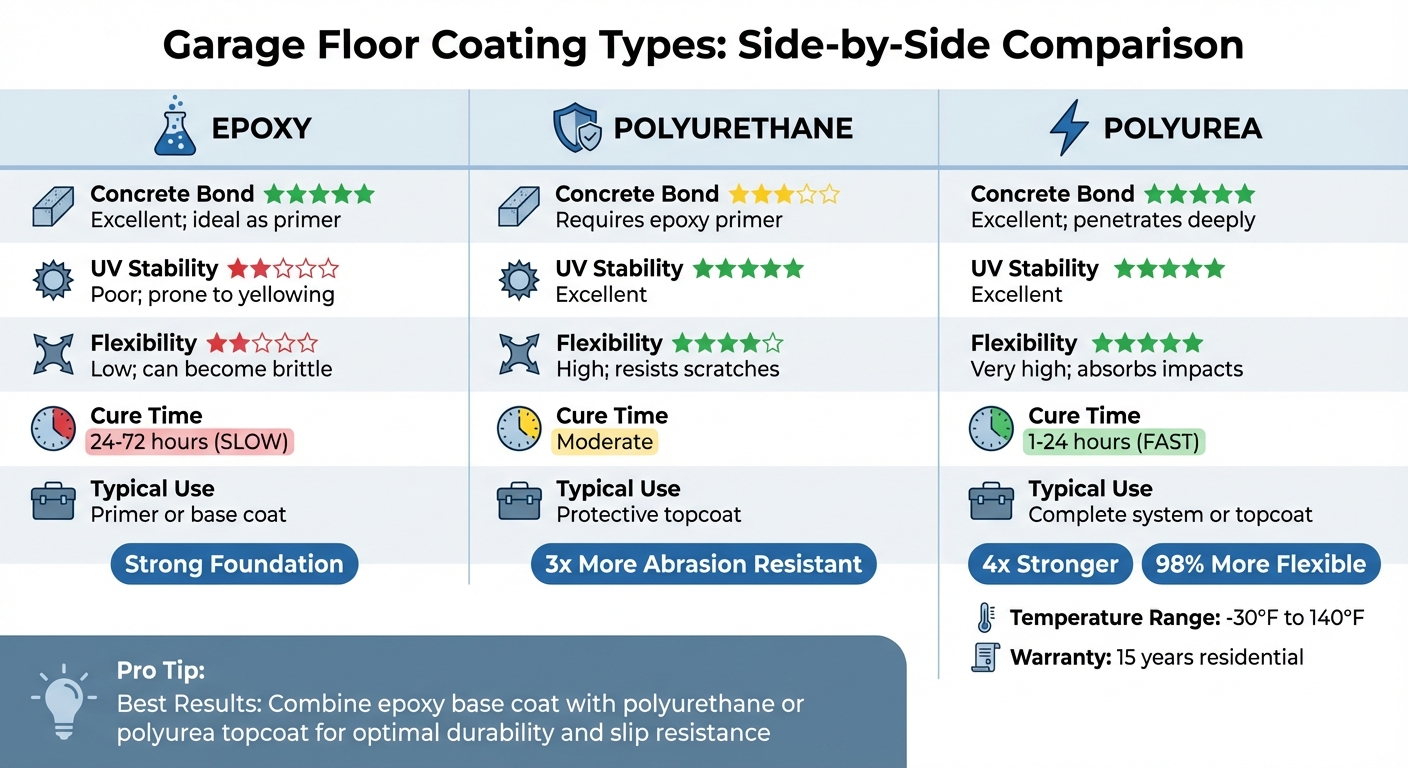
Garage Floor Coating Types Comparison: Epoxy vs Polyurethane vs Polyurea
Improving the safety of your garage floor starts with selecting the right coating to address slip hazards effectively. Different coatings offer varying levels of slip resistance and durability, so it’s essential to choose one that suits your specific needs. Below, we break down the unique features of each type.
Epoxy Coatings
Epoxy is a popular choice as a base layer for garage floors. Its slow curing process allows it to seep into concrete pores, creating a strong foundation that resists moisture pressure. However, epoxy on its own can yellow when exposed to UV light and may become slippery unless texture additives are included. Because of this, professionals often use epoxy as a primer or base coat, pairing it with a more flexible topcoat for enhanced performance. Adding textured materials like aggregates during application can significantly improve grip.
Polyurethane Coatings
Polyurethane stands out for its flexibility and scratch resistance, outperforming epoxy in these areas. Aliphatic polyurethane, in particular, is more flexible, which makes it less prone to scratches and better at absorbing impacts. Its abrasion resistance is nearly three times greater than epoxy, making it a durable option for high-traffic areas. Additionally, polyurethane is UV stable and highly resistant to chemicals and temperature fluctuations, making it ideal for garages that experience seasonal changes. However, it requires an epoxy primer to bond effectively to concrete. A textured surface further enhances traction, reducing the risk of slips.
Polyurea Coatings
Polyurea is known for its rapid curing time and exceptional flexibility. It can cure in as little as 24 hours, making it a convenient option for quick installations. Compared to standard epoxy, polyurea is approximately four times stronger and 98% more flexible . It penetrates deeper into concrete pores and remains UV stable, making it suitable for both indoor garages and outdoor areas like patios and pool decks. Polyurea can also handle extreme temperatures, ranging from –30°F to 140°F. Companies like Atlas Concrete Coatings offer polyurea-based systems with decorative flakes that not only enhance slip resistance but also add a visually appealing texture. These systems often come with long residential warranties, such as 15 years.
To help you compare the options, here’s a quick summary of their key features:
| Feature | Epoxy | Polyurethane | Polyurea |
|---|---|---|---|
| Concrete Bond | Excellent; ideal as a primer | Requires epoxy primer | Excellent; penetrates deeply |
| UV Stability | Poor; prone to yellowing | Excellent | Excellent |
| Flexibility | Low; can become brittle | High; resists scratches | Very high; absorbs impacts |
| Cure Time | Slow (24–72 hours) | Moderate | Fast (1–24 hours) |
| Typical Use | Primer or base coat | Protective topcoat | Complete system or topcoat |
Slip resistance can be enhanced during application by broadcasting decorative flakes or adding aggregates like aluminum oxide or polypropylene into the wet coating. For the best results, consider combining an epoxy base coat with a polyurethane or polyurea topcoat. This layered approach balances durability, flexibility, and slip resistance for a safer garage floor.
How Anti-Slip Additives Work
Anti-slip additives are designed to create a textured surface that boosts the coefficient of friction, giving your garage floor extra grip – even in wet or oily conditions. Without these additives, a smooth, glossy finish can turn dangerously slippery. By introducing tiny peaks and valleys, these additives add traction underfoot. Essentially, the more texture you have, the more contact points are created, which improves grip.
The application method plays a big role in how these additives perform. You can either mix them directly into the coating before applying it or sprinkle them onto the wet coating as soon as it’s applied. Mixing ensures an even texture across the surface, while the sprinkling (or broadcasting) method allows for a more concentrated, grittier texture in areas that need extra traction. Both techniques are key to achieving slip resistance tailored to your needs.
Common Anti-Slip Additives
Choosing the right anti-slip additive depends on your specific traction and maintenance requirements. Each type of additive offers distinct benefits:
- Silica sand: A budget-friendly option that delivers a sandpaper-like texture for excellent grip. However, its rough surface tends to trap dirt and grime, making cleaning more difficult.
- Aluminum oxide: Known for its durability and toughness, this additive provides strong traction, even in heavy traffic or oily environments. It’s a popular choice for industrial settings.
- Polymer grit (polypropylene): Offers a less aggressive texture, making it comfortable for bare feet while still maintaining slip resistance. It’s also easier to clean compared to coarser materials.
- Decorative flakes: These serve a dual purpose by enhancing the floor’s appearance and creating a textured surface that reduces liquid tension – perfect for areas prone to spills.
"Unlike silica sand, our anti-slip additive creates texture without making cleaning a hassle. Silica-based coatings often leave rough surfaces that trap dirt." – Matt Martin, Everlast Concrete Coatings
Climate can also influence your choice. For instance, in the Southwest, a 40 to 60 grit aggregate is commonly used for general slip resistance, while in the Midwest, a coarser 30 grit is preferred to handle snow and ice.
How to Apply Anti-Slip Additives
There are two main ways to apply anti-slip additives:
- Mixing method: Add the additive directly into the coating before application, then roll it onto the surface as usual. This method is straightforward and ensures even distribution, making it a good option for DIY projects.
- Broadcasting method: Sprinkle the additive onto the wet coating right after it’s applied. Once the aggregate is evenly distributed, "back-roll" the surface to lock the particles in place. This method allows for a more aggressive non-slip texture, as you can keep adding the additive until the surface no longer accepts it.
For areas where people walk barefoot – like pool decks or home gyms – choose a "pedestrian grade" or "barefoot" additive, which is less abrasive than industrial-grade options. If you’re using a full-broadcast flake system, applying a clear topcoat over the flakes will help lock them in place, making the surface easier to clean while preserving its texture.
sbb-itb-4b4bb37
Maintaining Slip-Resistant Coatings
Even the best slip-resistant coatings can lose their effectiveness if they’re clogged with oil, dirt, or debris. Regular upkeep is essential to keep your floors safe and maintain their traction and durability.
Cleaning to Maintain Traction
When debris settles into the textured surface of your floor, it can reduce grip significantly. To avoid this, dust your floors weekly to keep the texture clear and functional. For a more thorough cleaning every few months, follow these steps:
- Sweep the floor to remove loose debris.
- Apply a diluted pH-neutral cleaner and let it sit for 10–15 minutes.
- Gently scrub the surface to loosen any buildup.
- Use a squeegee or wet vacuum to remove the cleaning solution.
- Rinse thoroughly with clean water.
"No matter how aggressive the texture of your floor, if it is not cleaned properly, it can present a slip hazard." – Slip Free Systems
If oil is present, use a degreaser along with a squeegee to lift it off the surface. Stick to pH-neutral cleaners and steer clear of harsh products like bleach, vinegar, or citrus-based cleaners, which can damage the coating. Be especially vigilant about cleaning up spills quickly – battery acid, for example, can cause bubbling in the finish.
Checking for Damage
Keeping your floor clean is only half the battle; regular inspections are just as important. During your weekly cleaning, take a moment to check for any scratches, chips, or peeling in the coating. For new coatings, it’s a good idea to scrub them weekly for the first 2–3 months to ensure they settle properly.
High-quality coatings, such as professional polyurea systems, often come with a 15-year warranty, while epoxy polyaspartic systems can last 30 years or more if maintained correctly. However, if your floor remains slippery even after a deep clean or you notice visible damage, it’s time to call in a professional for reapplication.
Other Benefits of Garage Floor Coatings
While slip resistance is a standout feature, these coatings also provide extra layers of protection that help your concrete last longer and cut down on maintenance costs over time.
Protection from Chemicals and Stains
Garage floor coatings create a tough, non-porous barrier that keeps harmful substances – like gasoline, oil, road salt, or even battery acid – from soaking into the concrete. This makes cleaning up spills as easy as wiping or mopping with a pH-neutral cleaner. Plus, the seamless design stops liquids from seeping into cracks or pores, making it much simpler to sanitize your floor.
When cleaning, stick with mild options such as Simple Green, ammonia, or Windex. Avoid using bleach, vinegar, or citrus-based products, as these can wear down the coating’s finish over time.
And it’s not just about stopping stains – these coatings also add strength and durability to your concrete.
Preventing Cracks and Dust
By sealing the porous surface of your concrete, coatings help prevent dust from forming and add an extra layer of defense against cracking. Advanced options, like polyurea coatings, are designed to flex with temperature changes, reducing the chances of peeling or cracking. In fact, polyurea is four times stronger and 98% more flexible than traditional epoxy coatings. This flexibility allows it to move with the concrete as temperatures shift, providing long-lasting protection.
With proper care, epoxy-coated floors can last 20 to 25 years, while polyaspartic systems can endure for 30 years or more. That’s a lot of mileage for a garage floor!
Conclusion
Slip-resistant garage floor coatings bring together safety, durability, and easy upkeep, making them a practical choice for any homeowner. When you opt for professional-grade solutions like polyurea or polyaspartic coatings, you’re investing in a surface that offers dependable traction – even in wet or oily conditions – while withstanding heavy vehicle use, temperature swings, and exposure to harsh chemicals for 20 to 30 years or more.
The key to a coating’s longevity lies in proper installation. Professional installers use industrial-grade tools, such as 800 lb diamond grinders, to create the strong mechanical bond that DIY kits just can’t replicate. Statistics show that over 60% of DIY epoxy floors fail within two years due to poor surface prep and subpar materials.
As Atlas Concrete Coatings explains:
"The polyurea solution bonds to the concrete and is stronger and more flexible than epoxy. The base coat finds to open pores in the concrete and adheres deep into the concrete becoming a permanent part of the floor." – Atlas Concrete Coatings
Atlas Concrete Coatings is a standout example of these benefits in action. Their polyurea systems are four times stronger and more flexible than traditional epoxy, backed by a 15-year warranty for residential projects. They also address crucial factors like moisture control and anti-slip additives to ensure the job is done right. For a standard two-car garage (about 360 sq. ft.), professional installation typically costs between $720 and $1,800.
If you’re aiming to boost safety, protect your concrete, or cut down on maintenance, a professionally installed slip-resistant coating offers reliable, long-lasting performance.
FAQs
What are the key advantages of polyurea coatings for garage floors?
Polyurea coatings bring a host of benefits to garage floors, making them a standout option. They’re known for being extremely tough – in fact, they’re four times stronger than epoxy. Thanks to their flexibility, they can handle wear and tear without cracking, which is a big plus for high-traffic areas. Another advantage? Their quick curing time. These coatings are ready in just 15–30 minutes, so the installation process is fast and hassle-free.
They’re also built to endure UV rays and extreme temperatures, meaning no fading, peeling, or performance issues even under harsh conditions. Safety is another priority, as their slip-resistant surface helps reduce accidents. On top of all that, they’re easy to maintain and keep looking sharp with minimal effort. Many polyurea coatings even come with warranties of up to 15 years, offering long-term reliability and great value for your garage floor.
How do anti-slip additives improve the safety of garage floor coatings?
Anti-slip additives are blended into the top layer of garage floor coatings to create a lightly textured surface. This texture boosts the grip of the floor, making it safer for walking or driving, particularly in wet or slick conditions. By increasing the floor’s friction, these additives help lower the chances of slips and falls.
For homeowners prioritizing safety while maintaining an attractive finish, anti-slip additives can be integrated into various coating styles. This ensures a balance of durability and practicality, making them a smart choice for high-traffic garages or spaces where moisture is a concern.
How can I maintain the slip-resistant coating on my garage floor?
To keep your slip-resistant garage floor coating in great shape, a little regular upkeep goes a long way. Here are some straightforward tips to maintain its durability and safety:
- Sweep or dust frequently to clear away dirt and debris that might scratch the surface.
- Clean with a mild, pH-neutral cleaner mixed with warm water. Steer clear of harsh chemicals or abrasive tools that could harm the coating.
- Repair damage promptly by fixing any chips or cracks to avoid moisture problems and maintain the floor’s safety features.
- Place protective mats in areas with heavy foot traffic or beneath heavy equipment to minimize wear and tear.
These simple practices can help prolong the life of your garage floor coating while keeping it safe and slip-resistant.