
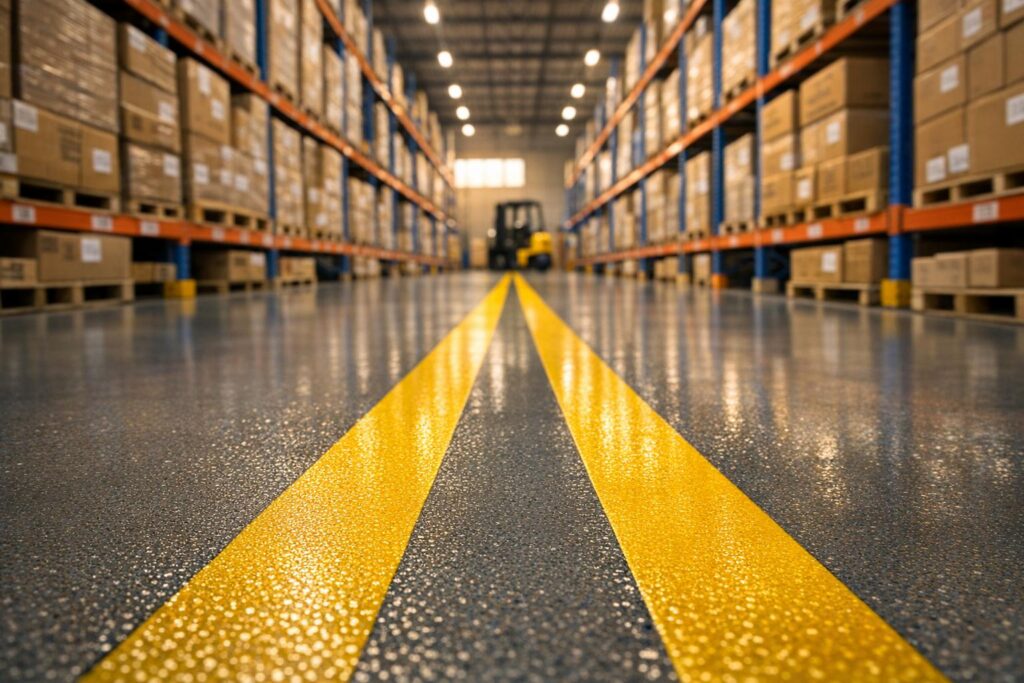
Polyurea coatings can transform warehouse floors by reducing slip risks, improving durability, and cutting maintenance costs.
Slip-and-fall accidents account for a significant portion of workplace injuries, often caused by untreated concrete floors that absorb chemicals and create slick surfaces. Polyurea coatings solve these issues by offering:
- Non-porous surfaces to prevent liquid absorption and stains.
- Customizable textures for better traction on wet or oily floors.
- 98% flexibility to prevent cracking and maintain even surfaces.
- Durability that lasts 3–5 times longer than epoxy coatings.
- Fast application with minimal downtime (cures in 1–4 hours).
These coatings also comply with OSHA standards, making them a practical choice for safer, longer-lasting warehouse floors.
| Feature | Polyurea Coating | Epoxy Coating | Polished Concrete |
|---|---|---|---|
| Slip Resistance | High (customizable) | Moderate | Low |
| Impact Resistance | 10× higher | Standard | Low |
| Flexibility | 98% more flexible | Brittle, cracks easily | None |
| Cure Time | 1–4 hours | 7–10 days | N/A |
| Maintenance | Low | High | High |
Polyurea coatings are ideal for high-traffic areas like loading docks, machine shops, and food processing facilities, ensuring safety and durability for years to come.
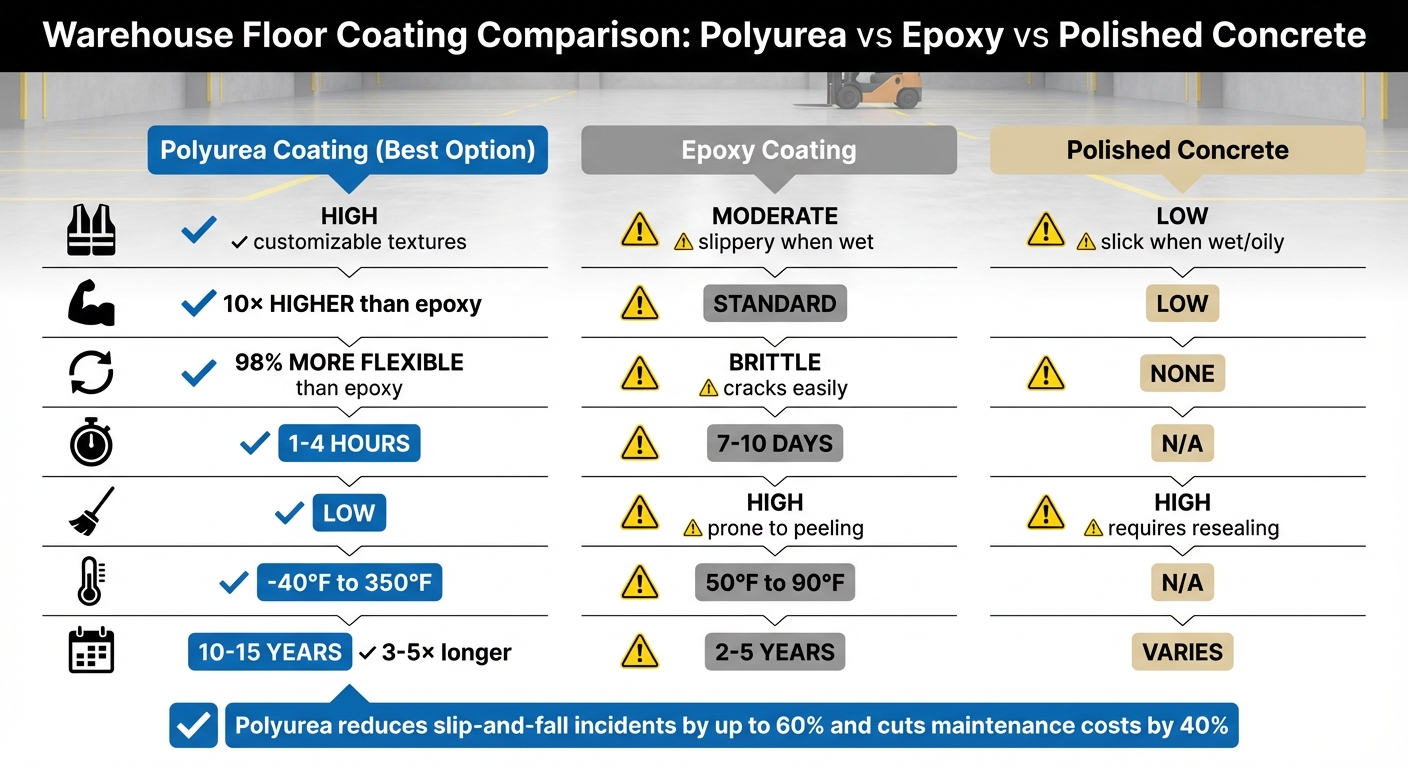
Polyurea vs Epoxy vs Polished Concrete Warehouse Flooring Comparison
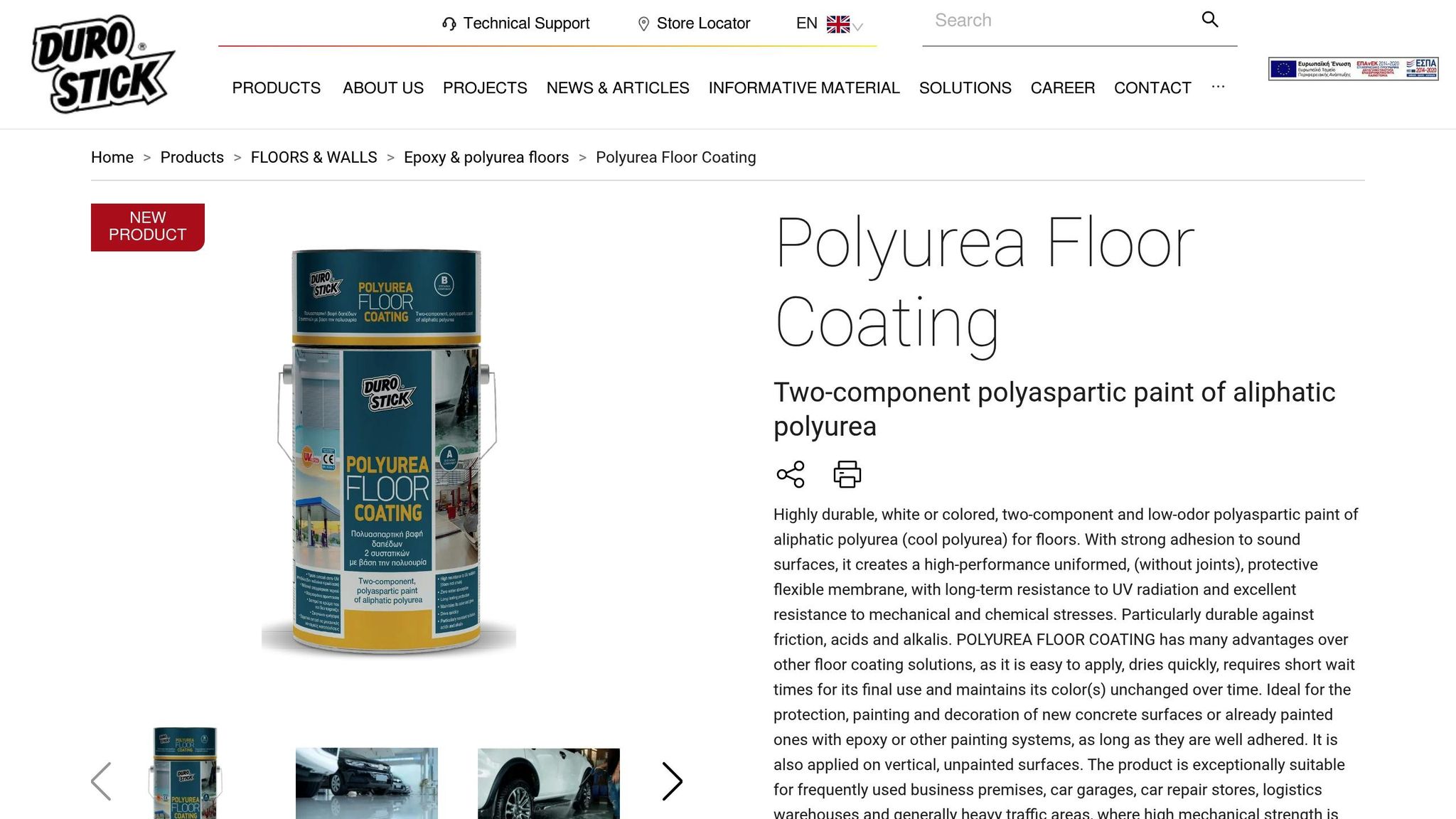
Industrial Floor Painting with POLYUREA FLOOR COATING by DUROSTICK
sbb-itb-4b4bb37
How Polyurea Coatings Prevent Slips
Polyurea coatings are a game-changer when it comes to reducing slip hazards. They address these risks through a combination of surface texture and chemical properties. A critical factor here is the coefficient of friction (COF) – essentially, a measure of how much traction a surface provides. By tweaking the polyurea formula during production, manufacturers can fine-tune COF levels to meet specific safety standards.
Even though polyurea surfaces may look smooth, they work seamlessly with texturing agents. Installers often add materials like aluminum oxide or silica sand, covering 30%-50% of the surface. These additives act like tiny grips, ensuring traction for both shoes and forklift tires, even on wet surfaces.
"The slip resistance of polyurea floors is often measured by the coefficient of friction, which indicates the level of traction the surface provides. This property is critical for ensuring safety, particularly in areas where slipping could lead to injuries."
Another key feature is its non-porous nature, which prevents oils and chemicals from soaking in. This means spills stay on the surface, making them easy to clean and reducing the likelihood of slick spots. This is especially critical in spaces like loading docks and battery charging stations.
Coefficient of Friction Studies
Research shows that polyurea coatings can cut slip-and-fall incidents by up to 60% in commercial spaces, thanks to their superior traction and durability. Here’s a quick comparison of how polyurea stacks up against other flooring options:
| Feature | Polyurea Coating | Epoxy Coating | Polished Concrete |
|---|---|---|---|
| Slip Resistance | High (customizable textures) | Moderate (slippery when wet) | Low (slick when wet or oily) |
| Impact Resistance | 10× higher than epoxy | Standard | Low |
| Flexibility | 98% more flexible than epoxy | Brittle; prone to cracking | None |
| Maintenance | Low; non-porous | High; prone to peeling | High; requires regular resealing |
Polyurea’s flexibility is another standout feature. It moves with the concrete, reducing the risk of cracks or peeling that could create uneven, hazardous surfaces.
Installation techniques also enhance slip resistance. For example, broom or trowel finishes can add subtle ridges to the surface, improving grip. In high-risk areas like loading docks, rubber granules can be mixed into the coating for extra traction, particularly for forklift tires.
"Polyurea coatings contribute to a safer environment through slip-resistant finishes that provide excellent traction, even in wet or oily conditions."
- Allexa Callaway, Keas Concrete Coatings
Polyurea performs reliably in extreme temperatures, ranging from -40°F to 180°F. This makes it suitable for diverse environments, from cold storage facilities to high-heat manufacturing plants. Unlike epoxy, which requires warmer conditions (above 50°F) to cure properly, polyurea can be applied even in freezing temperatures without losing its slip-resistant properties.
Case Studies: Reduced Slip Incidents
Polyurea coatings don’t just improve safety – they also last longer. Studies show they can extend a floor’s lifespan by 3 to 5 times compared to epoxy in high-traffic areas. Plus, their rapid cure time of just 1 to 4 hours allows businesses to resume operations quickly, unlike epoxy, which can take 7 to 10 days to fully cure.
Switching from untreated concrete to textured polyurea eliminates deep oil stains that make concrete dangerously slick. In places like machine shops or food processing plants, where spills are frequent, the seamless, non-porous surface is a major safety upgrade.
"The small granules help create a textured surface that a forklift’s tires can adhere to, thus preventing any injuries."
Polyurea’s durability is another key advantage. Its resistance to impact and abrasion – 10 times greater than epoxy – helps maintain its textured, slip-resistant finish, even under heavy industrial use. This durability ensures consistent safety performance for 15 to 20 years.
On top of improving traction, polyurea’s bright color options make it easy to mark walkways, hazard zones, and borders. These visual cues, combined with the enhanced grip, help reduce accidents and ensure compliance with OSHA’s Surface Conditions Directive 1910.22.
Durability and Impact Resistance
Warehouse floors endure a relentless barrage of high-impact activities. From forklifts zipping around to pallets crashing down and machinery rolling over the same areas repeatedly, the flooring must be tough enough to handle it all. Polyurea coatings are designed to meet these demands head-on, offering elasticity that absorbs impacts instead of cracking or chipping like more rigid options. Here’s a closer look at how polyurea performs under heavy loads and its ability to handle impacts.
Heavy Load Performance Data
Polyurea outshines traditional epoxy coatings when it comes to impact and abrasion resistance – 10 times more resistant, to be exact. This durability translates to fewer repairs and a longer lifespan for floors. In fact, polyurea can extend a floor’s lifespan by 3 to 5 times in high-traffic areas compared to epoxy. Facilities that have switched to polyurea report impressive results: a 40% drop in maintenance costs and a 30% reduction in downtime caused by floor repairs.
The coating’s seamless, non-porous finish also plays a critical role in maintaining the concrete’s integrity. It prevents oils and chemicals from seeping through and weakening the surface. With a rapid cure time of just 1 to 4 hours, facilities can return to full operation quickly after application.
Elasticity and Impact Absorption
What sets polyurea apart is its exceptional flexibility, which makes it a standout choice for absorbing impacts. It’s 98% more flexible than epoxy, allowing it to move with the concrete as it expands and contracts due to temperature changes. Unlike epoxy, which tends to crack and peel under such conditions, polyurea stays intact. This flexibility also helps it absorb the energy from heavy impacts, like dropped pallets or machinery, instead of transferring it to the concrete below. The result? Safer walking surfaces with fewer trip hazards.
In high-impact environments, polyurea is rated 4 times more durable than epoxy. It holds up even under the strain of forklifts making sharp turns or pallets being dropped repeatedly in the same spot. Additionally, polyurea is UV stable, meaning it won’t yellow or degrade when exposed to sunlight streaming through warehouse doors. This durability ensures its protective qualities last far longer than epoxy.
Chemical and Temperature Resistance
Polyurea coatings don’t just offer mechanical durability; they also provide exceptional protection against chemicals and extreme temperatures, making them a reliable choice for safeguarding warehouse floors. Warehouses often deal with chemical spills – like oils, solvents, acids, and cleaners – that can wreak havoc on unprotected concrete. Polyurea forms a seamless, non-porous barrier that stops these substances from penetrating and causing lasting damage. It’s specifically designed to resist common industrial chemicals, including gasoline, motor oil, isopropyl alcohol, and even harsh acids like muriatic and sulfuric acid at 10% concentration.
"Spills happen, but with polyurea, cleanup is as easy as a towel and a general-purpose cleaner." – Cross Creek Concrete Coatings
This chemical-resistant surface makes maintenance a breeze – spills can be wiped up quickly without needing specialized cleaners. In food processing facilities, its non-porous nature helps prevent bacteria from taking hold, while in machine shops, it avoids the peeling and cracking that epoxy floors often suffer under heavy chemical exposure.
Protection Against Chemicals and Spills
The unique structure of polyurea, created from isocyanate and polyol, gives it a level of chemical resilience and flexibility that outperforms epoxy. Tests show it holds up well against motor oil, isopropyl alcohol, and 25% sodium hydroxide. While gasoline and acetone may cause slight discoloration, the coating itself remains intact. However, it’s worth noting that 10% hydrofluoric and nitric acids should be avoided as they can damage the surface. This impressive resistance to chemicals minimizes maintenance disruptions and ensures safe, durable floors in even the toughest warehouse environments.
Performance in Extreme Temperatures
Polyurea’s ability to handle extreme temperatures is another key advantage. It can withstand a temperature range of -40°F to 350°F without cracking or peeling. Its elongation properties, which range from 200% to over 600%, allow it to flex and move with the concrete during temperature shifts.
"Polyurea lies stable under temperature fluctuations, from extremely high temperatures to cold conditions. This temperature sensitivity advantage makes it ideal for both indoor and outdoor applications." – Extreme Industrial Coatings
Unlike epoxy, which requires a narrow temperature range of 50°F to 90°F for proper application, polyurea can be applied in conditions as extreme as -20°F to 105°F, making it a year-round solution. Plus, it cures incredibly fast – foot traffic is possible in just one hour.
| Performance Factor | Traditional Epoxy | Polyurea Coatings |
|---|---|---|
| Temperature Range | 50°F – 90°F | -40°F to 350°F |
| Chemical Resistance | Good | Excellent |
| Flexibility | Rigid | 98% more flexible |
| Cure Time | 24–72 hours | 1 hour |
| UV Stability | Poor (yellows/fades) | Excellent (UV-stable) |
For outdoor areas like loading docks, aliphatic polyurea formulations prevent UV yellowing and surface degradation. Additionally, with zero volatile organic compounds (VOCs), polyurea is a safer option for spaces that are occupied or poorly ventilated. These qualities not only extend the life of the flooring but also reduce safety and maintenance concerns in busy warehouse environments.
Cost Savings and Safety Benefits
Polyurea coatings can lead to notable long-term savings by cutting down on maintenance needs and reducing workplace injuries. While the initial cost of polyurea is higher than epoxy, its durability and extended lifespan mean fewer repairs and replacements over time. These savings are compounded by lower ongoing maintenance costs.
Lower Maintenance and Repair Expenses
The durability of polyurea directly impacts operating costs in a positive way. Typical annual maintenance costs range between $100 and $200. Thanks to its non-porous surface, polyurea effectively resists oils, chemicals, and dirt, making cleanup straightforward. This eliminates the need for specialized cleaning products or frequent professional services.
"Investing in polyurea ensures you won’t need frequent floor replacements, saving both time and money over decades." – Admin, Tawazon
Additionally, polyurea is 98% more flexible than epoxy, allowing it to move with the concrete and bridge cracks up to 5 mm without peeling. This flexibility prevents the structural issues often seen with rigid epoxy floors, which can lead to costly repairs. With a tensile strength of 2,200 to over 4,000 PSI (compared to epoxy’s 1,200–1,500 PSI), polyurea can handle heavy forklift traffic and dropped pallets without chipping. Its Taber abrasion rating of 75 mg per 1,000 revolutions ensures the surface stays intact over time.
Another advantage is polyurea’s fast curing time – typically within 24 hours – which minimizes downtime. In contrast, epoxy installations can take 3 to 7 days, disrupting operations and productivity. This quick turnaround reduces repair costs and keeps the work environment running smoothly.
Fewer Slip Accidents and Related Costs
Polyurea coatings also help reduce the financial and operational impact of slip-and-fall accidents. These incidents often result in compensation claims, lost productivity, and potential legal issues. By offering customizable slip-resistant textures, polyurea improves traction for both pedestrians and equipment, reducing the risk of accidents. Its safety features remain effective throughout its lifespan, providing consistent protection in high-traffic areas like loading docks, stairways, and ramps.
In addition to preventing injuries, polyurea’s easy cleanup capabilities ensure that hazardous conditions, such as spills, are resolved quickly. This contributes to a safer workplace and supports the overall financial stability of the facility.
Atlas Concrete Coatings‘ Warehouse Solutions
Atlas Concrete Coatings focuses on delivering durable, high-performance flooring systems designed to meet the intense demands of warehouse and industrial spaces. Using advanced polyurea technology, these systems improve traction, resist chemical damage, and significantly reduce slip-related accidents.
Industrial Flooring Features
Atlas offers three specialized flooring options:
- Chip Blends: Provides a textured, granite-like finish that increases traction and enhances safety.
- High-Gloss Metallic Coatings: Improves light reflectivity, which can help lower lighting costs.
- 5-Layer Quartz System: Offers exceptional resistance to chemicals, impacts, and friction, making it ideal for areas exposed to liquids and heavy loads.
These coatings are UV-stable, maintaining their traction and gloss for 10–15 years.
"Our better-than-epoxy flooring outlasts concrete paint sealers, epoxy resins, and other coating alternatives." – Atlas Concrete Coatings
In addition to durability, the coatings help prevent concrete cracking and mildew, creating a safer environment while reducing maintenance needs and costs.
Why Choose Atlas Concrete Coatings
Atlas stands out by pairing top-tier products with expert installation from trained professionals. This ensures the coatings perform as intended even under challenging conditions. Every project includes strong service and product warranties, giving warehouse operators peace of mind.
Warehouse managers can schedule free consultations to explore the Chip, Metallic, and Quartz systems, tailoring solutions to their facility’s specific needs. For spaces frequently exposed to liquids or heavy machinery, Atlas highly recommends the 5-Layer Quartz system for its superior friction and impact resistance.
Conclusion
Polyurea coatings offer a clear boost to warehouse safety and operational efficiency. Research shows these systems can lower slip-and-fall incidents by up to 60% while slashing maintenance expenses by 40% compared to traditional epoxy alternatives. With impact resistance 4 to 10 times higher and 98% greater flexibility, polyurea floors endure the relentless demands of heavy machinery, dropped pallets, and constant foot traffic without cracking or peeling.
The benefits go beyond accident prevention. Warehouses see 30% less downtime and enjoy floors that last 10–15 years – three to five times longer than epoxy. Thanks to their chemical resistance and UV stability, these floors maintain their functionality and appearance without yellowing or fading, reducing the need for frequent upkeep.
Proper installation is key to unlocking these advantages, and Atlas Concrete Coatings specializes in delivering expert application for maximum durability and performance.
"Instead of resurfacing your warehouse flooring every 2-5 years, trust in our rugged varieties and maintain a stylish gloss and consistent traction for 10-15 years or longer." – Atlas Concrete Coatings
For warehouse managers looking to address aging floors or prevent future safety risks, scheduling a free consultation is a smart first step. Polyurea technology, paired with skilled installation, provides long-lasting protection that pays for itself through fewer accidents, lower maintenance costs, and smoother operations.
FAQs
What slip-resistance level (COF) should a warehouse floor meet?
A warehouse floor needs a high coefficient of friction (COF) to maintain safety. Industry standards usually suggest a COF of at least 0.6 to reduce the risk of slipping. Adding textured finishes or using anti-slip materials like polyurea coatings can improve traction, even when the surface is wet or oily.
How do you choose the right polyurea texture for foot traffic vs forklifts?
When selecting the right polyurea texture, it’s all about matching it to the type of traffic the surface will handle. For areas with foot traffic, go for a textured, slip-resistant surface that incorporates aggregates. This adds grip and enhances safety.
On the other hand, if the space is used by forklifts or heavy machinery, a smoother but tough finish with anti-slip additives works best. This ensures durability while reducing the risk of slipping, even in wet or oily environments.
The key is finding a texture that strikes the right balance between safety and long-term durability for your specific needs.
What floor prep is needed before applying a polyurea coating?
Getting the surface ready is a crucial step if you want polyurea coatings to stick well and last a long time. Here’s what’s involved:
- Inspection: Look for cracks, spalling, oil stains, or moisture problems. These issues need to be addressed before moving forward.
- Thorough Cleaning: Remove all dirt, grease, debris, and any old coatings. A clean surface is non-negotiable.
- Damage Repair: Fix any cracks or other imperfections to create a solid base.
- Mechanical Profiling: Achieve the right texture, typically a Concrete Surface Profile (CSP) of 2–3, to help the coating adhere properly.
- Moisture and Porosity Testing: It’s a good idea to test for these factors to ensure the surface is ready for the coating.
Skipping these steps? That’s when problems like peeling or blistering can show up, ruining all your hard work. Proper preparation is the foundation for success.