

When deciding between epoxy and polyurea chip systems for concrete floors, it boils down to durability, flexibility, curing time, and cost. Both systems use decorative chips and a topcoat, but polyurea outperforms epoxy in most areas. Here’s a quick breakdown:
- Durability: Polyurea is 4x stronger and lasts up to 15–20+ years, while epoxy lasts 5–10 years (less in extreme climates).
- Flexibility: Polyurea flexes with concrete, preventing cracks, whereas epoxy is rigid and prone to peeling.
- UV Resistance: Polyurea resists yellowing and fading in sunlight, ideal for outdoor use; epoxy degrades with UV exposure.
- Curing Time: Polyurea cures in 6–8 hours, while epoxy takes 24–72 hours.
- Cost: Epoxy is cheaper at $3–$7 per square foot, compared to polyurea’s $6–$12 per square foot.
For quick, long-lasting, and outdoor-friendly flooring, polyurea is the better choice. Epoxy is more budget-friendly for indoor, low-traffic areas.
Quick Comparison
| Attribute | Epoxy Chip Systems | Polyurea Chip Systems |
|---|---|---|
| Durability | Moderate (5–10 years) | High (15–20+ years) |
| Flexibility | Rigid, prone to cracks | Highly flexible |
| UV Resistance | Low; yellows over time | High; retains color |
| Curing Time | 24–72 hours | 6–8 hours |
| Cost | $3–$7/sq. ft. | $6–$12/sq. ft. |
| Temperature Tolerance | Min. 40°F | Min. -20°F |
Polyurea is the better investment for lasting performance, especially in harsh climates or outdoor spaces.
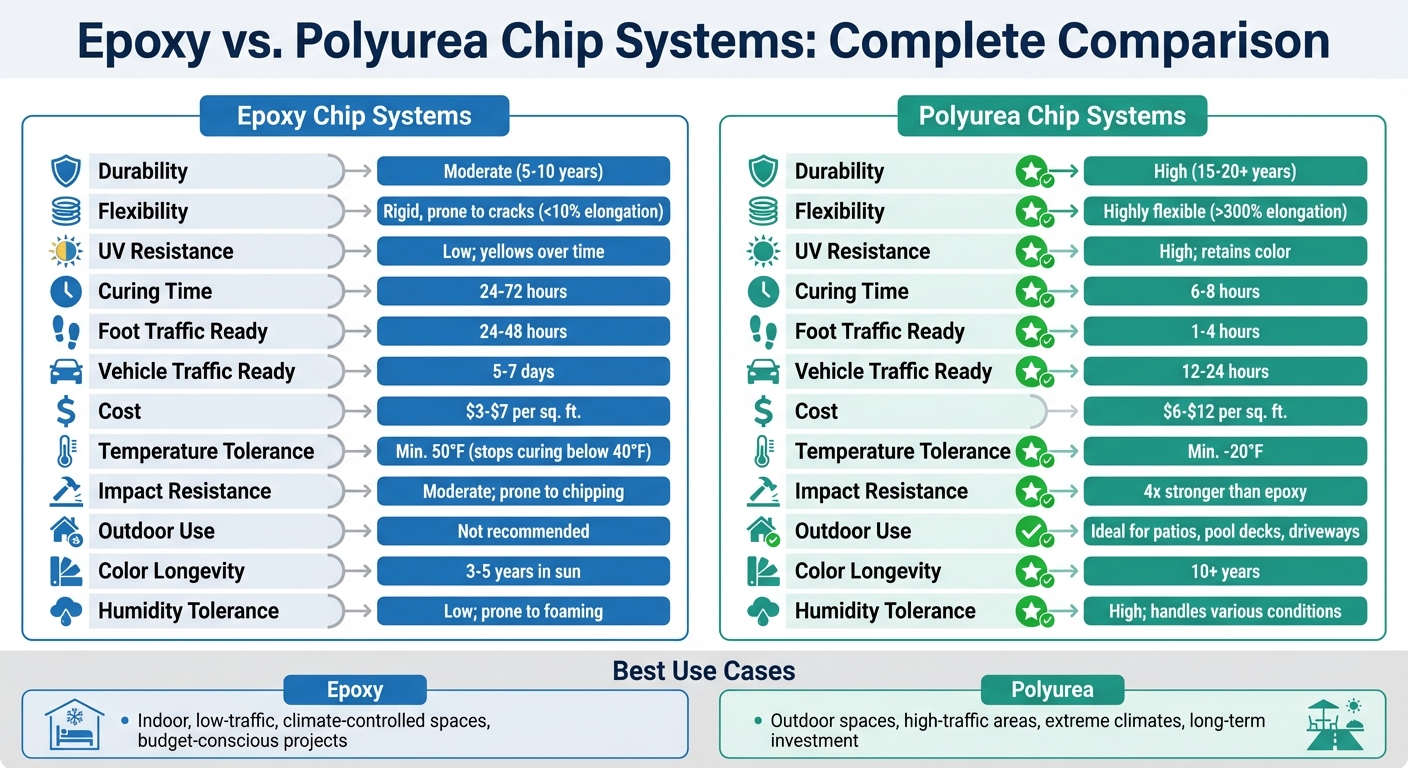
Epoxy vs Polyurea Chip Systems Comparison Chart
Durability: Epoxy vs. Polyurea Chips
Main Durability Differences
When it comes to durability, epoxy and polyurea coatings handle stress very differently. Epoxy is rigid and brittle, which means it doesn’t adapt well to the natural expansion and contraction of concrete. This lack of flexibility often leads to cracking, flaking, and peeling over time. On the other hand, polyurea is elastomeric, meaning it flexes with the concrete rather than resisting it.
Polyurea is 98% more flexible and offers up to 4 times greater resistance to impact and abrasion compared to epoxy. For example, a case study in Denver, Colorado highlighted this difference: an epoxy-coated floor failed after just two winters, showing peeling and salt stains. The surface was then redone with a polyurea granite-style flake finish, and even after two years of exposure to harsh freeze-thaw cycles, it remained crack-free and unstained.
Temperature also plays a big role in durability. Epoxy coatings can’t cure below 40°F and become brittle in cold weather. In contrast, polyurea remains stable in extreme conditions, curing at temperatures as low as -20°F and holding up under intense heat. Its ability to expand and contract with temperature changes prevents cracking and peeling, making it a better choice for fluctuating climates.
This difference in performance impacts longevity too. Epoxy coatings typically last 5–10 years, but in extreme climates, that lifespan can drop to just 3–5 years. Polyurea systems, however, often last 15–20+ years. This is why polyurea is sometimes referred to as "lifetime armor", while epoxy is seen as more of a temporary fix. Companies like Atlas Concrete Coatings even back their polyurea systems with lifetime warranties, demonstrating confidence in their long-term durability for garages, commercial spaces, and industrial environments.
Durability Comparison Table
Here’s a breakdown of how epoxy and polyurea chip systems compare:
| Feature | Epoxy Chip Systems | Polyurea Chip Systems |
|---|---|---|
| Flexibility | Rigid and brittle; <10% elongation | Elastomeric; >300% elongation |
| Impact Resistance | Moderate; prone to chipping | High; absorbs shocks without damage |
| Thermal Stability | Softens in heat; cracks in cold | Maintains integrity from -20°F to extreme heat |
| Lifespan | 5–10 years (3–5 in extreme climates) | 15–20+ years |
| Abrasion Resistance | Good, but prone to "hot-tire pickup" | Exceptional; resists heavy traffic |
| Curing Time | 24–72 hours | 6–8 hours |
sbb-itb-4b4bb37
Customization and UV Resistance
Design Options
When it comes to UV exposure and customization, the differences between epoxy and polyurea systems become even more apparent. Both systems allow for decorative flakes to create distinct patterns, but polyurea stands out with its ability to mimic natural stone, offering sleek, modern finishes. Epoxy, on the other hand, tends to degrade when exposed to UV light, leading to yellowing and fading. This makes epoxy far less suitable for outdoor use compared to polyurea, which maintains its bold appearance over time.
For the best results in flake systems, the coating must be thick enough to fully embed the decorative chips. Polyaspartic topcoats, which are commonly paired with polyurea systems, excel in achieving this thickness. Standard urethane topcoats often fall short, compromising both the durability and aesthetic of the finish.
Polyurea is specifically designed to resist UV damage, preserving its gloss and color vibrancy even in harsh sunlight. Often referred to as the "SPF 100 of floor coatings", polyurea offers exceptional protection against UV rays. In contrast, epoxy is better suited for indoor environments like garages or basements, where UV exposure is minimal.
"Direct sunlight is one of the biggest challenges for concrete coatings. Traditional epoxy flooring can gradually fade or yellow if exposed to UV rays for long periods."
Polyurea is the go-to choice for outdoor spaces like patios, pool decks, and driveways. Companies like Atlas Concrete Coatings specialize in polyurea-based chip floor systems, which are engineered to resist UV damage and maintain their vibrant look. These coatings are particularly well-suited to sun-drenched areas in regions like Pennsylvania and New Jersey, ensuring long-lasting aesthetic appeal. In contrast, epoxy coatings may begin to lose their luster after just a few years of sun exposure.
Color Longevity Table
Here’s a quick comparison of how each system performs in terms of UV resistance and color retention:
| Feature | Epoxy Chip Systems | Polyurea Chip Systems |
|---|---|---|
| UV Resistance | Low; prone to yellowing and fading | High; UV-stable |
| Color Longevity | 3–5 years in sun-exposed areas; ambers over time | 10+ years; maintains vibrancy and gloss |
| Outdoor Suitability | Indoor use only | Ideal for patios, driveways, and pool decks |
| Design Options | Customizable flakes; may be limited by resin yellowing | Stone-like, modern customizable flakes |
| Finish Quality | Hard, glossy, but degrades in sunlight | Flexible, high-gloss, impact-resistant |
Application and Moisture Resistance
Installation and Curing Time
When it comes to curing speed, polyurea leaves epoxy far behind. Polyurea systems can fully cure in just 6 to 8 hours, making it possible to complete an installation in a single day. Foot traffic is allowed within 1–4 hours, and vehicles can use the surface in 12–24 hours. In contrast, epoxy takes much longer: 24–48 hours for foot traffic and a full 5–7 days for vehicle traffic. Additionally, epoxy needs two full days to reach complete hardness.
Temperature and humidity also play a key role in curing. Polyurea can cure in extreme cold, down to -20°F, while epoxy requires at least 50°F to cure properly and stops curing altogether below 40°F. High humidity poses another challenge for epoxy, as it can lead to foaming or premature curing. Polyurea, however, is far more adaptable to varying humidity levels, though adding a moisture-vapor barrier to polyurea installations may extend the process by an extra day.
For projects where time is of the essence – like commercial spaces or garages that need to be back in use quickly – polyurea’s fast curing and flexibility offer a clear edge. Companies like Atlas Concrete Coatings specialize in polyurea installations, ensuring minimal downtime while delivering durable, high-performance flooring for both residential and commercial settings. These quick curing times and adaptable installation conditions also impact how each material manages moisture during the process.
Moisture Resistance Table
Here’s a side-by-side comparison of epoxy and polyurea chip systems, highlighting their performance under various application and moisture-related conditions:
| Feature | Epoxy Chip Systems | Polyurea Chip Systems |
|---|---|---|
| Curing Time (Full Hardness) | Approximately 2 days | 6–8 hours |
| Foot Traffic Ready | 24–48 hours | 1–4 hours |
| Vehicle Traffic Ready | 5–7 days | 12–24 hours |
| Min. Application Temp | 50°F (does not cure below 40°F) | -20°F |
| Humidity Tolerance | Low; prone to foaming in high humidity | High; handles various humidity levels |
| Moisture Barrier | Moderate protection | Robust barrier (adds 1 day if applied) |
| Flexibility | Rigid/brittle; may crack with substrate movement | Elastomeric; flexes with concrete |
Safety and Design Features
Slip Resistance and Safety
When it comes to safety in damp or wet areas, surface texture plays a crucial role. Polyurea chip systems create a textured, non-slip surface that maintains traction even when wet. The decorative flakes embedded in the polyaspartic topcoat naturally enhance grip, making these floors a go-to solution for garages, pool decks, and commercial spaces prone to spills or water exposure.
In contrast, epoxy flooring delivers a glossy, smooth finish that can become dangerously slippery when wet. Its rigid structure also makes it susceptible to cracking or peeling, often due to substrate movement. Once this damage occurs, it can lead to uneven surfaces, which pose trip hazards.
Polyurea stands out with its non-porous surface, effectively repelling liquids. This makes it easy to clean up spills without leaving behind slick spots. The combination of a textured surface and liquid resistance makes polyurea a safer option for both homes and businesses. Plus, these safety advantages align seamlessly with its ability to provide aesthetic versatility.
Custom Design Options
The textured finish that enhances safety also adds a layer of visual sophistication, elevating architectural designs. Polyurea chip systems offer extensive customization options, far beyond simple color choices. For example, Atlas Concrete Coatings offers a wide range of flake blends and finishes suitable for residential garages, commercial showrooms, pool decks, and even industrial facilities. These systems can replicate the look of natural stone or create bold, modern designs, transforming plain concrete into a premium surface.
Polyurea’s UV-stable properties ensure that custom designs retain their vibrancy without yellowing or fading, even in outdoor spaces exposed to direct sunlight. Whether you’re aiming for a subtle, stone-like appearance or a striking, contemporary style, polyurea delivers both durability and long-lasting visual appeal.
Epoxy Versus Polyurea Flooring (Which is Better?)
Summary of Differences
This section brings together the main differences between epoxy and polyurea chip systems, highlighting their standout features. When it comes to performance, polyurea outshines epoxy in several critical areas. It offers 4 times the strength and 98% greater flexibility, making it far better at handling impact and substrate movement. On the other hand, epoxy is a more affordable choice for low-traffic indoor areas.
Polyurea also cures much faster – 6–8 hours compared to epoxy’s 2+ days to reach full hardness. This quick curing time can significantly reduce downtime. Additionally, polyurea works in temperatures as low as -20°F, while epoxy requires at least 50°F to cure properly.
Another key difference is how the two handle sunlight. Epoxy tends to yellow and fade when exposed to UV rays, making it unsuitable for outdoor use. Polyurea, however, retains its color and provides excellent UV protection. Polyurea’s non-porous surface also offers better moisture and stain resistance, making it ideal for high-traffic or outdoor applications.
Here’s a side-by-side comparison to summarize:
| Attribute | Epoxy Chip Systems | Polyurea Chip Systems |
|---|---|---|
| Durability | Strong but can chip | 4x stronger; resists abrasion and impact |
| Flexibility | Brittle; cracks with movement | 98% more flexible; elastomeric |
| Lifespan | Shorter; degrades faster | Longer; referred to as "lifetime armor" |
| UV Resistance | Poor; yellows and fades | Excellent; UV-stable |
| Moisture Protection | Good chemical resistance | Non-porous; highly stain-resistant |
| Curing Time | Slow (2+ days) | Fast (6–8 hours) |
| Application Temperature | Minimum 50°F | Works down to -20°F |
| Safety | Can be slippery when wet | Textured surface improves traction |
These comparisons underline why polyurea is often the better choice for areas like garages, pool decks, commercial spaces, and outdoor environments that face temperature changes and UV exposure. However, epoxy remains a practical option for indoor, climate-controlled spaces like basements, especially for those prioritizing cost over durability.
Conclusion
Polyurea chip systems outshine epoxy when it comes to strength, flexibility, and longevity. Thanks to their fast curing time, UV stability, and resistance to extreme temperatures, polyurea coatings address many of the shortcomings associated with traditional epoxy options. This combination of durability, quick application, and design versatility makes polyurea a standout choice.
These technical strengths bring practical benefits to everyday use. For homeowners and businesses looking for floors that offer durability, safety, and aesthetic options, polyurea delivers. Its non-porous surface resists oil and chemical stains, while the textured finish enhances traction, even in wet conditions. Whether you’re upgrading a garage floor, resurfacing a pool deck, or enhancing a commercial space, polyurea is built to withstand cracking and peeling.
Atlas Concrete Coatings takes full advantage of these benefits, offering polyurea-based chip floor coatings designed to meet the needs of residential, commercial, and industrial spaces. Their systems boast quick installation, long-lasting durability, and a variety of custom design options. With a lifetime warranty on chip systems and service throughout Pennsylvania and New Jersey, Atlas provides flooring solutions you can rely on.
While epoxy may work for budget-friendly indoor projects, polyurea is the go-to choice for demanding conditions like harsh weather, heavy foot traffic, and outdoor spaces. Choosing polyurea is an investment in flooring that not only performs but also maintains its appearance over time.
FAQs
Which chip system is best for my garage?
Polyurea stands out as the go-to option for garage floors thanks to its exceptional durability, fast curing time (ready in under 24 hours), and ability to resist UV damage, cracking, and chemical spills. While epoxy coatings might seem like a budget-friendly choice initially, they typically last only 5–10 years and are susceptible to fading over time. For garages exposed to heavy use or fluctuating temperatures, polyurea offers a much longer lifespan – lasting 15–20 years or more – making it a smart investment for durability and performance.
Can polyurea be installed in cold weather?
Polyurea can be applied even in cold weather, as it cures well at lower temperatures. This makes it a dependable option for projects throughout the year, no matter the season.
How do I choose a flake color and finish?
When selecting a flake color and finish, think about both the style and purpose of your space. Flake colors are available in a wide range of shades, allowing you to either complement or contrast with your existing decor. Finishes – like matte, satin, or gloss – can change the floor’s look and how much light it reflects. If you’re aiming for a bold and long-lasting result, polyurea coatings are a great choice. To improve safety, consider adding slip-resistant materials for extra texture. A professional can help you pinpoint the best combination to suit your needs.