

Polyurea coatings are the go-to choice for protecting garage floors from heat-related damage. Unlike epoxy, which cracks, peels, and yellows under temperature shifts and UV exposure, polyurea remains flexible and durable. It stretches with the concrete during thermal expansion and resists temperatures up to 350°F. This prevents common issues like cracking, bubbling, and “hot tire pickup.” While epoxy coatings typically last 5–10 years, polyurea systems can last 15–30+ years, making them a long-term investment for your garage.
Key Benefits of Polyurea Coatings:
- Heat Resistance: Withstands up to 350°F without softening or peeling.
- UV Stability: Won’t yellow or fade under sunlight.
- Flexibility: Moves with concrete, preventing cracks and chips.
- Durability: Lasts 3–5 times longer than epoxy coatings.
- Quick Curing: Ready for foot traffic in 4–8 hours, vehicle traffic in 24 hours.
Professional installation ensures proper surface preparation and application, especially in hot climates. Regular cleaning and simple maintenance can extend the lifespan of polyurea floors to over 25 years, making them a smart choice for both durability and performance.
How Heat Damages Garage Floors
Heat’s Impact on Concrete
Concrete isn’t as solid as it seems. It expands during hot summers and contracts in cold winters, creating internal stress points over time. This constant cycle of movement gradually weakens the slab, making it more prone to damage.
Adding to the problem, concrete’s porous nature allows it to absorb moisture. When temperatures rise, that trapped water turns into vapor, pushing upward and causing bubbling or delamination on the surface. Over the years, these stress points evolve into visible cracks and other surface damage, compromising the strength and stability of the floor.
This is why rigid coatings, like standard epoxy, often fail – they simply can’t handle the constant movement of the concrete.
Why Standard Floor Coatings Fail
The natural expansion and contraction of concrete is a challenge for rigid materials like epoxy. Unlike concrete, epoxy can’t flex or move. Instead, it resists the shifting, which leads to stress fractures, cracking, and eventually peeling away from the surface.
Direct sunlight adds another layer of trouble. UV rays break down the chemical bonds in epoxy, causing it to yellow, fade, and lose its shine over time. If your garage gets natural light, you’ll likely notice discoloration in just a few months.
Then there’s tire heat. When your car’s tires heat up after driving, that heat transfers to the garage floor. Standard coatings soften under this heat, leading to tire marks and bonding issues.
All these issues highlight the need for a more durable and flexible solution – one that can withstand heat-induced stress. That’s where polyurea coatings come into play, offering a better alternative to traditional epoxy.
sbb-itb-4b4bb37
Polyurea vs. Epoxy – This Changed Everything for Garage Floors
Polyurea’s Heat Resistance Advantages
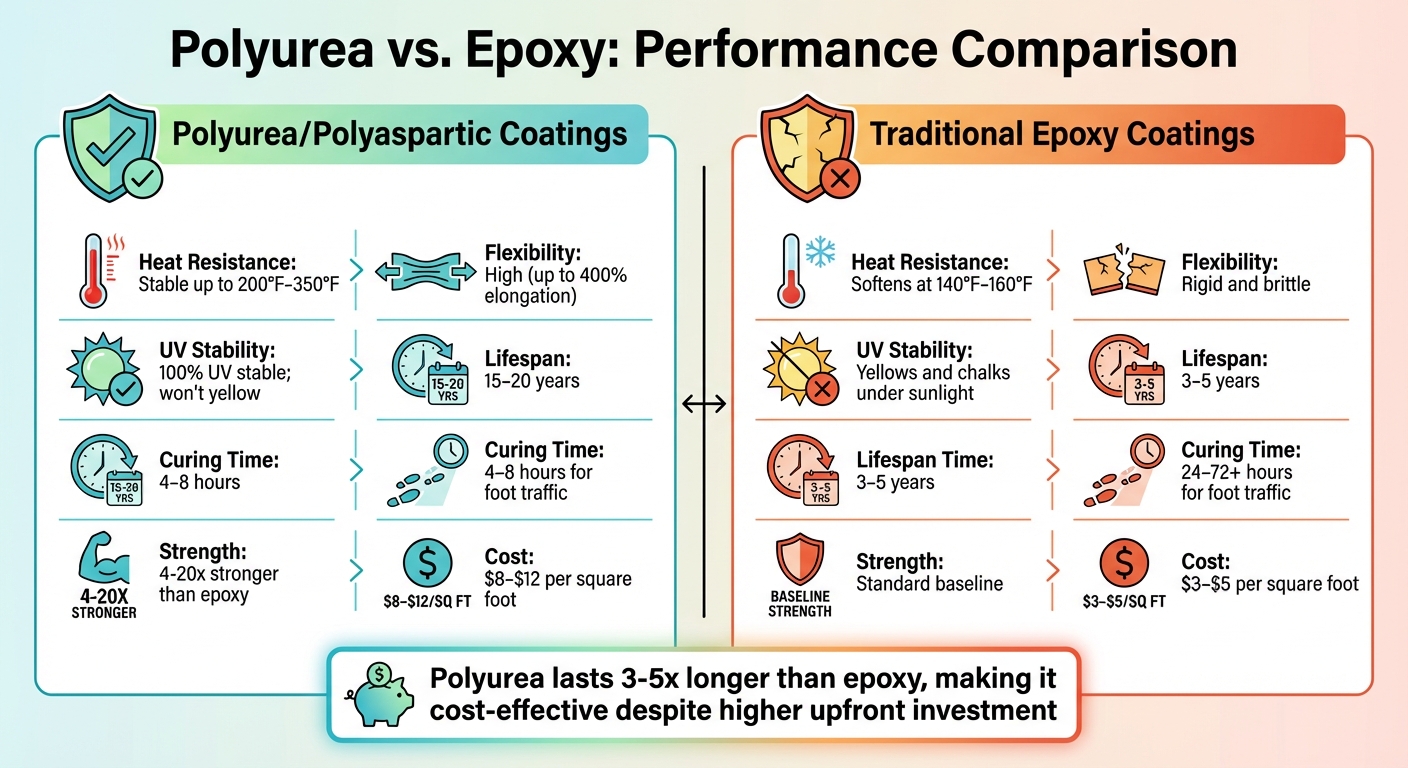
Polyurea vs Epoxy Garage Floor Coatings Comparison
Polyurea coatings bring a host of benefits that address the shortcomings of traditional materials like epoxy.
Polyurea Coating Properties
The strength of polyurea lies in its unique molecular structure. When applied, it forms a dense, elastic bond capable of moving with the concrete surface. This flexibility is a game-changer – polyurea can stretch up to 400% elongation, allowing it to handle thermal expansion and contraction without cracking or detaching.
When it comes to heat resistance, polyurea outperforms epoxy by a wide margin. While epoxy begins to soften around 140°F–160°F, polyurea maintains its integrity at temperatures exceeding 200°F, with some formulations handling up to 350°F. This resilience significantly reduces issues like hot tire pickup and peeling.
Another standout feature is the UV stability of aliphatic polyurea and polyaspartic formulations. Unlike epoxy, these coatings are fully UV stable, meaning they won’t yellow, chalk, or fade under sunlight. In rigorous lab tests, polyaspartic coatings retained over 90% of their original appearance after 5,000 hours of accelerated UV exposure. This durability translates to a lifespan of 15–20 years in harsh environments, compared to epoxy’s 3–5 years.
"These advanced systems combine best strength with flexibility, creating a seamless, waterproof barrier that actually moves with your concrete instead of fighting against it."
– Hayley Shahbazi, Manager, Galaxy Concrete Coatings
Polyurea also excels in forming a waterproof barrier, preventing moisture vapor transmission, which often causes bubbling in other coatings under humid conditions. Additionally, it’s highly resistant to automotive fluids like oil, gas, and brake fluid – even at elevated temperatures.
Polyurea vs. Other Coating Materials
In high-heat environments, polyurea’s advantages over epoxy are clear. Not only is polyurea approximately four times stronger than standard epoxy, but some formulations are up to 20 times stronger. This strength comes from the superior chemical bond it forms with concrete, ensuring a more durable and lasting application.
| Feature | Polyurea / Polyaspartic | Traditional Epoxy |
|---|---|---|
| Heat Resistance | Stable up to 200°F–350°F | Softens at 140°F–160°F |
| Flexibility | High (up to 400% elongation) | Rigid and brittle |
| UV Stability | 100% UV stable; won’t yellow | Yellows and chalks under sunlight |
| Lifespan | 15–20 years | 3–5 years |
| Curing Time | 4–8 hours (foot traffic) | 24–72+ hours |
Another advantage of polyurea is its wide application window. It can be applied in temperatures ranging from -30°F to 140°F, unlike epoxy, which typically requires conditions above 50°F to cure properly. This adaptability allows for installations in less-than-ideal weather, and its rapid cure time means vehicle traffic can resume in just 24 hours, compared to epoxy’s 3–7 days.
"Hot tire resistance is critical for Florida garages where pavement temperatures exceed 150°F."
– John, Author, National Concrete Polishing
Although polyurea coatings cost more – ranging from $8–$12 per square foot compared to epoxy’s $3–$5 – their extended lifespan and superior performance make them a worthwhile investment.
How to Install Polyurea in Hot Garages
Installing polyurea in hot conditions requires careful planning and precision. While polyurea is ideal for areas with extreme heat, the same high temperatures can make the installation process challenging. If the coating dries too quickly, it can lead to poor adhesion or a brittle finish.
Why Professional Installation Matters
One of polyurea’s standout qualities is its rapid cure time – it can harden in as little as 10 minutes. However, this speed leaves very little room for error. Any mistakes during application can jeopardize the entire floor’s durability and performance.
"The incredibly fast cure rate of a polyurea also has a downside: It limits the time available for application, leaving little room for error."
– Anne Balogh, ConcreteNetwork.com
Professional installers have the expertise and tools needed to handle these challenges. They use specialized equipment, like mechanical diamond grinders, to create the textured surface necessary for proper bonding. Additionally, they conduct moisture vapor emission tests to ensure the substrate is ready for the coating. Moisture levels exceeding 3 pounds per 1,000 square feet over 24 hours can cause bubbling and failure of the coating. Companies like Atlas Concrete Coatings make these tests a standard part of their process.
Professionals also mix polyurea under controlled conditions and monitor weather and surface temperatures closely. This is essential because the material’s rapid cure time and strong chemical odor require precise handling. Once the preparation is complete, timing becomes the next critical factor.
Floor Preparation and Installation Timing
Proper surface preparation is the foundation of a durable polyurea coating. The surface must be free of oil, grease, tire marks, dust, and laitance, as these contaminants prevent the coating from bonding effectively. After mechanical grinding, spraying water on the surface can help check readiness – if water beads, further preparation is needed.
"A high percentage of coating failures is due to improper surface prep and a contaminated surface."
– Bob Harris, Decorative Concrete Institute
Timing the installation is especially important in hot climates. Experienced technicians aim to complete applications before 11:00 AM to avoid the peak heat of the day. Erika Ray from Keas Concrete Coatings suggests starting as early as 7:00 or 8:00 AM to ensure the base layers and topcoats cure properly. If temperatures exceed 95°F or the concrete is in direct sunlight, it’s best to delay the job. Excessive heat can cause the coating to become cloudy or opaque due to rapid solvent evaporation.
During application, keeping the garage door open improves ventilation and helps cool the workspace. For surfaces exposed to direct sunlight, temporary shade covers can help moderate the temperature. When repairing cracks, polyurea-based fillers are the best choice as they provide the flexibility needed to accommodate the coating’s thermal movement.
Caring for Polyurea Floors in High Heat
With proper care, polyurea coatings can last an impressive 20–25 years. Regular cleaning not only keeps them looking great but also helps maintain their flexibility and resistance to extreme temperatures. Here’s how to keep your polyurea floor in top shape, especially during high-heat conditions.
Seasonal Maintenance Steps
Daily sweeping with a soft-bristled broom or microfiber mop is essential to remove dust and grit. During summer months, increase this to twice a week to clear away pollen and sand.
For deeper cleaning, mop weekly or monthly using warm water and a mild detergent. For routine spills, a diluted Simple Green solution (1:8 ratio) works well. For tougher grime, mix ½ cup of clear ammonia with one gallon of warm water. Avoid using harsh cleaners like bleach, vinegar, or citrus-based products, as these can damage the surface.
"I never park the car immediately after a long drive. Letting the tires cool helps prevent hot rubber from stressing the polyurea."
– Brian Deas, Owner, DEAS Garage Floors
Quickly blot automotive fluids such as oil, antifreeze, or grease to prevent stains or chemical damage. Drip pans under vehicles prone to leaks and mats at entry points can add an extra layer of protection. During peak heat, avoid parking immediately after long drives to prevent hot tires from stressing the coating.
Managing humidity is another crucial step. If you notice condensation on walls or cabinets during summer, use box fans or a dehumidifier to improve airflow. Keeping garage doors closed during peak sunlight hours can also help reduce UV exposure, even though polyurea is UV-stable.
Lastly, addressing minor damages as they occur is key to maintaining your floor’s durability.
Repairing and Preserving Your Coating
Scratches and scuffs are bound to happen, but they’re easy to fix. Many manufacturers provide touch-up kits with colored epoxy or polyurea for filling in small imperfections.
"Minor scratches and scuffs are inevitable. For small imperfections, some manufacturers offer touch-up kits containing colored epoxy or polyurea that can be used to fill in the scratch."
– Brian Deas, Owner, DEAS Garage Floors
Reapply a top coat every 10–15 years to keep the surface in optimal condition. Professional inspections can also help catch hidden issues like foundation shifts or moisture buildup that might compromise adhesion.
When moving heavy equipment, lift items or use furniture pads to avoid gouging the surface. Stick to soft brooms and microfiber mops for cleaning, as abrasive pads can create micro-scratches that dull the finish over time.
Conclusion
Polyurea coatings offer a standout solution for protecting garage floors from heat damage and thermal stress. Thanks to their elastomeric flexibility, these coatings expand and contract with your concrete during temperature changes, preventing the cracking and peeling that often affect rigid coatings. With the ability to withstand temperatures ranging from -40°F to 350°F and resist hot tire pickup, polyurea handles everything from blazing summer heat to icy winter conditions without losing adhesion.
Unlike traditional epoxy coatings, which typically last 5–10 years, professional polyurea coatings maintain their integrity for over 30 years. They also provide 100% UV stability, keeping your garage floor vibrant and free from cracks. This durability translates into a tangible return on investment, as a quality polyurea floor can increase your home’s value by about 20% to 25% of the initial cost.
"When a coating lasts 30+ years instead of 5-10, the math is simple."
– Hayley Shahbazi, Manager, Galaxy Concrete Coatings
Atlas Concrete Coatings ensures precise application of these trusted systems, offering diamond grinding for optimal adhesion and aliphatic topcoats for superior UV resistance – features that DIY kits simply can’t match. With quick installation and a lifetime warranty on their chip systems, they provide long-lasting performance and peace of mind.
Beyond protecting your garage floor, polyurea coatings enhance your property’s overall value and shield your concrete foundation from expensive thermal damage for decades. It’s a smart investment in both durability and aesthetics.
FAQs
Will polyurea stop existing garage floor cracks from growing?
Polyurea coatings are an effective way to stop existing cracks in garage floors from getting worse. Thanks to their flexibility and ability to withstand thermal stress, they help prevent cracks from expanding, providing durable protection for your floor over time.
Can polyurea be installed over old epoxy or paint?
Yes, you can apply polyurea over old epoxy or paint, but proper surface preparation is critical. This means thoroughly cleaning the surface, fixing any damage, and creating a textured profile on the existing coating. These steps ensure the polyurea adheres well, resulting in a durable and lasting finish.
How do I know if my concrete has too much moisture for polyurea?
To determine if your concrete contains too much moisture for polyurea application, use a calibrated moisture meter to get an accurate reading of the moisture content. If the moisture level exceeds 1%, problems like peeling, blistering, or delamination may arise. It’s crucial to test for moisture beforehand. If the levels are high, you may need to apply mitigation systems or specialized primers to promote proper adhesion and long-lasting results.