
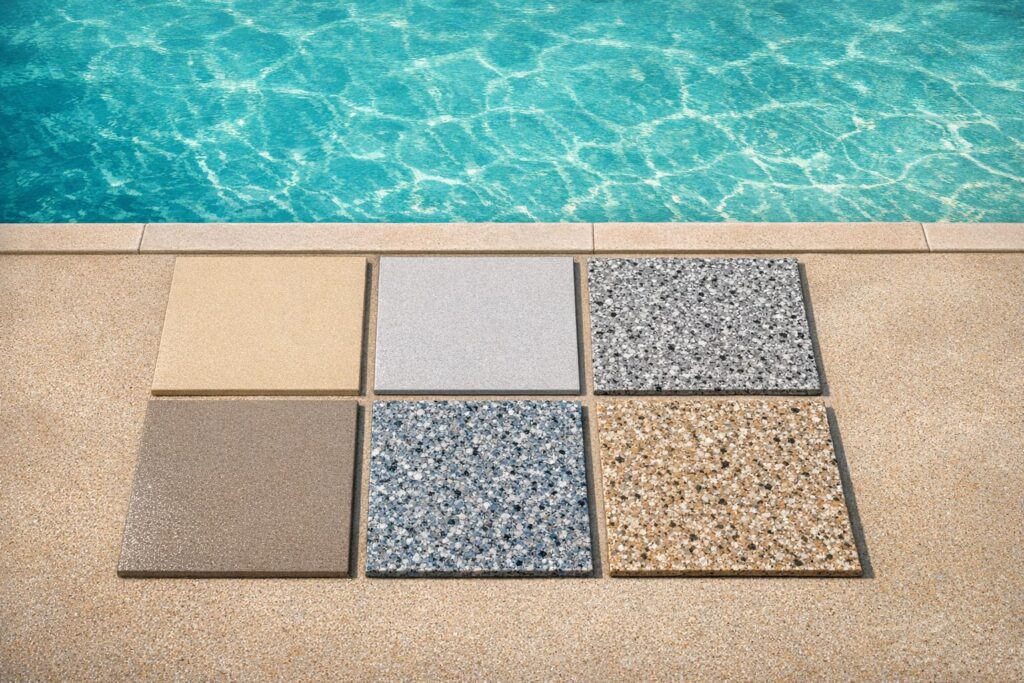
Polyurea pool deck coatings offer a long-lasting, durable solution for pool areas, outperforming traditional concrete and epoxy coatings. They resist UV rays, pool chemicals, and temperature changes, ensuring a lifespan of over 15 years. Choosing the right color impacts not only the deck’s appearance but also its comfort and functionality. Light shades like beige and ivory reflect heat, keeping surfaces cooler, while darker tones like terracotta and charcoal create a cozy atmosphere. Flake blends add texture and grip, improving safety on wet surfaces. For the best results, test colors in natural light and consider heat-reflective coatings for warmer climates.
Concrete Coatings Installation on Pool Deck
sbb-itb-4b4bb37
Solid Color Options for Polyurea Pool Deck Coatings
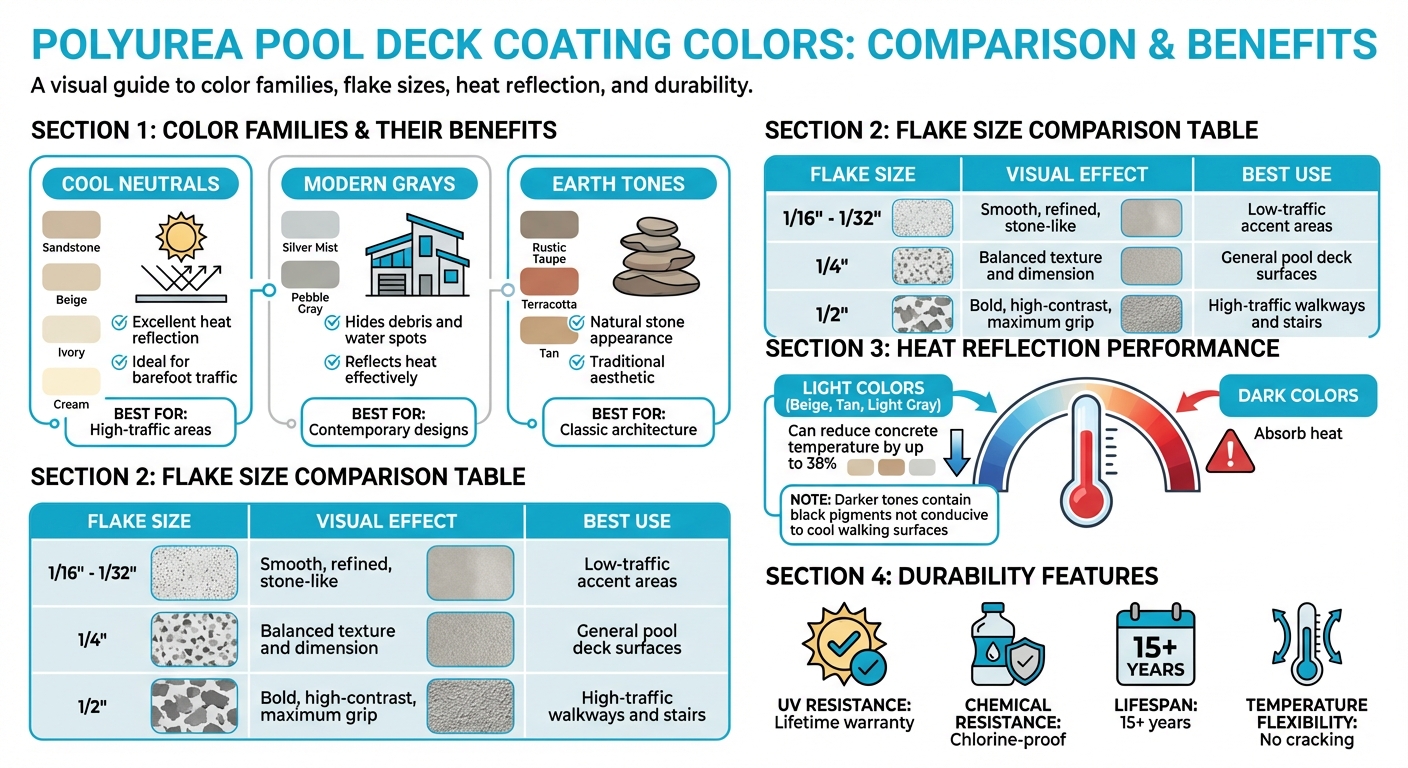
Pool Deck Coating Color Selection Guide: Heat Reflection and Safety Features
Solid color polyurea coatings offer a sleek and versatile look that works well with both traditional and contemporary styles. Popular choices include cool neutrals like sandstone, beige, and ivory; modern grays such as silver mist and pebble gray; and rustic earth tones like taupe, terracotta, and tan. Light shades dominate the market because they reflect sunlight, helping to keep surfaces cooler and more comfortable for bare feet during hot summer days.
Modern design trends favor gray tones, particularly "silver mist" and "pebble gray", which pair beautifully with the vibrant blue of pool water and the shine of stainless steel accents. These shades also do a better job of concealing light debris compared to stark whites, while still reflecting heat effectively. For homes with classic architecture, earth tones like rustic taupe and terracotta mimic the appearance of natural stone and blend seamlessly with wooded landscapes or brick exteriors.
Polyurea coatings allow for a high degree of customization. Some manufacturers even offer custom color matching by incorporating acrylic paint into the base kit. Additionally, you can select from high-gloss or matte finishes to achieve your desired look and performance.
Common Solid Colors for Pool Decks
There are three main color families to choose from, each serving specific functional and aesthetic purposes:
- Cool neutrals: Colors like sandstone, beige, ivory, and cream are excellent at reflecting heat, making them ideal for areas with heavy barefoot traffic.
- Modern grays: Shades such as silver mist and pebble gray lend a contemporary touch while effectively hiding light debris and water spots.
- Earth tones: Rustic taupe, terracotta, and tan create a natural stone-like appearance that complements traditional exteriors and landscaping.
Coastal-inspired palettes, featuring soft grays and blues, are also becoming popular for homes near the beach, reflecting the serene vibe of seaside environments.
Heat Reflection and UV Stability by Color
The color of your pool deck plays a significant role in surface temperature and barefoot comfort. Light shades like beige, tan, and light gray are particularly effective at reflecting heat, while darker tones tend to absorb it. As Encore Coatings explains:
Darker earth tones and even shades of gray can contain black pigments which are not conducive to a cool walking surface.
Specialized heat-reflective coatings, when paired with light colors, can lower concrete temperatures by as much as 38%.
Polyurea stands out for its UV resistance, maintaining its color and integrity far better than epoxy, which can yellow or become brittle under prolonged sun exposure. Kentucky Concrete Coatings highlights this advantage:
Polyurea and polyaspartic are extremely resistant to UV-fading, ensuring that the flooring will look as good as the day it was installed.
While polyurea retains its color well, some minor "color drifting" may occur over time with extended exposure to intense sunlight. This gradual change is subtle and often goes unnoticed as surrounding materials age alongside it.
For pool decks in hotter climates, lighter shades like white, light tan, or light gray are the best choices to ensure maximum comfort for bare feet. Use darker colors sparingly, such as for accent areas or low-traffic zones. If cooling is a top priority, avoid combining heat-reflective coatings with darker hues.
Flake and Chip Blends for Added Depth and Texture
Flake and chip blends bring both style and practicality to polyurea pool deck coatings. These blends, made from acrylic flakes, pigments, and UV stabilizers, are layered between the base and top coats. The result? A sophisticated, multi-tonal look with a subtle "orange peel" texture that enhances slip resistance – perfect for wet pool decks. They not only add visual appeal but also improve grip, making them a functional choice for any pool area.
On a practical level, flakes help conceal surface flaws while boosting resistance to impacts, scratches, and pool chemicals. Polyurea chip systems are also designed to handle temperature shifts without cracking, and many products offer a 15-year warranty for residential use. Below, we’ll explore standard flake blends and how they enhance pool deck performance.
Standard Flake Blends and Their Advantages
Standard flake blends are popular for their appealing color combinations and low-maintenance finish. Options like "Cookie" (featuring warm browns and tans) and "Domino" (a mix of black, white, and gray) are favorites for pool decks. These blends typically use 1/4" flakes, which strike a balance between adding texture and making cleaning easy.
Flake size significantly affects both the look and functionality of the coating. Smaller flakes (1/16" to 1/32") create a polished, stone-like finish, while larger chips (1/4" to 1/2") add bold dimension and extra traction – especially valuable on wet surfaces.
| Flake Size | Visual Effect | Best Use for Pool Decks |
|---|---|---|
| 1/16" – 1/32" | Smooth, refined, stone-like | Low-traffic accent areas |
| 1/4" | Balanced texture and dimension | General pool deck surfaces |
| 1/2" | Bold, high-contrast, maximum grip | High-traffic walkways and stairs |
While these standard blends work well for most needs, custom options can elevate the design to suit individual preferences.
Custom Flake Options for Personalized Designs
Custom flake blends let homeowners match their pool deck to their home’s architecture or landscaping. Atlas Concrete Coatings, for example, offers custom-blended chips designed to coordinate with pavers, brick exteriors, or even the specific shade of your pool water. With vinyl chips available in nearly any color, the possibilities are endless.
Nature-inspired blends like "Stonehenge" (featuring natural stone tones) and "Outback" (with clay, sand, and granite hues) are gaining popularity for their ability to blend seamlessly with outdoor spaces. For a more modern vibe, options like "Nightfall" add a sleek, contemporary touch. Meanwhile, "Evolution" blends use multi-tonal combinations to create a polished, high-end look. These custom designs don’t just enhance the appearance – they maintain the durability and resilience of polyurea coatings.
Before settling on a design, it’s smart to request physical sample boards. Colors can look different on a screen compared to natural sunlight, and seeing the flakes in your pool area’s lighting can help you avoid costly mistakes. For added safety, especially on stairs or sloped entries, consider incorporating non-slip additives like aluminum oxide into the topcoat.
2026 Color Trends for Pool Deck Coatings
By 2026, pool deck designs are shifting towards warm, organic tones, replacing the once-dominant industrial cool grays. Homeowners are opting for complex palettes, often blending 3–5 complementary colors to add depth and help mask dirt. These trends are branching into two main styles: nature-inspired warmth and sleek, minimalist modernity.
Nature-Inspired Tones
The "Earthy Elegance" trend is taking center stage, with tones like terracotta, clay, and deep chocolate browns becoming popular choices. These colors create a natural flow between the pool deck and surrounding landscape, especially when paired with stone accents and lush greenery. However, these darker hues can absorb more heat, which might impact comfort in high-traffic barefoot areas.
Design preferences are also moving away from traditional bright blues, favoring moody, saturated colors that echo ocean depths and rainforest vibrancy. Charcoal and black iridescent finishes are particularly sought after, offering a reflective, mirror-like effect on the water that adds a layer of elegance.
Modern and Minimalist Shades
On the other end of the spectrum, modern designs lean into cool neutrals and grays. Shades like slate and charcoal offer a striking contrast to blue pool water and complement stainless steel accents. For those prioritizing heat reflection, light neutrals such as ivory and cream remain popular, delivering a clean, minimalist aesthetic.
Another trend gaining momentum is the integration of outdoor and indoor spaces. Matching pool deck coatings with indoor flooring creates seamless visual lines, making both areas feel larger and more connected. Additionally, homeowners are experimenting with minimalist designs that define spaces creatively. For example, using a solid border with a flake-filled center can mimic the look of an area rug without adding physical barriers. These evolving styles highlight how polyurea coatings can balance striking visuals with practical functionality for pool decks.
Durability and Maintenance of Polyurea Colors
Beyond its visual appeal and functionality, polyurea stands out for its durability and minimal upkeep, making it a long-lasting choice for pool decks. Designed to handle extreme conditions, polyurea resists temperature fluctuations without affecting its color layer. Its flexibility allows it to expand and contract with the concrete, ensuring the color remains intact over time.
UV and Chemical Resistance
Polyurea’s ability to resist UV damage is a game-changer. It prevents yellowing or fading, even after prolonged sun exposure. Many manufacturers back this feature with a lifetime UV stability warranty, offering peace of mind to homeowners.
"Our coatings offer longevity and vibrancy with a lifetime UV stability warranty." – Concrete Coatings Hawaii
Another major advantage is its resistance to chemicals. Poolside spills, like chlorine, are no threat to polyurea’s color or surface integrity.
"Polyurea also offers chemical resistance, so if you slosh some chlorine on the pool deck while adding chemicals to your pool, you don’t have to worry about it causing any damage or discoloration." – Concrete Coatings Hawaii
This durability eliminates the hassle of yearly repainting often required with concrete paints, which tend to chip and fade due to sun and chemical exposure. Alongside its resistance to chemicals, polyurea also features slip-resistant textures that prioritize safety.
Slip-Resistant Textures for Safety
Safety is crucial around wet pool areas, especially for families with kids. Polyurea coatings incorporate slip-resistant additives directly into the material during application. These textures not only enhance traction but also maintain the deck’s design appeal. Unlike temporary surface treatments that wear off, these slip-resistant features are a permanent part of the coating, ensuring long-term safety and functionality.
Atlas Concrete Coatings delivers polyurea solutions that combine vibrant color retention, durability, and built-in safety features, ensuring your pool deck performs beautifully for years.
Conclusion
Polyurea pool deck coatings go far beyond just looking good – they offer a wide range of color options to match any personal style. Whether you lean toward earthy tones, custom flake blends, or sleek modern shades, these coatings allow homeowners to create a pool deck that truly reflects their taste.
But it’s not just about looks. These coatings bring practical benefits to the table too. Lighter colors can help reflect heat, making the surface more comfortable for bare feet, while darker shades can add a cozy feel to larger spaces. Using contrasting colors can also enhance safety by clearly marking steps and other features.
What makes polyurea coatings even better is their durability. With a lifespan of over 15 years, they keep your pool deck looking vibrant and safe, thanks to their resistance to UV rays and chemicals. This means you get long-lasting performance without compromising on style.
For the best results, test physical samples on your deck at various times of the day to see how the colors look in different lighting.
In short, Atlas Concrete Coatings offers a perfect blend of durability, customization, and vibrant color retention, ensuring your pool deck stays beautiful and functional for years to come.
FAQs
Which pool deck color stays coolest in summer?
Light and reflective colors are ideal for keeping your pool deck cooler during summer. These shades minimize heat absorption, making the surface much more comfortable to walk on, even on scorching days. Choosing lighter tones can make a noticeable difference in comfort when the sun is blazing.
Should I choose a solid color or a flake blend?
When deciding between solid colors and flake blends, it comes down to what suits your style and needs. Solid colors provide a clean, modern appearance with a consistent finish, perfect for a polished and minimalist look. On the other hand, flake blends bring more texture and depth to the surface, along with added slip resistance. They’re also great for concealing imperfections while delivering a premium, personalized feel. Both choices are tough and adaptable, but flake blends stand out for those seeking bold, textured designs.
How can I test colors before committing?
To make sure you’re happy with your polyurea pool deck coating color, try applying small test patches or samples directly onto the surface. This lets you see how the color looks with your specific lighting, surroundings, and design features. Testing helps confirm the color fits well with your outdoor space and matches your style.