
Your pool deck takes a beating from the sun, and without proper protection, UV rays can cause fading, cracks, and safety hazards. UV-resistant coatings are the solution, offering durability, slip resistance, and heat reduction. Here’s how to design a pool deck that lasts:
- Choose light colors to keep surfaces cooler by reflecting heat (up to 38% lower temperatures).
- Add textured finishes for slip resistance and safety, especially on wet surfaces.
- Use UV-stable pigments to prevent fading and maintain vibrant colors over time.
- Apply flexible coatings to handle temperature swings and avoid cracks.
- Incorporate decorative chips or patterns for style while boosting durability and traction.
Professionally applied systems, like polyurea or polyaspartic coatings, combine these features for long-term performance, lasting up to 20 years. They also resist chlorine, salt, and heavy foot traffic, ensuring your pool deck stays safe, cool, and visually appealing.
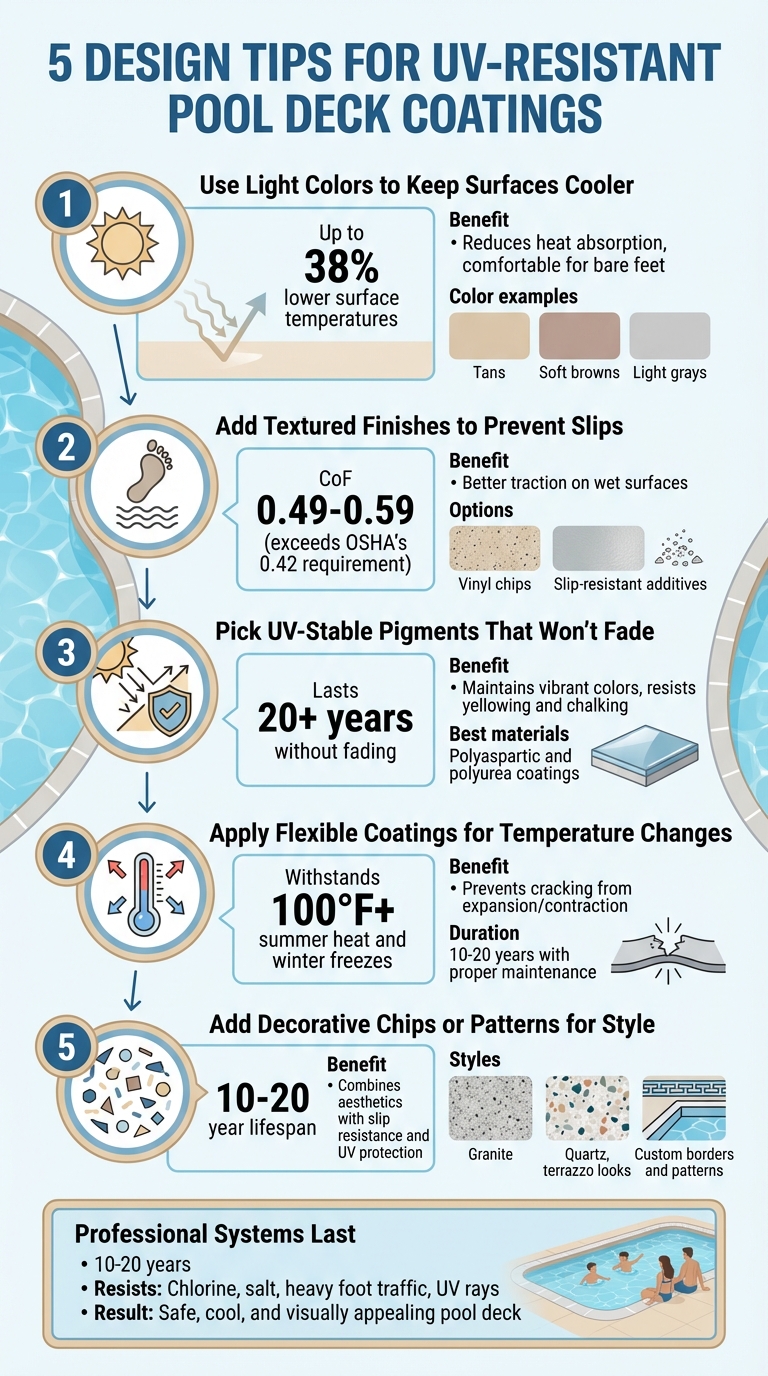
5 Essential Design Tips for UV-Resistant Pool Deck Coatings
1. Use Light Colors to Keep Surfaces Cooler
Heat Reduction and Comfort
Choosing light-colored coatings for your pool deck can make a noticeable difference in temperature. These coatings reflect solar radiation, lowering surface temperatures by 30–38%. This not only helps keep the area comfortable for walking barefoot on scorching summer days but also reduces the overall heat absorption of the space.
"Lighter hues like white tend to keep the surface cooler than darker colors like navy blue. Lighter colors reflect more sunlight, reducing heat absorption and keeping the surface cooler on hot days." – Matt Martin
Without this treatment, surfaces like concrete can become so hot they’re almost impossible to walk on without shoes. So, beyond just functionality, your choice of color can improve comfort significantly.
Aesthetic Customization Options
Light shades, such as tans, soft browns, and light grays, don’t just help with heat – they can also enhance the visual appeal of your pool deck. These colors can make the area feel more open and inviting. You can even mix tones within a light palette to create subtle contrasts and visual interest.
It’s worth testing color samples in different lighting conditions, like direct sunlight and during dusk, to see how they look throughout the day. Matching your deck’s palette to your home’s exterior can result in a cohesive, polished design that balances both beauty and practicality.
UV Resistance and Durability
While light-colored coatings offer great temperature and aesthetic benefits, the material you choose plays a big role in long-term performance. Acrylic and latex coatings are excellent at reflecting heat but may yellow, crack, or degrade under prolonged UV exposure. On the other hand, polyaspartic coatings stand out for their durability, often lasting over 20 years without fading or cracking. They’re also more resistant to chemicals like chlorine and salt, making them a smarter choice for poolside areas.
One thing to keep in mind: light colors can make stains from spills or pool chemicals more noticeable. Quick cleanup of drinks or chemical splashes is key to keeping your deck looking its best.
sbb-itb-4b4bb37
2. Add Textured Finishes to Prevent Slips
Slip Resistance for Safety
A smooth, wet pool deck can quickly become a hazard. Textured finishes address this by incorporating materials like vinyl chips or slip-resistant additives into the base coat, creating better traction. This added grip is crucial for keeping bare feet secure, especially on wet concrete. According to OSHA, a coefficient of friction (CoF) of 0.42 is required, but high-quality coatings often exceed this, achieving CoF levels between 0.49 and 0.59. This ensures safer footing, whether the surface is wet or dry.
UV Resistance and Durability
Not all textured finishes are made to withstand harsh sunlight. Basic concrete paint with sand additives tends to wear out within a season or two, losing its slip-resistant properties. On the other hand, UV-stable coatings are designed to resist yellowing, chalking, and degradation, even under relentless sun exposure. These coatings are also non-porous, which helps prevent algae and mold growth – common culprits behind slippery surfaces. Maintenance is simple: a quick rinse with a garden hose and mild detergent usually does the trick to keep the area clean and safe.
Aesthetic Customization Options
Safety doesn’t have to come at the expense of style. Textured finishes offer a range of decorative options to enhance the look of your pool deck. For example, broadcast flake systems embed colorful vinyl chips into the surface, while knockdown spray textures provide a more subtle, tactile appearance.
Atlas Concrete Coatings specializes in polyurea-based chip floor coatings that are ideal for pool deck resurfacing. Their customizable finishes combine excellent slip resistance with visual appeal. Plus, their UV-resistant surfaces are designed for long-term durability and come with a lifetime warranty on chip systems. These textured designs not only enhance safety and aesthetics but also ensure the UV stability needed to keep your pool deck looking and performing its best over time.
3. Pick UV-Stable Pigments That Won’t Fade
UV Resistance and Durability
Pool decks endure constant sun exposure, and not all coatings are up to the challenge. Many traditional sealers and paints tend to yellow or chalk after prolonged UV exposure. On the other hand, UV-stable pigments, particularly those in polyaspartic and polyurea coatings, are specifically designed to resist damage from ultraviolet rays. These coatings act as a shield, helping maintain the original vibrancy of your pool deck.
"Polyaspartic coatings are formulated to withstand UV rays, keeping your pool deck’s color vibrant and its surface protected." – Ox Floors
Polyaspartic coatings are widely recognized for their long-lasting UV resistance. With proper upkeep, they can retain their color and durability for over 20 years. Similarly, polyurea coatings are built for tough outdoor conditions and typically last 10–15 years or more. Beyond UV protection, both options also defend against scratches, impacts, and chemical stains caused by pool chlorine or sunscreen. This durability ensures your pool deck remains both visually appealing and functional, while also expanding your design possibilities.
Aesthetic Customization Options
UV-stable pigments open the door to a variety of design choices. Some systems use high-quality exterior acrylic paint in UV-resistant binders, offering a nearly endless palette of colors. This flexibility allows you to select shades and finishes that perfectly complement your pool area. For a practical touch, matte finishes and textured surfaces are excellent for hiding wear and tear, unlike high-gloss finishes that can make scratches more noticeable.
Atlas Concrete Coatings takes customization a step further with polyurea-based systems that pair UV-stable pigments with decorative chips. This combination delivers vibrant colors along with long-term protection. Plus, their quick-curing formulas mean your pool deck can often be ready for use within just a few hours, minimizing downtime and letting you enjoy your refreshed space sooner.
4. Apply Flexible Coatings for Temperature Changes
UV Resistance and Durability
Pool decks endure some pretty harsh conditions throughout the year. In the summer, surface temperatures can soar past 100°F, while winter freezes cause the concrete to contract. This constant expansion and contraction can lead to cracks if the coating isn’t up to the task. That’s where flexible systems like polyurea and polyaspartic coatings come in – they’re designed to move with the concrete, preventing damage over time.
"Polyurea and epoxy coatings are flexible enough to expand and contract with the concrete, preventing cracks and damage during colder months." – FloorTech Concrete Coatings
One major advantage of polyaspartic coatings over epoxy is their resistance to UV rays. Epoxy coatings, while durable, are rigid and tend to yellow with prolonged sun exposure. Polyaspartic coatings, on the other hand, remain flexible and 100% UV stable, ensuring your pool deck looks great and holds up for 10 to 20 years with proper maintenance. Plus, their non-porous surface creates a tough barrier against water, pool chemicals like chlorine, and everyday wear and tear.
Companies like Atlas Concrete Coatings specialize in polyurea-based systems built for extreme outdoor conditions. Their quick-curing formulas allow for installation in just one day, with the deck ready for use within 24 hours. This fast turnaround means less downtime for your pool area. At the same time, these coatings provide long-lasting protection against UV damage and temperature swings. When paired with lighter color options, they also contribute to a cooler and more comfortable pool deck.
Heat Reduction and Comfort
For maximum comfort and durability, flexible coatings work best when combined with light-colored finishes. This combination helps manage both the structural stress from temperature changes and the heat buildup on the surface.
5. Add Decorative Chips or Patterns for Style
Aesthetic Customization Options
Decorative chips can instantly elevate a plain deck into something that looks like natural stone. With full broadcast systems, vinyl flakes are used to replicate the look of granite, quartz, or terrazzo, offering a sophisticated finish. You can choose from a variety of neutral shades – think tans, browns, grays, and blues – that blend seamlessly with your outdoor landscaping.
Professional installers can also create custom designs, including borders, multi-color patterns, and textured finishes that give your deck an architectural flair. Some popular options include "knockdown" finishes, which are sprayed and troweled for a Mediterranean stucco-like effect, or orange peel textures for added depth and character. For a more uniform and durable surface, opt for a full broadcast application.
These decorative systems not only enhance the look of your deck but also build on the UV stability and slip resistance discussed earlier.
"Our polyaspartic systems are light-years ahead, offering unparalleled performance, protection, and out-of-this-world beauty for your backyard oasis."
– Hayley Shahbazi, Manager, Galaxy Concrete Coatings
Slip Resistance for Safety
Decorative chips aren’t just about looks – they also improve safety. Broadcasting chips into the base coat increases surface traction, making it safer to walk on, especially when wet, while also reducing heat buildup underfoot.
Atlas Concrete Coatings’ polyurea-based chip systems combine style with functionality, offering slip-resistant surfaces that protect your family while maintaining a polished appearance. These systems outperform DIY concrete paints with sand additives, which often wear down quickly and lack proper UV protection.
UV Resistance and Durability
When paired with durable topcoats, decorative chips form a thick, non-porous surface that resists UV damage, impacts, and heavy foot traffic. Polyaspartic resins, in particular, ensure 100% UV stability, meaning your deck won’t yellow, fade, or chalk even after prolonged exposure to intense sunlight.
These coatings are also flexible enough to handle temperature swings, preventing the cracking and peeling often seen in more rigid options. With proper maintenance, these systems can last 10 to 20 years, far outlasting basic resurfacing solutions, which typically cost $3 to $5 per square foot and require frequent reapplications. The result? A pool deck that’s as durable as it is stylish.
Conclusion
Creating a UV-resistant pool deck that stands the test of time requires careful planning and the right materials. The five tips we’ve discussed – choosing light colors to manage heat, adding textured finishes for safety, using UV-stable pigments, applying flexible coatings, and incorporating decorative chips – combine to deliver a deck that’s both stylish and built to last. Pairing these design elements with a professional-grade coating system can result in a surface capable of enduring 10 to 20 years of intense sunlight, pool chemicals, and heavy use.
Professional installation takes these principles to the next level, offering unmatched durability and safety. Unlike DIY solutions, experts use a triple-layer system – primer, color coat, and UV-resistant topcoat – that shields the surface from cracking and damage caused by temperature swings. For example, professionally applied polyaspartic coatings provide a coefficient of friction between 0.49 and 0.59, exceeding OSHA’s 0.42 standard for wet conditions, which ensures superior traction and safety.
Atlas Concrete Coatings offers a polyurea-based resurfacing solution that incorporates all five design principles into a single, efficient system. Their one-day installation process allows you to enjoy your upgraded pool deck within 24 hours. Plus, their coatings are 100% UV stable, ensuring vibrant colors and structural integrity for years to come. Serving Pennsylvania and New Jersey, Atlas provides free consultations to help you design a pool deck that’s as functional as it is visually appealing.
FAQs
Which UV-resistant pool deck coating is best for my climate?
An aliphatic polyurea coating is an excellent choice for pool decks exposed to sunlight. Its UV-resistant properties help prevent fading, cracking, and peeling, even with prolonged sun exposure. This makes it a reliable solution for outdoor areas, ensuring durability and consistent performance, even in regions with intense sunlight.
How do I choose a cool, light color that won’t show stains?
To choose a cool, light color that resists stains, go for shades like white or soft pastels. These colors help reflect sunlight, keeping surfaces cooler by minimizing heat absorption. However, lighter tones can show stains more easily, so combining them with a stain-resistant finish is key to keeping things looking clean and stylish.
What texture level is safest without being rough on bare feet?
The best choice for bare feet is a lightly textured surface that offers slip resistance while still feeling comfortable. Materials such as light-colored acrylic elastomeric coatings or smooth natural stone finishes strike this balance well. They provide enough traction to prevent slips while remaining gentle to walk on, making them excellent options for pool deck surfaces.