
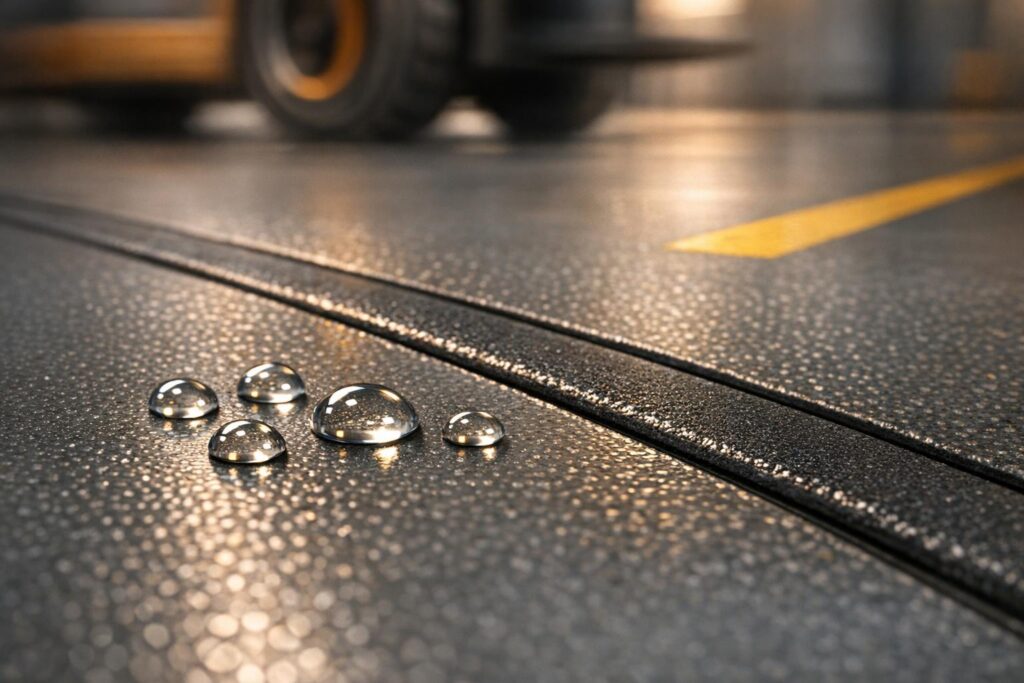
Polyurea coatings outperform epoxy in industrial settings by lasting up to 30+ years, compared to epoxy’s 5–10 years. They are 4x stronger (compressive strength of 4,000+ PSI vs. 1,200–1,500 PSI for epoxy) and handle extreme temperatures from –40°F to 350°F. Their flexibility allows them to stretch over 300% of their length without breaking, making them resistant to impacts and cracks. Unlike epoxy, polyurea cures in 1–4 hours, reducing downtime, and can be applied in high humidity or extreme cold.
Key benefits include:
- Durability: Lasts 3–5 times longer than epoxy.
- Strength & Flexibility: Absorbs impacts, bridges cracks, and withstands temperature changes.
- Fast Application: Cures in hours, minimizing factory downtime.
- Chemical Resistance: Protects against spills, cleaning agents, and moisture.
- Cost Savings: Higher upfront cost but saves up to 40% in long-term maintenance.
For factory owners, polyurea is a smart choice for reducing maintenance costs, ensuring floor longevity, and maintaining uninterrupted operations.
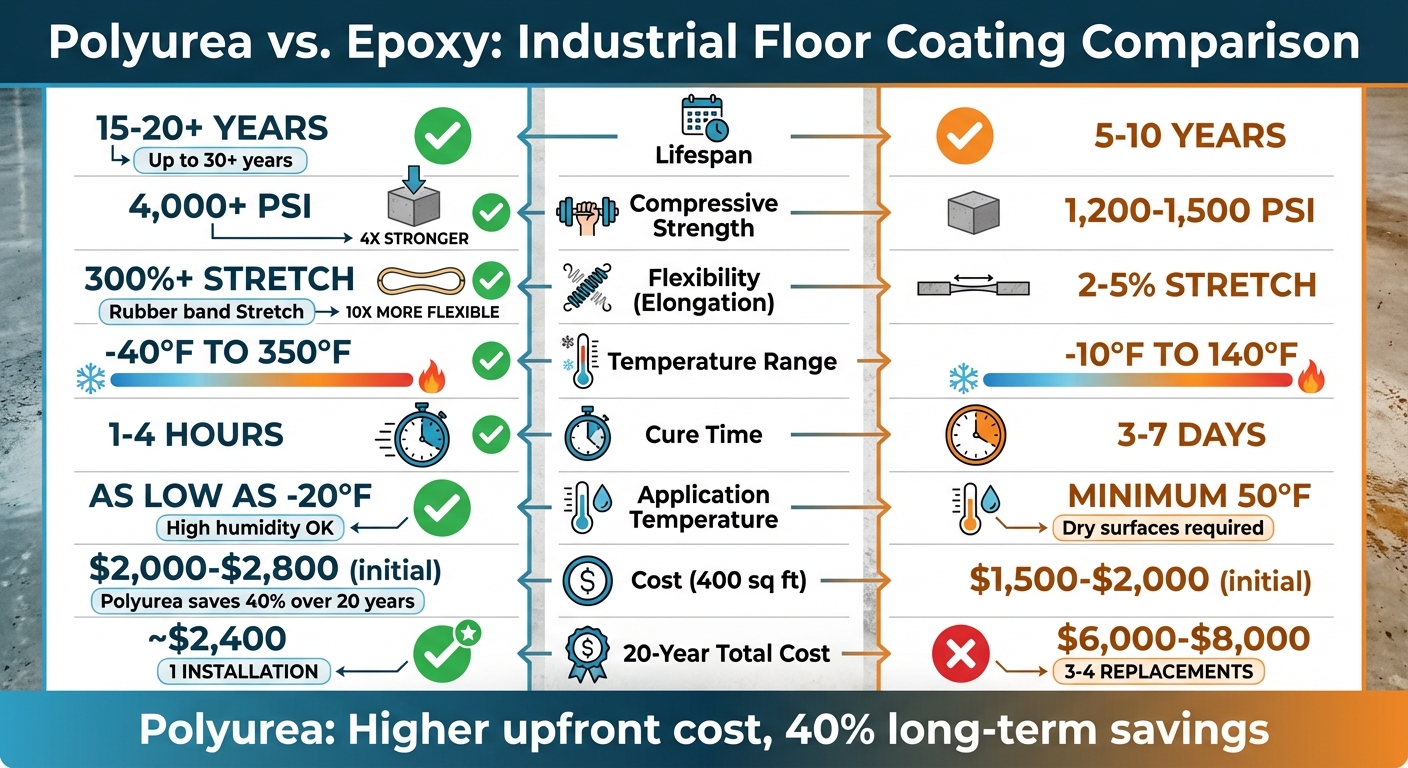
Polyurea vs Epoxy Coatings: Performance Comparison for Industrial Floors
How Polyurea’s Chemical Structure Creates Durability
Chemical Makeup and Resistance Properties
Polyurea is created through a rapid chemical reaction between an isocyanate and an amine-terminated resin, forming a robust urea linkage. This reaction happens almost instantly, solidifying the polymer within seconds.
"The formation of linkages during polymerization establishes a network of bonds that resist breaking when subjected to stress." – PolyOrgs
This tightly bonded network results in a low-permeability barrier that effectively blocks water, salts, oils, and various chemicals. Unlike epoxy coatings, which need dry surfaces and temperatures above 50°F for proper application, polyurea can be applied in high humidity and extreme temperatures without issue. It maintains its stability across a wide temperature range, from –30°F to 140°F, ensuring it remains flexible in freezing conditions and resists softening in high heat.
Many polyurea formulations are 100% solids and contain zero Volatile Organic Compounds (VOCs), making them safer for use in indoor environments like factories. Its seamless, non-porous surface acts as a shield, preventing chemicals and moisture from seeping into concrete. This is especially valuable in industrial settings where frequent spills and exposure to cleaning agents are common. Beyond its chemical resistance, polyurea’s flexibility adds another layer of performance benefits.
Flexibility and Impact Strength
While epoxy coatings are harder, polyurea is tougher. It can stretch over 300% of its original length before breaking, compared to the mere 2–5% elongation of standard epoxy. This elastomeric quality allows polyurea to absorb impacts – whether from dropped tools or heavy machinery – and bounce back to its original form.
"Think of a polyurea as a tough rubber shield versus epoxy as a hard ceramic shield." – Marvel Coatings
Polyurea’s flexibility also makes it highly effective at "crack bridging." It acts like a protective skin, spanning hairline cracks in concrete caused by vibrations or settling, without splitting. During freeze–thaw cycles, when concrete expands and contracts, polyurea moves with it, avoiding the peeling and cracking that rigid materials often suffer. Its hardness ratings typically range from Shore A 85–95 to Shore D 40–50, striking a balance between surface toughness and impact-absorbing flexibility.
In outdoor applications, aliphatic formulations prevent issues like yellowing or chalking due to sun exposure. In high-traffic areas, polyurea’s durability protects against "hot-tire pickup" and delamination, even under the stress of warm tires or heavy forklift activity.
sbb-itb-4b4bb37
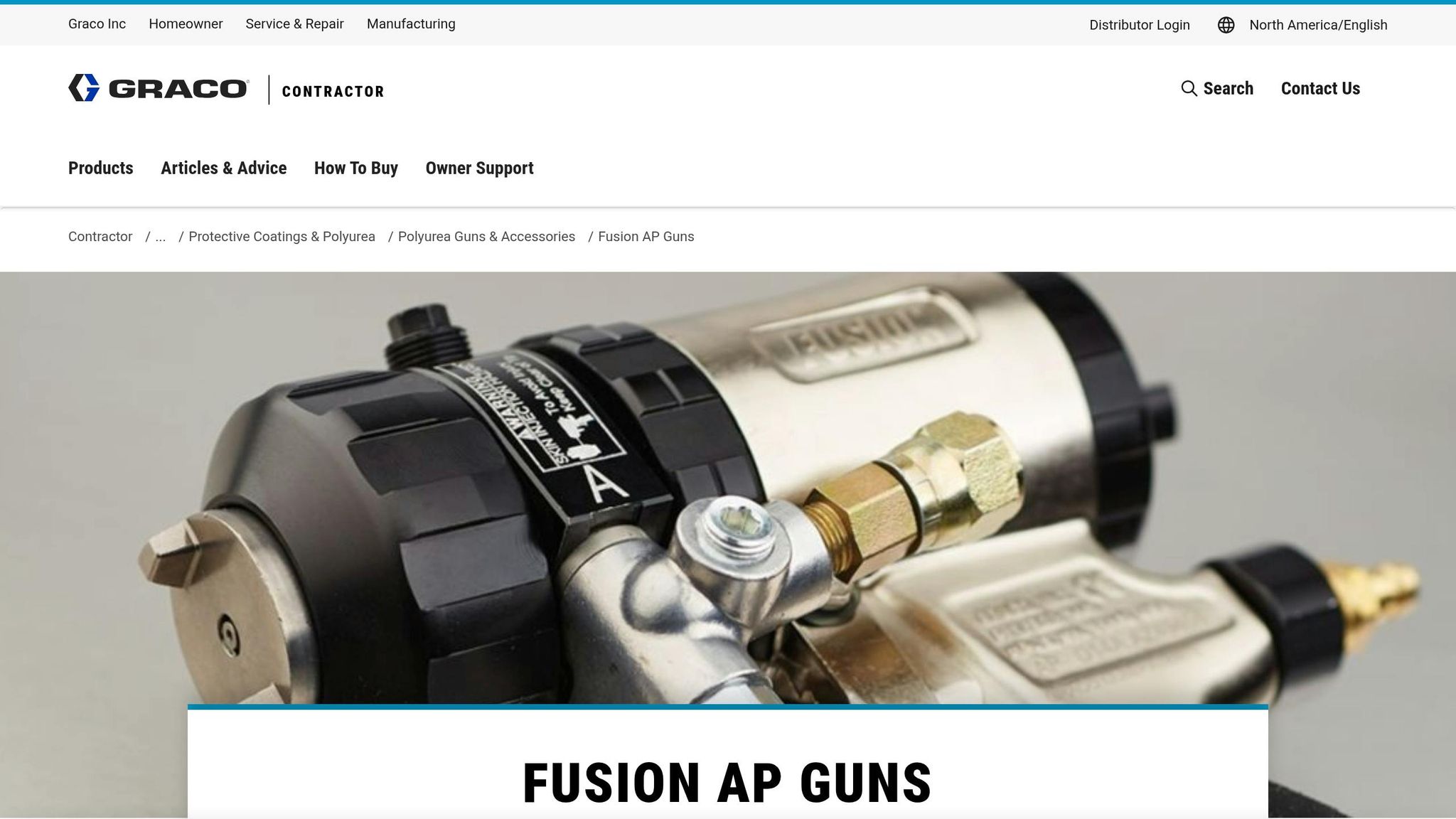
Polyurea Spraying with Graco AP Fusion Gun on a Factory Floor at Coca-Cola
Performance Comparison: Polyurea vs. Epoxy Coatings
When it comes to durability and overall cost-effectiveness, polyurea coatings consistently outperform epoxy coatings. Here’s why.
Expected Lifespan and Maintenance Costs
Polyurea coatings are built to last, typically enduring 15–20+ years in demanding factory settings. In contrast, epoxy coatings often need replacement within 5–10 years. One key advantage of polyurea is its elastomeric nature, which allows it to flex with concrete as it expands and contracts due to temperature changes. This adaptability helps prevent the micro-cracks that are common in rigid epoxy systems.
While polyurea has a higher upfront cost – ranging from $2,000–$2,800 for a 400-square-foot factory floor compared to epoxy’s $1,500–$2,000 – its long-term savings are substantial. Over a 20-year period, epoxy may require 3–4 replacements, costing an estimated $6,000–$8,000. Meanwhile, a single polyurea installation remains functional, offering about 40% savings over its lifecycle.
A real-world example highlights these savings. MotorCity Floors and Coatings installed a polyurea system in a Michigan warehouse exposed to daily forklift traffic and chemical spills. Years later, the polyurea coating showed minimal wear, unlike the epoxy floors that previously needed frequent refinishing. The client reported saving over $50,000 in maintenance and replacement costs by switching to polyurea.
"Epoxy is like a hard shell that can crack under stress. Polyurea is like a flexible armor that moves with your concrete, absorbing impacts and temperature fluctuations without breaking down." – Jake Lowry, MotorCity Floors and Coatings
Beyond cost and durability, polyurea’s 24-hour cure time allows factories to resume operations the next day. By comparison, epoxy’s 3–7 day curing period can lead to significant downtime and operational delays.
Performance Under Environmental Stress
Polyurea’s durability extends to its ability to withstand extreme environmental conditions. It remains stable across a temperature range of –40°F to 300°F, far surpassing epoxy’s limits of –10°F to 140°F. This resilience also prevents issues like "hot tire pickup", where heat from machinery or forklifts softens epoxy coatings, causing them to peel.
In terms of strength and flexibility, polyurea is a standout. It boasts a tensile strength of over 4,000 PSI, significantly higher than epoxy’s 1,200–1,500 PSI. Additionally, polyurea is approximately 10 times more flexible, allowing it to absorb impacts from heavy machinery or dropped tools without cracking.
Polyurea can also be applied in temperatures as low as –20°F, making it suitable for cold environments. When paired with a polyaspartic topcoat, it offers enhanced UV resistance, maintaining its appearance and performance over time. Unlike epoxy, which requires a minimum of 50°F to cure and is prone to yellowing and chalking under UV exposure, polyurea delivers long-term reliability and aesthetics.
Main Benefits of Polyurea for Manufacturing Floors
Polyurea stands out for its ability to endure tough conditions while keeping downtime to a minimum, improving safety, and reducing long-term expenses. These practical benefits go hand in hand with its durability, ensuring smooth operations and a safer work environment.
Reduced Downtime During Application
One of the biggest perks of polyurea is how quickly it cures – typically in just 1–4 hours. This means factories can often return to full production the same day, which is a game-changer for facilities that run 24/7.
Take, for example, a February 2025 case study involving a distribution center handling heavy forklift traffic. After switching from epoxy to polyurea, the facility was back to full operation in only 4 hours, compared to the several days it would’ve taken for epoxy to cure. This switch not only reduced downtime by 30% but also slashed maintenance costs by 40%.
Polyurea’s high-pressure spray application is another time-saver, allowing large industrial spaces to be coated quickly and efficiently. However, for the best results, surfaces must be clean, dry, and free of contaminants to ensure the coating adheres properly.
Improved Safety and Appearance
Polyurea doesn’t just speed up operations – it also makes workplaces safer and more visually appealing. Its slip-resistant surface can reduce slip-and-fall incidents by as much as 60% in industrial and commercial settings.
The material’s seamless, non-porous finish is another huge plus. It prevents cracks and bacterial buildup, making it compliant with USDA and FDA standards for food processing facilities. This same quality also keeps chemical spills – like oils, solvents, and harsh cleaning agents – from pooling or damaging the floor. Unlike epoxy, which tends to yellow or fade under UV exposure, polyurea retains its color and appearance for decades, even in areas exposed to natural light, such as factory windows or loading docks.
On top of that, polyurea offers customization options with various textures and colors, giving facilities the chance to create professional-looking spaces that are easy to clean with just soap and water – all while meeting safety standards.
Atlas Concrete Coatings: Polyurea Flooring for Industrial Facilities
Atlas Concrete Coatings specializes in polyurea flooring systems designed to handle the intense demands of industrial environments. Founded by Scott Payne, the company has earned its reputation by delivering flooring solutions that endure the wear and tear of factory conditions. Their expertise ensures flooring that’s built to last while meeting the unique needs of industrial operations.
Industrial Flooring Services
Atlas Concrete Coatings offers polyurea floor coatings specifically engineered for industrial settings. These coatings are designed to handle heavy machinery, resist chemical exposure, and support 24/7 operations. Beyond coatings, they also provide concrete repair services and finishes that meet strict safety standards. Every project begins with a free consultation and estimate, offering a clear breakdown of the scope of work and timeline.
The polyurea coatings provided are chemical-resistant, UV-resistant, and capable of bearing heavy loads – features that are essential for facilities where downtime or frequent floor replacements can disrupt operations.
Why Factory Owners Choose Atlas Concrete Coatings
Factory owners trust Atlas Concrete Coatings because of their precise installation methods and the advantages of polyurea flooring. With a curing process that takes just minutes, downtime is kept to a minimum. Their commitment to thorough surface preparation – ensuring concrete is cleaned, dried, and repaired properly – lays the groundwork for a coating that can last 15 to 40+ years with minimal upkeep. This meticulous approach prevents common issues like bubbling or blistering, which can occur if adhesion is compromised by moisture or contaminants.
To provide even more assurance, Atlas Concrete Coatings backs their chip coating systems with a lifetime warranty, ensuring long-term reliability and performance.
Conclusion
Polyurea coatings stand out as a top choice for factory floors, thanks to their advanced chemical makeup. They bring together exceptional strength, flexibility, and fast curing, which helps minimize both maintenance expenses and downtime in high-demand industrial settings.
One of their key advantages is elasticity, enabling the coating to adapt to concrete’s natural movement during thermal expansion and contraction. This reduces micro-cracking and extends the floor’s lifespan. While the initial cost of polyurea is higher than epoxy, its durability and longevity translate into significant savings over time.
"A polyurea coating consistently outperforms an epoxy coating in durability, longevity, and total cost of ownership – especially in the challenging climate of Michigan."
- Jake Lowry, MotorCity Floors and Coatings
With its resilience, quick application process, and long-term cost benefits, polyurea is a practical and forward-thinking choice for industrial flooring.
FAQs
Is polyurea worth the higher upfront cost?
Polyurea is absolutely worth the higher upfront cost. Why? It lasts an impressive 15–20+ years and provides exceptional durability. This coating stands strong against chemicals, UV damage, and extreme temperatures, making it a reliable option for challenging environments. Plus, it cures much faster than other coatings, minimizing downtime. Over time, these advantages cut down on maintenance and replacement expenses, offering a smart, long-term solution for industrial and manufacturing settings.
How do I know if my concrete floor is ready for polyurea?
To determine if your concrete floor is ready for a polyurea coating, start by checking for cracks, spalling, oil stains, and moisture. Make sure to conduct tests for moisture and porosity to confirm the surface is completely dry. Thoroughly clean the floor using industrial-grade tools, repair any visible damage, and mechanically profile the surface to achieve a CSP 2–3 texture. Before proceeding, double-check that the surface is clean, dry, and meets the required conditions for proper adhesion.
Which polyurea system is best for my factory’s chemicals and traffic?
For your factory, the best polyurea system should deliver exceptional chemical resistance to substances like acids, oils, and solvents. It also needs to handle heavy traffic with ease, ensuring long-lasting performance. Hybrid and aliphatic polyurea systems stand out as top options because they combine flexibility with the strength to endure both chemical exposure and high-impact conditions.