
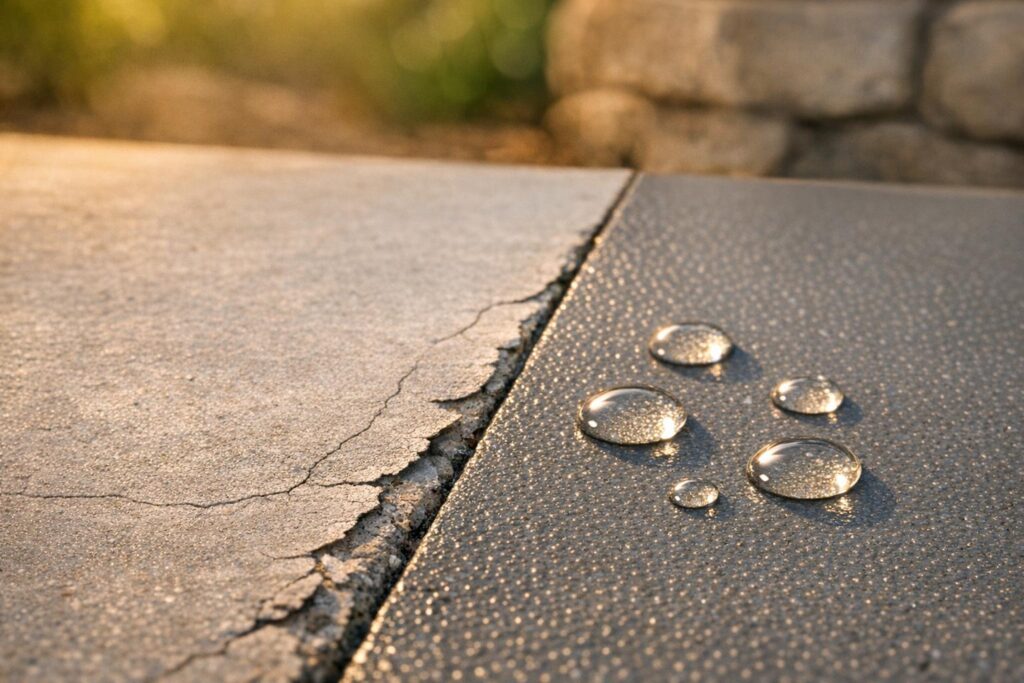
Concrete surfaces exposed to sunlight can degrade quickly without proper protection. Ultraviolet (UV) radiation breaks down the chemical bonds in standard coatings, causing fading, yellowing, cracking, and weakening of the material. This not only ruins the appearance but also shortens the lifespan of outdoor spaces like patios, pool decks, and driveways.
Key Takeaways:
- UV Damage: Sunlight accelerates fading, chalking, and structural breakdown in concrete coatings.
- Polyurea Coatings: These coatings resist UV radiation and maintain durability better than standard epoxies.
- Longevity Benefits: UV-resistant coatings reduce maintenance needs and prevent costly repairs.
- Applications: Ideal for residential areas (pool decks, patios, garages) and commercial spaces (parking lots, industrial floors).
UV-resistant polyurea coatings stand out for their ability to handle intense sunlight while preserving both appearance and function. They’re a smart investment for extending the life of concrete surfaces with minimal upkeep.
Everything You Need to Know About Coating Outdoor Concrete
sbb-itb-4b4bb37
How UV Exposure Damages Concrete Coatings
When concrete coatings are exposed to sunlight, the ultraviolet (UV) and blue light in its spectrum can cause serious damage. These light waves carry enough energy to break down the chemical bonds in the polymers that make up the coating material. This damage shows up in two key ways: visible changes like discoloration and deeper structural issues like cracking.
Color Fading and Yellowing
UV rays don’t just harm the coating itself – they also degrade the pigments used in the material. This leads to uneven fading, blotchy discoloration, and sometimes a chalky residue. Traditional epoxy coatings are particularly prone to yellowing when exposed to sunlight unless they’ve been specially formulated with UV-resistant additives. Over time, the coating can lose its gloss, becoming dull and chalky. In areas with intense sunlight, concrete surfaces often need resealing more frequently to maintain their appearance and protective layer.
Structural Breakdown
Beyond just changing the appearance, UV exposure can compromise the coating’s structural integrity. Prolonged sunlight exposure makes coatings brittle, and the constant thermal expansion and contraction caused by temperature changes can lead to hairline cracks and flaking. UV radiation also increases the coating’s porosity, making it easier for moisture and contaminants to seep through. This accelerates carbonation and weakens the bond between the coating and the underlying concrete.
Reduced Service Life
The cumulative effects of UV damage significantly shorten the lifespan of concrete coatings. As the polymers break down, the protective barrier they provide becomes less effective. Over time, even high-quality coatings that lack UV resistance can lose their vibrancy and protective capabilities much faster than anticipated. This can result in expensive repairs or even the need for a complete replacement well before the expected service life is reached.
Polyurea Coatings: A UV-Resistant Solution
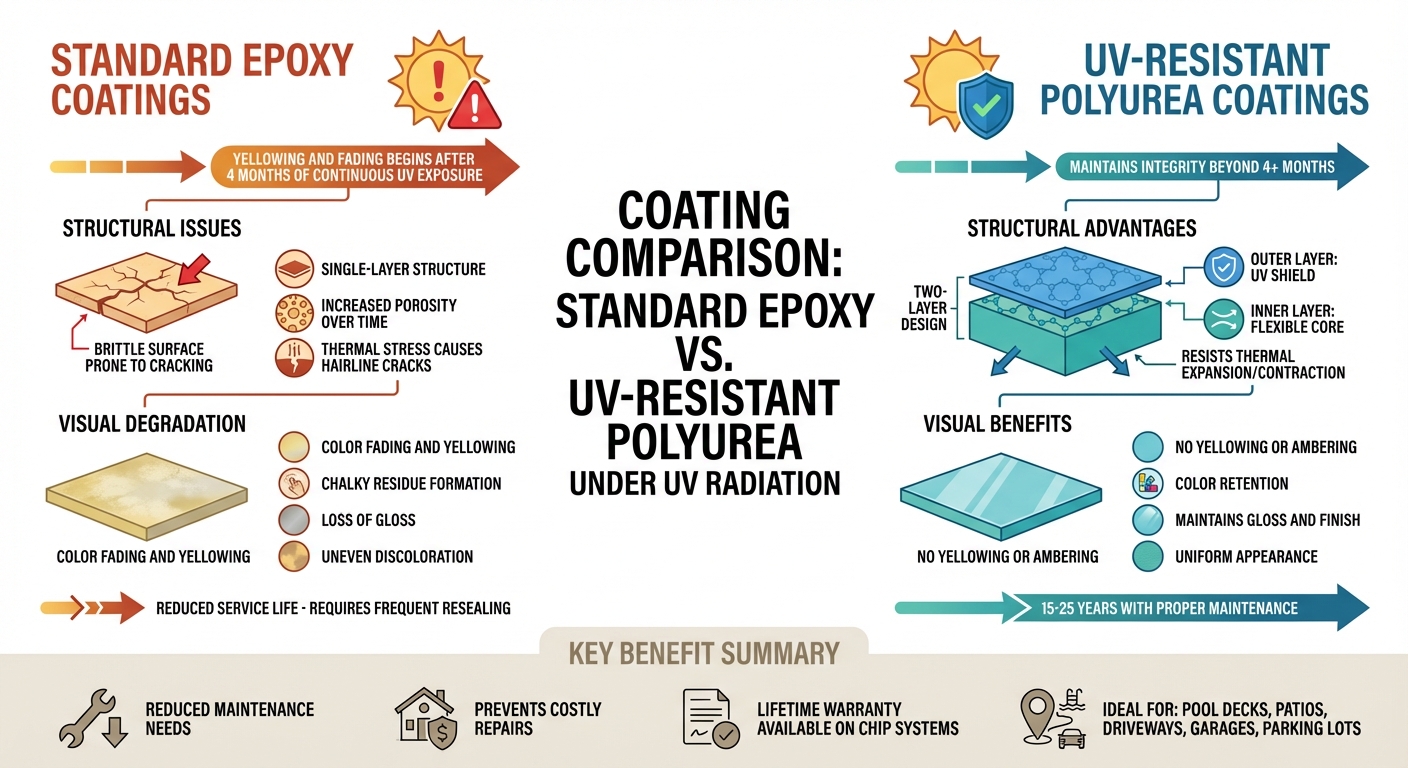
UV Damage Effects on Concrete Coatings: Standard Epoxy vs UV-Resistant Polyurea
While standard epoxy coatings act as protective barriers, they often fall short when it comes to UV protection. Polyurea, on the other hand, is designed with a polymer structure that naturally resists UV light, making it a go-to choice for outdoor concrete surfaces exposed to constant sunlight.
What Makes Polyurea UV-Resistant?
The secret to polyurea’s durability lies in its molecular design. It features two distinct layers: an outer layer that acts as a strong shield against UV radiation and an inner layer that stays flexible. This flexibility allows the coating to expand and contract with temperature changes, preventing cracks from forming.
"The molecular design of polyurea is what gives it its strength: the outer layer creates a nearly impenetrable shield, while the inner layer allows flexibility." – Xano521 Concrete Coatings
A 2020 study highlighted that this dual-layer structure is the key to polyurea’s long-lasting performance. In comparison, standard epoxy coatings can start to yellow, fade, and crack after just four months of continuous UV exposure. Thanks to its robust design, polyurea not only withstands UV damage but also offers practical advantages in terms of durability and reduced upkeep.
Benefits of UV-Resistant Polyurea Coatings
Polyurea coatings go beyond just UV protection. Their flexible nature resists cracking caused by thermal stress, preventing yellowing and reducing the need for constant maintenance. In contrast, epoxy coatings with added UV-resistant fillers may delay damage but eventually succumb to prolonged sun exposure.
For outdoor areas like driveways, pool decks, and patios in sunny climates, polyurea coatings are a standout choice. Companies like Atlas Concrete Coatings use polyurea systems for pool decks and garage floors, offering UV-resistant, slip-resistant surfaces. These systems are even backed by lifetime warranties on chip systems, showcasing their durability. Whether for residential or commercial spaces, polyurea coatings provide a reliable, long-term solution for outdoor surfaces.
Where UV-Resistant Coatings Work Best
UV-resistant coatings are designed to protect and extend the life of concrete surfaces exposed to relentless sunlight. Beyond just preserving aesthetics, these coatings help prevent structural issues that can shorten a surface’s lifespan. Knowing where these coatings make the biggest impact can help homeowners and businesses make smarter choices for their properties.
Residential Spaces: Patios, Pool Decks, and Garages
Residential areas like patios, pool decks, and garages take a beating from constant UV exposure. For patios and pool decks, this means fading colors, surface deterioration, and even safety concerns. UV-resistant coatings not only shield these areas from the sun but also handle exposure to pool chemicals while providing a slip-resistant surface for added safety.
Driveways and walkways are other high-visibility areas that benefit from UV protection. Without it, sunlight can speed up carbonation, making concrete more porous, harder to clean, and more prone to cracking. This is especially critical in sunny regions like Southern California, where the sun’s intensity can quickly degrade untreated surfaces.
Garages, often overlooked, are also vulnerable. Standard epoxy coatings can fade or yellow under UV light, but UV-resistant polyurea coatings maintain their appearance and durability. Companies like Atlas Concrete Coatings use these advanced systems for garage floors and pool decks, offering surfaces that resist both sun damage and chemical staining. Their chip systems even come with a lifetime warranty, ensuring long-term reliability.
Commercial and Industrial Applications
In commercial and industrial settings, UV-resistant coatings are essential not just for aesthetics but also for maintaining structural strength over time.
For example, commercial pool decks and entryways need to look professional despite constant exposure to sunlight and pool chemicals. Faded or worn surfaces can detract from a business’s image, which makes UV protection a practical investment.
Industrial areas like outdoor storage spaces, loading docks, and parking lots face even harsher conditions. Without UV-resistant coatings, these surfaces can deteriorate rapidly, leading to costly repairs. UV-stable topcoats ensure these areas remain intact and functional, even under heavy use. Atlas Concrete Coatings also provides industrial flooring solutions that are tough enough for heavy loads but still retain UV stability, making them ideal for outdoor commercial spaces.
How to Extend the Life of UV-Resistant Concrete Coatings
Even though UV-resistant polyurea coatings are designed to handle intense sunlight and heavy usage, they still need proper care to last their full lifespan of 15 to 25 years. With regular upkeep, you can prevent early wear and keep surfaces looking great over time.
Regular Cleaning and Maintenance
Daily cleaning is key to preserving the finish. Use a soft-bristled broom or microfiber mop to sweep away abrasive debris that could scratch or dull the surface. Stay away from abrasive scrubbers or harsh chemicals, as they can damage the protective layer.
For deeper cleaning, mop weekly with warm water and a mild dish soap, then rinse thoroughly to avoid leaving residue. Quickly address spills – blot oil spills and use a degreaser when needed. For acidic spills, neutralize them with a paste made from baking soda and water before wiping clean.
To minimize wear, take preventative steps like placing mats at entry points, adding furniture pads under heavy items, and lifting objects instead of dragging them. In garages, drip pans under vehicles can catch oil or fluid leaks. As concrete-coating expert Crayton Caudill advises, plan to reapply a top coat every 10 to 15 years to maintain the coating’s appearance and durability.
By combining consistent cleaning with protective measures, you can significantly extend the life of your coating.
Scheduled Inspections
In addition to routine cleaning, regular inspections are essential for catching and fixing small problems before they grow. As part of your weekly cleaning routine, check the surface for chips, scratches, or peeling edges. Small damages can often be repaired using touch-up kits with colored polyurea, which also helps keep water and chemicals from seeping in.
For a deeper evaluation, schedule professional inspections every few years. Experts can confirm that the coating remains securely bonded to the concrete and check for issues like foundation shifts or delamination, particularly in areas with high moisture. In commercial or industrial spaces where heavy equipment is used, inspections are especially important to ensure the coating continues to provide a seamless, non-porous barrier against substances like oil, gasoline, and road salt.
With a combination of regular cleaning, preventative care, and inspections, you can maximize the durability of your UV-resistant concrete coatings.
Conclusion
The challenges posed by UV exposure call for a strong, long-lasting solution. Without proper protection, intense sunlight can break down the chemical bonds in standard concrete coatings, leading to cracks, discoloration, and a loss of their protective properties. UV-resistant polyurea coatings tackle this issue head-on, preventing molecular damage and ensuring your concrete surfaces remain durable and visually appealing for years to come.
But the benefits go beyond just durability. These coatings help preserve the original color and finish of your surfaces, cutting down on the time and money you’d otherwise spend on repairs. Whether you’re safeguarding a backyard patio, a commercial pool deck, or an industrial workspace, UV-resistant coatings provide a level of long-term reliability that traditional epoxies simply can’t offer.
"Opting for a UV-resistant concrete coating is not merely a practical decision; it’s an investment in your property’s future." – Floor Shield
Of course, achieving these benefits hinges on proper installation. Atlas Concrete Coatings ensures maximum durability and aesthetic appeal by using industrial-grade surface preparation methods like diamond grinding, which creates a permanent mechanical bond to prevent peeling. Their 100% UV-stable polyurea and polyaspartic systems are specially designed to resist yellowing and ambering under sunlight. With customizable finishes, lifetime warranties on chip systems, and service availability across Pennsylvania and New Jersey, Atlas combines expertise with high-quality materials to enhance both the look and longevity of your concrete surfaces.
Investing in UV-resistant coatings not only cuts down on future repair costs but also ensures your concrete remains tough and visually striking for years with the right care and maintenance.
FAQs
How do I know if my coating is sun-damaged?
Signs of sun damage in coatings often show up as fading, discoloration, chalking, surface cracking, or peeling. These problems arise when extended exposure to UV rays breaks down the coating’s chemical makeup. Conducting regular inspections is key to spotting these issues early, helping preserve both the coating’s look and its long-term durability.
Is polyurea safe around pools and chemicals?
Polyurea is a reliable choice for areas near pools and where chemicals are present. Its resistance to chemicals and waterproof nature make it well-suited for outdoor surfaces, like pool decks, that face tough conditions. This material is built to handle the challenges of such environments, offering durability and lasting performance.
What affects how long a UV-resistant coating lasts?
The durability of a UV-resistant coating is influenced by several factors, including extended exposure to sunlight, heat, moisture, and surrounding conditions. Over time, these elements may cause problems like yellowing, cracking, fading gloss, or general wear and tear.