
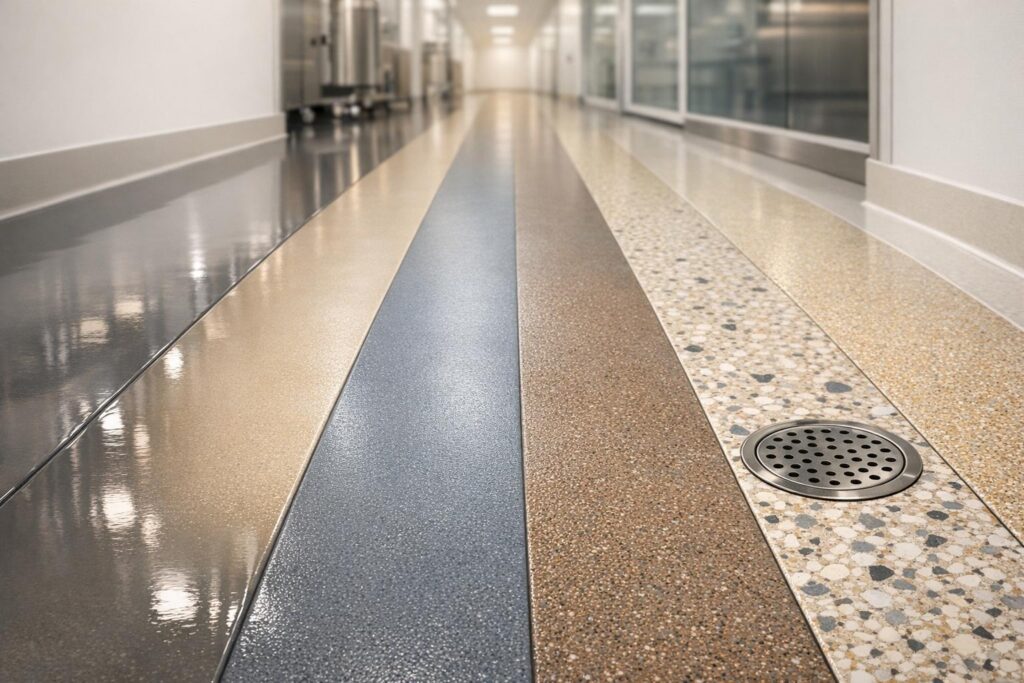
In pharmaceutical facilities, flooring plays a critical role in maintaining cleanliness, safety, and compliance with strict FDA and cGMP standards. The right flooring must withstand heavy machinery, chemical exposure, and thermal shocks while being easy to clean and resistant to contamination. Here’s a quick overview of the top flooring options:
- Atlas Concrete Coatings: Durable, nonporous, chemical-resistant, and easy to maintain.
- Polyurea Coatings: Flexible, impact-resistant, and ideal for high-traffic areas.
- Epoxy Coatings: Tough, long-lasting, antimicrobial, and suitable for cleanrooms.
- Urethane Cement: Handles extreme temperatures, heavy loads, and aggressive cleaning agents.
- MMA Acrylic: Fast curing, hygienic, and resistant to wear and chemicals.
- Terrazzo Flooring: Long-lasting, nonporous, and highly durable.
- Resinous Systems: Seamless, antimicrobial, and suitable for various pharmaceutical zones.
Each option offers unique benefits tailored to specific needs, from thermal resistance to static control. Choosing the right flooring ensures compliance, safety, and efficiency in pharmaceutical operations.
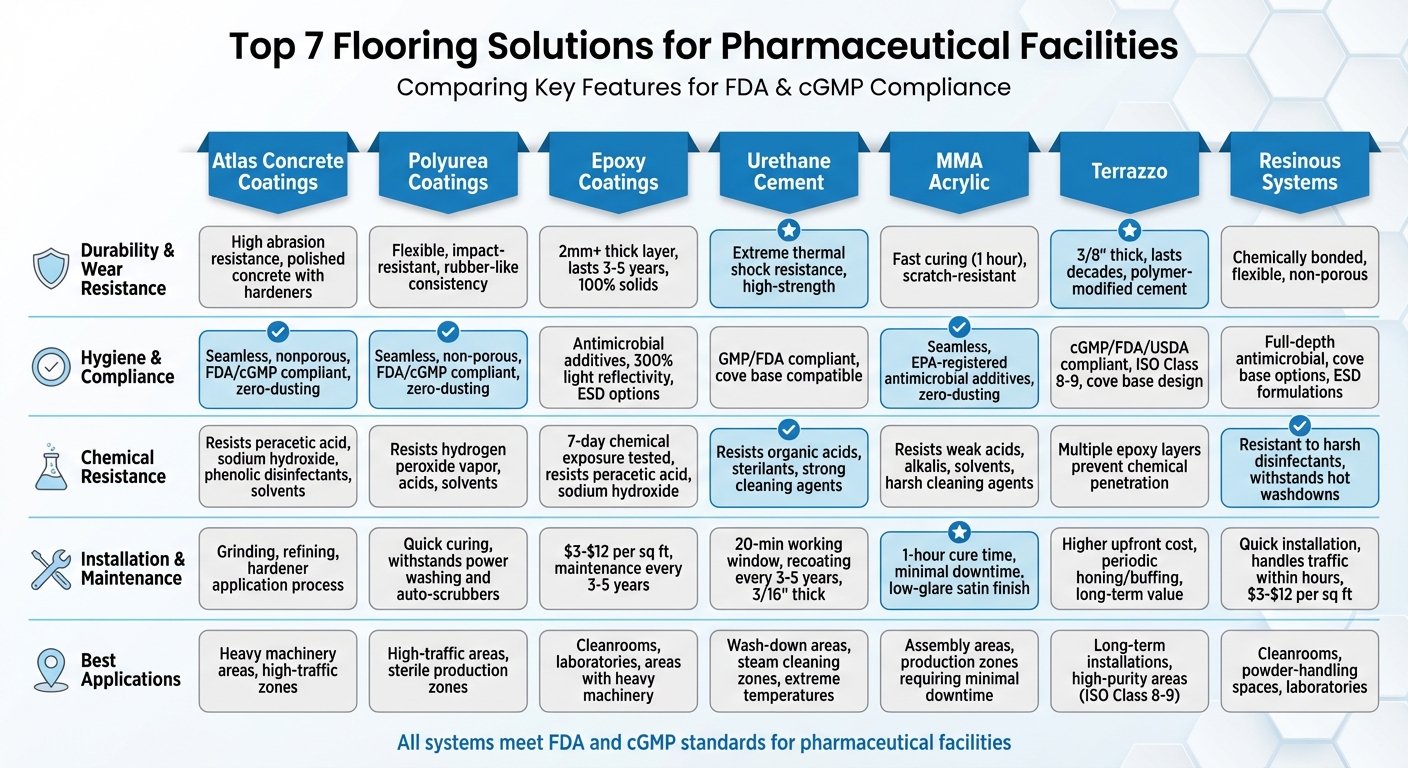
Pharmaceutical Flooring Solutions Comparison Chart
Pharmaceutical & Lab Flooring Systems Explained
sbb-itb-4b4bb37
1. Atlas Concrete Coatings
Atlas Concrete Coatings specializes in industrial-grade flooring systems tailored for pharmaceutical manufacturing environments. Their polyurea-based coatings and resinous systems are designed to handle the challenges of these facilities, including exposure to chemicals and strict hygiene requirements.
Durability and Resistance to Wear
Atlas uses a meticulous process – grinding, refining, and applying hardeners – to create polished concrete surfaces that are highly resistant to abrasion. These floors are built to endure heavy machinery and constant foot traffic without chipping or scratching. Their urethane coatings add a layer of flexibility and strength, ensuring long-term performance and reliability. This level of durability is essential for maintaining the rigorous hygiene standards required in pharmaceutical settings.
Meeting Hygiene Standards
The company’s flooring solutions are seamless and nonporous, eliminating joints and cracks where bacteria could hide. These coatings comply with FDA safety standards and cGMP regulations, which demand smooth, crack-free surfaces. Additionally, the systems meet zero-dusting requirements, a critical feature for pharmaceutical labs to prevent particle contamination and maintain product integrity.
Resistance to Harsh Chemicals
Atlas Concrete Coatings designs their systems to withstand exposure to aggressive cleaning agents and disinfectants. Their floors resist damage from substances like peracetic acid, sodium hydroxide, phenolic disinfectants, and various solvents. The nonporous surface prevents chemicals from seeping in and compromising the substrate, making sanitation easier and more effective – an essential feature for pharmaceutical operations.
Simplified Cleaning and Maintenance
Thanks to their seamless design, these floors are easy to clean and maintain. The smooth, dense finish resists stains and bacteria, allowing cleaning crews to sanitize surfaces quickly and efficiently. This ensures compliance with regulatory standards while streamlining daily maintenance tasks.
2. Polyurea Floor Coatings
Durability and Resistance to Wear
Polyurea’s rubber-like consistency makes it exceptionally durable and able to handle significant impacts without the brittleness often found in harder coatings. Its flexibility helps absorb heavy loads and prevents cracking, making it ideal for demanding environments. Polyaspartic variants, a type of polyurea, cure quickly and perform well in areas with constant foot or equipment traffic. These qualities make polyurea a reliable choice for maintaining strict hygiene standards in pharmaceutical settings.
Compliance with Pharmaceutical Hygiene Standards
Polyurea coatings go beyond durability to address hygiene needs by creating a seamless, non-porous surface. This finish reduces the risk of microbial growth by eliminating hiding spots for bacteria and other contaminants. This feature is essential for meeting FDA standards and cGMP regulations in sterile production areas. Additionally, polyurea’s zero-dusting properties help prevent particulate contamination. Its thermal stability allows it to withstand hot wash-downs without cracking or warping, ensuring the high hygienic standards required in pharmaceutical facilities are consistently maintained.
Chemical Resistance
Designed to handle exposure to harsh cleaning agents and disinfectants, polyurea coatings resist damage from substances like hydrogen peroxide vapor, acids, and solvents. The impermeable surface acts as a barrier, preventing chemicals from seeping into the concrete substrate. This not only protects the floor’s structural integrity but also simplifies cleaning and maintenance routines.
Ease of Cleaning and Maintenance
The smooth, high-gloss finish of polyurea coatings allows for easy and effective cleaning. It can withstand power washing, auto-scrubbers, and high-temperature cleaning methods without degrading. As Sherwin-Williams explains:
Seamless floors eliminate crevices and absorptive surfaces that can harbor pathogens, harmful germs, and debris. Having a chemical resistant topcoat is also key to creating an exceptionally hygienic surface.
Polyaspartic systems further enhance maintenance efficiency with their quick curing times, reducing downtime and supporting continuous operations in pharmaceutical facilities.
3. Epoxy Floor Coatings
Durability and Resistance to Wear
Epoxy floor coatings create a tough, 2 mm+ layer designed to endure the daily demands of pharmaceutical environments. Industrial-grade epoxy, made from 100% solids, is applied at a minimum thickness of 2 millimeters. This sturdy surface stands up to heavy machinery, forklift traffic, and constant use without cracking or chipping [4, 13].
The coating forms a chemical bond with concrete, reducing joints and cracks where dust, bacteria, or mold could gather [9, 10]. In high-traffic areas, epoxy floors generally last 3 to 5 years before needing professional upkeep, though routine maintenance can extend their lifespan. Mark Glazier, President of NutraBio Labs Inc., shared his experience:
Michael Greenblatt and his team at Surface Technology did the epoxy floors and walls here at NutraBio Labs Inc. and did an amazing job… Michael went above and beyond to make sure the job was done correctly and to my expectations.
This durable solution not only protects against wear but also aligns with the rigorous hygiene standards required in pharmaceutical settings.
Compliance with Pharmaceutical Hygiene Standards
Epoxy flooring is a natural fit for facilities following FDA and cGMP guidelines. Its seamless design eliminates gaps and crumbling grout, which are common in traditional flooring, reducing the risk of particulate contamination [4, 10]. Many advanced epoxy systems include antimicrobial additives throughout every layer – not just the surface – ensuring long-lasting microbial protection, even if the floor is scratched or damaged. This feature helps maintain both safety and efficiency in sterile production areas.
Additionally, epoxy floors can increase light reflectivity by up to 300%, improving visibility in cleanrooms and laboratories. For spaces handling sensitive powders or electronics, Electrostatic Dissipative (ESD) epoxy formulations offer static control, reducing fire risks and enhancing compliance with safety standards.
Chemical Resistance
Epoxy coatings act as a non-porous barrier, preventing corrosive chemicals from seeping into the concrete below. High-quality systems are tested for durability by exposing them to concentrated chemicals and detergents for seven consecutive days. These floors can resist prolonged contact with substances like hydrogen peroxide vapor, peracetic acid, sodium hydroxide, phenolic disinfectants, and alcohol-based sanitizers without breaking down [10, 18, 11].
Ease of Cleaning and Maintenance
The seamless, joint-free nature of epoxy floors makes them easy to clean and sanitize. They can handle power washing and strong chemical cleaners without sustaining damage. CPC Floor Coatings explains:
A pharma-grade floor must be seamless, nonporous, and easy to sanitize so it won’t trap microbes or contaminants. It must also withstand harsh cleaning protocols, heavy traffic, and chemical exposure while supporting consistent audit readiness.
Installation costs for epoxy flooring range between $3 and $12 per square foot, depending on the formulation, application process, and number of coats required. In wet processing areas, adding grit or marble chips to the epoxy mix can enhance traction while maintaining the smooth, seamless finish [18, 11].
4. Urethane Cement Coatings
Durability and Resistance to Wear
Urethane cement coatings take the durability of polyurea and epoxy systems to the next level, especially when it comes to handling thermal shock. This high-strength material is a blend of polymer binder, cement, and aggregate fillers, creating a tough surface that resists wear and tear from heavy foot traffic, dropped tools, and the constant pressure of forklifts and pallet trucks. Its seamless, monolithic finish also prevents contaminants from seeping in, making it a reliable choice for demanding environments.
What makes urethane cement stand out is its ability to endure extreme temperature changes, which is crucial for pharmaceutical facilities that deal with high-temperature wash-downs or steam cleaning. Tom Dassie from CustomCrete highlights this feature:
Systems like urethane cement offer thermal shock resistance – essential in areas that undergo hot wash-downs or have varying room temperatures.
In these high-traffic environments, urethane cement floors typically need recoating every 3 to 5 years. Some systems even allow for a 20-minute working window at standard temperatures, enabling crews to cover large areas quickly and efficiently.
Compliance with Pharmaceutical Hygiene Standards
Urethane cement flooring is specifically designed to meet GMP and FDA requirements, thanks to its seamless, poured-in-place finish. Surface Technology Inc notes:
Urethane cement flooring systems tend to perform well when installed in pharmaceutical labs and care facilities, as they can create seamless finishes that are easy to clean.
For the highest levels of hygiene, these systems can be paired with cove bases, which create a smooth transition between the floor and walls, eliminating hard-to-clean corners where dirt tends to gather. Additionally, slip-resistant textures can be added for areas like wet processing zones or gowning rooms, improving worker safety while maintaining ease of cleaning.
Chemical Resistance
The dense, non-porous structure of urethane cement makes it highly resistant to organic acids, sterilants, and strong cleaning agents, even with prolonged exposure. High-quality systems undergo rigorous testing with concentrated chemicals to ensure they can maintain their integrity over time.
| Feature | Urethane Cement Performance | Pharmaceutical Benefit |
|---|---|---|
| Thermal Resistance | Handles steam and hot water | Critical for sterilization and wash-down areas |
| Surface Type | Seamless and non-porous | Prevents microbial growth and cross-contamination |
| Chemical Profile | Resists organic acids and sterilants | Withstands aggressive cleaning protocols |
| Physical Strength | High impact and abrasion resistance | Endures heavy equipment use and constant traffic |
This robust chemical resistance also simplifies cleaning, as described below.
Ease of Cleaning and Maintenance
Urethane cement coatings are easy to maintain, helping facilities stay compliant with strict pharmaceutical standards. Their seamless surface stands up to machine scrubbing and high-pressure washing, making sanitation quick and effective. These coatings are also moisture-tolerant, which is a big plus for facilities dealing with vapor issues. Typically installed at a thickness of 3/16 inch, they provide a sturdy barrier against both moisture and physical impacts. Plus, they can be applied to new concrete as soon as five days after pouring, reducing downtime during installation.
5. MMA Acrylic Coatings
Quick Installation with Minimal Disruption
MMA acrylic coatings are known for their incredibly fast curing time – just about an hour – making them ideal for projects where downtime needs to be kept to an absolute minimum. This speed allows operations to resume quickly, helping businesses avoid unnecessary revenue losses. However, there’s a catch: the uncured material has a strong odor and is highly flammable, requiring strict ventilation and safety measures during application. Because of these challenges, professional installation is a must to ensure proper bonding and a smooth, even finish. This quick turnaround aligns perfectly with the demand for minimal disruptions in facility operations.
Meeting Pharmaceutical Hygiene Standards
MMA coatings are a top choice for pharmaceutical environments because they create a seamless, non-porous surface. This design eliminates cracks and joints where bacteria, mold, or dust could hide, directly supporting FDA and cGMP hygiene standards. Additionally, these coatings can be enhanced with EPA-registered additives to inhibit the growth of microbes, yeast, and fungi – critical for maintaining sterile conditions in pharmaceutical labs and production areas. They also meet the "zero-dusting" requirement, which is essential for keeping pharmaceutical products uncontaminated.
Durable and Easy to Maintain
MMA coatings don’t just install quickly and support hygiene – they also offer excellent chemical resistance. They can handle exposure to weak acids, alkalis, solvents, and even harsh cleaning agents. While they may not be as hard as 100% solids epoxy coatings, MMA systems still provide impressive scratch resistance and can endure heavy equipment use and high foot traffic, making them a practical choice for assembly and production areas.
Ace Avant highlights the benefits of MMA coatings:
MMA is perfect for pharmaceutical settings due to its excellent chemical resistance, making it durable and easy to maintain in high-demand areas. It is fast curing, allowing for minimal downtime.
The seamless finish not only supports strict sanitation protocols but also prevents pathogens from penetrating the surface. With a low-glare satin finish, these coatings reduce eye strain, making them more comfortable for workers. For added safety, slip-resistant textures can be incorporated in wet processing areas, ensuring worker protection without compromising the smooth, seamless look.
6. Terrazzo Flooring Systems
Durability and Resistance to Wear
Terrazzo flooring systems are a standout choice for pharmaceutical environments, thanks to their exceptional durability. Using a polymer-modified cement base with an epoxy binder, these floors create a strong yet flexible surface that resists cracking. Typically installed at a thickness of 3/8" (375 Mils), terrazzo’s seamless, poured-in-place design eliminates grout lines and joints, which are often weak points under heavy loads. After installation, the surface is ground smooth and finished with a specialized topcoat, making it non-porous and resistant to moisture, chemicals, and contamination. This durability means terrazzo floors can last for decades, often outliving the buildings they are installed in when properly cared for. While the upfront installation costs are higher due to the labor-intensive grinding and polishing process, the reduced need for replacement over time makes it a cost-effective option in the long run.
Compliance with Pharmaceutical Hygiene Standards
Terrazzo systems are specifically designed to meet the rigorous hygiene standards required in pharmaceutical facilities, aligning with cGMP, FDA, USDA, and EC regulations. The jointless surface eliminates hidden spaces where bacteria, mold, or other contaminants could thrive. These systems are suitable for environments requiring high levels of purity, with ratings for use in production areas up to purity level C or ISO Class 8-9. LEONHARD WEISS Fußbodentechnik GmbH & Co. KG highlights this in their statement:
"LW Pharma Terrazzo Natural… fulfils all requirements according to EC regulation for the good manufacturing practice (GMP) for medicinal products and FDA (US standard)."
For cleanrooms, a cove-based design – where the flooring curves seamlessly into the wall – further enhances hygiene by eliminating corners where dust and bacteria could accumulate. Terrazzo systems can also be customized with electrically conductive or antistatic properties, meeting ATEX 100a or BGR 132 standards for areas with explosion risks.
Ease of Cleaning and Maintenance
One of terrazzo’s most practical features in pharmaceutical settings is its low-maintenance, seamless surface. Cleaning is straightforward – regular sweeping and mopping are usually enough, and the smooth finish supports quick cleaning protocols, including the use of floor-scrubbing machines. Once sealed with epoxy or polyurethane topcoats, the floor becomes resistant to chemicals, oils, and spills, allowing for easy cleanup without staining or degradation. Blackrock Industrial explains:
"Terrazzo flooring is made by suspending aggregates in a flexible matrix. Once it is installed and smoothed, it is sealed with a special topcoat that makes it impervious to outside contamination."
While daily cleaning is simple, periodic professional honing or buffing is recommended to maintain the floor’s finish and protective seal. Additionally, terrazzo’s ability to increase light reflectivity by up to 300% enhances visibility and safety in production areas. These characteristics make it an excellent choice for maintaining hygiene and performance in pharmaceutical facilities.
Chemical Resistance
The sealed surface of terrazzo provides outstanding protection against harsh chemicals and disinfectants commonly used in pharmaceutical settings. Multiple epoxy layers act as a barrier, preventing chemical penetration and ensuring the floor’s integrity even under frequent exposure to aggressive cleaning agents. This chemical resistance, combined with its longevity, makes terrazzo a smart, long-term investment for facilities that require both cleanliness and durability. By addressing both safety and compliance needs, terrazzo proves to be a reliable flooring solution for pharmaceutical operations.
7. Resinous Flooring Systems
Durability and Resistance to Wear
Resinous flooring systems, built on the strengths of polyurea and epoxy, are designed to excel in the demanding environments of pharmaceutical facilities. These systems chemically bond to concrete, creating a seamless and flexible surface that resists peeling and delamination.
Advanced polymers in these floors are engineered to withstand heavy foot traffic and the constant movement of equipment. Urethane-based floors, in particular, offer excellent flexibility and resistance to abrasion, while urethane cement is specifically designed to endure thermal shock, such as that caused by high-temperature washdowns. Because resinous floors are non-porous, they prevent liquids and chemicals from seeping in, preserving the floor’s structural integrity over time. Typically, epoxy and urethane floors require maintenance every 3 to 5 years.
Compliance with Pharmaceutical Hygiene Standards
Resinous flooring systems are crafted to meet stringent FDA and cGMP standards, which mandate smooth, non-porous surfaces free from cracks or joints. These fluid-applied floors provide a continuous surface that prevents bacteria, mold, and dust from accumulating.
What sets resinous floors apart is their use of antimicrobial additives that offer full-depth protection. Many systems incorporate EPA-registered additives that inhibit the growth of microorganisms – like bacteria, yeast, and fungi – throughout the entire thickness of the floor, not just on the surface. As CPC Floor Coatings emphasizes:
A pharma-grade floor must be seamless, nonporous, and easy to sanitize so it won’t trap microbes or contaminants.
For areas like cleanrooms or high-risk production zones, resinous flooring can include a cove base that curves up the wall, eliminating floor-to-wall gaps where debris might collect. Additionally, electrostatic-dissipative (ESD) formulations are available for rooms where static discharge control is critical, such as powder charging or blending spaces. These ESD systems help reduce fire hazards and ensure safety.
Ease of Cleaning and Chemical Resistance
The seamless design of resinous flooring eliminates joints where contaminants can hide, making it easy to clean and maintain. These systems are resistant to harsh chemicals and stand up to the regular use of disinfectants. Kendall Youngworth, Senior Marketing Specialist at Tennant Coatings, highlights the long-term benefits:
Resinous flooring systems can provide the best life cycle value over the long term.
Another advantage is the quick installation process, allowing these floors to handle foot traffic within hours. Costs for epoxy flooring range from $3 to $12 per square foot, depending on factors like the formulation, installation method, and number of coats applied. Their chemical resistance, combined with the ability to endure hot washdowns and steam cleaning, makes resinous flooring a reliable choice for maintaining both cleanliness and durability in pharmaceutical operations.
Conclusion
Pharmaceutical facilities demand flooring solutions designed to handle contamination control, regulatory compliance, and long-term durability. The options discussed here – from Atlas Concrete Coatings’ industrial-grade polyurea systems to urethane cement and resinous coatings – are tailored to meet these needs while maintaining the seamless, non-porous surfaces required by FDA and cGMP standards.
Seamless flooring systems are a game-changer. By eliminating joints, cracks, and grout lines, they remove the typical hiding spots for bacteria, mold, and dust. Integrated cove bases further enhance these systems by creating continuous surfaces, which are vital for cleanrooms and processing areas. As Tom Dassie from CustomCrete points out:
Seamless flooring isn’t just a finishing touch in pharmaceutical facilities – it’s a key part of the contamination control strategy.
The ability to resist harsh chemicals and withstand extreme temperatures sets pharmaceutical-grade flooring apart. These floors can handle aggressive sanitizers, such as peracetic acid, and endure high-temperature steam cleaning in autoclave rooms. Additionally, certain epoxy systems remain unaffected even after seven days of continuous exposure to concentrated chemicals. With antimicrobial additives embedded throughout the flooring, protection is maintained even if the surface becomes damaged. Atlas Concrete Coatings continues to lead the way in delivering solutions that meet these stringent requirements.
Beyond hygiene and compliance, these flooring options boost operational efficiency. High-performance coatings can increase light reflectivity by up to 300%, while their direct bonding to concrete substrates prevents moisture pockets where microorganisms could thrive.
Choosing the right flooring depends on the specific demands of each zone: urethane mortar is ideal for wash-down areas requiring thermal shock resistance, ESD epoxy works best in powder-handling spaces, and chemical-resistant resinous systems are perfect for laboratories. With proper installation and maintenance, these flooring systems provide a solid foundation for safe, compliant pharmaceutical operations. They not only meet strict hygiene requirements but also protect product quality and promote a safer working environment.
FAQs
What is the best flooring for cleanrooms?
Seamless epoxy and resin flooring systems are a great fit for cleanrooms in pharmaceutical facilities. Their non-porous surfaces make them easy to clean, while their resistance to contamination helps maintain strict hygiene levels. These features ensure the floors align with the rigorous standards of the pharmaceutical industry.
What flooring can withstand thermal shock from hot washdowns?
Resinous flooring systems, like high-performance epoxy or urethane-based coatings, are well-suited for environments that deal with thermal shock. These materials can withstand sudden and extreme temperature changes without cracking or peeling, making them a dependable choice for areas requiring hot washdowns.
Do pharmaceutical floors need ESD static control?
Yes, pharmaceutical floors need ESD (Electrostatic Discharge) static control. Electrostatic discharges can disrupt sensitive equipment and jeopardize data accuracy in highly controlled scientific settings. Implementing ESD control helps ensure the reliability of operations and adherence to strict compliance standards.